■ Establishment of Korean Genomic Data for Pancreatic Cancer Research
Large-scale genomic data on Korean pancreatic cancer patients have been established for the first time, addressing the previous Western-centric bias in pancreatic cancer genomic research. This is expected to enable customized treatments that reflect the genetic characteristics of domestic pancreatic cancer patients.
A gastroenterology team led by Professor Hwang Jin-hyeok at Seoul National University Bundang Hospital conducted genomic analyses on 237 Korean pancreatic cancer patients and presented indicators capable of predicting prognosis and treatment response.
The research team supplemented the limitations of previous studies by analyzing tissue obtained through endoscopic ultrasound-guided fine needle aspiration, regardless of whether surgery had been performed.
The analysis found that patients with excessively amplified mutant KRAS (a key gene in the development of pancreatic cancer) showed a high rate of liver metastasis and shorter survival, indicating a very poor prognosis. In addition, patients with a high tumor mutational burden (TMB) had longer survival periods after chemotherapy, while patients positive for homologous recombination deficiency (HRD) showed clearly higher treatment response and survival rates with platinum-based anticancer drugs.
Professor Hwang stated, “This study, based on genomic data from Koreans, is an important starting point for realizing precision medicine in pancreatic cancer.” The research findings were published in the international journal Cancer Letters.
■ CHA University Signs MOU for ‘New Senior Activist Training’
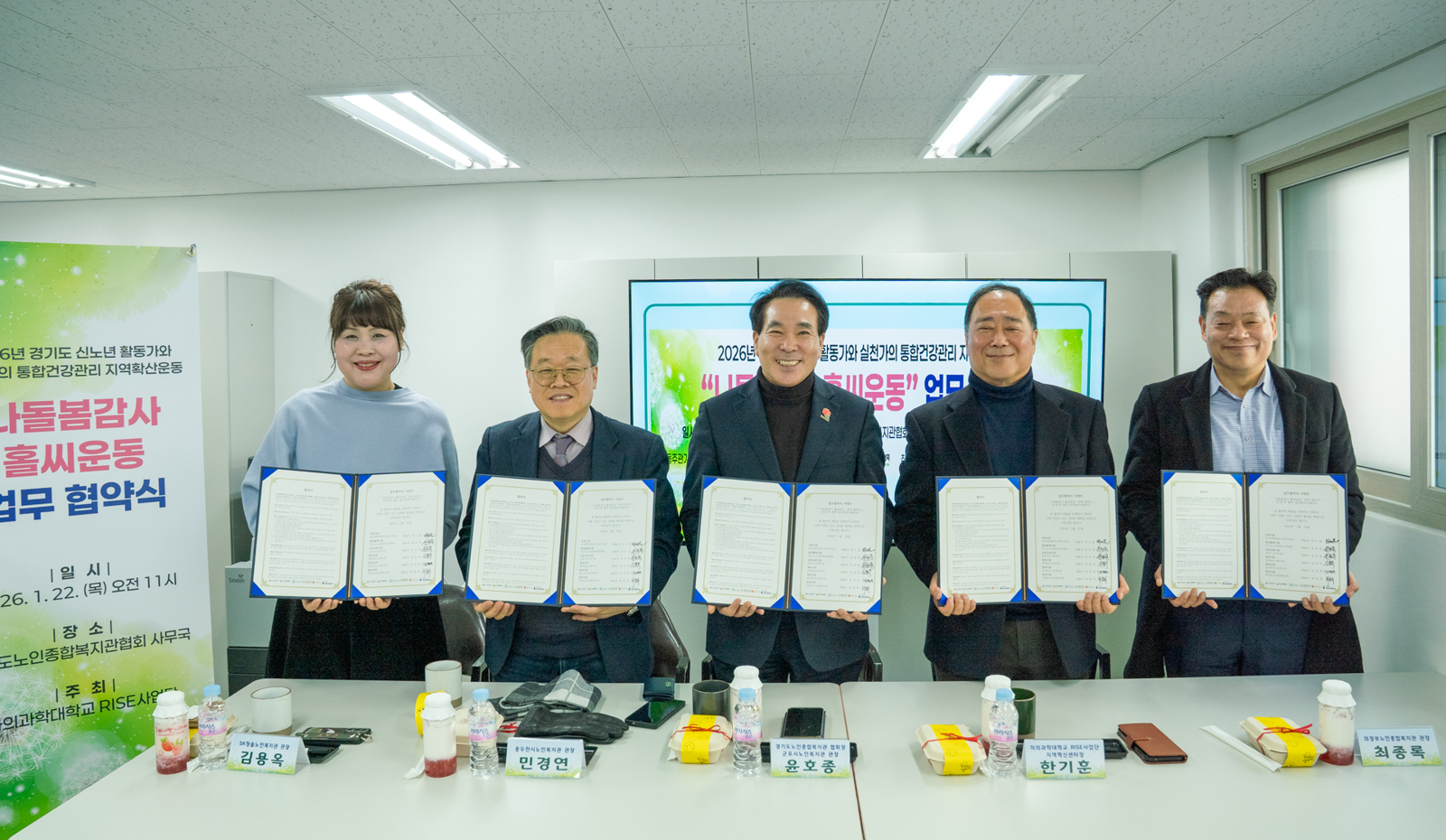
CHA University announced that on the 22nd it held a briefing session and memorandum of understanding (MOU) signing ceremony for the “Community New Senior Activist Training and Dissemination Project” at the Gyeonggi-do Association of Senior Welfare Centers, launching a public–private–academic cooperation framework to expand integrated health management in local communities in Gyeonggi Province.
The project aims to respond to social changes marked by an increase in new seniors with higher educational attainment and health capabilities by expanding the role of older adults from being recipients of care to “activists who care for the community.” Operated under the name “Self-Care Gratitude Seed Movement” (Nadolbom Gamsa Holssi Movement), the project seeks to create a structure in which self-care and gratitude practices by the new senior generation spread throughout the community.
The briefing session was attended by representatives of the Gyeonggi-do Association of Senior Welfare Centers as well as officials from the Gunpo, Dongducheon, Uijeongbu and SK Cheongsol Senior Welfare Centers, who discussed the roles of each institution and plans for cooperation. CHA University, led by its RISE project group, will be responsible for scientific verification of program effectiveness and performance analysis, while the Gunpo Senior Welfare Center will oversee project planning and activist training.
CHA University President Seo Young-geo said, “This agreement marks a starting point for jointly promoting the expansion of social participation by the new senior generation and solving community care issues,” adding, “We will establish and disseminate an evidence-based integrated health management model.”
■ SCL Healthcare Builds Companion Diagnostics Platform for Ovarian Cancer
SCL Healthcare announced that the results of a study evaluating the diagnostic performance and clinical utility of homologous recombination deficiency (HRD) testing in Korean ovarian cancer patients were published in the November 2024 issue of the international journal Cancer Genetics. The study is significant in that it suggests the feasibility of establishing a Korean-type companion diagnostics platform for targeted ovarian cancer therapy.
Ovarian cancer is a representative women’s cancer that is difficult to diagnose at an early stage because early symptoms are not clear.
In this study, SCL Healthcare identified HRD-positive patients even among those who tested negative in conventional BRCA gene testing and confirmed the potential for targeted anticancer therapy.
HRD-positive patients can be expected to benefit from treatment with PARP inhibitors, which block the DNA damage repair mechanisms of cancer cells.
Applying HRD analysis technology to Korean patients with high-grade serous ovarian cancer, the research team found that 73% of the total were HRD-positive, and that patients with higher genomic instability scores showed a tendency toward improved progression-free survival and overall survival. SCL Healthcare plans to apply this technology in domestic medical institutions starting in the first half of 2026.
■ SickGPT Launches AI Management Platform for Chronic Kidney Disease
Medical artificial intelligence (AI) startup SickGPT announced on the 27th that it has launched “Doctori,” an intelligent management platform specialized for patients with chronic kidney disease.
Despite the fact that chronic kidney disease requires extremely complex dietary and lifestyle management compared to other chronic diseases such as diabetes or hypertension, there had been no AI solution capable of responding precisely to the diverse, complex cases of individual patients.
The service was jointly developed by Co-CEO Kim Se-jung, a professor of nephrology at Seoul National University Bundang Hospital, and Co-CEO Kim Myung-joo, who holds a doctorate in medical AI. Their decision to establish the company stemmed from the longstanding difficulties associated with kidney disease management.
By using AI technology to address the challenge that patient conditions vary so widely that it is difficult to provide uniform guidance, the aim was to create an environment in which patients can manage their disease intelligently on their own.
Doctori is based on a large language model (LLM) specialized in kidney disease that was developed at SickGPT’s in-house corporate research institute (AI Research Center). When patients upload photos of the food they have eaten, the system immediately analyzes four components that must be managed by kidney disease patients—sodium, protein, potassium and phosphorus—and provides customized feedback. An AI coach trained on more than 100,000 cases from patient communities also answers questions in real time to address patients’ concerns. Doctori is currently available as a free beta version on Google Play Store and Apple App Store.
ⓒ dongA.com. All rights reserved. Reproduction, redistribution, or use for AI training prohibited.
Popular News