“Thinking of a safe life for everyone.”
As extreme weather events, large-scale traffic accidents, and massive wildfires become widespread around the world and increasingly difficult to predict, “safety” is regarded as a core precondition of social infrastructure. In particular, as transportation means (vehicles) such as cars, ships, and drones become more advanced, a single accident can inevitably spread beyond individual loss of life to system-wide risks across roads and entire cities.
In disaster situations, the moment terrestrial communication infrastructure is incapacitated, even sending a rescue request becomes impossible. The golden time that must be secured in emergencies is directly linked to life, but the limitations of current communication infrastructure are clear. This is why situations in which no rescue request can be sent, simply because the communication network is cut off or the area is out of service coverage, continue to recur. Building a rapid response system for unforeseen risks such as vehicle accidents, abductions, or sudden illnesses is no longer optional but essential.
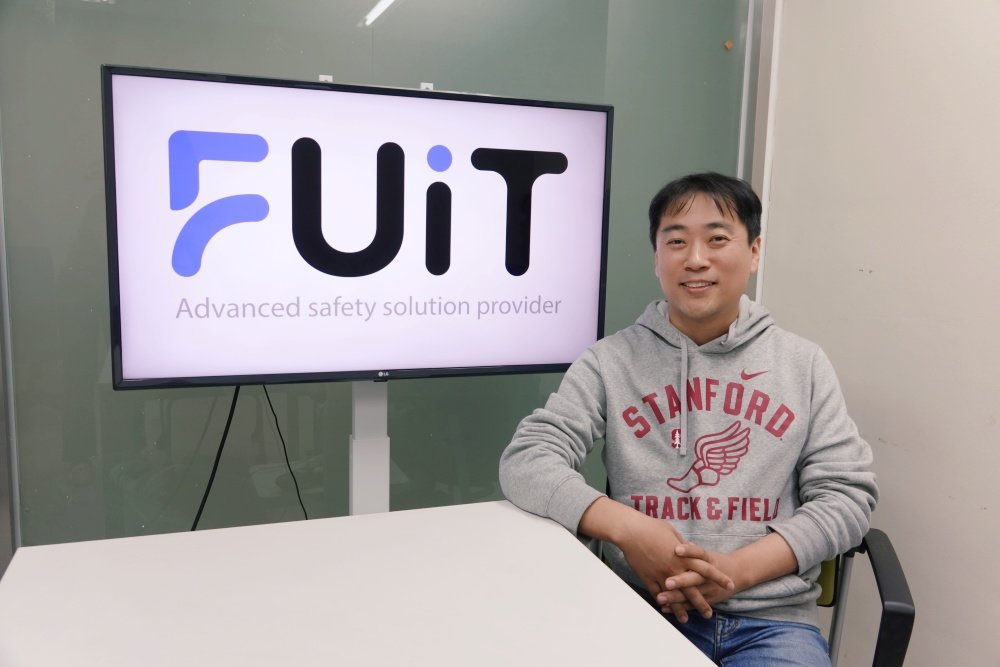
Kim Se-ho, CEO of Fuit / Source=IT Donga
Startup Fuit is focused on combining satellite communications with AI-based mobility safety technologies to fill precisely this “last disconnected segment.” The aim is to create an invisible safety net that automatically displays emergency messages at the moment an accident occurs on roads, at sea, or in remote areas where terrestrial networks are cut off. The future Fuit envisions goes beyond simple technological innovation to the evolution of a social safety net that protects lives. CEO Kim Se-ho of Fuit, who views safety as essential infrastructure, spoke about the company’s business strategy and goals.
Reinforcing expertise based on global conglomerate experienceFounded in 2022, Fuit is a safety solution company that combines satellite communications and AI. It began with digital healthcare, then expanded its business scope to vehicles and satellite communications, and is also focusing on developing personal safety solutions within smart cities.
CEO Kim leads Fuit based on experience accumulated over roughly 20 years at global conglomerates. After joining a large company as a software developer, he handled a broad range of fields including product planning, electric vehicle charging infrastructure, digital healthcare, and AI business strategy, building extensive know-how in new business development. On top of this, he secured a robust network, which has also played a significant role in strengthening Fuit’s expertise.
Kim said, “At a global conglomerate, I handled advanced technology areas such as space tech, humanoids, and computing, and was responsible for planning synergies among affiliates. I naturally experienced the entire process from product development to manufacturing and became familiar with creating new businesses. That experience had a major impact on Fuit.”
Securing technological competitiveness through proactive patent filingsFuit’s core technology is its ICT-based emergency rescue system, E-call (Emergency call). E-call automatically detects emergency situations and transmits accident information to an E-call center, enabling safe protection of occupants by securing their golden time.
Existing E-call services provided by companies such as Hyundai, GM, BOSCH, and BMW are highly dependent on terrestrial networks and therefore have limitations in blind spots such as tunnels or mountainous regions. Terrestrial networks are concentrated only in densely populated areas, and they are difficult to rely on when communications are unstable or in disaster situations. Fuit aims to build an ultra-connected safety net based on satellites and AI that enables uninterrupted, rapid, and accurate rescue support for occupants in any emergency situation. The company is also advancing its technology by defining diverse scenarios that may occur in blind spots. In addition, it is co-developing satellite messaging solutions with global conglomerates that can be extended to vehicles, ships, and Urban Air Mobility (UAM).
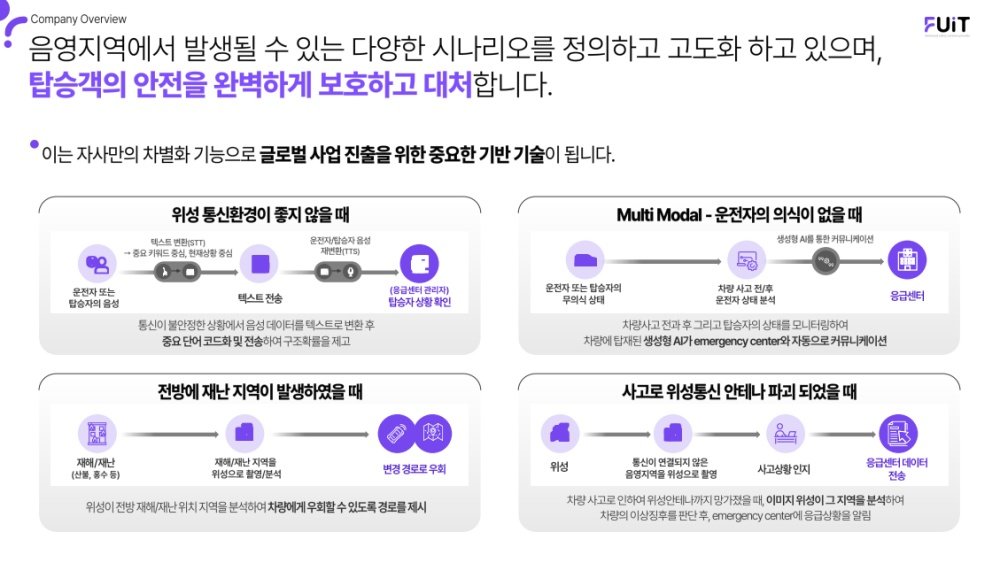
Fuit’s core technology, E-call, automatically detects emergency situations and transmits accident information to an E-call center, enabling safe protection of occupants by securing their golden time / Source=Fuit
In particular, Fuit’s E-call is equipped with a satellite communication-based emergency messaging solution. This technology uses edge-based AI to assess the driver’s safety even in resource-constrained environments and automatically transmits emergency messages via satellite communications. Dynamic compression messaging technology is applied to maximize communication efficiency. The company is also advancing its key technologies such as ▲encoding and transmitting important words ▲a satellite-based disaster avoidance route guidance system ▲a generative AI-based automatic vehicle accident response system ▲accident detection and emergency reporting through satellite image analysis.
Since 2023, Fuit has proactively filed related patents to secure technological competitiveness. This year, it completed PCT (Patent Cooperation Treaty) filings and North American patent filings. It is preparing to file European patents next year.
Kim said, “We analyze global patents every year and are building a strong technological moat unique to Fuit. Interest in satellite communication-based emergency rescue services is rising worldwide. Fuit saw the potential in this field starting in 2023 and has been proactively establishing its position. That is our strength.”
Fuit also holds a number of new and meaningful patents and technologies. For example, it has a “deception technology” patent that allows a vehicle in an abduction situation to autonomously head to a police station or communicate with the police in the background. It has also filed a system patent that automatically sends alerts to paramedics near an accident scene to secure the victim’s golden time.
This is not the end. Fuit is also developing safety solutions tailored to the spaces where people spend most of their time: vehicles, homes, and workplaces. In vehicles, it is preparing driver-centric safety monitoring, and in homes, home agent-based solutions for single-person elderly households and multi-person households.
Since 2023, Fuit has been proactively building its position in the field of satellite communication-based emergency rescue services, seeing the potential in this area / Source=IT Donga
Kim said, “Each space has different required technologies and needs. Vehicles are means of transportation, homes are places of rest, and workplaces are for work. We are developing services aligned with the role of each space,” adding, “We plan to integrate various healthcare technologies such as non-contact camera-based heart rate monitoring, stress index analysis, and analysis of lifelog data from smartphones and smartwatches to provide personal safety services.”
Preparing for an automated safety system amid various difficultiesFuit has grown through trial and error. In the early stages, it faced major difficulties in technology development and workforce management. Kim revealed, “Conglomerates and startups are different. After working at a conglomerate with abundant resources, I went through a lot of trial and error running a startup that did not have those resources.” He added, “We needed external experts in specialized areas such as patents, law, and accounting, but we overcame this by actively leveraging the network built during my time at a conglomerate.”
Kim repeatedly emphasizes that Fuit’s satellite communication-based safety technology is the “first of its kind in Korea.” In reality, investment in aerospace technology domestically remains minimal, and awareness is also lacking. According to Kim, while the United States and China are already reusing rockets, Korea is only planning to attempt this around 2035.
Based on his direct experience, Kim expressed regret, saying, “When I go around to have projects reviewed, I often get asked, ‘Why are you doing this when the technology is not yet mature?’ But other countries are already making massive investments in aerospace. Improving awareness of the need for such technologies is urgent.”
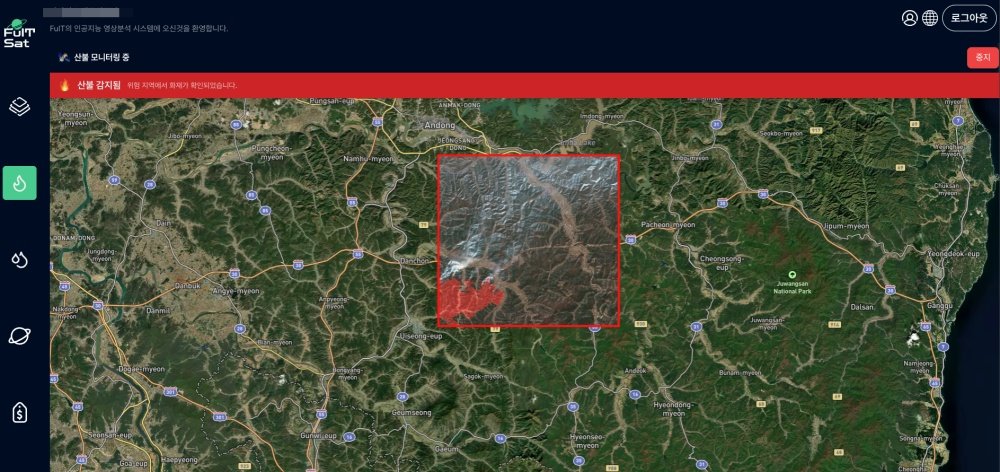
Nevertheless, Fuit is moving forward. In cooperation with the Artificial Intelligence Industry Convergence Business Group (AICA), jointly supported by the Ministry of Science and ICT and Gwangju Metropolitan City, and space specialist company Nara Space, it will begin full-scale verification of a satellite image-based disaster monitoring system in December 2025. Under this model, when a user requests satellite images of a specific area, Nara Space provides the images and Fuit analyzes them with AI to assess disaster situations such as floods or wildfires.
Fuit possesses technologies focused on safety, from automatic detection of emergencies in vehicles and satellite-based rescue requests to real-time disaster monitoring / Source=Fuit
Kim said, “The free model of the satellite image-based disaster monitoring system analyzes past images, while the paid model requests and analyzes satellite images in real time at the expected time of a disaster. We can also build an automated system that extends services to things like pothole detection.”
Kim further said, “There are few cases where a private company has built a satellite communication-based urban monitoring system at this level. We can complete an automated system that ensures safety not only for individuals but also for spaces outside smart cities.”
Overseas expansion becoming visible… focus on security as wellFuit’s current challenge is overseas expansion. The market size and demand for satellite communication-based services are far greater overseas than in Korea. To this end, Fuit is working closely with various global partners. In October 2025, the company held one-on-one meetups and IR demo days in Luxembourg to meet with local business partners. Kim said, “We confirmed positive feedback that our technology has sufficient market potential in Europe as well.”
A prior online survey that Fuit independently conducted with 50 drivers residing in the United States also produced meaningful results. A total of 94% of respondents said they were willing to pay a monthly subscription fee of USD 49 (KRW 72,000) or more for Fuit’s technology.
Buoyed by these results, Fuit plans to embark on full-fledged overseas expansion starting with participation in “CES 2026,” the world’s largest consumer electronics and IT trade show, to be held in Las Vegas, USA, in January 2026. It is in business talks with partners in Europe and the United States, and is also considering attracting overseas investment and establishing local subsidiaries.
Fuit is in business discussions with various global partners for overseas expansion / Source=IT Donga
Fuit is also working to build systems that meet the stringent standards of Europe’s GDPR (General Data Protection Regulation). The company considers enhanced security essential because it handles satellite communications and image data. Kim explained, “While working at a global conglomerate, I gained experience in global business and developed a perspective that considers overseas markets first. Fuit’s business was planned not only with the domestic market in mind but also with the potential for global expansion.”
As disasters caused by abnormal climate patterns surge, terrestrial communication infrastructure is easily destroyed. Kim explains that building satellite-based monitoring systems is essential. Fuit projects that by 2030 satellite communications will be more economical and efficient than terrestrial communications and is planning, in the long term, to build a satellite network constellation (a satellite fleet in which multiple satellites cooperate as a single network to cover the entire globe).
Kim stated, “Life is precious, so Fuit’s goal is to develop technologies that can secure the golden time when an accident occurs. We will establish a comprehensive safety solution within smart cities to secure the golden time for people in danger.”
Fuit’s efforts, which focus on safety from automatic detection of emergencies in vehicles and satellite-based rescue requests to real-time disaster monitoring, are notable. They raise questions about the basic conditions that future smart cities must meet, while also providing answers as to how technology should protect human life.
IT Donga, reporter Park Gui-im (luckyim@itdonga.com)
ⓒ dongA.com. All rights reserved. Reproduction, redistribution, or use for AI training prohibited.
Popular News