Each company is accelerating the adoption of AI, but they are also voicing new concerns in the process. In many cases, they first encounter issues related to security and the complexity of operational structures, rather than the performance or applicability of AI models.
Source = Shutterstock
In practice, it is common for companies to outsource cloud infrastructure to Company A and AI solutions to Company B. In such cases, data is managed across multiple vendors’ environments, which increases the likelihood of security vulnerabilities and blurs the boundaries of responsibility. This structure itself becomes an obstacle to AI adoption, particularly in manufacturing, finance, distribution, and public sectors, where the sensitivity of internal data is high.
Obstacles to AI adoption lie in complex structures, not technologyWhen the providers of cloud and AI solutions are different entities, unnecessary delays frequently occur during data access permission control and security review processes. It is also difficult to quickly identify causes and respond when failures or issues arise. There are many cases where AI is not sufficiently utilized in real-time decision-making or automation tasks.
To address these issues, a recent alternative approach is to design and operate infrastructure and AI within a single integrated framework. Rather than separating the operators of the cloud environment and AI, this approach aims to manage the entire lifecycle—data generation, storage, and utilization—within a unified structure, thereby clarifying security control points and centralizing operational responsibility. By refining the operational structure, it lowers the practical barriers to AI utilization. This shift explains why corporate perspectives on AI adoption are gradually moving from “technology selection” to “operational design.”
For example, the collaboration between Gabia, a cloud specialist, and Artiwells, an AI solution developer, is drawing attention as an attempt to design and operate infrastructure and AI within a single system. Rather than a simple partnership, the two companies have built an integrated flow from infrastructure design to AI deployment and operations based on an intra-affiliate collaboration structure. From the customer’s standpoint, this prevents both security concerns and management complexity that may arise when infrastructure and AI are handled by different vendors. Such a structure is also advantageous in terms of continuous maintenance and long-term development stability, both of which are crucial for operating AI services.
Source = Shutterstock
Using AI in an environment where data does not leave the premises… minimizing security concernsThe issue that most concerns security-sensitive companies is data leakage. In response, Artiwells offers on-premises or private environments as the default option, installing and operating AI solutions directly within Gabia’s infrastructure, which has obtained cloud security certification.
In this setup, data does not move to external AI services, thereby minimizing security concerns. Corporate internal data is managed within Gabia’s data centers, and AI also runs in that environment. The data transfer path is simple, and the security control points are clearly defined. This structure can be a practical alternative for companies that must closely respond to regulations, or for organizations handling data for which external transmission itself is burdensome.
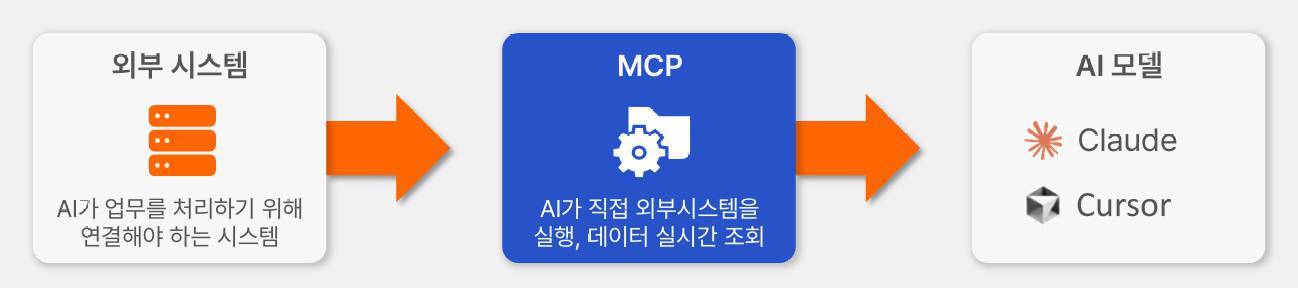
An approach that organizes data before AI… the ‘MCP platform’From a technical standpoint, the spotlight is on the MCP (Model Context Protocol)-based platform developed by Artiwells. “MCP” refers to a standardized data connection protocol that enables AI to directly query and use corporate data. Previously, to connect corporate data with services such as ChatGPT or Claude AI, developers had to individually integrate different APIs for each dataset and tool. Adding new data sources also required complicated configuration, limiting scalability. This was one of the reasons small and medium-sized enterprises (SMEs), which struggle to hire developers, found digital transformation difficult.
By using the MCP server automatic deployment solution, integration with existing cloud drives, ERP, and CRM systems can be implemented easily without professional developers or complex coding. Once accumulated corporate data is converted to MCP, AI tools can analyze the data in real time and respond to queries.
MCP utilization process / Source = Artiwells
For instance, SMEs that have not yet achieved digital transformation often find it difficult to grasp the overall logistics flow at a glance because production and distribution data are separated. This makes it challenging to explore new distribution channels and enter platforms. Above all, data from departments such as production, inventory, sales, and finance are scattered in different formats, preventing AI from understanding the data and creating further fragmentation. The MCP platform connects and organizes this data into a common standardized format that AI can understand.
When production, inventory, logistics, and sales data are integrated and standardized using the MCP server automatic deployment solution, it becomes possible to forecast product demand and supply and identify purchasing patterns. If a user requests in natural language, “List the products whose recent sales have surged,” the AI immediately identifies the relevant items. Through this process, companies can shorten the time required to discover and open new distribution channels and increase their market response speed. Unlike conventional approaches that start by introducing an AI model, this method focuses on organizing the data structure first to create a state in which AI can actually be deployed in day-to-day operations.
Field practitioners can design workflows for task automation or data analysis on a no-code basis, without excessive reliance on development personnel. As a result, AI becomes closer to an “everyday work tool” rather than an “experimental technology.” Security, infrastructure stability, data structure, and unified operational responsibility are issues that cannot be addressed by AI performance alone. Artiwells has focused not on showcasing flashy AI features, but on building a structure that enables companies to actually operate AI.
Lee Sang-min, principal researcher at Artiwells, said, “Now that AI adoption has become a task rather than a choice, each company is focusing more on ‘in what structure AI can be operated and how stably’ than on ‘which AI to use,’” and added, “By operating AI solutions and infrastructure within a single system and leveraging the strengths of MCP solutions, we will support each company’s stable AI transition.”
Reporter Kim Dong-jin, IT Donga (kdj@itdonga.com)
ⓒ dongA.com. All rights reserved. Reproduction, redistribution, or use for AI training prohibited.
Popular News