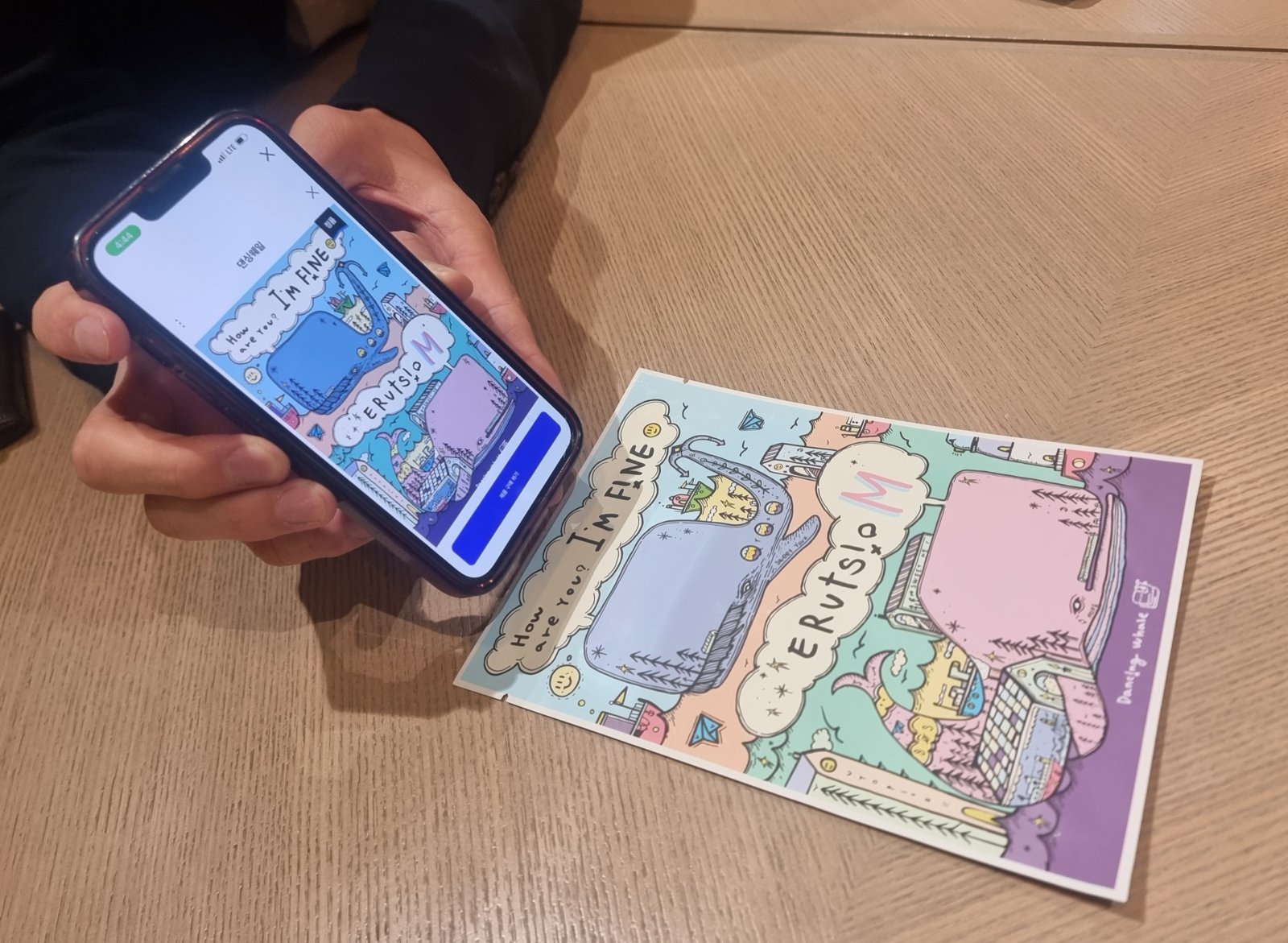
On the afternoon of the 20th, SnapTag CEO Min Kyung-woong of AI startup SnapTag photographs an AI-generated whale image with a smartphone to identify an invisible watermark.
“Even if you tear the paper like this, the durability of the watermark is not damaged.”
On the afternoon of the 20th in Tokyo, Japan, SnapTag CEO Min Kyung-woong made this remark while tearing up a document containing an artificial intelligence (AI)-generated image right in front of his interlocutor. SnapTag is a domestic startup that has developed invisible watermark technology that cannot be seen with the naked eye. As the “AI Basic Act,” which requires watermarks on images or videos created by generative AI, comes into effect on the 22nd, Min said, “Invisible watermarks can be a technological solution.”
The distinguishing feature of SnapTag’s invisible watermark is its durability. Typically, invisible watermarks embed content-specific identification IDs and management information, which are difficult to distinguish with the naked eye, into the upper layer of content. They are mainly used in a way that captures or photographs the content to verify whether the image on the screen was produced by AI. However, when digital images are compressed, the watermark is often damaged and cannot be identified. SnapTag has made it possible for the watermark to function even when the image is compressed.
Min explained, “When images created by AI are uploaded to social networking service (SNS) accounts, they are heavily compressed, making it very difficult to identify invisible watermarks,” adding, “Big Tech companies such as OpenAI and Google have also developed their own invisible watermarks and launched beta services, but when images are transmitted or files are damaged, they are not properly identified.” He continued, “SnapTag has strengthened durability by inserting around 700 watermarks into an image of 1,024 pixels by 1,024 pixels, so that the watermark continues to function even if the image is cropped.”
In practice, when a smartphone camera was pointed at an AI-generated whale image that day, a URL linked to the SnapTag AI website appeared, allowing the invisible watermark information to be verified. Although the printed material had no visible markings, the invisible watermark information was identified within a few seconds. Based on this technology, SnapTag previously announced that it would provide the “K-Safe Open API” free of charge. It plans to launch a beta service in January and fully open the service free of charge from April to all domestic AI companies and content platforms.
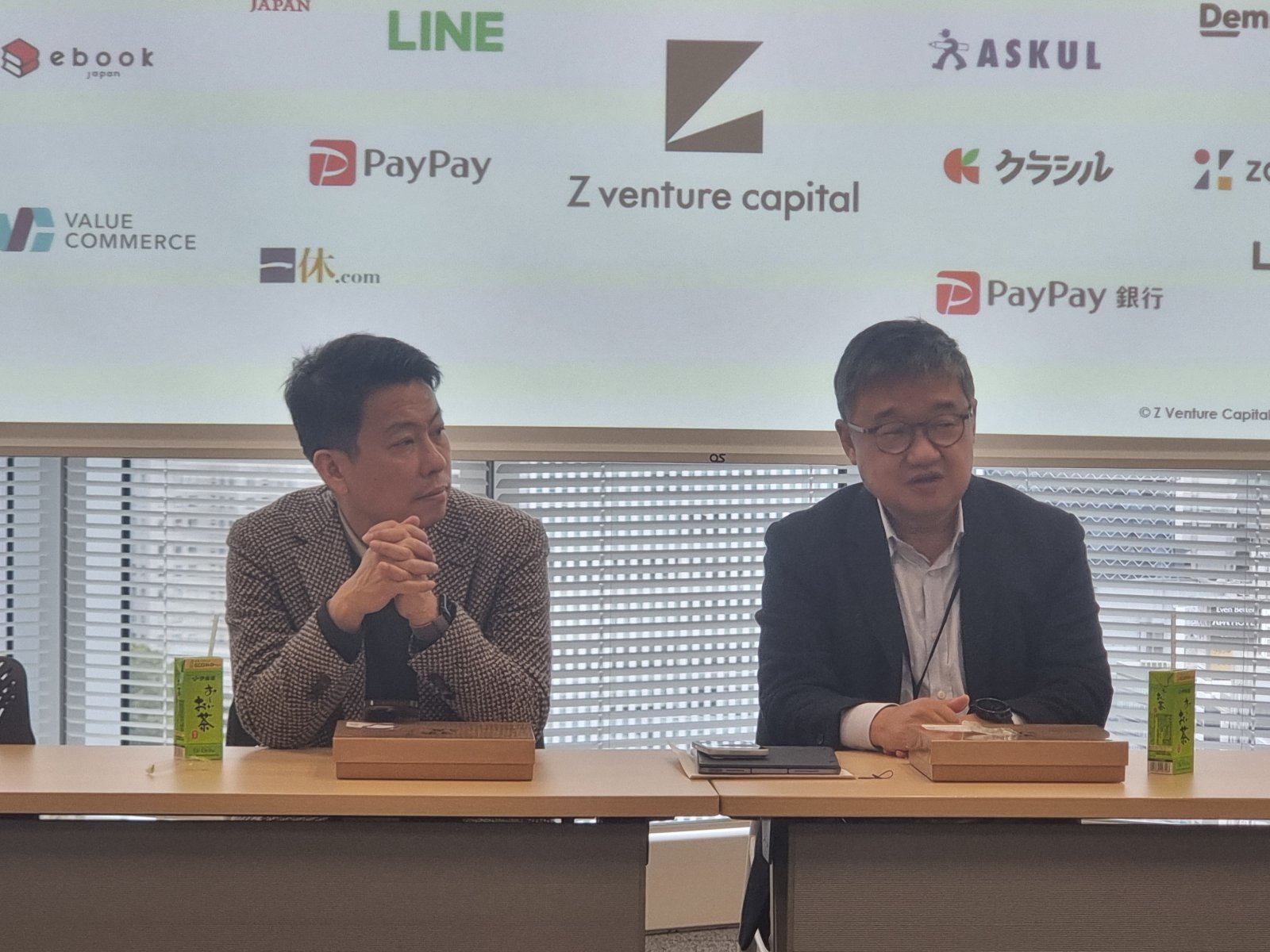
On the afternoon of the 20th, Jet Venture Capital (ZVC) CEO Hwang In-jun (right) speaks to reporters about AI startups in Korea and Japan.
Meanwhile, on the same day, Jet Venture Capital (ZVC) CEO Hwang In-jun, head of a Japanese venture investment firm, also met with reporters to discuss the AI startup ecosystems of Korea and Japan. Hwang advised, “Japan may seem very close to and similar to Korea, but there are many differences in how people work, think, and manage human relationships,” adding, “For Korean startups that are considering entering Japan, it is important to actually live in Japan and gain a deeper understanding of the local market.”
Citing his early-stage investment experience in Riiid Technologies, a leading domestic generative AI startup, he also set out his investment plans for Korea. Among the companies currently invested in by ZVC, those based in Japan account for 62.1%, the largest share, while Korea accounts for 9.3%. Hwang said, “This year, we plan to focus our investments on how AI can further improve productivity,” and added, “We intend to invest more proactively in strong Korean companies as well.”
ⓒ dongA.com. All rights reserved. Reproduction, redistribution, or use for AI training prohibited.
Popular News