Technology permeating parks and markets: digital experiments by districts transforming daily life
[Jongno-gu] Expanding multilingual QR systems in traditional markets
[Yangcheon-gu] Operating autonomous robots for recyclable collection
The landscapes of parks and markets are gradually changing. Daily routines such as carrying recyclables to collection bins or hesitating for a long time in front of a menu board are becoming simpler through technology. This change stems from the fact that reducing minor inconveniences for residents and tourists has become an important task for district-level administrations.
As each district in Seoul accelerates digital experiments encompassing the environment, tourism, and everyday convenience, approaches that increase perceived benefits by applying technology to everyday spaces such as parks and traditional markets are attracting attention. Some observers assess that the direction of administrative services is shifting from “management” to “user experience.”
Cases of districts experimenting with changes in everyday spaces are drawing particular attention as they improve the quality of urban life. Jongno-gu (District Mayor Jeong Moon-heon) has introduced a multilingual QR menu system in traditional markets and food culture streets to reduce inconvenience for foreign tourists and merchants, while Yangcheon-gu (District Mayor Lee Ki-jae) has deployed autonomous driving robots that collect recyclables throughout parks, lowering the threshold for eco-friendly practices.
“Orders possible even without speaking the language”
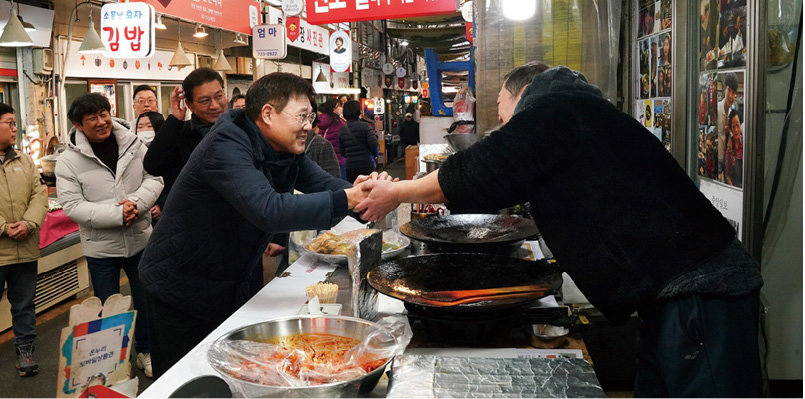
Jongno-gu District Mayor Jeong Moon-heon visits a traditional market and greets merchants. Provided by Jongno-gu
Jongno-gu is expanding digital-based services to strengthen the competitiveness of traditional markets and improve convenience for tourists. Since November last year, the district has been operating a multilingual QR menu system at a total of 72 restaurants in traditional markets and commercial districts, including 38 locations in the Sejong Village Food Culture Street and 10 in Jongno Sinjin Market.
This initiative was introduced to enhance digital utilization capabilities among traditional market and commercial district merchants and to provide a more user-friendly consumption environment for domestic and international tourists visiting Jongno. Visitors can scan a QR code to view food photos, prices, spice levels, main ingredients, and allergy information at a glance. The system offers services in Korean, English, Simplified and Traditional Chinese, and Japanese, effectively lowering language barriers.
After confirming the effectiveness of the system through a pilot project conducted last year with 88 food stalls at Gwangjang Traditional Market, the district this year accepted applications from six traditional markets and commercial districts and expanded the scope of support. This reduces inconveniences in the ordering process caused by a lack of understanding of menus and alleviates the burden of foreign-language communication, thereby promoting service improvements that are tangible for both merchants and customers. In particular, by reflecting the characteristics of local traditional markets that attract numerous foreign tourists, the program is being evaluated as a form of practical support that enhances accessibility and satisfaction in food-centric commercial areas.
Jongno-gu District Mayor Jeong Moon-heon stated, “By introducing the multilingual QR menu system, the district is strengthening the competitiveness of traditional markets and helping tourists more conveniently experience Jongno’s food culture,” adding, “Going forward, the district will continue to expand digital support to revitalize traditional markets and commercial districts in response to changes in the consumption and distribution environment.”
Recyclable collection robot introduced at Sintree Park as well
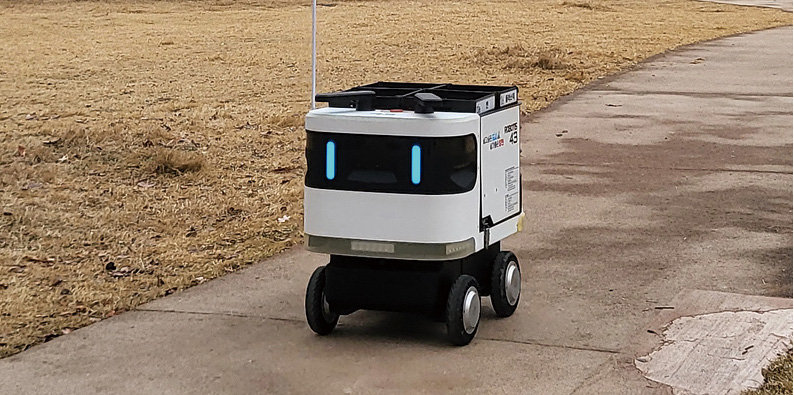
A recyclable collection robot circulating in Sintree Park in Yangcheon-gu. Provided by Yangcheon-gu
Yangcheon-gu recently announced that it will operate autonomous driving robots for recyclable collection at Sintree Park, following Yangcheon Park, Omok Park, and Paris Park.
The autonomous driving robots, which are equipped with separate collection bins for plastics, paper, cans, and other items, move to designated locations to collect recyclables when called via QR codes installed throughout the park, and automatically return to a charging station once collection is complete. In addition, through regular circulation runs in the morning and afternoon, they help park users conveniently dispose of recyclables.
This service was first introduced nationwide by Yangcheon-gu in 2024 through the “Testbed Seoul Demonstration Project.” The “Testbed Seoul Demonstration Project” applies advanced technology innovation products and services in real-world settings to provide demonstration opportunities and support companies in commercialization and market development.
Yangcheon-gu received new technology support from Robotis AI Co., Ltd., which was selected for the Seoul Metropolitan Government’s demonstration project, and has operated autonomous driving robots over the past year at three locations: Yangcheon Park, Omok Park, and Paris Park. As a result, the service has been used approximately 6,000 times, improving both park management efficiency and user convenience for residents.
Based on these verified operational results, the district plans to expand the operation of recyclable collection robots to Sintree Park and extend the operation period, initially scheduled to end in 2025, through 2026. During this period, the district will review various development directions to improve functionality and operational efficiency and will work to establish a stable foundation for service provision.
Yangcheon-gu District Mayor Lee Ki-jae said, “Through the expanded introduction of this service, the district hopes that more residents will experience advanced technologies in their daily lives and that park usage convenience will improve,” adding, “The district will continue to incorporate residents’ feedback, enhance the quality of robot-based daily-life services, and gradually expand the areas where they are operated.”
ⓒ dongA.com. All rights reserved. Reproduction, redistribution, or use for AI training prohibited.
Popular News