Partnering with Nubilab to roll out an ‘AI Meal Management System’ Data-driven food waste reduction to be expanded nationwide across sites Encouraging participation by linking with the ‘Carbon Neutral Points’ program Presenting a new model for sustainability in the food service industry
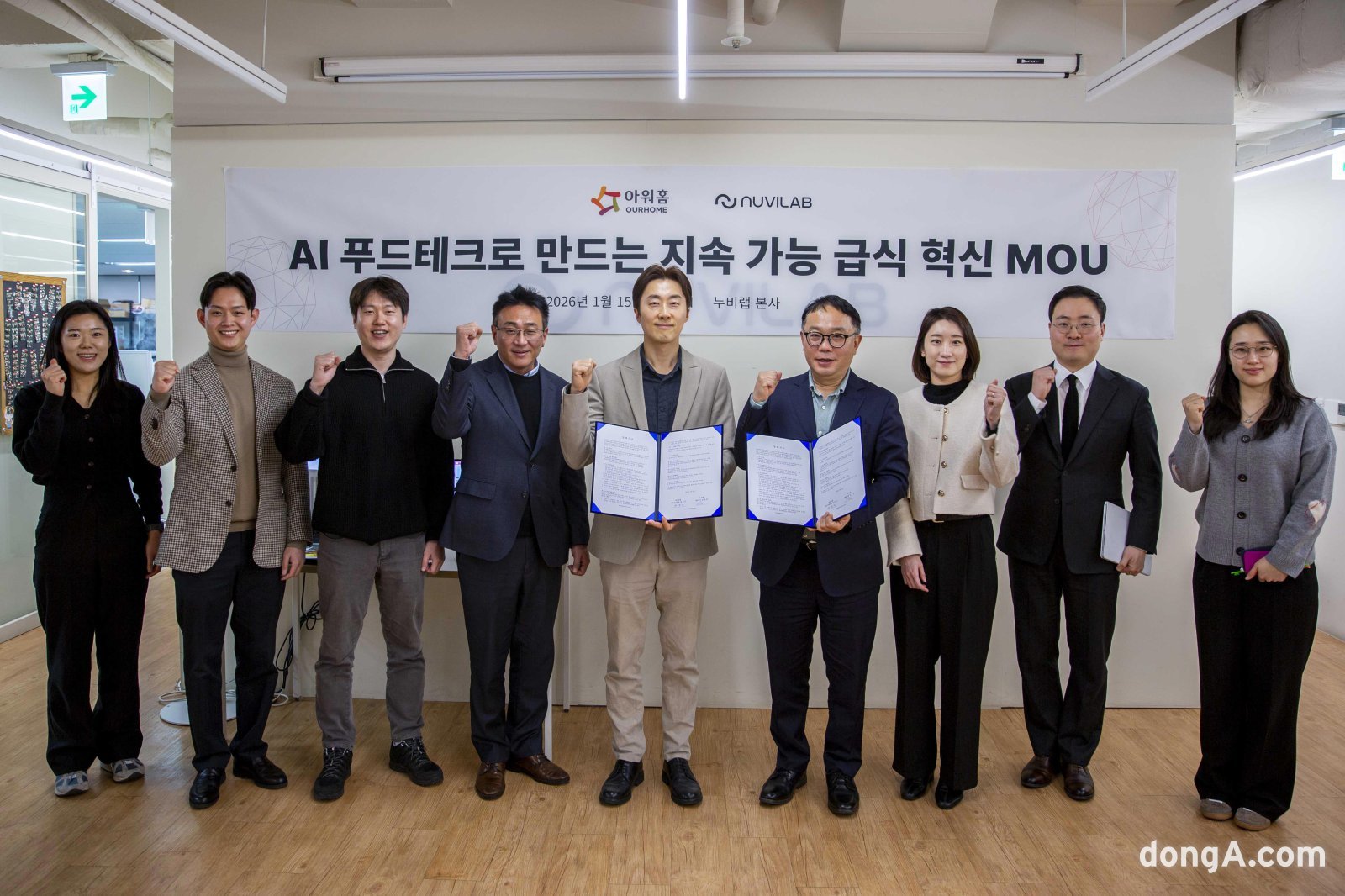
Ourhome announced on the 16th that it will establish a sustainable operation model that uses artificial intelligence (AI) technology to reduce food waste in institutional catering sites. At a signing ceremony held on the 15th at the headquarters of food tech company Nubelab, Ourhome signed a business agreement with Nubelab for the “development of an AI-based sustainable meal service operation model.”
Nubelab is a startup that uses AI cameras and data analysis technology to automatically measure users’ food intake and leftover amounts, and accumulates data to propose customized standards for meal service operations.
Through this agreement, Ourhome plans to gradually introduce a system that will quantitatively manage the amount of food waste generated at institutional catering sites nationwide and verify reduction effects in numerical terms. Once validation is completed through pilot operations, it will sequentially expand the number of operating sites.
This collaboration is also linked to the “Carbon Neutrality Point” scheme operated by the Korea Environment Corporation under the Ministry of Climate and Environment. Carbon Neutrality Points are provided as monetary benefits to individuals or institutions that participate in greenhouse gas reduction activities, and a “Zero Food Waste” category was newly added in July last year. Upon certification as Zero Food Waste, participants can receive up to approximately KRW 70,000 in points per year. Ourhome plans to provide these points through Nubelab’s mobile app “Coconut.”
A Nubelab official said, “The AI meal service management system will be fully validated at Ourhome meal service sites operating nationwide. We will use on-site data to establish sustainable meal service standards.”
An Ourhome official said, “Through this collaboration, the initiative will go beyond reducing food waste to create tangible value that users can directly perceive. We will build a virtuous cycle in which environmental improvement, cost savings, and user satisfaction are achieved together, thereby enhancing the ESG (environmental, social, and governance) competitiveness of the meal service industry.”
Kim Sang-jun
AI-translated with ChatGPT. Provided as is; original Korean text prevails.
ⓒ dongA.com. All rights reserved. Reproduction, redistribution, or use for AI training prohibited.