Survey targets four key spaces: factories, homes, and more
Half want “risk detection before accidents occur”
70% of parcel thefts occur in multi-unit housing
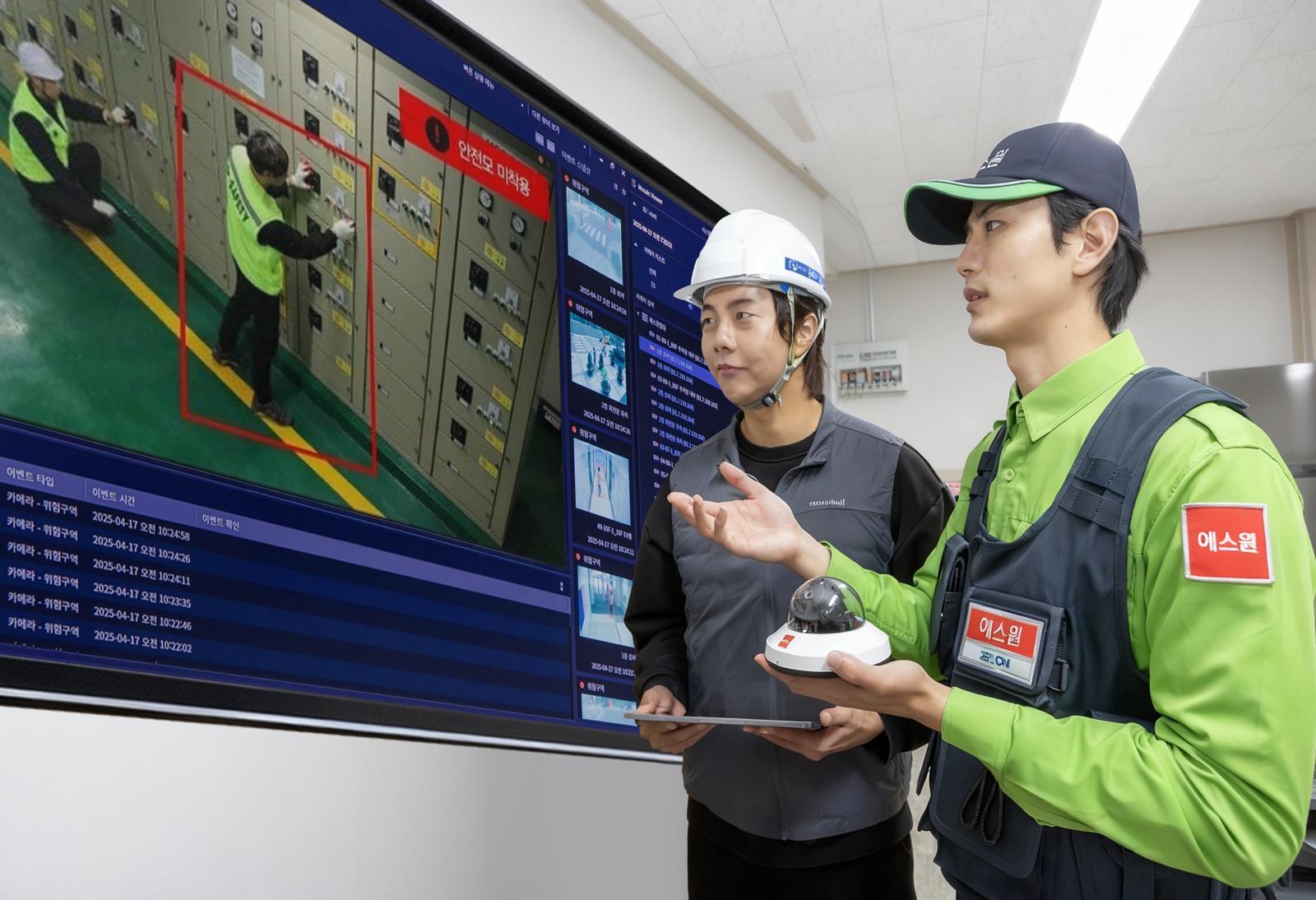
An S-1 employee explains the company’s “Smart Video Management System (SVMS) Safety Monitoring” service to a customer. Provided by S-1
As artificial intelligence (AI) technology is being fully introduced into the security sector, industry trends are shifting from the traditional post-incident tracking and response model to one focused on pre-incident detection and prediction.
Security company S-1 announced on the 14th that it has selected “AI-driven transformation of the security paradigm: from detection to prediction” as this year’s key security trend. The finding is based on the results of a survey of 27,207 of its customers and an analysis of crime and accident statistics.
S-1 stated that the limitations of the existing security approach, which confirms and responds only after an incident occurs, are appearing commonly across all areas. Accordingly, it assessed that demand is rapidly increasing for AI-based pre-incident detection and prediction security systems.
The survey was conducted across four major types of spaces: factories and warehouses, unmanned stores, government offices and schools, and residential properties. In industrial sites, the biggest risk factor cited was “security gaps during unmanned hours” (41%), followed by “reliance on manpower” (28%), “post-incident awareness” (27%), and “fragmented systems” (4%).
As security functions requiring urgent improvement, “pre-incident risk detection” (49%) and “real-time monitoring” (36%) were most frequently mentioned. In particular, 83% of respondents agreed on the need to adopt AI-based real-time risk detection systems, a 25 percentage point increase from the same survey last year (58%).
In unmanned stores, the main management challenges were identified as “post-incident awareness” (46%), “constant monitoring burden on store owners” (38%), and “difficulty in real-time response” (15%). Reflecting this, there was strong demand for rapid-response solutions such as AI-based automatic detection of abnormal behavior (46%) and dispatch response by professional personnel (24%).
In public facilities such as government offices and schools, facility issues or accidents were most often identified “during inspections” (45%) or “after an incident” (23%), indicating a high level of dependence on personnel. For future improvement, respondents pointed to “real-time monitoring of facility conditions” (45%) and “pre-incident detection of abnormal signs” (26%) as necessary management systems.
Concerns over residential security are also increasing amid the spread of non-face-to-face consumption. Of approximately 400 parcel theft cases that occurred in the first half of last year (January to June), 70% took place in multi-unit housing complexes.
ⓒ dongA.com. All rights reserved. Reproduction, redistribution, or use for AI training prohibited.
Popular News