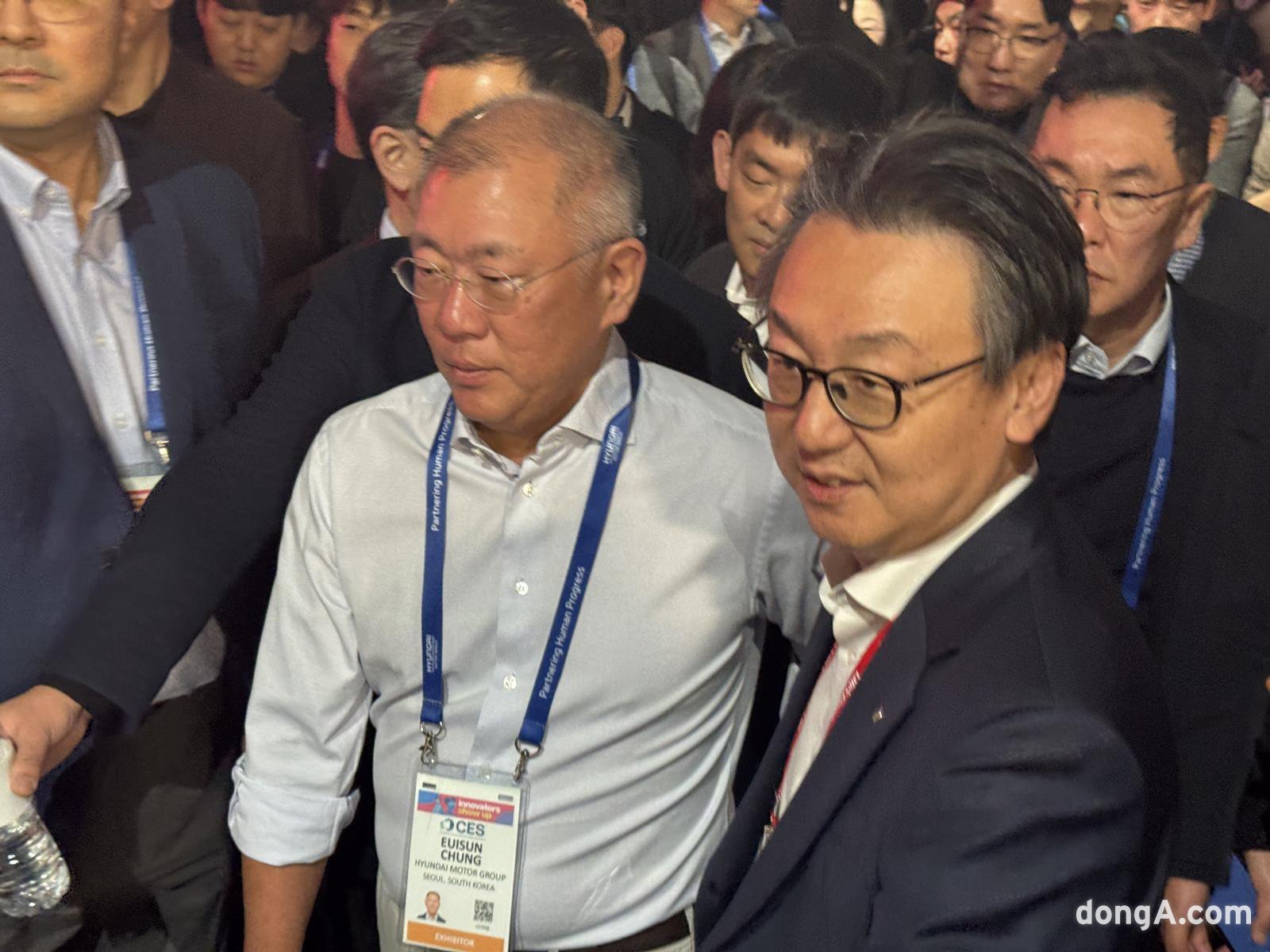
Chairman Chung Euisun visits the LG Electronics booth at Hall C of the Las Vegas Convention Center in Nevada, U.S., on the 6th (local time) and meets with company officials. Reporter Jeong Jin-su?
Hyundai Motor Group Chairman Chung Euisun carried out extensive global management activities over 10 days from the beginning of the new year, traveling across three countries: China, the United States, and India.
Starting with his attendance at the Korea-China Business Forum early in the year, Chairman Chung visited CES in Las Vegas, U.S., where he met with industry leaders including NVIDIA CEO Jensen Huang to explore innovation strategies in future business areas.
He then visited India, the world’s most populous and a vast market, touring Hyundai’s Chennai plant, Kia’s Anantapur plant and Hyundai’s Pune plant, among other business sites across India, to detail the group’s growth strategy.
Chairman Chung’s intensive new year schedule is seen as an effort to directly assess Hyundai Motor Group’s present and future business areas, including mobility, hydrogen, AI and robotics, in three major economic blocs with strong global influence, and to reinforce the group’s status as a customer-centric, sustainable company.
Meetings with CATL, Sinopec and Yueda Group
Discussions on hydrogen and battery industriesChairman Chung first stayed in Beijing, China, from the 4th to 5th, where he explored possibilities for strategic cooperation with local companies and directly examined the rapidly changing local market. It was his first visit to China in eight months since he attended the Shanghai Motor Show in May last year.
Attending the Korea-China Business Forum held at Diaoyutai State Guesthouse for the first time in nine years, on the occasion of the president’s state visit to China, Chairman Chung discussed comprehensive cooperation plans in a wide range of areas, including mobility, hydrogen, batteries and tech sectors.
Chairman Chung first held in-depth talks with Zeng Yuqun, chairman of CATL, the world’s largest battery maker, regarding the battery sector, a core component of electric vehicles. Chairman Chung also met Chairman Zeng at the APEC CEO summit in Gyeongju in October last year.
Chairman Chung also exchanged views on the hydrogen business with Hou Qijun, chairman of Chinese energy company Sinopec.
Hyundai Motor Group maintains an overwhelming No. 1 global market share in hydrogen fuel cell vehicles. At “HTWO Guangzhou,” its hydrogen business base in China, the group is producing hydrogen fuel cell systems. Sinopec, for its part, is fostering the hydrogen industry as a full-fledged strategic sector, recently launching operations at a green hydrogen plant with an annual capacity of 20,000 tons.
In addition, Chairman Chung met with Zhang Naiwen, chairman of Yueda Group, Kia’s joint venture partner in China, and reached consensus on strengthening a continuous and progressive cooperative relationship.
To increase sales in the Chinese market, Hyundai launched its first dedicated electric vehicle model “Elexio” in China last October and plans to expand its local EV lineup to six models by 2030. Kia, starting with the EV6 in 2023, is building its EV lineup in China by launching at least one EV per year in the market through 2027.
Grasping CES AI and robotics trends
Meeting with Jensen Huang and big tech executivesFollowing his visit to China, Chairman Chung went directly to Las Vegas, U.S., where he attended the world’s largest IT and consumer electronics show, “CES 2026,” from the 6th to 7th.
There, Chairman Chung held meetings with key executives of major global big tech companies, including NVIDIA CEO Jensen Huang and Qualcomm COO Akash Palkhiwala.
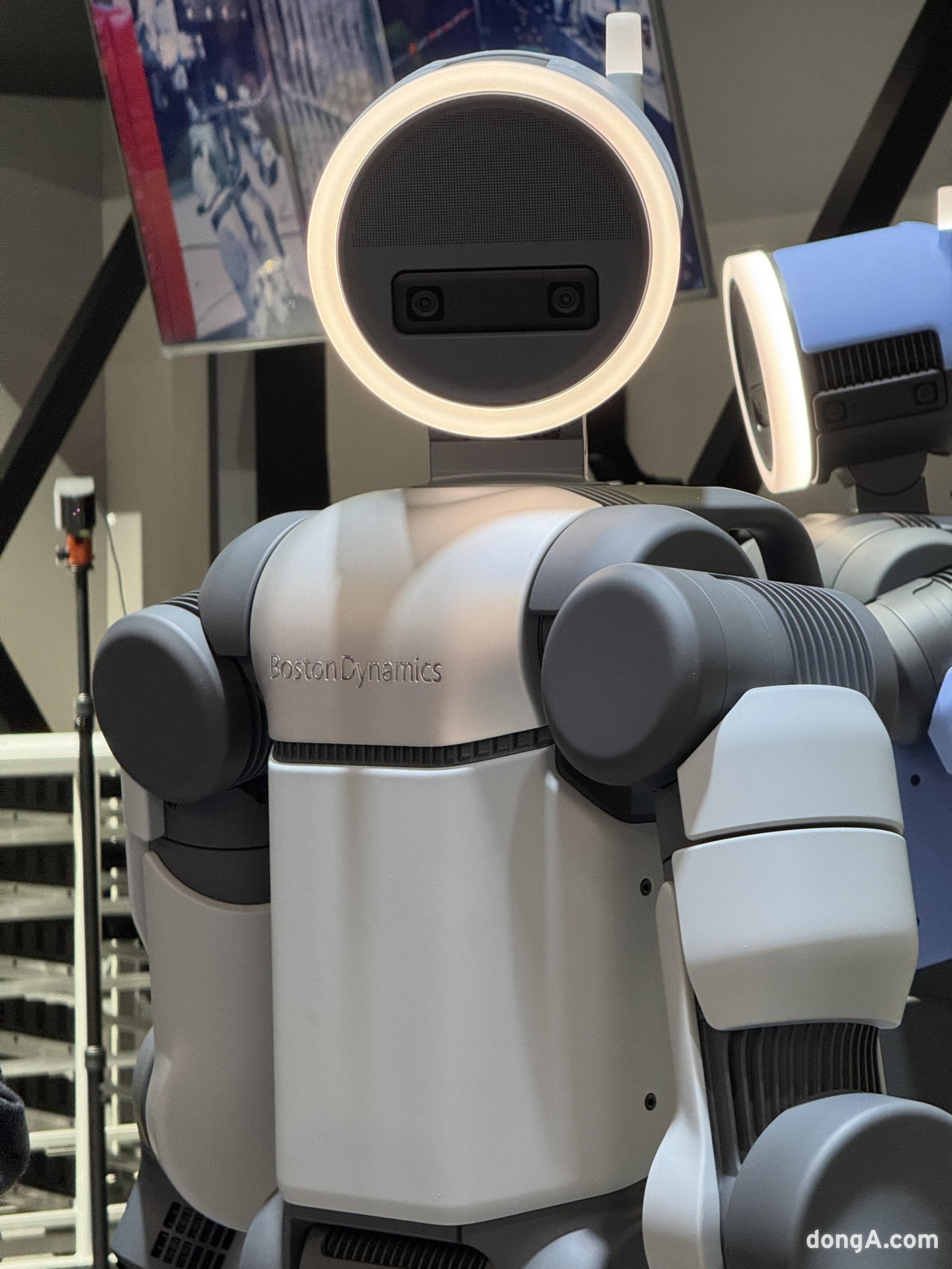
Atlas, the humanoid robot developed by Hyundai Motor Group subsidiary Boston Dynamics, was unveiled at CES and drew a strong response, while Hyundai Motor Group’s mobility robot platform MobED won the Best of Innovation Award in the Robotics category at CES 2026, highlighting the group’s AI and robotics technological capabilities.
The group also showcased its robotics ecosystem spanning manufacturing, logistics and mobility, including the quadruped robot Spot and electric vehicle parking and charging robots.
Boston Dynamics additionally announced concrete plans to grow into a leading human-centric physical AI company, including signing a strategic partnership with Google’s AI unit DeepMind to accelerate development of future humanoid technologies. Chairman Chung’s reunion with CEO Jensen Huang after three months drew significant attention.
Hyundai Motor Group and NVIDIA are pursuing a wide range of collaborations, including a contract for the supply of 50,000 Blackwell GPUs and, based on the signing last year of a “business agreement to enhance domestic physical AI capabilities,” the establishment of an NVIDIA AI technology center in Korea.
Through these efforts, the group plans to build a domestic physical AI ecosystem, including AI data centers, and strengthen its competitiveness in future technologies such as in-vehicle AI, autonomous driving, production efficiency and robotics.
The “Global Leaders Forum,” where Hyundai Motor Group’s key executives convene to discuss mid- to long-term strategies and vision, was also held locally in Las Vegas during CES, which is interpreted as an effort to foster consensus on future innovation strategies.
Hyundai Motor Group directly inspects plants in India
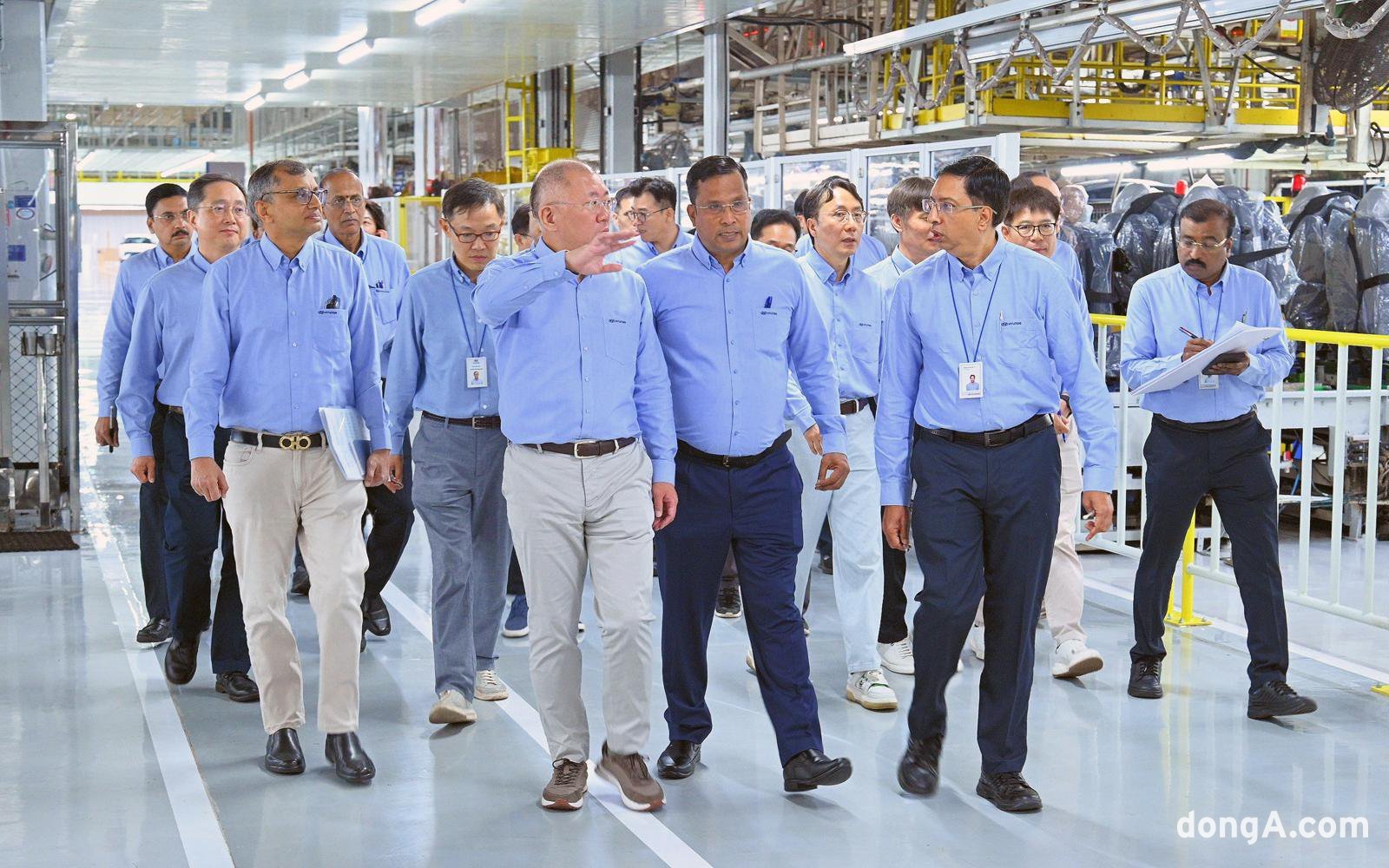
From the 12th to 13th, Chairman Chung visited Hyundai’s Chennai plant in southeastern India, Kia’s Anantapur plant in central India and Hyundai’s Pune plant in west-central India, in sequence, to review the current status of local production and sales, as well as mid- to long-term development strategies.
India, with a population of 1.4 billion, the largest in the world, is currently regarded as the most attractive market globally. Backed by its vast population, India not only has a powerful domestic market but is also expected to have high growth potential thanks to its young demographic structure, with an average age in the late 20s.
In particular, the Indian government’s strongly promoted “Make in India” initiative and its production-linked incentive (PLI) scheme to foster manufacturing are evaluated as offering an optimal business environment for global companies.
Having entered India in 1996, when the country began its rise from a simple “consumption market” to a “global manufacturing hub,” Hyundai Motor Group has firmly established itself as a leading mobility company in India. Marking its 30th anniversary this year, the group aims for further growth through strategies tailored to the Indian market. Hyundai Motor Group currently holds about a 20% market share, ranking second in India.
Starting with the Santro, a strategic model for India produced at Hyundai’s Chennai plant 30 years ago, Hyundai Motor Group sparked a compact car boom and diversified its segment portfolio into SUVs with the completion of Kia’s Anantapur plant in 2019.
The group also anticipated the growth of the Indian automotive market and acquired GM’s Pune plant, where it began producing the compact SUV Venue in the fourth quarter of last year. It plans to hold a completion ceremony in the first half of this year and begin full-scale production. Phase 1 will start with an annual capacity of 170,000 units, which will be expanded to a total of 250,000 units by 2028.
With the completion of the Pune plant, Hyundai Motor Group has secured total production capacity of 1.5 million units in India, including 824,000 units at the Chennai plant and 431,000 units at the Anantapur plant.
In addition, after listing Hyundai Motor India on the Indian stock market in 2024 in the largest-ever new listing, Hyundai Motor Group has further strengthened the transparency of its Indian subsidiary and has been actively investing in new products, advanced future technologies and R&D capabilities. At the same time, it plans to foster India as a strategic export hub.
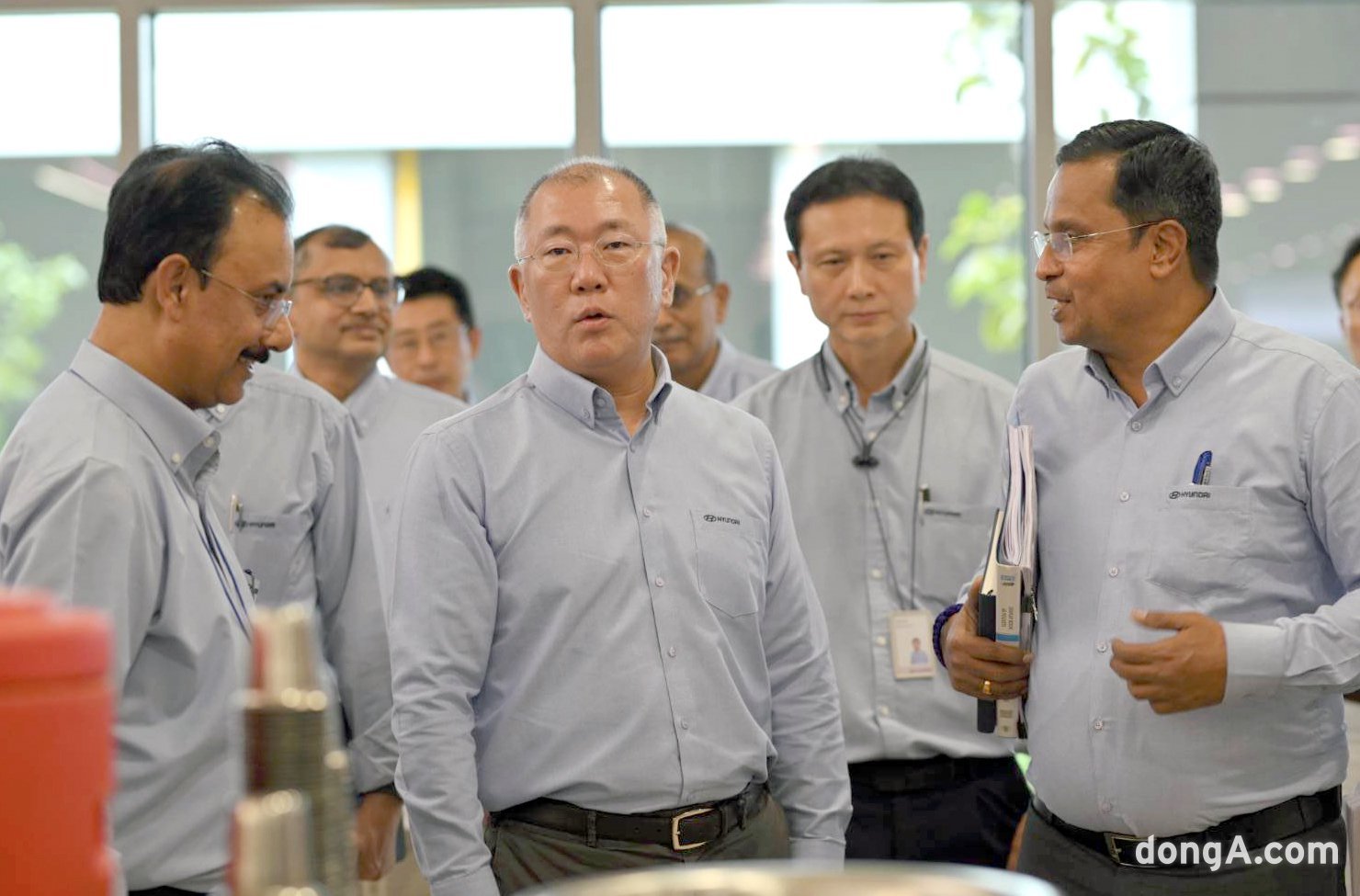
During his visit to Hyundai’s Chennai plant on the 12th, Chairman Chung received a business briefing from Hyundai and toured the Creta production line and the Hyundai Mobis BSA plant.
Chairman Chung stated, “Hyundai has been able to grow thanks to the love of the Indian people over the past 30 years,” and emphasized, “We must pursue a home-brand strategy with a 30-year perspective so that we can be reborn as India’s national company.”
To this end, he said the group should maximize differentiated strengths, such as vehicle quality and customer-oriented service, which are Hyundai’s fundamental competitive advantages, and build an organizational culture that is unafraid of failure and encourages renewed attempts, thereby sustaining challenge and innovation.
On the same day, Chairman Chung reviewed Kia’s production and sales strategy at the Anantapur plant.
Chairman Chung said, “Now in its eighth year in India, Kia faces great growth potential and opportunity, so it must set ambitious targets and strive to become the top brand in India in terms of brand image, product appeal and quality in the eyes of Indian customers,” adding, “Kia must leverage a DNA that is unafraid of failure, recovers quickly even if it fails, and moves nimbly once goals are set, in order to achieve sound growth and build a strong brand.”
On the 13th at Hyundai’s Pune plant, Chairman Chung closely examined the production quality of the new Venue and highlighted the significance and role of the Pune plant, reborn as a strategic production base for Hyundai’s strategic models, in the Indian regional economy. Hyundai Motor Group is contributing to local job creation and economic revitalization through activation of the Pune plant.
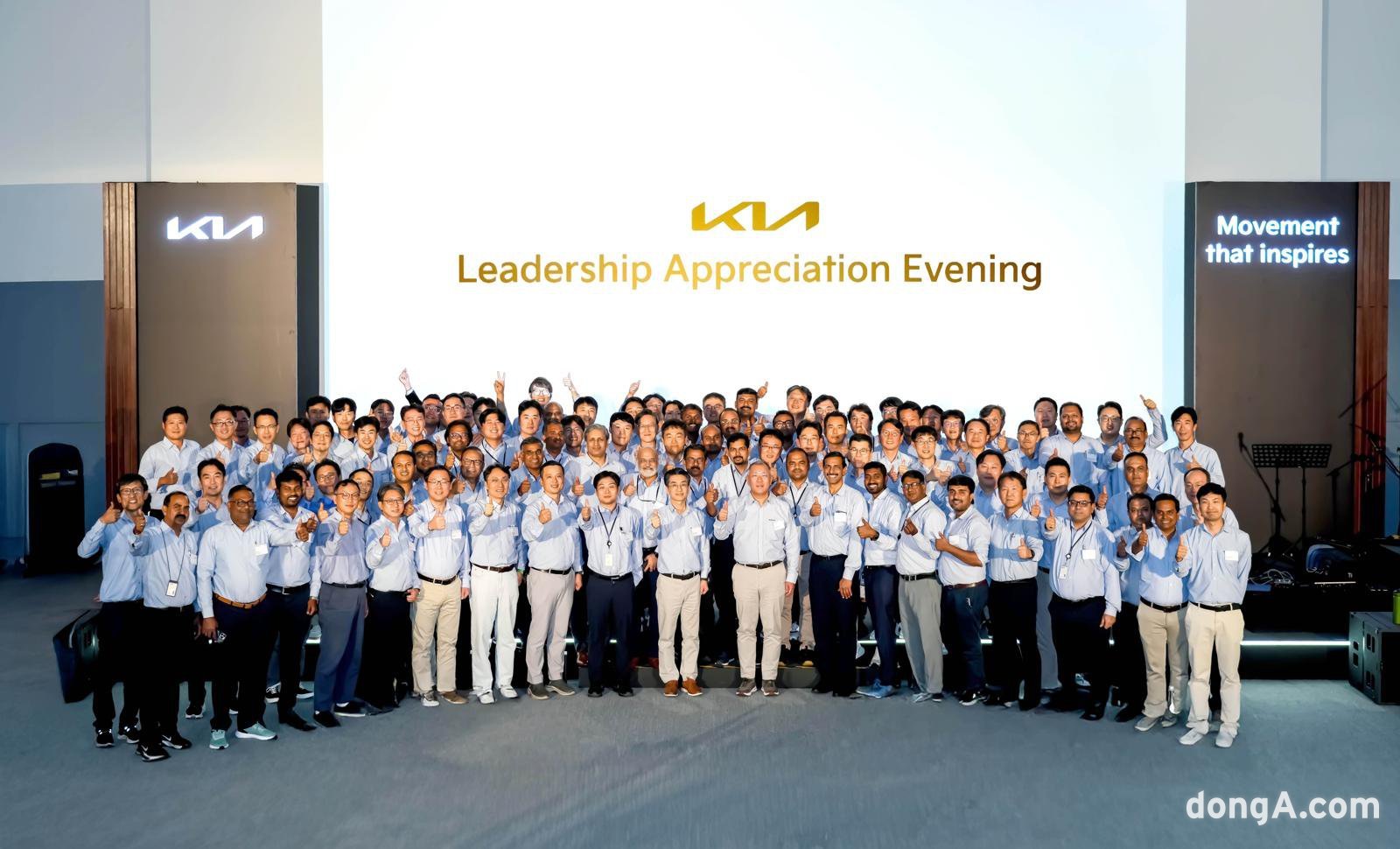
Chairman Chung also made time to dine with and encourage Hyundai and Kia employees and their families. Presenting Korean cosmetics as gifts to family members, he expressed his gratitude, saying, “Hyundai Motor Group’s success in India has been made possible by the dedication of our families.”
In the Indian mobility market, Hyundai Motor Group’s strategy is to solidify its status as a key corporate player through: ▲establishing a 1.5 million-unit production system ▲implementing a flexible product lineup strategy for the market ▲building an electrification ecosystem.
With the full-scale operation of the Pune plant, the group will expand production capacity and actively respond to growth in the SUV market by ramping up Venue production and introducing new models such as the Seltos and Sorento. In addition, to prepare for the future mass adoption of electric vehicles and preempt the market, the group will secure local production capabilities for key components such as battery cells, battery packs and PE systems, and promote localization of the EV supply chain.
As a global enterprise, Hyundai Motor Group is fulfilling its responsibilities and roles while growing into a company loved by the Indian public. Rather than pursuing profit alone, the group has been devoted to social contribution activities for customers, employees, partners, the environment and local communities in India.
Aligned with its global vision of “Progress for Humanity,” which aims to raise awareness of India’s approximately 26.8 million people with disabilities and create an inclusive and progressive world through the power of mobility, Hyundai has been running the “Hyundai Samarth” campaign since 2023.
Through the Samarth campaign, Hyundai directly supports Indian para-athletes and produces and distributes videos aimed at improving perceptions of people with disabilities. It has also continuously carried out social responsibility activities since entering India, including the establishment and operation in 2006 of HMIF, a social responsibility foundation for the India region.
In addition, to improve access to healthcare in rural India, Hyundai is operating mobile clinics in seven of India’s 28 states where medical access is relatively weak.
Kia is also conducting various social contribution activities, including mobility support for disadvantaged groups and initiatives in community healthcare, hygiene, education and vocational training.
In cooperation with local NGOs and medical personnel, Kia operates “mobile clinics” that visit medically underserved areas to provide check-ups and treatment. It is also carrying out various industry-academia collaborations with the Indian Institute of Technology Tirupati to foster local talent and strengthen mobility capabilities.
ⓒ dongA.com. All rights reserved. Reproduction, redistribution, or use for AI training prohibited.
Popular News