Samsung Electronics’ in-house automotive semiconductor Exynos Auto V920. Provided by Samsung Electronics
Samsung Electronics will supply automotive semiconductors for the next-generation electric vehicle models of German automaker BMW. As its portfolio of automotive components such as vehicle semiconductors, in-vehicle electronics (electric and electronic equipment for vehicles), displays, and secondary batteries expands, Samsung Electronics’ status as a core partner for global automakers is expected to be further strengthened.
According to the semiconductor industry on the 30th, Samsung Electronics’ Device Solutions (DS) Division will supply its self-developed in-vehicle infotainment (IVI) processor “Exynos Auto V720” for BMW’s new electric vehicle “New iX3.” The New iX3 is the first mass-produced model to adopt BMW’s next-generation electrification platform “Neue Klasse,” and is scheduled to be launched in the Korean market in the second half of next year (July–December).
Samsung Electronics plans to expand its supply of automotive semiconductors across BMW’s next-generation vehicle lineup going forward. The latest automotive processor “Exynos Auto V920” is expected to be installed in the next-generation version of BMW’s flagship 7 Series.
The automotive semiconductors to be supplied this time are designed by Samsung Electronics’ System LSI Business and manufactured by its Foundry Business using a 5 nm (nanometer; 1 nm is one-billionth of a meter) process. As an integrated control processor that simultaneously handles multiple functions such as display output, voice recognition, and navigation, it serves as the “brain” of key electronic devices inside the vehicle.
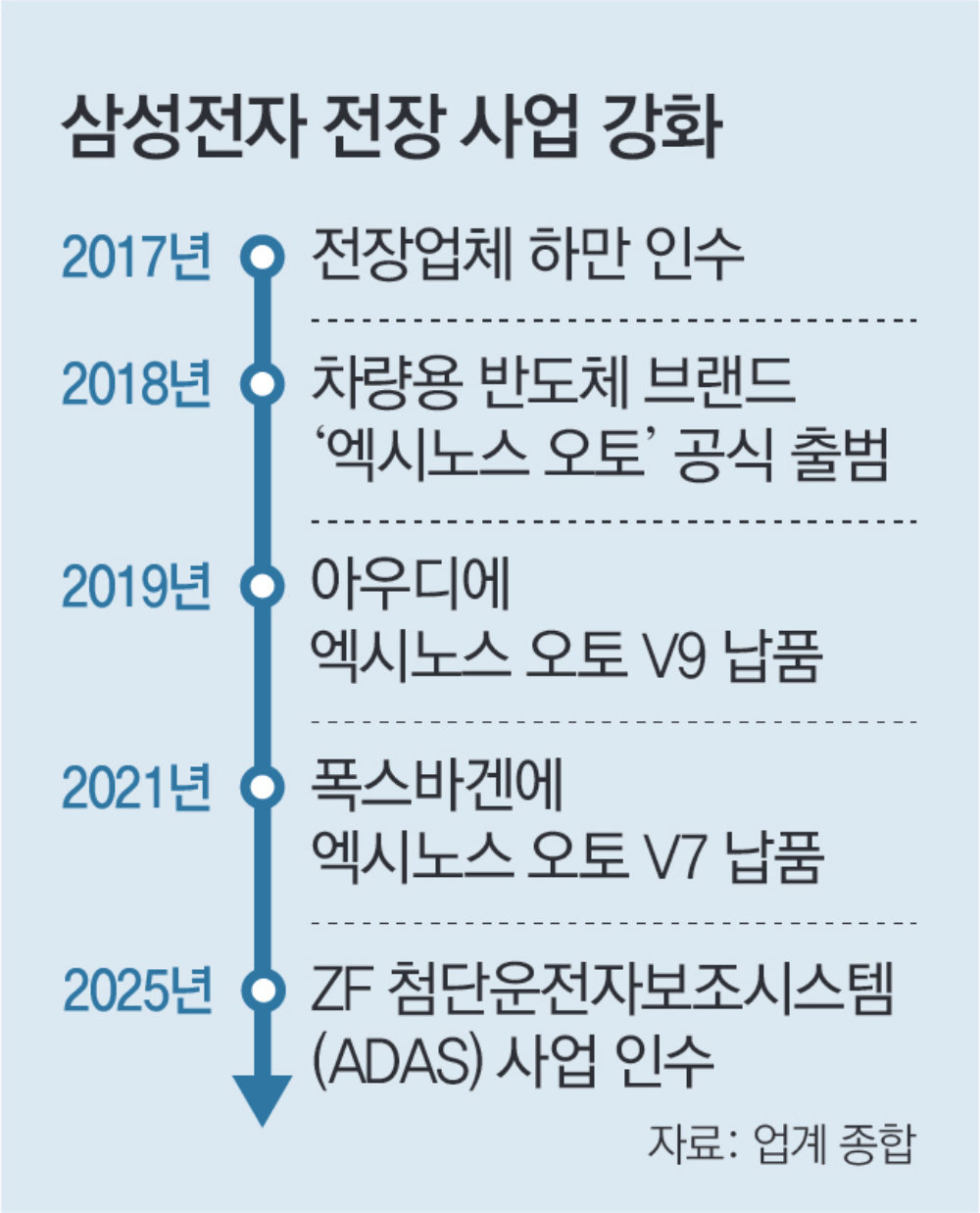
Since launching the automotive semiconductor brand “Exynos Auto” in 2018, Samsung Electronics has been expanding its business mainly with German automakers. After supplying the “Exynos Auto V9” to Audi in 2019, it entered the German automaker lineup by delivering the “Exynos Auto V7” to Volkswagen in 2021.
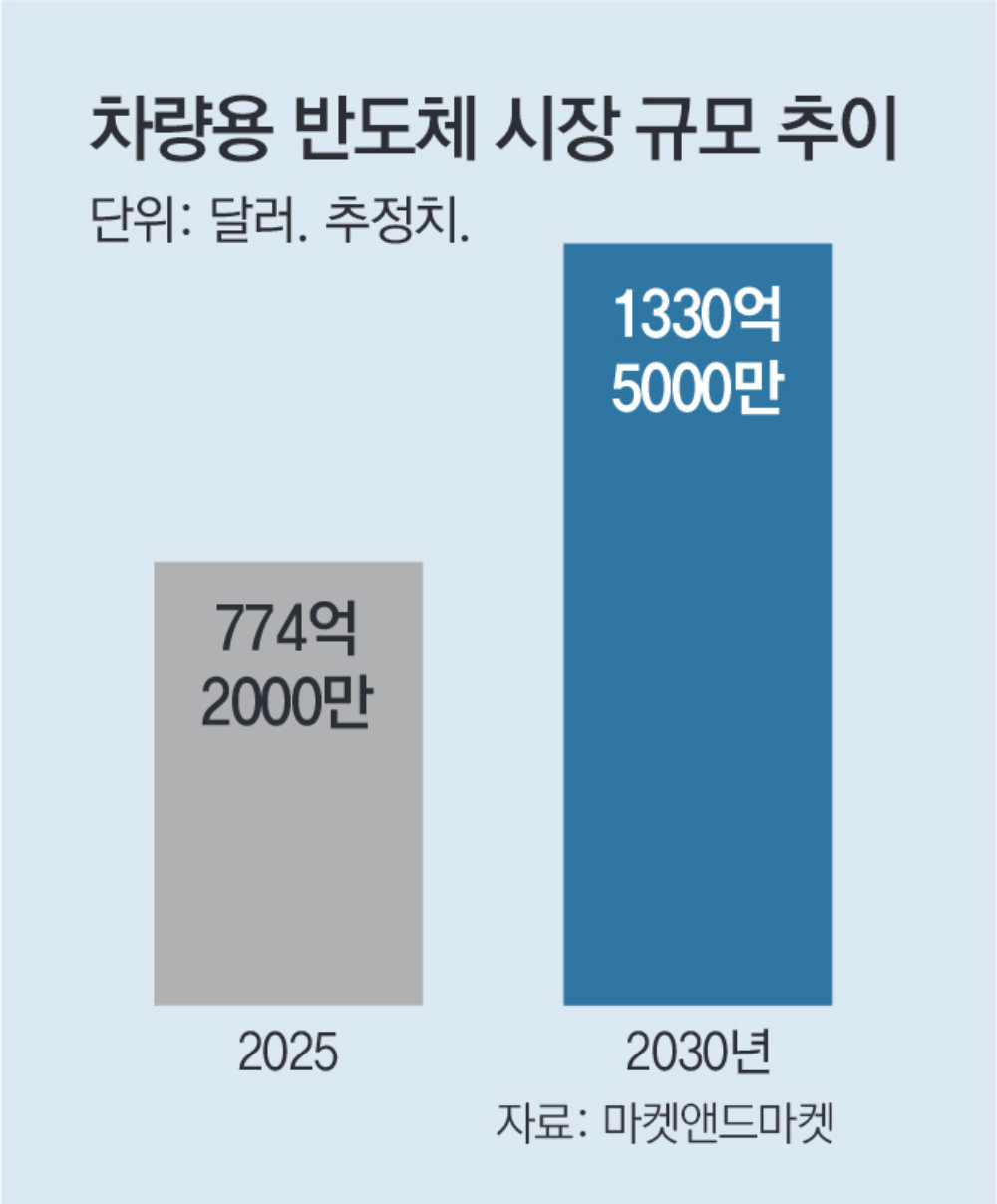
With the automotive semiconductor market set to grow, there is an outlook that Samsung Electronics’ System LSI and Foundry businesses will seek a rebound by securing new revenue streams. As the in-vehicle electronics business has recently expanded, the size of the automotive semiconductor market has also been increasing rapidly. Market research firm MarketsandMarkets forecasts that the global automotive semiconductor market will grow from USD 77.42 billion (about KRW 111,128.7 billion) this year to USD 133.05 billion (about KRW 190,980 billion) in 2030.
To strengthen its in-vehicle electronics business, Samsung Electronics has also been pursuing a series of large-scale mergers and acquisitions (M&A). In 2017, it secured an in-vehicle electronics platform by acquiring Harman, an automotive electronics company, for USD 8 billion (about KRW 9,350 billion at the exchange rate at the time). This month, it purchased the advanced driver assistance systems (ADAS) business of German auto parts maker ZF Friedrichshafen for EUR 1.5 billion (about KRW 2,620 billion).
An industry official said, “Samsung Electronics is the only company that possesses a full range of core in-vehicle electronics components, including an in-vehicle electronics portfolio such as IVI and digital cockpits, as well as automotive semiconductors, ADAS, displays, and secondary batteries,” adding, “There is a possibility that its influence in the in-vehicle electronics business will expand, centering on German automakers.”
ⓒ dongA.com. All rights reserved. Reproduction, redistribution, or use for AI training prohibited.
Popular News