“Food-Tech Startup Training and Acceleration” Program Launches in January Next Year
CEO Joseph Heo: “Our new organization’s mission is to guide founders all the way to launch using the ‘Heem-Nanda Model’ approach”
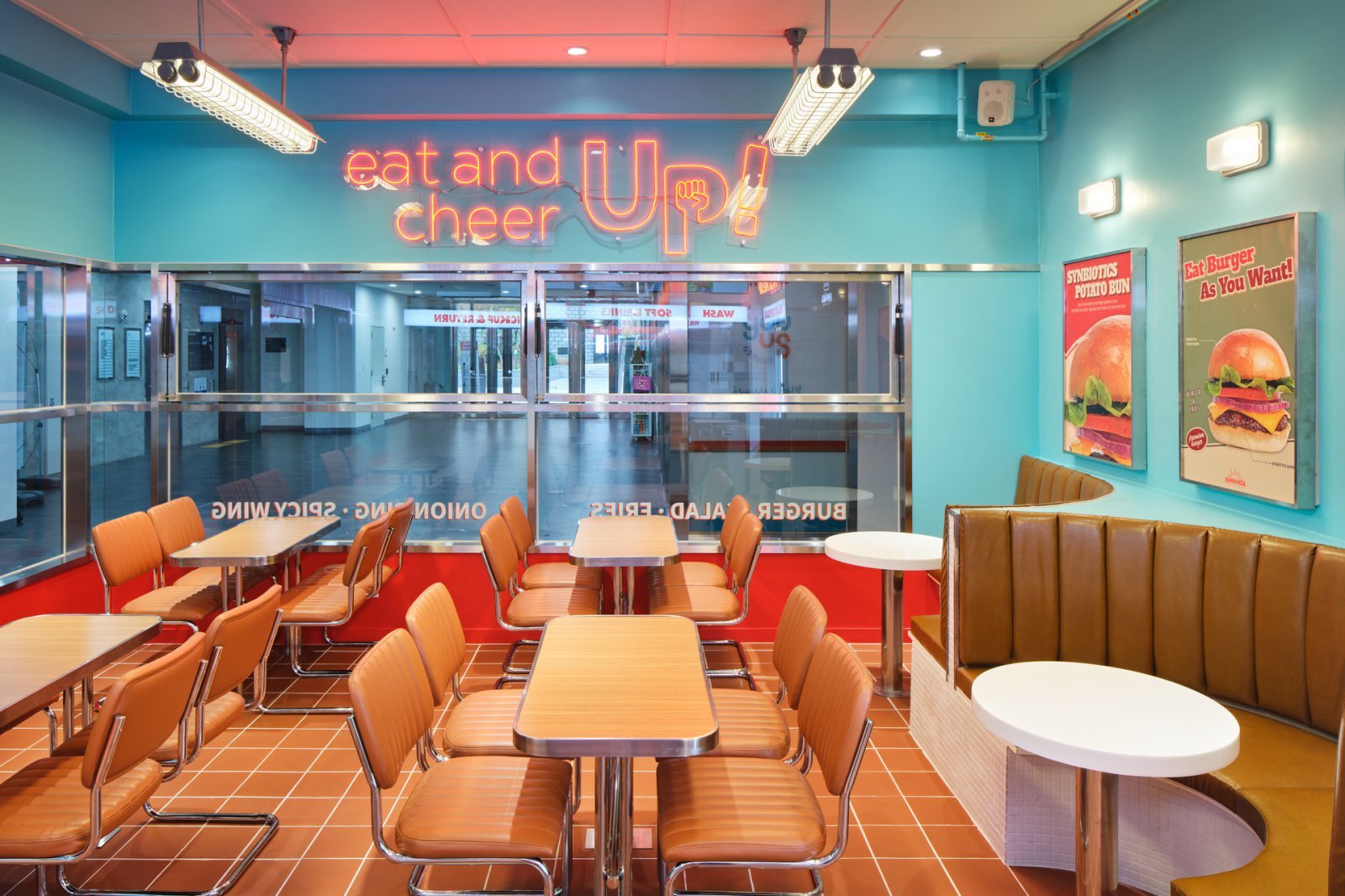
Himnanda Burger founding store interior
Bio food-tech F&B company Himnanda (CEO Joseph Heo) announced that in the new year it will place a temporary pause on external growth and instead mobilize its full organizational capabilities for a “company builder” business that nurtures F&B startup founders and leads them to actual business creation.
Himnanda Burger, founded and led by CEO Heo, achieved within one year of launch 60 franchise locations, KRW 10 billion in sales, KRW 3 billion in investment attraction, a corporate valuation of KRW 30 billion, and the highest repeat-visit rate among handmade burger brands. He stated, “With a sense of crisis that the existing restaurant industry has fallen into a structurally vicious cycle, there was an urgent need to educate a new F&B startup system,” adding, “With the determination to change the F&B startup equation so that founders can reduce trial and error while gaining differentiated competitiveness by combining food-tech and investment attraction, we launched this new business.”
A sense of crisis that the existing formula of the restaurant industry has collapsed
Heo diagnosed the crisis in the restaurant industry not as stemming from external variables such as an economic downturn, but from the industry structure itself. A distribution system centered on delivery commissions, excessive cost structures at franchise headquarters, menus lacking technological sophistication and easy to copy, and management practices driven by intuition rather than data have, he argued, entrenched the restaurant sector as a “low-return, high-risk industry.” With the net profit margin of self-employed businesses falling below an average of 10%, the traditional formula of the restaurant business—“hard work will allow survival”—has, in his view, completely collapsed. “Can founders break away from the structural limitations of neighborhood eateries and franchises and build the restaurant business as a company and a brand, not just a self-employment venture?” This question was the starting point for Himnanda Group to conceive its company builder business.
At the same time, as food-tech integration has become the dominant trend in dining, Himnanda saw it as essential to convey to F&B founders the growing movement in which food engineering technologies are increasingly applied to food and beverages, and high-protein, low-sodium, low-sugar, and slow-aging functional ingredients are combined with nutritional precision. Accordingly, Himnanda Group expects that its startup education program will not only become a new growth engine for the company itself but also inject entrepreneurial vitality into Korea’s F&B sector.
Heo said, “Himnanda’s education has been differentiated and structured with a meticulous training system according to participants’ specific needs, business types, and the stage of the corporate life cycle their business belongs to.” Different programs are provided to reflect the varied situations of participants—for example, prospective founders, those currently running or with experience running restaurants, and those looking to launch a hamburger brand like Himnanda Burger. In addition, rather than theory-centered training, the company has created a system that jointly designs food-tech-based menu development, actual business strategy formulation, and startup execution plans, and connects them to private and government investment attraction. In that process, the curriculum incorporates cutting-edge food-tech technologies by food category from Himnanda’s R&D affiliate HimBio, as well as various advanced F&B recipe development techniques, plus branding, finance, store operation training, IR, and investment linkage.
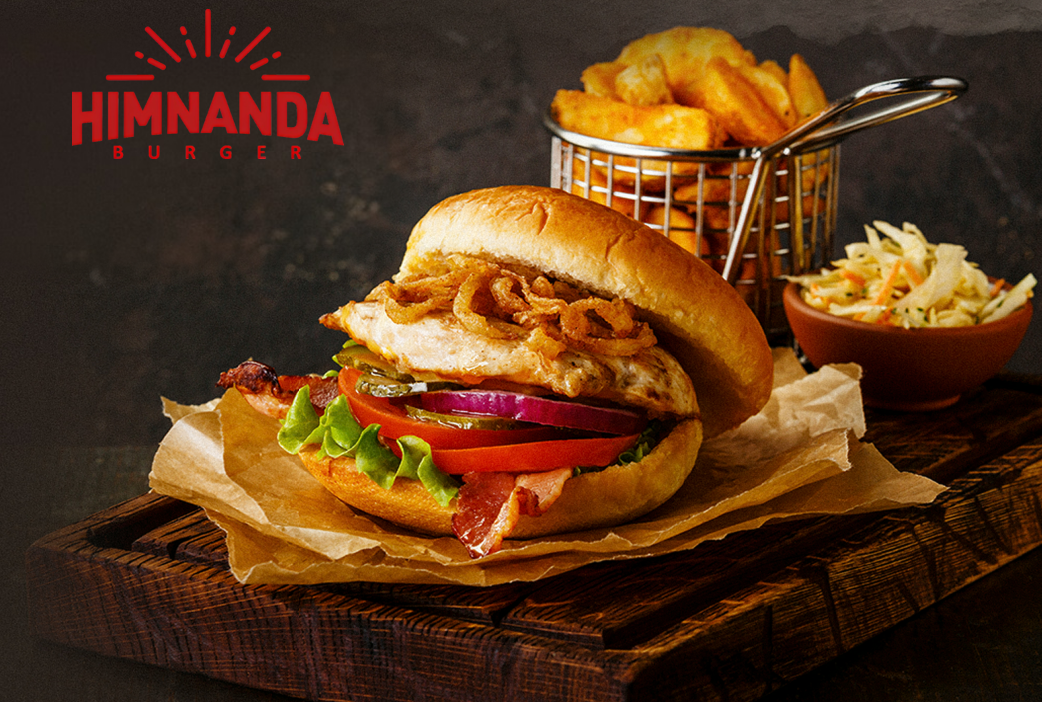
Himnanda Burger products
In step with the government’s entrepreneur-type startup policy
A distinguishing feature is the structure that connects graduates of the startup education camp with VCs, accelerators, and government support programs. A typical example is linking founders to up to KRW 300 million in initial investment through the LIPS (Local Investment Platform Support) program operated by the Ministry of SMEs and Startups and the Korea Small Enterprise and Market Service. This aligns with the government’s policy direction of shifting the restaurant sector from livelihood-type self-employment to entrepreneur-type small businesses. Himnanda plans to cooperate with the central government, local governments, and public institutions to bundle education, R&D demonstration, and investment linkage and establish this as the “Himnanda Model” in the field of “F&B company builders.” In addition, startup support measures are in place through Himnanda’s impact franchise agreement with the Gyeonggido Social Economy Center this year and its social venture certification by the Korea Technology Finance Corporation under the Ministry of SMEs and Startups.
The path Himnanda has taken is a sort of chronicle of “first experiments.” In 2016, the company shook up the detox juice sector by introducing the nation’s first cold-press juicing equipment, and in 2017 it launched nutrition-based superfood salads. In 2018, it developed a personalized food recommendation algorithm and IoT technologies, and in 2019 it implemented an unmanned digital restaurant and ordering app at COEX. All of these were initiatives described as “the first in Korea.” These experiments led in 2020 to the food-tech-based franchise “Himnanda Burger.” By combining lactic acid bacteria-fermented patties and enzyme technology to enhance nutritional content and remove residual bacteria and odors from meat to reduce digestive burden, this hamburger obtained “Senior-Friendly Innovative Product Certification,” thereby establishing a positioning distinct from conventional fast food.
From the path of a ‘first mover’ to an ‘F&B company builder’
In this way, Himnanda is condensing all the know-how accumulated over 10 years of experiencing the A-to-Z of the F&B sector and is embarking on the “F&B startup company builder” business in the “Himnanda Model” format, which combines food-tech and investment attraction and differentiates itself from conventional startup education practices. This in itself constitutes yet another “first in Korea.”
Heo notes that the 10-year journey in F&B has been anything but smooth. “The speed race in product development and store expansion creates difficulties in management and operations,” he said, emphasizing, “Even if it takes time, menus incorporating food-tech that cannot be copied by other companies are essential, and the pursuit of short-term profit when the founder’s brand philosophy and sense of purpose are not established is highly likely to end in failure.” He further stated that Himnanda is opening this new business “with a sincere intention to provide a breakthrough for the next generation that will lead the future F&B market, based on the numerous trials, errors, and lessons Himnanda has undergone.”
Himnanda Group aims to strengthen competitiveness across the restaurant sector through three-dimensional, triangular-linked management that connects HimBio’s food-tech research, Himnanda Burger’s restaurant brand operations, and Himnanda’s education and accelerating businesses. With a new organizational mission to raise the restaurant sector from simple commerce to a domain of technology and education, the company plans to launch the ambitious new Himnanda company builder business starting next month.
ⓒ dongA.com. All rights reserved. Reproduction, redistribution, or use for AI training prohibited.
Popular News