Reporters on the Dong-A Ilbo IT Science Team introduce noteworthy technologies, trends, and companies in the fields of IT, science, space, and bio. “What is this company?” The behind-the-scenes stories of tech companies changing the world with technology. From the ideas that shocked the world to the latest concerns of founders, the series digs into everything readers have been curious about.
The fire at the National Information Resources Service (NIRS) in September this year led to an unprecedented paralysis of the national computing network. Since then, the industry has been flooded with belated criticism pointing to the chronic explosion risk of lithium-ion batteries. This comes at a time when the importance of data centers, which are at the core of the artificial intelligence (AI) industry, has grown more than ever. Kim Booki, CEO of Standard Energy, which has been developing “batteries that cannot catch fire,” said he has received countless inquiries asking, “After the fire, how can we make sure data centers do not catch fire?”
Standard Energy, founded in 2013 by PhDs from KAIST and MIT in the United States, has developed a “vanadium ion battery.” It uses water instead of volatile electrolytes, making ignition physically impossible.
In a recent interview with the Dong-A Ilbo, CEO Kim explained, “I believed that unless the volatile electrolyte in lithium-ion batteries is replaced, fires will inevitably continue to occur,” adding, “By using water as the electrolyte, we made it so that a fire cannot break out at all.”
Standard Energy is the only company that has obtained product certification for vanadium batteries made with vanadium—an element highly specialized for energy storage—and an aqueous electrolyte that has no ignition risk, and is operating them in energy storage systems (ESS). Thanks to the elimination of fire risk, vanadium ion batteries have been installed in ESS units in subway stations and densely populated urban areas where conventional lithium-ion batteries could not be used.
Kim Booki, CEO of Standard Energy. Provided by Standard Energy
In July this year, Daejeon Transportation Corporation installed Standard Energy’s ESS at Guam Station in Daejeon. Subways handle large flows of people, so the damage can be extremely severe in the event of a fire.
“In city centers, subways are among the heaviest power users, but because so many people pass through, ESS cannot be installed if there is even the slightest safety concern. Nevertheless, our products were installed in subway stations after the safety of vanadium ion batteries was recognized. Our ESS units are also installed in the basements of Lotte Construction and Hyundai Engineering & Construction buildings, where research centers and commercial facilities are located. This shows that their safety has been verified.
Client companies commonly report that they ‘no longer have to feel any stress about safety.’ They no longer need to worry about fires breaking out, and the ease of installation and maintenance is another strength. It has been said that worker error was involved in the Daejeon NIRS fire, but if a fire can break out due to worker error, that implies maintenance is that much more difficult.”
High-performance ESS is regarded as essential infrastructure in the AI era.
“The key was the view that if a new presence like artificial intelligence (AI) emerges—one with enormous volatility in power consumption that has never existed before—then high-performance ESS specialized for that will be needed.”
Because they are free from fire risk, the company is seen as having a competitive edge in AI data centers, urban ESS, and ultra-fast charging stations. Have there been collaboration offers from big tech as well?
“We are either collaborating with or seeking collaboration with U.S. big tech companies, large Korean conglomerates, major university hospitals in Korea, and Japanese companies. We are mainly targeting markets that lithium-ion batteries could not enter due to their inherent limitations, such as explosion risks. We are focusing on high-value assets such as data centers and urban ESS installations in areas with high transient or resident populations. In particular, progress has been swift in Japan, which was the first to commercialize lithium-ion batteries. Recently, we began supplying power with our ESS to fast-charging stations for electric taxis in Kyoto, Japan.”
For the three leading AI powers, it is important to develop AI foundation models at a top global level, but Korea must also not miss the opportunity to preempt the AI power infrastructure market, where it has strengths. Many experts say that is the true meaning of “sovereign AI.” It appears there could be synergy with the capabilities of companies such as Hyosung Heavy Industries, Korea Electric Power Corporation (KEPCO), and LS.
“Batteries should not be viewed as merely batteries. In the AI era, batteries are power infrastructure. In the past, there were reportedly cases in Korea where the power went out while running just 10 GPUs. In the United States, big tech companies have already begun work to standardize power infrastructure for AI. Their conclusion is that existing power grids cannot run AI data centers. Korea must also quickly create large-scale demonstration projects in data centers and other facilities to lead the establishment of power standards suited to the AI era. This is an area in which Korea excels, and it must not simply be handed over.”
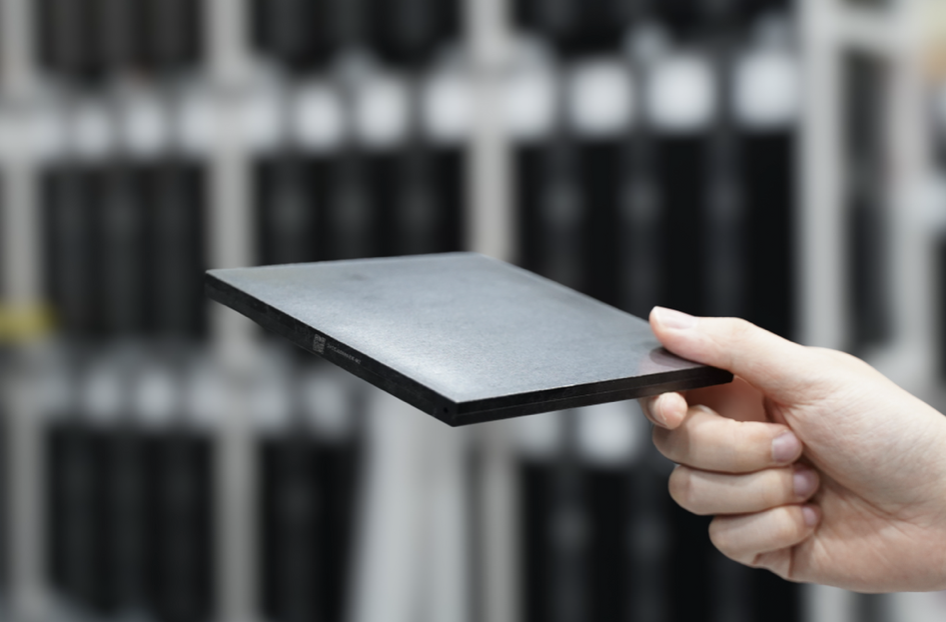
Photo of a vanadium ion battery cell from Standard Energy. Provided by Standard Energy
Is Standard Energy also considering cooperation related to small modular reactors (SMR) for AI data centers?
“There are already discussions about coupling our batteries with SMRs. Right now is a period of massive upheaval in industrial standards. Whether we successfully ride this wave or not will determine the survival of companies and nations. The government must establish a standard model for power infrastructure and even export it. If we can use the massive power grid data accumulated by KEPCO to train systems for ESS operation, we believe Korea can take an overwhelming lead in the global competition to set power infrastructure standards.”
In partnership with AI semiconductor company Rebellions, Standard Energy has begun developing AI to efficiently control power in data centers. The AI is being built to monitor power supply conditions between servers and ESS within AI data centers and automatically manage power loads.
“High-performance ESS like ours need smart brains. They must determine when to charge and discharge the batteries to maximize profitability. Because every building has a different power usage pattern, optimizing conditions and costs for power use is essential.”
Full-scale mass production is set to begin next year.
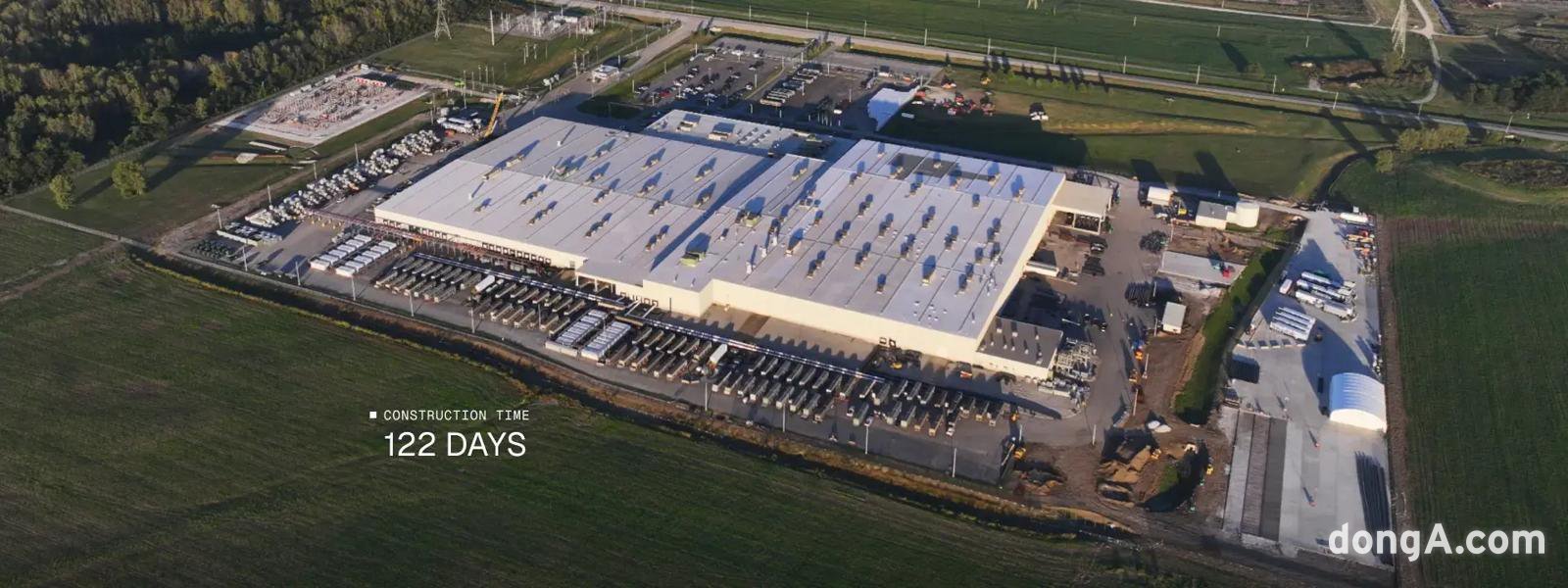
“Our Daejeon production line will go into operation early next year. We plan to mass-produce up to 17 million battery cells per line annually. We expect to sell everything we produce. Market demand already exceeds our production capacity, so we are looking for ways to quickly scale up production in response to client requests.”
Battery racks inside the vanadium ion battery energy storage system (ESS) installed by Standard Energy at Guam Station on Daejeon Urban Railway Line 1. Provided by Standard Energy
ⓒ dongA.com. All rights reserved. Reproduction, redistribution, or use for AI training prohibited.
Popular News