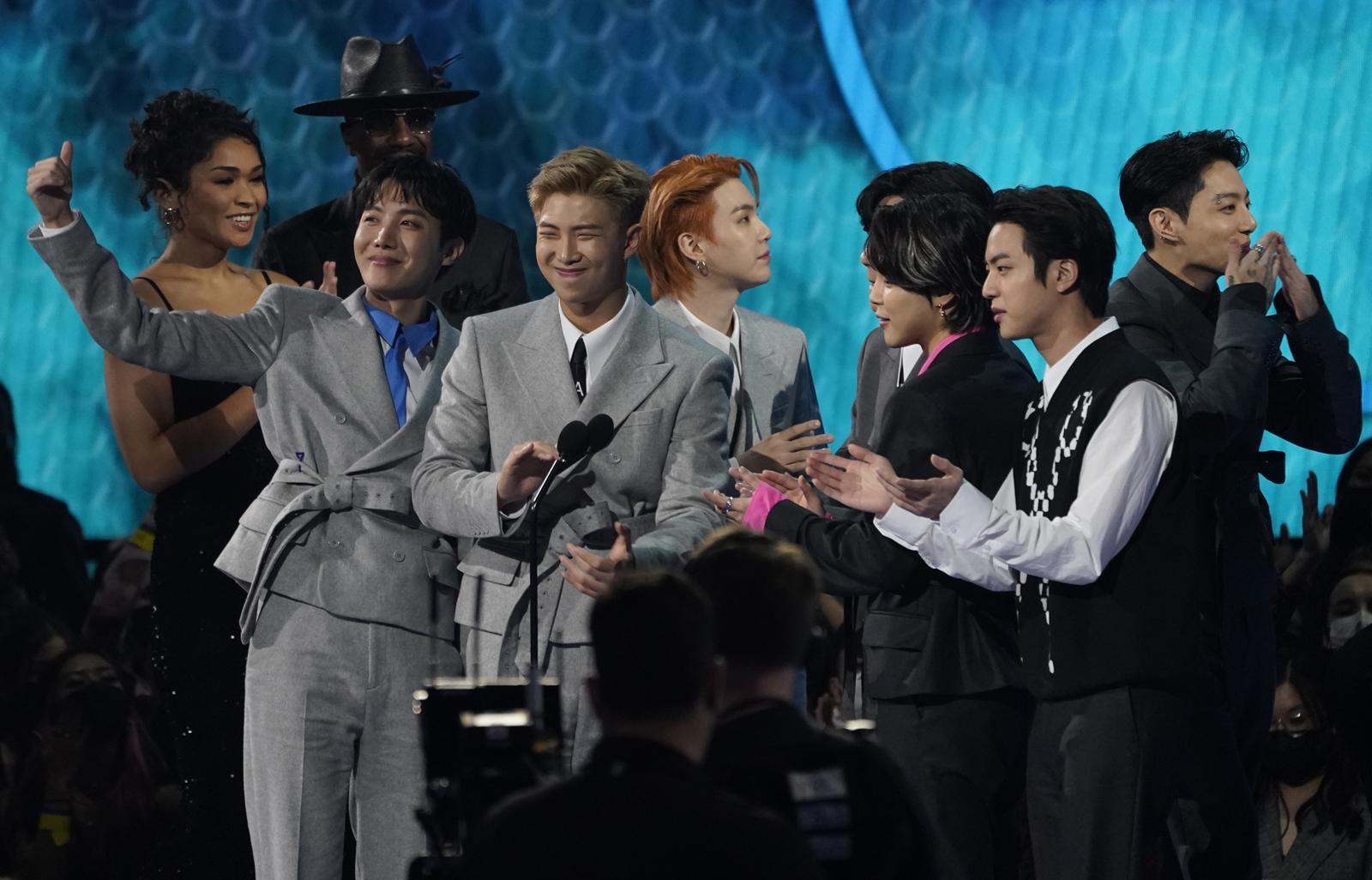
The New York Times (NYT) assessed that while K-pop has firmly taken root as a global mainstream culture, it is experiencing an internal rupture in the form of a “creative stagnation” due to its top-down structure centered on major entertainment agencies. The paper particularly pointed to the NewJeans case as a clash between capital and art, and suggested that it is urgent to seek new breakthroughs through innovation outside the existing system and global collaboration. AP/Newsis
K-pop’s worldwide popularity reached its peak this year, but internally it is suffering from serious growing pains, the New York Times (NYT) reported on the 25th (local time).
NYT wrote, “In 2025, K-pop battled its demons,” adding that “beneath its glittering achievements, cracks are beginning to show.”
● NewJeans in the courtroom… “Deep conflict between art and capital”
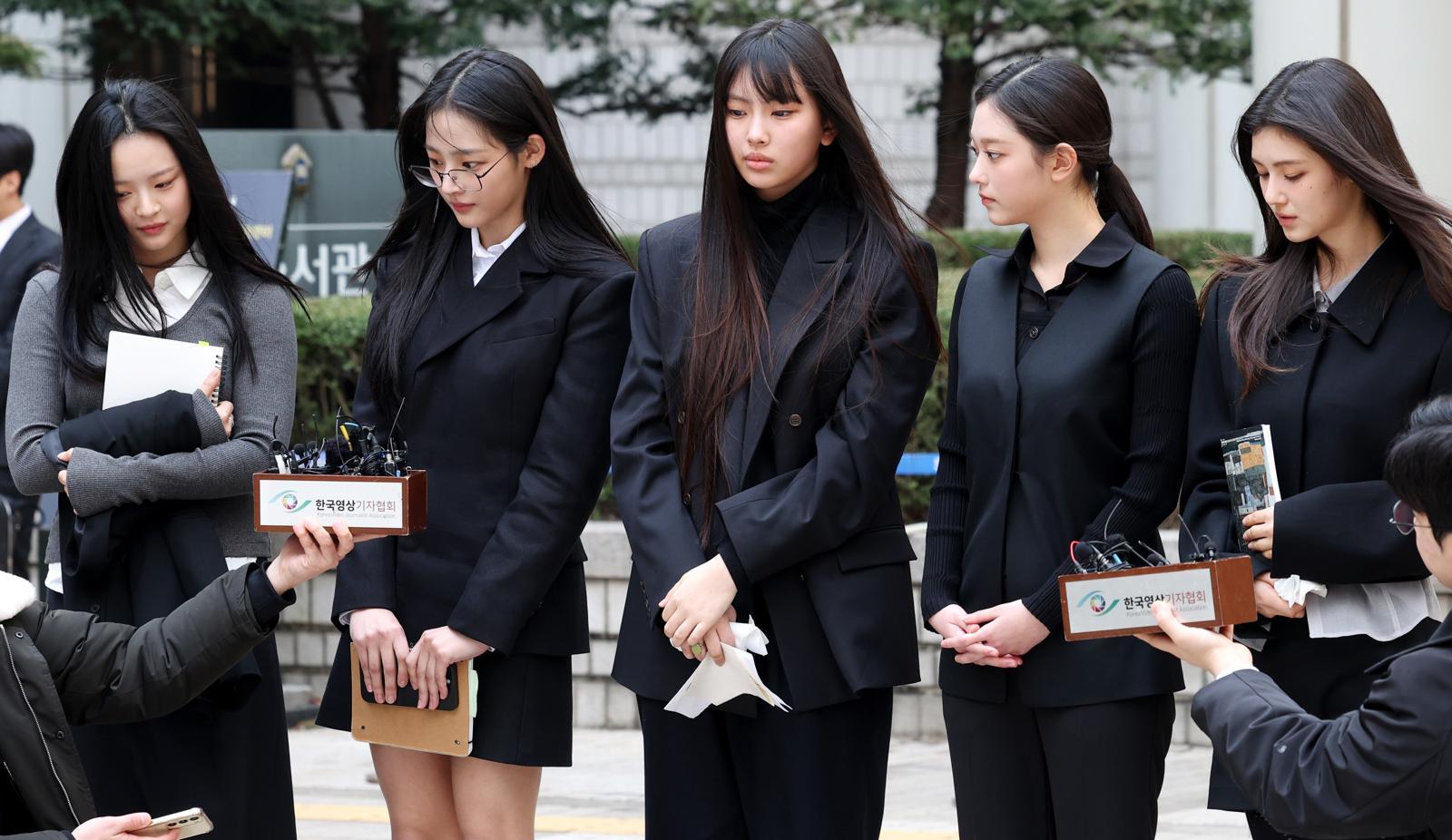
Members of the group NewJeans (NJZ Hanni, Minji, Hyein, Haerin, Danielle) answer questions from the press after finishing the hearing for “the injunction filed by ADOR against NewJeans to preserve its status as their agency and to prohibit the conclusion of advertising contracts” held at the Seoul Central District Court in Seocho-gu, Seoul, on the afternoon of the 7th. Newsis
The first issue NYT highlighted was the exclusive contract lawsuit between NewJeans and ADOR (HYBE). NYT described NewJeans as “the group that has taken the most innovative steps in recent years” and stated, “The true potential of K-pop and the direction of its growth are being determined in the courtroom,” adding, “The NewJeans case poses weighty questions for both business and art.”
Global girl group Katseye, jointly formed by HYBE and U.S. label Geffen Records. Aimed at the global market from inception, the group has been evaluated as breaking K-pop’s conventional mold and presenting a new starting point for creative work. AP/Newsis
NYT noted, “Over the past 30 years, K-pop has grown through a top-down structure dominated by a small number of major entertainment agencies,” and pointed out that “within this system, it is almost impossible for groups with a distinctive identity to sustain their activities.”
NYT went on to express concern that K-pop has fallen into a “creative standstill.” While groups under major agencies are achieving commercial success, musically they are failing to break out of the existing framework.
The paper added that although next year, when BTS (Bangtan Sonyeondan) returns from military service, could become a major turning point for the industry, this may be nothing more than a temporary stopgap.
● Innovation outside the system stands out…
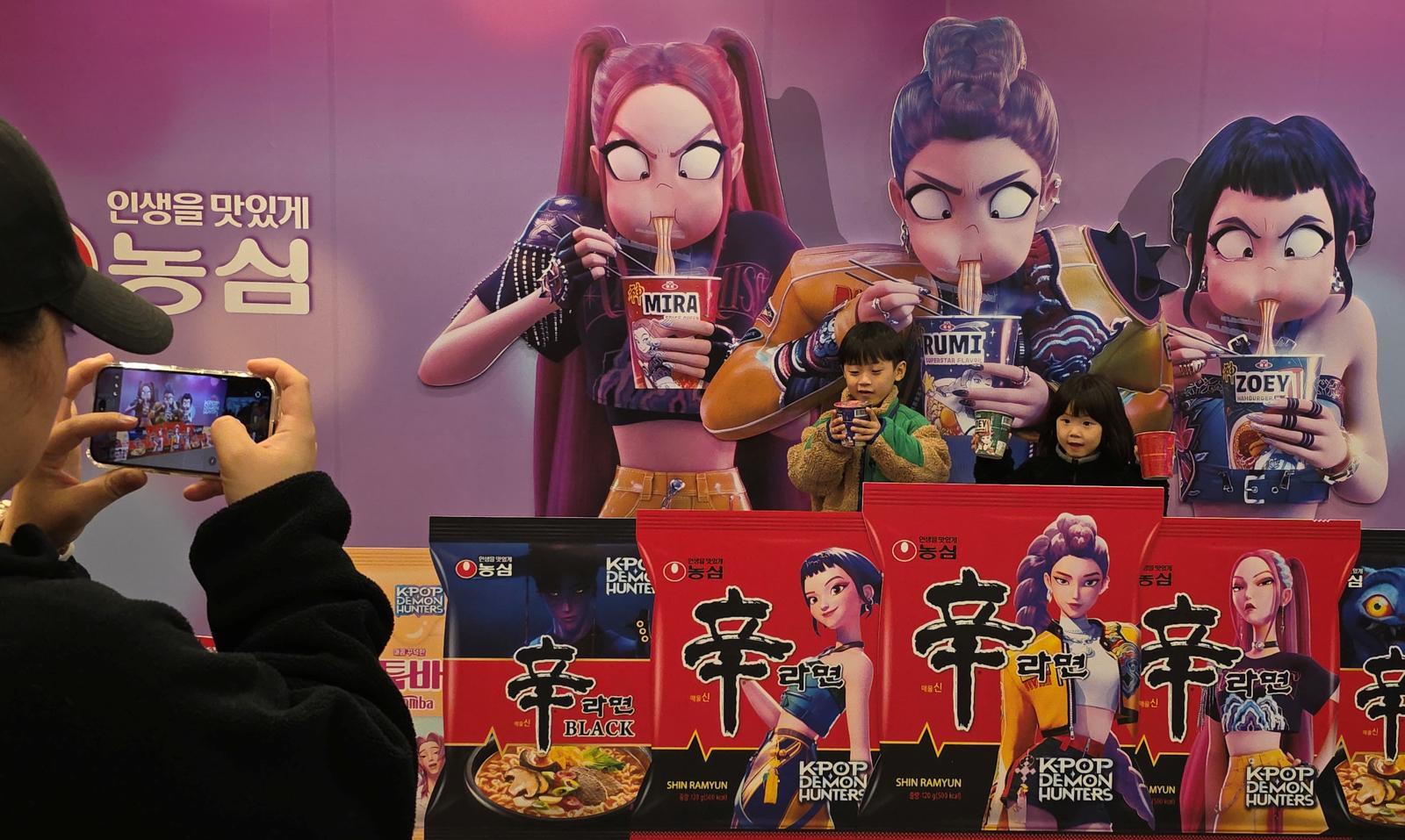
Visitors to the “2025 Gumi Ramen Festival” take commemorative photos in front of an image of characters eating ramen from the Netflix animated film “K-Pop Demon Hunters.” News1
Even so, there are grounds for optimism. NYT cited the Netflix animated film “K-Pop Demon Hunters” (often shortened to “Kedeheon”), which set a record for the most viewers in the platform’s history, as a symbolic example demonstrating the popularization of K-pop. NYT assessed, “(The success of ‘Kedeheon’) proves that K-pop has taken root worldwide not just as a music genre, but as a universal cultural form.”
The provocative experiments of young Korean artists such as Effie and the Deep, who work outside the major agency system, were also mentioned as positive signs. In particular, Effie, a female rapper born in 2002, is an artist who has been recognized by prominent overseas music criticism outlet Pitchfork.
Korean female artist Effie’s album “pullup to busan 4 morE hypEr summEr it’s gonna bE a f****n moviE” received a favorable review with a score of 7.6 from Pitchfork. Screen capture from Pitchfork
The emergence of Katseye, formed through a joint venture between HYBE and Geffen Records and aimed at the global market from the outset, and the commercial success of “Apt.,” a collaboration track between BLACKPINK’s Rosé and Bruno Mars, were also highlighted.
NYT described these developments as “a natural phenomenon arising as K-pop establishes itself as a mainstream genre,” adding, “While the K-pop industry has been enduring internal fatigue and anxiety, it has simultaneously produced new sounds capable of overturning the existing order.”
ⓒ dongA.com. All rights reserved. Reproduction, redistribution, or use for AI training prohibited.
Popular News