Digital Transformation (DX) has been a trend that reshaped the format of work, whereas AI Transformation (AX) is the process of advancing the intelligence of work. Digital Transformation has been carried out over about 10 years in terms of cloud migration, the introduction of Enterprise Resource Planning (ERP), and database construction. In contrast, AI Transformation is taking place within one to three years, approaching it from the perspective of training AI based on proprietary data and upgrading work methods through the introduction of large language models. The former focused on process management and efficiency, while the latter is closer to the intelligent and strategic enhancement of decision-making.
Global big tech companies at the forefront of AI—such as Google, Microsoft, AWS, and Meta—are already accelerating their AX transition by internalizing DataOps, automated labeling, and vector database-based RAG (Retrieval-Augmented Generation) pipelines, and are even using AI agents to make decisions. Newly founded companies in which AI is fully embedded begin by automating all business areas with generative AI. The gap between companies that adopt AI and those that do not is widening and is directly linked to corporate global competitiveness.
The situation in Korea is not favorable. The majority of domestic companies are still in the midst of Digital Transformation, and production and quality data are scattered across ERP systems, handwritten records, and log data. Some do not have document metadata or have yet to adopt the cloud. In manufacturing, distribution, and logistics, adoption is difficult, and even in the financial and medical sectors, which hold structured data, companies struggle to refine their data. To avoid losing competitiveness, it is no longer sufficient to introduce AI internally and gradually; extensive support from expert groups is needed.
Unlike SI, AX requires continuous management, making collaboration with external experts essential
AI implementation is difficult for the following reasons. To pursue AX, companies need to employ AI expert groups on a long-term basis, but the cost of recruiting and retaining AI professionals is extremely high. Even if an AX team is established, a steady stream of resources and expenses is required to build the data necessary for AX and to train the models. According to the report “Generative AI Gap: Business AI Status in 2025” published by the MIT Media Lab’s NANDA Initiative, only 5% of generative AI pilot projects achieved rapid revenue gains, while 95% showed no change in their income statements, making it impossible to expect phased profitability.
Han Jae-seok, Letther AI Consultant Engineer / Source = IT Donga
As a result, a model that specializes solely in AX is rapidly becoming the mainstream. Just as companies entrust specialized work to accountants or legal professionals, AX is delegated to groups that specialize in AX. A representative example is Letther’s “AX Partners.” Based on Letther’s experience in more than 300 AX projects, AX Partners provides everything from customized AI consulting to implementation and management. As with DX, specialized staff are dispatched to diagnose the business, making it ideal for building tailored services.
Questions were put to Han Jae-seok, AI consultant engineer at Letther, about the domestic AX implementation environment and the importance of introducing dedicated AX organizations. Han ranked second in the “1st AI Semiconductor Technology Talent Selection Contest,” becoming a topic of discussion by entering the team-based competition as an individual and winning. He joined Letther in January this year and is currently responsible for technical execution, including AX utilization and solution development.
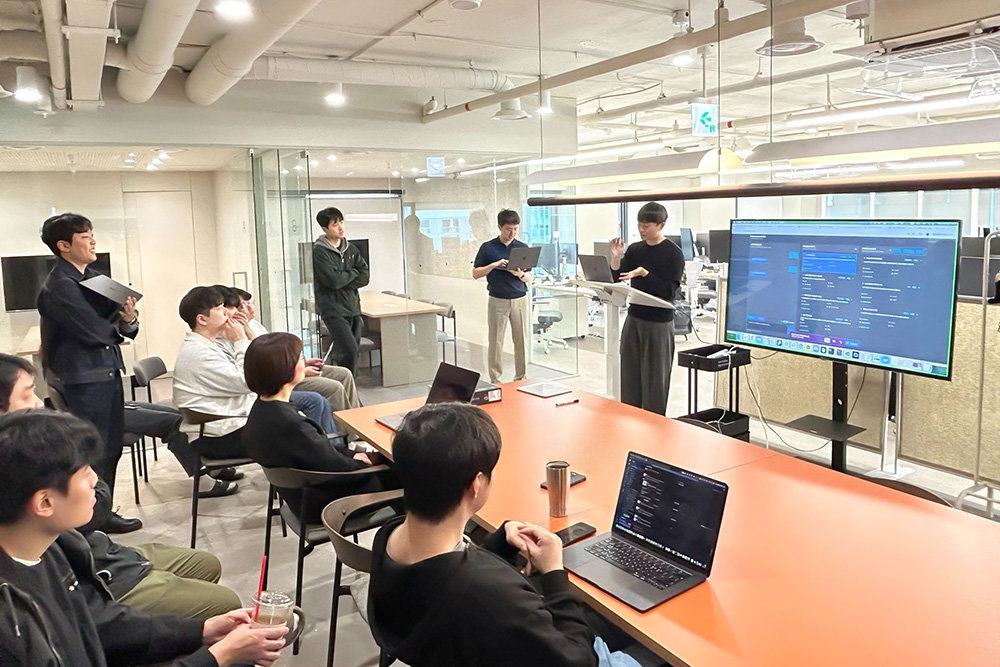
AX experts at Letther share and discuss AI implementation plans through a town hall meeting / Source = Letther
Which companies need AX Partners’ services? Han explained, “Companies that have influence in their industries and feel the need to introduce AI mainly come to us. Recently, there have been many cases from trend-sensitive K-beauty and fashion companies, and the majority are mid-sized enterprises with sales in the KRW 100 billion range. If a company has no benchmark for how to start with AI, AX Partners can provide the answer. Regardless of whether the data is structured or unstructured, engineers directly diagnose the situation and, after discussion, build AI. The faster the organization makes decisions, the greater the effect.”
Building AI through know-how and platformization, MVP possible even on the same day
Engineer Han Jae-seok explains the overview of Letther’s AX Partners and the flow of AI implementation / Source = IT Donga
The concept of building AI is somewhat abstract, so an explanation of the basic implementation approach was requested. Han said, “A project manager is assigned and the relevant team works together. The first step is to understand the client’s needs and situation. Rather than building a one-off service, we discuss from the initial stage how to collect data, how to plan, and how to implement,” adding, “Once the concept is finalized, we design the appropriate response platform using Letther’s AI operations management SaaS platform, Staix. Staix converts more than 300 AI implementation cases into templates, allowing rapid AI deployment.”
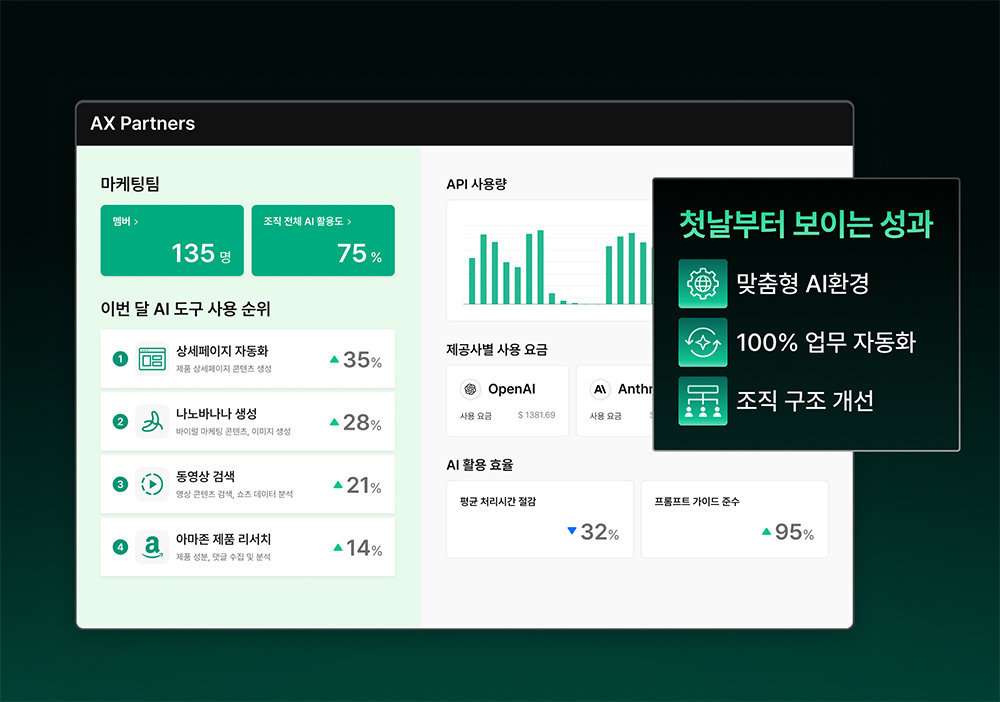
AX Partners is effective not only for AI implementation but also for post-deployment operations and management / Source = Letther
Regarding implementation speed, Han explained, “Based on the proposed concept, it can take as little as a week, with another one to two weeks for internal design, and deployment can be completed in as little as one to two months. In some cases, during the first meeting we connected internal data with Staix and demonstrated a trial version, and there was also a case where we identified 15 potential AI applications through same-day consulting and immediately implemented six of them.”
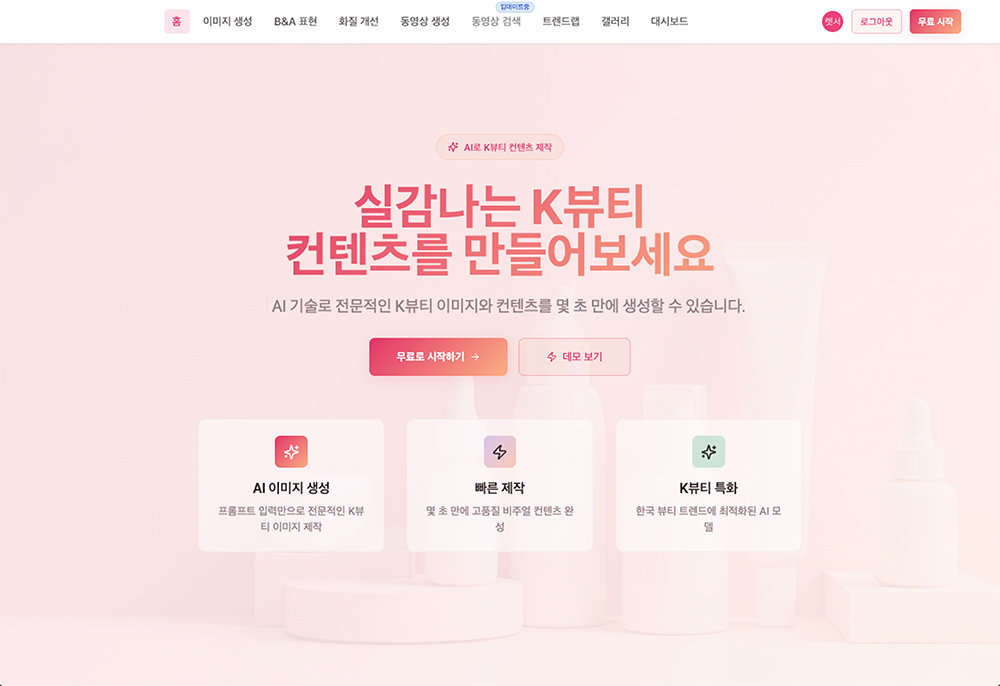
Actual AI implementation case supported by engineer Han Jae-seok / Source = Letther
Asked to introduce an actual implementation case, Han said, “A beauty company had been manually checking, one by one, which products were going viral on social media, and requested that this task be automated with AI. Based on existing implementation cases, we optimized a model for this company and built an AI service for data collection and trend analysis within one month.”
Another company, he added, “is working on an AI model that automatically generates video proposals of under two minutes for YouTube, TikTok, Instagram, and other platforms. We have already implemented the entire process from planning how to collect data in line with social media trends that change daily, to generating output results.”
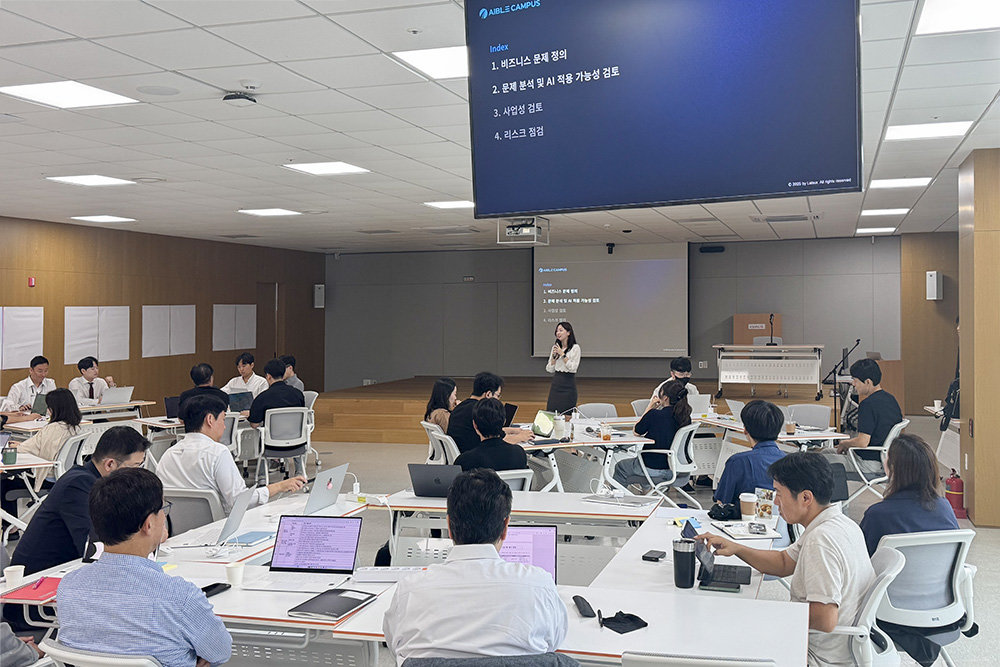
The Able Campus team visits companies directly to conduct AX-related training / Source = Letther
Deployed models are not left for fragmented use; appropriate training and integrated management are provided. Han noted, “After assessing in-house AI capabilities, Able Campus provides customized AI utilization training tailored to that level. The training is not limited to the implemented service but is a process aimed at enhancing the company’s overall AI capabilities, often resulting in additional training.”
AI can do everything… to raise efficiency, AX collaboration structures must also be built
Han argues that AI can become a master key regardless of a company’s business domain. “AI should be approached not from a profitability angle, but as a way to change the company’s disposition,” he said. “The entire organization must participate and provide support with the belief and optimistic attitude that AI will eventually deliver results. There are many hurdles to overcome, such as data format and organizational culture, but if AX is well established in the early stages, subsequent adoption gains momentum. Recently, AI implementation speed has been accelerating through tools like Cursor and Codex, so instead of a speed race, it is more important to establish long-term, scalable AI strategies.”
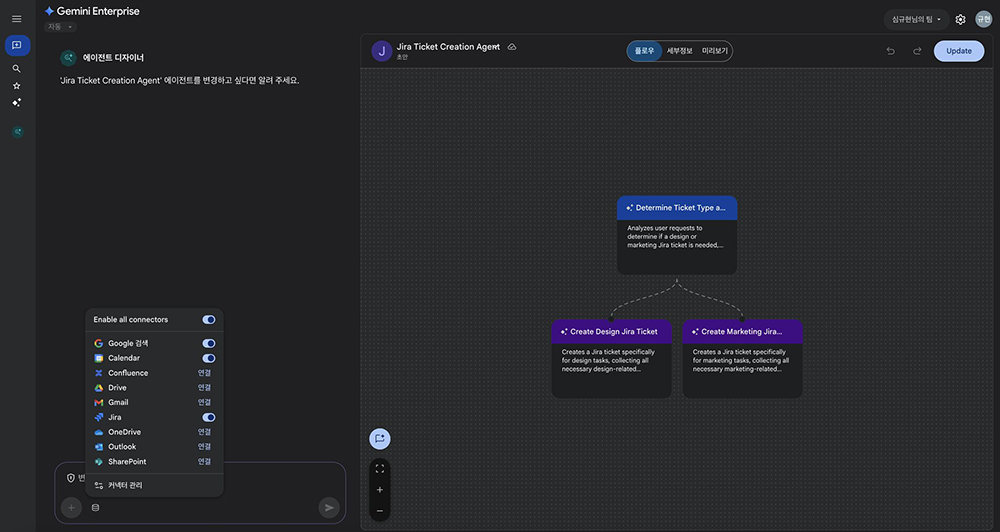
Screen for designing AI agents in Google Gemini Enterprise. It is now possible to build business process automation flows without coding. As a result, AI implementation strategy has become more important than coding itself / Source = Letther
From this perspective, Letther does not limit itself to providing AI solutions, but builds AI with the mindset of growing together as a partner company. “The market has moved beyond simply wanting good AI tools,” Han said. “The more capable companies are, the more they seek talent and partnerships that understand the business context and can redesign their operations to fit AI. Letther’s AX Partners works closely like an internal team to plan AI business, organize data, and co-manage implementation and operations, helping clients secure returns on their investments.”
Letther’s strategy for next year is to move from points to lines. Han concluded, “This year, we focused on solving specific tasks, such as content creation in marketing departments or automation strategies in customer service departments. As we rolled these out one by one, we began designing ways to connect the company’s entire value chain with AI,” adding, “For a fashion company, for example, we would build AI that goes beyond planning to connect design generation, product detail page creation, and inventory management. As step-by-step AI progresses, AX within the company also accelerates. Achieving full internalization of AI at client companies is our core task for next year.”
Driving AI Transformation requires attention to support from expert groups like AX Partners
In Korea, cases like Letther—where AI expert teams are embedded in companies to support AX—are only just beginning, but this approach is already mainstream overseas. For example, global consulting firm McKinsey & Company operates “McKinsey QuantumBlack,” an organization that dispatches data scientists and engineers to support improvements in corporate AI intelligence, while the tech division of Boston Consulting Group runs an AI implementation team called BCG X. IT infrastructure implementation and operations companies such as Accenture and IBM Consulting also provide professional AX transition support.
Therefore, for domestic companies whose data construction is not systematic and for whom it is difficult to operate in-house experts, collaboration with startups like Letther is essential to securing competitiveness—especially when competing with overseas companies. The golden time for AX transition is within the next three to five years at most. Falling behind this trend in itself means losing global competitiveness, so companies that need to drive AI adoption should quickly begin with consulting from expert groups.
IT Donga reporter Nam Si-hyun (sh@itdonga.com)
ⓒ dongA.com. All rights reserved. Reproduction, redistribution, or use for AI training prohibited.
Popular News