Inserting a balloon in the aorta to reduce bleeding
Must be performed within 20 minutes of ER arrival
Developing a Korea-style REBOA training course
Integrating operating room and imaging suite functions in one place
Planning a “hybrid emergency room” system
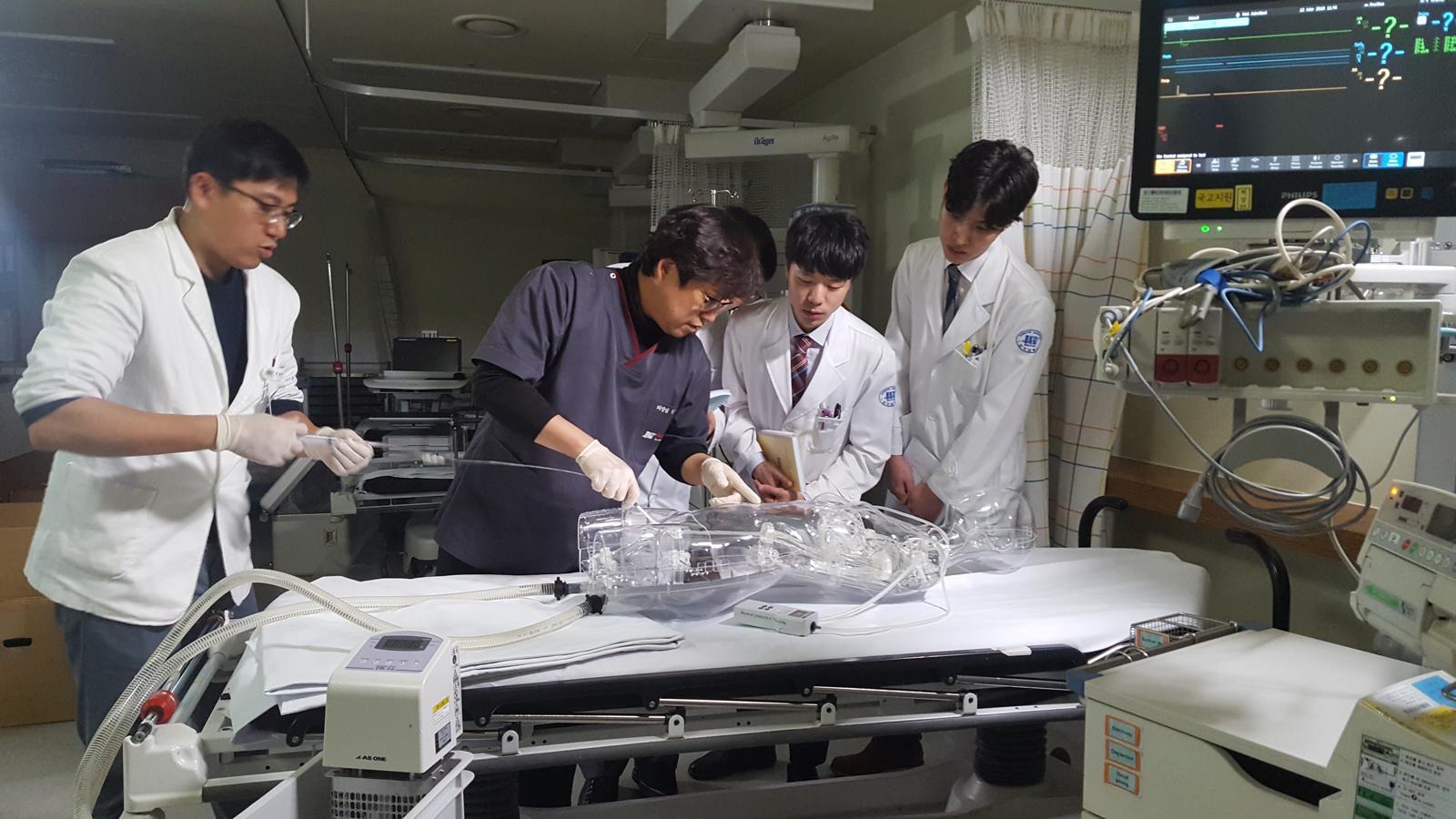
Jang Sung-wook, professor of Cardiovascular and Thoracic Surgery at Dankook University Hospital (head of the Chungnam Regional Trauma Center, second from left), provides training on Resuscitative Endovascular Balloon Occlusion of the Aorta (REBOA), a procedure that can be used to respond to massive abdominal hemorrhage. Courtesy of Dankook University Hospital
In the drama “Dr. Romantic,” there is a scene in which a severely injured trauma patient in hemorrhagic shock is treated not by opening the chest but by inserting a medical balloon through a blood vessel to temporarily block intra-abdominal bleeding. This is Resuscitative Endovascular Balloon Occlusion of the Aorta, or REBOA. Although it appears only briefly in the drama, in real clinical practice it has become an important treatment that determines whether a patient lives or dies.
The facilities where such severe trauma care is actually provided are regional trauma centers. A regional trauma center is a trauma treatment institution equipped with facilities, equipment, and specialized personnel to provide immediate resuscitation, emergency surgery, and treatment for severe trauma patients with multiple fractures and massive hemorrhage caused by traffic accidents, falls, industrial accidents, and similar events. Its role extends beyond in-hospital care to include cooperation with fire services and administrative agencies in all stages of trauma care, from accident prevention and on-site management to transport and rehabilitation.
Dankook University Hospital’s Chungnam Regional Trauma Center was selected in 2012 by the Ministry of Health and Welfare as the first institution in the Chungcheong area to receive support for a regional trauma center, and it opened in 2014 as the nation’s third regional trauma center. It operates trauma-only resuscitation rooms, an intensive care unit dedicated to trauma, operating rooms, a computed tomography (CT) suite, and an angiography room, and runs 303 pieces of equipment across 60 categories exclusively for trauma patients 24 hours a day.
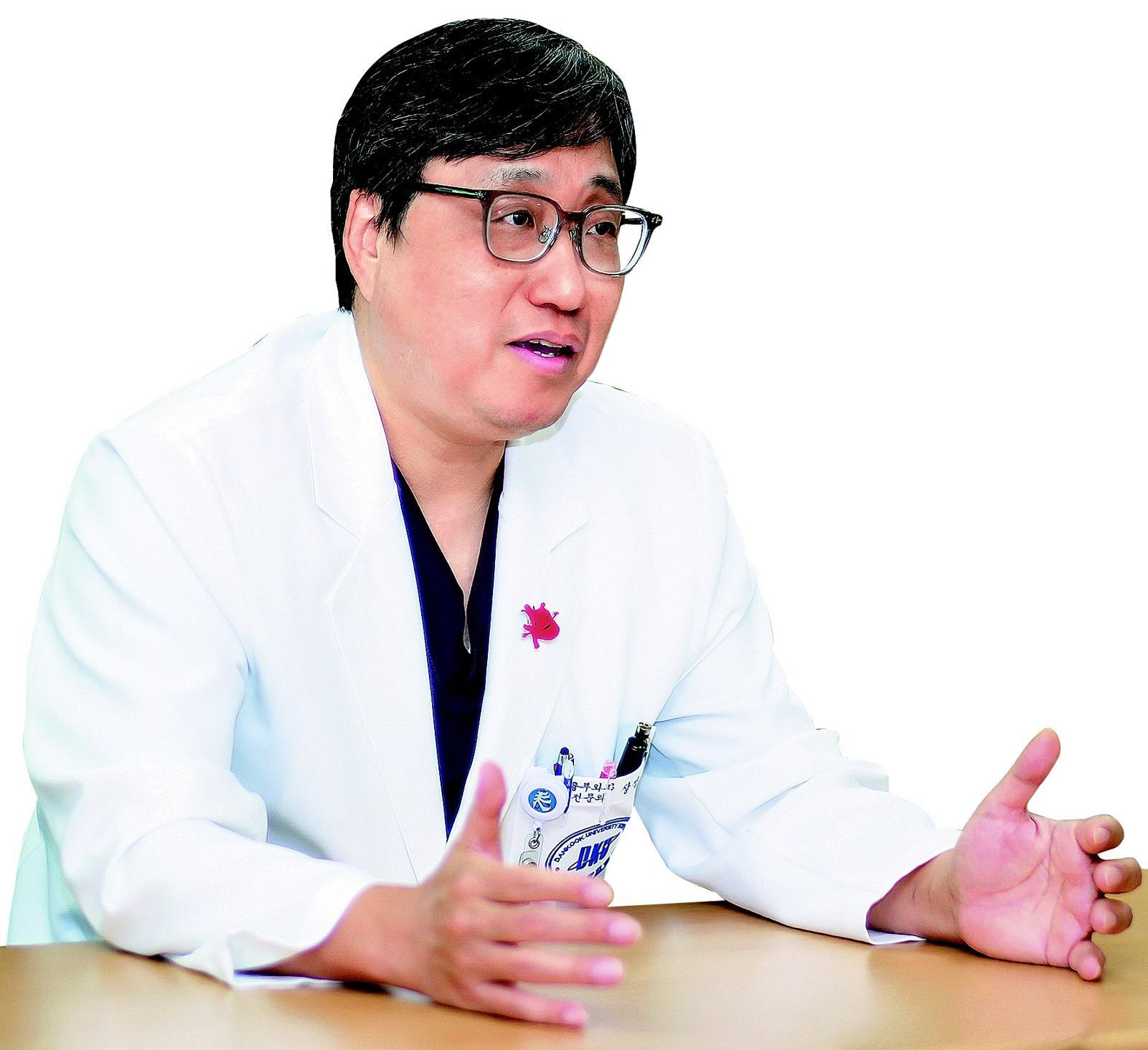
“The key to severe trauma care is how quickly bleeding can be controlled and time can be gained,” said Jang Sung-wook, head of Dankook University Hospital’s Chungnam Regional Trauma Center, adding, “REBOA is an important tool for creating that time.” The following is a Q&A with Jang.
Jang Sung-wook, head of the Chungnam Regional Trauma Center at Dankook University Hospital.
―What role does the Chungnam Regional Trauma Center play?“The Chungnam Regional Trauma Center is an organization where faculty from trauma surgery, cardiovascular and thoracic surgery, neurosurgery, and orthopedics are on site 24 hours a day and exclusively treat severe trauma patients. Specialists in anesthesiology and pain medicine and radiology also provide support, and trauma-dedicated nursing staff work as part of the center. The goal is to reduce gaps in the provision of severe trauma care in the Chungcheong region and lower the preventable mortality rate.”
―What types of patients mainly visit the center?“Most are severe trauma patients. The causes are diverse, ranging from traffic accidents and falls to industrial accidents and household incidents. Due to the regional characteristics of having many industrial facilities, there are also many cases of falls, crush injuries by machines, and amputation injuries. Since the center opened, about 2,400 patients have visited annually, and the proportion of severe trauma patients with an Injury Severity Score (ISS) over 15 has steadily increased.”
―Is there a particular patient who stands out in your memory?“I remember a 15-year-old male student. On his way home, he was struck by a large bus and suffered fatal injuries, including liver and lung rupture, pelvic and clavicle fractures, and burns. Emergency surgery, including REBOA, was performed immediately upon arrival, followed by multiple surgeries and extracorporeal membrane oxygenation (ECMO) treatment in the trauma intensive care unit. The guardian said it felt ‘as if the medical staff had been waiting for the child.’ The patient has now largely recovered his daily functioning and is preparing to return to school.”
―Massive hemorrhage is the biggest problem for severe trauma patients.“That is correct. Massive hemorrhage is a major cause of death within one to two hours after trauma. It commonly occurs with major vascular injuries in the chest or abdomen, solid organ injuries, and pelvic injuries. When massive hemorrhage occurs, damage control resuscitation—to rapidly control the bleeding and correct coagulopathy—is crucial.”
―How does REBOA compare with conventional aortic cross-clamping?“Aortic cross-clamping is an effective method, but it is extremely invasive and requires highly advanced training. In contrast, REBOA allows insertion of a balloon into the aorta without opening the chest, reducing distal hemorrhage while preserving blood flow to the brain and heart. It also offers the advantage of adjusting the occlusion zone according to the bleeding site and modulating balloon inflation to reduce ischemia and complications.”
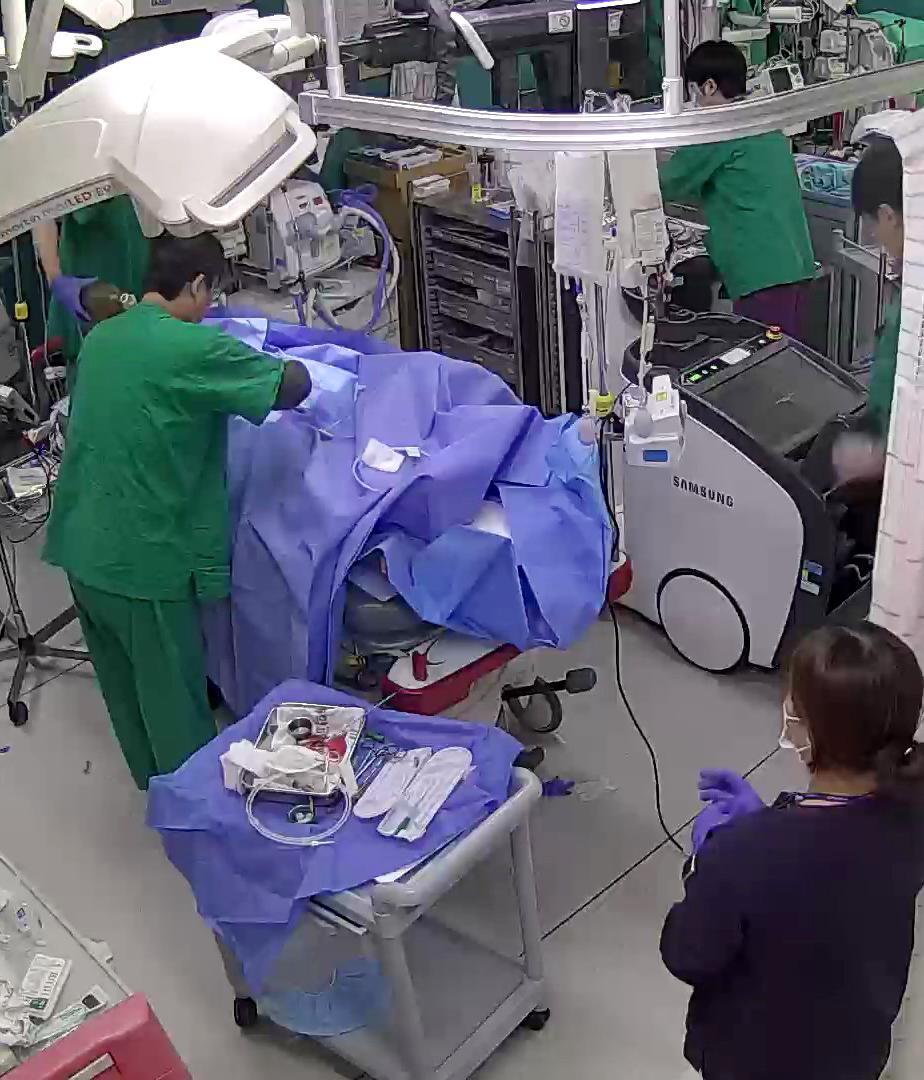
A 15-year-old male student being treated in the trauma resuscitation room at Dankook University Hospital’s Chungnam Regional Trauma Center. He suffered fatal injuries including liver and lung rupture, pelvic and clavicle fractures, and burns after being struck by a large bus.
―Why is the Chungnam Regional Trauma Center drawing attention for its REBOA treatment?“The ideal is to perform REBOA within 20 minutes after arrival at the emergency department. To achieve this, it is important to have an environment in which any physician who first encounters the patient on site, regardless of specialty, can assess the need for the procedure and perform it. From this awareness, we developed a Korean-style REBOA training course.”
―What was the background for developing your own REBOA training course?“There were practical limitations in simply following foreign training programs. After directly experiencing curricula in Japan, Sweden, and the United States, it became clear that training tailored to the domestic environment was necessary. We launched the nation’s first REBOA training in May 2018 and have since conducted 22 simulation-based training sessions in Korea and abroad. Without multidisciplinary cooperation, successful REBOA is not possible.”
―It is understood that you are also preparing a hybrid emergency room system.“A hybrid emergency room system integrates in a single space the functions of an emergency room, an angiography imaging suite, a CT scanner, and an operating room. This allows continuous care—from initial resuscitation to CT, vascular intervention, and emergency surgery—without moving the patient. Japan has already introduced such systems and reported clinical outcomes. However, the construction costs are high, making it difficult to implement through hospital efforts alone. Attention and support from local governments and at the national level are needed.”
ⓒ dongA.com. All rights reserved. Reproduction, redistribution, or use for AI training prohibited.
Popular News