Idiopathic pulmonary fibrosis is a chronic progressive disease in which fibrosis of lung tissue progresses without a clear cause and the lungs gradually harden. It is a rare, intractable disease that occurs in about 10 people per 100,000 population. Dry cough, shortness of breath, and fatigue are the representative symptoms. As the disease progresses, oxygen supply becomes difficult, making daily life challenging. Because the fundamental cause has not been clearly identified, both patients and medical staff must focus over a long period on “time management” and “suppression of progression.” A meeting was arranged with patient Kim Shin-yong, who has been receiving treatment for idiopathic pulmonary fibrosis, and his attending physician, Professor Jeong Man-pyo of the Division of Pulmonology, Samsung Medical Center.
―What kind of disease is idiopathic pulmonary fibrosis? Professor Jeong Man-pyo = “Idiopathic pulmonary fibrosis is a disease in which the lungs gradually harden. The lungs must have elasticity so they can expand and contract like a rubber balloon during breathing, but as fibrosis progresses, they no longer expand well. In the early stages, symptoms are not prominent, but once it has progressed to some extent, a dry cough develops, and as it becomes more severe, shortness of breath makes daily activities difficult. If the condition worsens, oxygen therapy may be needed. As the term ‘idiopathic’ suggests, the problem is that the cause is completely unknown.”
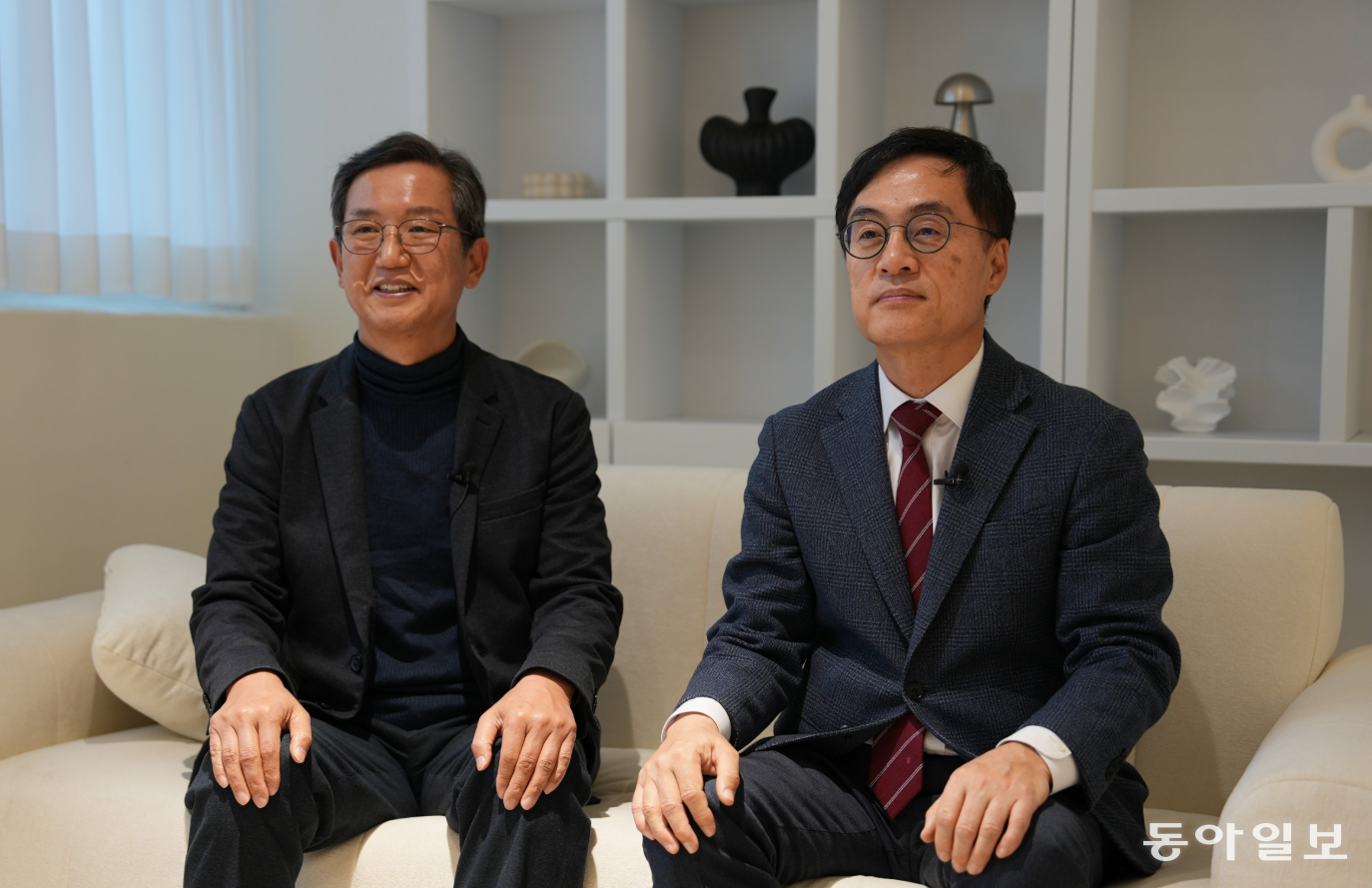
Patient Kim Shin-yong (left), who was diagnosed with idiopathic pulmonary fibrosis and is in recovery while undergoing treatment, and his attending physician, Professor Jeong Man-pyo of the Division of Pulmonology, Samsung Medical Center. Idiopathic pulmonary fibrosis is an intractable disease whose fundamental cause has not been clearly identified, requiring both patients and medical staff to focus over a long period on “time management” and “suppression of progression.” Medical correspondent and physician Lee Jin-han likeday@donga.com
―How was the process leading to your diagnosis? Patient Kim Shin-yong = “There were no particular symptoms. Three years ago, I had a health checkup at work, and findings suggestive of a lung disease were noted. At the time, I just let it pass, but a year later, the same findings appeared again at a health checkup, so I underwent additional tests such as computed tomography (CT) and blood tests at a secondary hospital. There I was diagnosed with pulmonary fibrosis. It is still hard to believe, but when I received the diagnosis, it felt as if the sky had fallen. I had dreamed of retiring at 60 and living in the countryside with my wife, but because of treatment, all those plans have changed.”
―What is the most difficult aspect in daily life? Patient Kim = “After hearing that respiratory infections such as colds, pneumonia, and COVID-19 could be fatal to the lungs, I voluntarily reduced social gatherings and going out. I have also significantly changed my living environment. When camping, people often light campfires, but I avoid them because the smoke is not good for my lungs. I replaced the gas stove at home with an induction cooktop and bought an air purifier and a humidifier.”
―What tests are used for diagnosis? Professor Jeong = “In the early stages, it is not easy to detect the disease with a chest X-ray. This is because lesions often start in the lower parts of the lungs and may be obscured by the liver or heart. Experienced medical staff may suspect it from an X-ray, but if there are no symptoms or it is in the early stages, CT is more useful. Pulmonary function tests are also used to assess the degree of functional decline. To diagnose idiopathic pulmonary fibrosis, it is also necessary to consider whether the hardening of the lungs might be caused by another disease. Through blood tests and other examinations, we check for other causes, and in some cases, we perform a lung tissue biopsy under general anesthesia.”
―How is the disease treated? Professor Jeong = “In the past, there were no therapeutic agents, and it was considered one of the most difficult respiratory diseases to treat. Treatment focused on symptom relief, such as considering lung transplantation or reducing cough and administering oxygen therapy. However, over the past 10 years or so, the treatment environment has changed with the development of drugs with antifibrotic effects, such as nintedanib and pirfenidone. These drugs do not restore hardened lungs to normal, but they can be expected to slow the progression of the disease or, in some cases, suppress it as much as possible. Therefore, early diagnosis is crucial above all. If treatment is started when the disease is already in an advanced stage, it is difficult to reverse.”
―What do you find regrettable about the treatment process? Patient Kim = “I heard that there are parts of the treatment that are covered by health insurance and parts that are not. I also heard that some drugs have already been approved overseas, and I hope such treatment options can be introduced more quickly domestically so that patients can improve their quality of life.”
―What is the current status of health insurance coverage? Professor Jeong = “Currently, the only drug covered by the national health insurance reimbursement scheme is pirfenidone. Nintedanib, which was developed around the same time, is still not reimbursed. The medication costs around KRW 2 million per month, which is a considerable burden, but because this disease falls under the category of rare and intractable diseases, the patient’s copayment would be reduced to 10% if it were reimbursed. It is regrettable that reimbursement has not yet been implemented.”
―Is there anything you would like to say to other patients with the same disease? Patient Kim = “It would be better not to rely excessively on incorrect medical information on YouTube or other social network services (SNS). There is a lot of information, but much of it is inaccurate and can actually increase anxiety. There are many people who live a long time while managing this disease. The best approach is not to be too discouraged and to protect one’s health through close consultation with the attending physician.”
Professor Jeong = “Lifestyle management is also important for lung health. At home, it helps to use air purifiers and other devices to manage indoor air quality, and during dry seasons it is advisable to maintain appropriate indoor humidity. For people with lung disease or older adults, vaccination such as influenza and pneumococcal vaccines is recommended. It is also important to rigorously follow basic infection prevention measures, such as wearing a mask when going out and washing hands after returning home.”
ⓒ dongA.com. All rights reserved. Reproduction, redistribution, or use for AI training prohibited.
Popular News