[Public Enterprise Inspirational Management] Ministry of Agriculture, Food and Rural Affairs National Food Cluster
Equipped with 12 support facilities and 1,114 types of equipment
316 startup teams, 938 new products and technologies launched
This year, 53 youth-led companies take on overseas markets
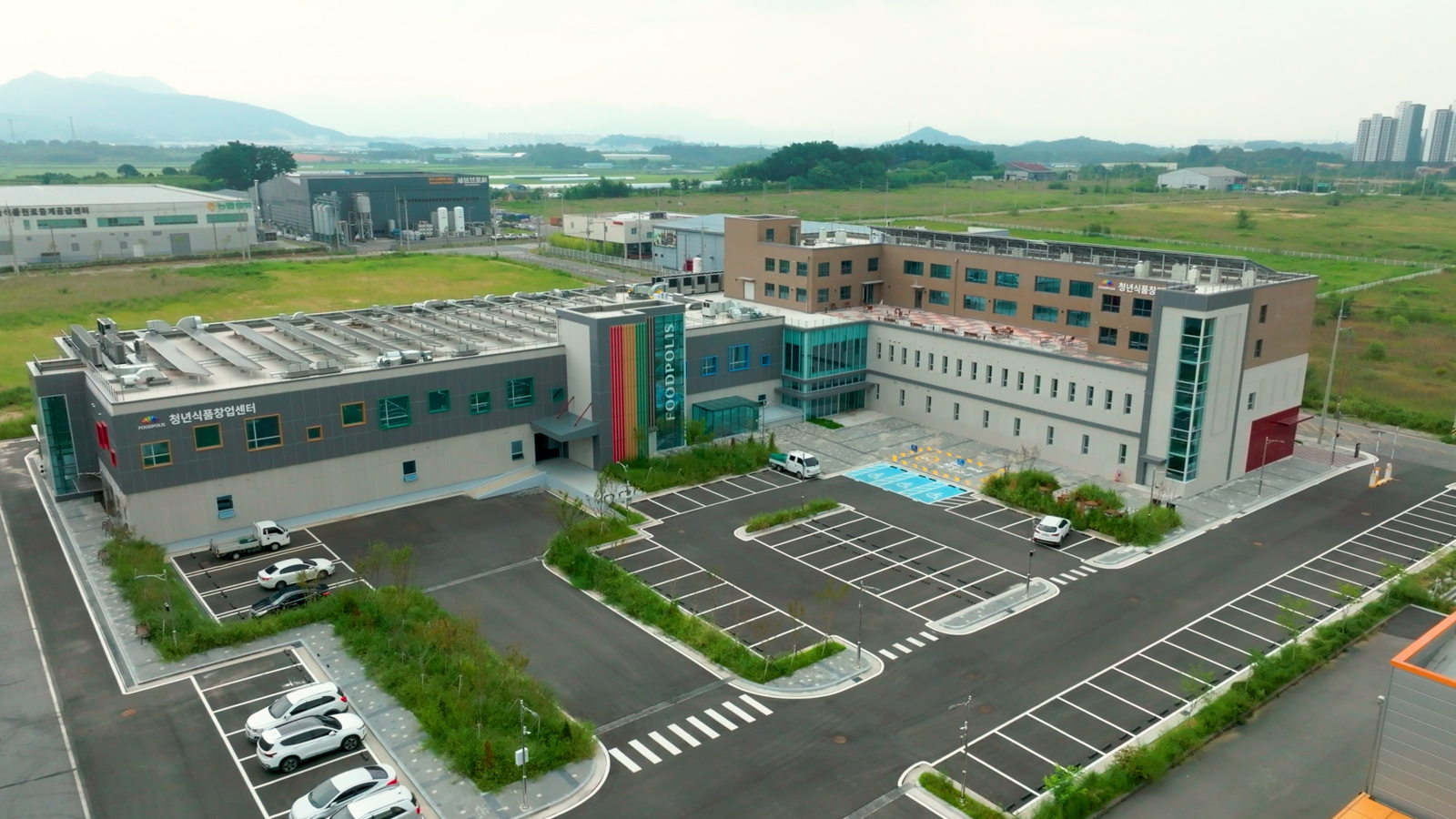
Youth Food Startup Center exterior. Provided by the National Food Cluster of the Ministry of Agriculture, Food and Rural Affairs
“A young person’s food idea that felt daunting to pursue alone has become a business at the National Food Cluster and has led to exports. This first challenge will not be the end; there will be continued challenges. We will grow into impressive young entrepreneurs as key players of K-Food.”
The National Food Cluster in Iksan, Jeollabuk-do, established by the Ministry of Agriculture, Food and Rural Affairs (Minister Song Mi-ryeong, hereinafter the Ministry of Agriculture, Food and Rural Affairs), is drawing attention for its role as a forward base for launching and nurturing youth food companies that will carry on the K-Food boom.
Since its establishment in 2017, the National Food Cluster has served as a hub for innovative growth of food companies and youth startups. To enhance the export competitiveness of K-Food, it is equipped with 1,114 types of equipment across 12 corporate support facilities.
Moon Won-tak, director in charge of the National Food Cluster industrial complex, said with confidence, “The National Food Cluster industrial complex is the only food-specialized complex in Korea and provides customized support by growth stage, including support for technology development for products to foster youth startups and future talent, as well as venture and mid-sized companies, and helping companies become global leaders for K-Food’s entry into the global market. In particular, anyone who hopes to start a business in the food sector or has a good idea should visit the National Food Cluster. Our doors are always open for you and we welcome you.”
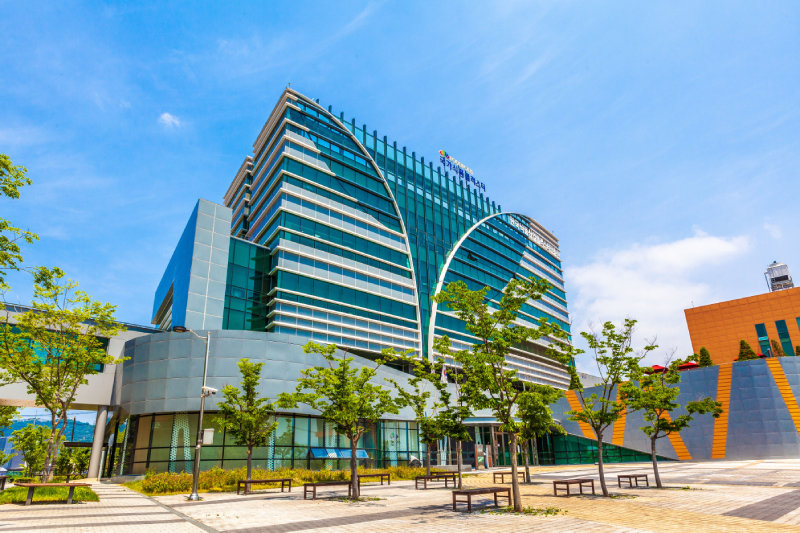
Food Industry Promotion Agency exterior.
Among the corporate support facilities operated by the Korea Food Industry Cluster Promotion Agency (Chairman Kim Deok-ho, hereinafter the Food Industry Promotion Agency), which manages the National Food Cluster, the Youth Food Startup Center and the Food Venture Center provide rental-type factories and offices, serving as a solid stepping stone to help young people start food businesses and grow. In addition, through the “Youth Food Startup Growth Support Project,” it supports young people with dreams and passion in the food sector to start their own businesses. This project offers food-specialized startup support by covering the entire process necessary for entrepreneurship, including professional education, prototype production, and opportunities to attract investment for young people who wish to start a business in the food sector.
From 2017 to 2024, food entrepreneurship support for young people led 316 teams to succeed in launching and commercializing businesses, and resulted in 938 new product launches and intellectual property right applications.
This year, 53 youth food companies took on the challenge of product development and expansion of sales channels in overseas markets, achieving tangible results.
The first major case of overseas market development is Medipresso Co., Ltd. (CEO Kim Ha-seop), based in Daejeon, which was founded on traditional tea in the form of “tea capsules.” Since its establishment in 2018, Medipresso has increased its staff from 9 to 15 employees, and its sales have risen significantly from KRW 230 million to KRW 3.47 billion. Its flagship products—three types of teas including Ssanghwa-cha (traditional herbal tonic tea), balloon flower root tea, and quince tea—have been developed into convenient capsule forms that maintain the characteristics of the raw ingredients and a rich, deep flavor, supported by technology that realizes optimal extraction through a dedicated machine. The company also received support for packaging production for three new tea capsule varieties and for nutritional testing and analysis costs, thereby securing product reliability. Currently, by moving into the Food Venture Center, it is expanding its production lines and, following exports to Singapore, is preparing to expand into global markets as a healthcare brand.
The second case is Local Works Co., Ltd. (CEO Jeong Eun-jeong) in Iksan, Jeollabuk-do. Local Works, established in 2018, noted that although honey is a healthy ingredient, it has drifted away from everyday use due to stickiness, storage inconvenience, and limited applications. Based on this insight, the company developed products such as convenient and hygienic honey caramels and blended honey. At the prototype stage, it overcame development limitations through verification of mixing ratios and gelling, and, through distribution environment testing, secured a shelf life of two years and applied individual hygienic packaging methods. By moving into the Food Venture Center, it established a production base with support for HACCP facility certification, and was able to continue startup activities and grow by using various research and production equipment at low cost. Subsequently, by expanding HACCP and acquiring overseas standard certifications, it solidified its export base, began exporting to Hong Kong, Japan, and Abu Dhabi, and sold 25,000 units within eight weeks of launch, generating KRW 150 million in sales.
The third case is Baekgyeong Distillery Co., Ltd., an agricultural corporation in Sejong City (CEO Jeong Chang-yun). Established in 2023, Baekgyeong Distillery is a distilled liquor brand that inherits the pharmaceutic philosophy of a family that has long operated an oriental medicine clinic, founded on the belief that “alcohol should comfort people.”
The company modernized the family’s traditional recipes and commercialized pharmaceutically processed wolfberry tea, and developed “Baekgyeong Hanjan,” a product that can be easily enjoyed in daily life. In addition, through its “non-alcoholic Korean liquor” line featuring three “zeros”—no alcohol, no additives, and no calories—it has introduced the appeal of fermentation culture even to those who do not drink. Through National Food Cluster support projects, Baekgyeong Distillery attracted KRW 300 million in investment and signed five MOUs, leading to export contracts worth USD 2.2 million (approximately KRW 3.2 billion). Based on this, it is expanding production capacity, and its sales are expected to exceed KRW 1 billion this year.
The fourth case is Dagyuk (CEO Jo Seung-ha) in Iksan, Jeollabuk-do, which connects the tradition of matcha to modern food culture. While in university, the founder interned at the Food Industry Promotion Agency, gaining close exposure to the food industry and startup ecosystem. Based on this experience, Dagyuk was founded in 2024 with the goal of modern reinterpretation of the parents’ tea-processing technology to build a brand that resonates with younger generations and the global market. In particular, by utilizing National Food Cluster support facilities for recipe development, OEM production consulting, and packaging development cost support, the company was able to enhance product completeness. Through participation in product exhibitions and consultation events, it is preparing for exports to the United States, Austria, and other markets, and is stably operating its business with office space support from the Youth Food Startup Center.
The fifth case is Bieungdo Deungdaega (CEO Kim Sam-seong) in Gunsan, Jeollabuk-do, which developed vacuum-packed soy sauce marinated crab with the ambition to make convenient seafood meals a global standard. With the aim of reinterpreting seafood as an everyday convenient meal that can also succeed overseas, the company was founded in 2024 and moved into the Youth Food Startup Center at the National Food Cluster to secure a stable hygienic processing space and expand sales channels. Utilizing the National Food Cluster’s pilot plant and Youth Food Startup Center facilities, it completed testing of recipes, packaging, and distribution environments for export prototypes, and expanded buyer meetings through participation in joint promotional halls, overseas export consultations, exhibitions, as well as consulting and networking support.
Based on this, it has successfully exported to Japan and Inner Mongolia, China. It is also in export negotiations with the United States, Hong Kong, and New Zealand as it pioneers global sales channels. At the time of moving in, its sales were KRW 480 million, but this year they are expected to reach KRW 1 billion.
ⓒ dongA.com. All rights reserved. Reproduction, redistribution, or use for AI training prohibited.
Popular News