Strengthening microbial material research in partnership with the National Institute of Biological Resources Focusing on microbiome technology development using native Korean plants Expanding bioresource exploration in pristine areas such as Jeju and Ulleung Building a proprietary database to secure next-generation source materials
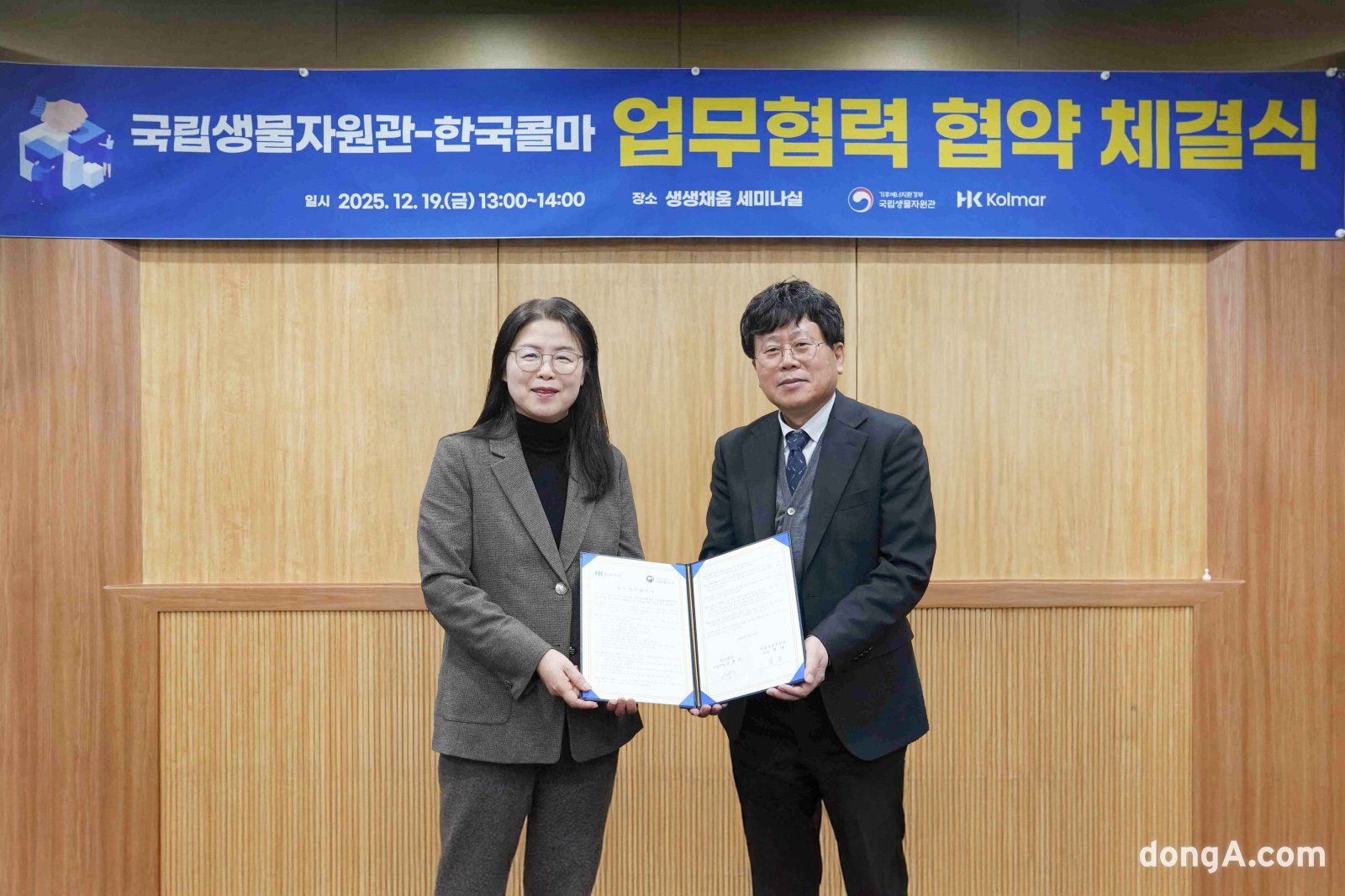
Kolmar Korea announced on the 22nd that it has partnered with the National Institute of Biological Resources to discover next-generation microbiome cosmetic ingredients by utilizing microbial resources inhabiting Korea’s native plants (indigenous to Korea). With this collaboration, Kolmar Korea plans to expand its research scope into the field of microbial ecosystems.
Kolmar Korea and the National Institute of Biological Resources signed a memorandum of understanding (MOU) on “the discovery and industrial utilization of microbial resources derived from native plants” on the 19th at the National Institute of Biological Resources in Seo-gu, Incheon. The event was attended by Moon Byung-seok, Head of Technology Research at Kolmar Holdings, Yoo Ho, Director of the National Institute of Biological Resources, and other representatives from both organizations.
The agreement aims to secure new microbial resources from native plants in environmentally pristine areas in Korea and develop them into microbiome cosmetic ingredients. Microbiome technology, which involves microbial communities coexisting with the human body, is a core technology for maintaining the balance of the skin ecosystem and improving skin health, and has recently emerged as a strategic research field in the cosmetics industry.
Under the agreement, Kolmar Korea will culture microorganisms isolated from native plants, analyze their characteristics and efficacy, and develop them as cosmetic raw materials. The National Institute of Biological Resources will survey native plants in biodiversity-rich regions such as Jeju Island and Ulleungdo, systematically organize information on the growth environments and microorganisms of the collected species, and share this data with Kolmar Korea.
Microorganisms derived from native plants are scarce resources that are difficult to obtain overseas. Based on these resources, Kolmar Korea plans to build an original database (DB) and utilize it across the entire spectrum of microbiome research and development.
A Kolmar Korea representative stated, “This agreement has significantly broadened the scope of research utilizing Korea’s indigenous biological resources. The company will continue to study unique materials found only in Korea to strengthen global competitiveness.”
Meanwhile, Kolmar Korea is expanding its research on microorganisms derived from various traditional fermented foods and indigenous resources. Earlier this month, it signed an agreement with the World Institute of Kimchi (a research institute under the Ministry of Science and ICT) and began work on discovering new cosmetic raw materials using kimchi-derived microorganisms.
Kim Sang-jun
AI-translated with ChatGPT. Provided as is; original Korean text prevails.
ⓒ dongA.com. All rights reserved. Reproduction, redistribution, or use for AI training prohibited.