[SBA X Donga.com Joint企划] The Seoul Metropolitan Government and the Seoul Business Agency (SBA) operate the Seoul Startup Hub, the cradle of entrepreneurship. They select promising startups together with investors and drive their growth through systematic programs offered by startup support experts and specialized institutions. The initiative also includes open innovation to promote co-growth between large/mid-sized corporations and startups. Donga.com, together with the Seoul Metropolitan Government and SBA, introduces outstanding startups that have distinguished themselves at the Seoul Startup Hub Gongdeok.
“Autism Spectrum Disorder (ASD)” is a neurodevelopmental disorder characterized by difficulties in social interaction and communication, and by restricted and repetitive behaviors. Symptoms generally appear around the age of two, and as the prevalence has recently increased to around 3%, it is increasingly recognized as a social issue beyond an individual health problem.
Because autism spectrum disorder arises from various causes, treatments may differ depending on the underlying condition. However, if appropriate intervention is not provided at an early stage, there may be limitations in long-term functional improvement. Yet, to date there are no approved core symptom treatments for children under the age of five. As a result, infants and young children showing symptoms have had no choice but to rely on limited special therapies or unscientific treatments despite high treatment costs.
Hwang Soo-kyung, CEO of Astrogen / Source=Astrogen
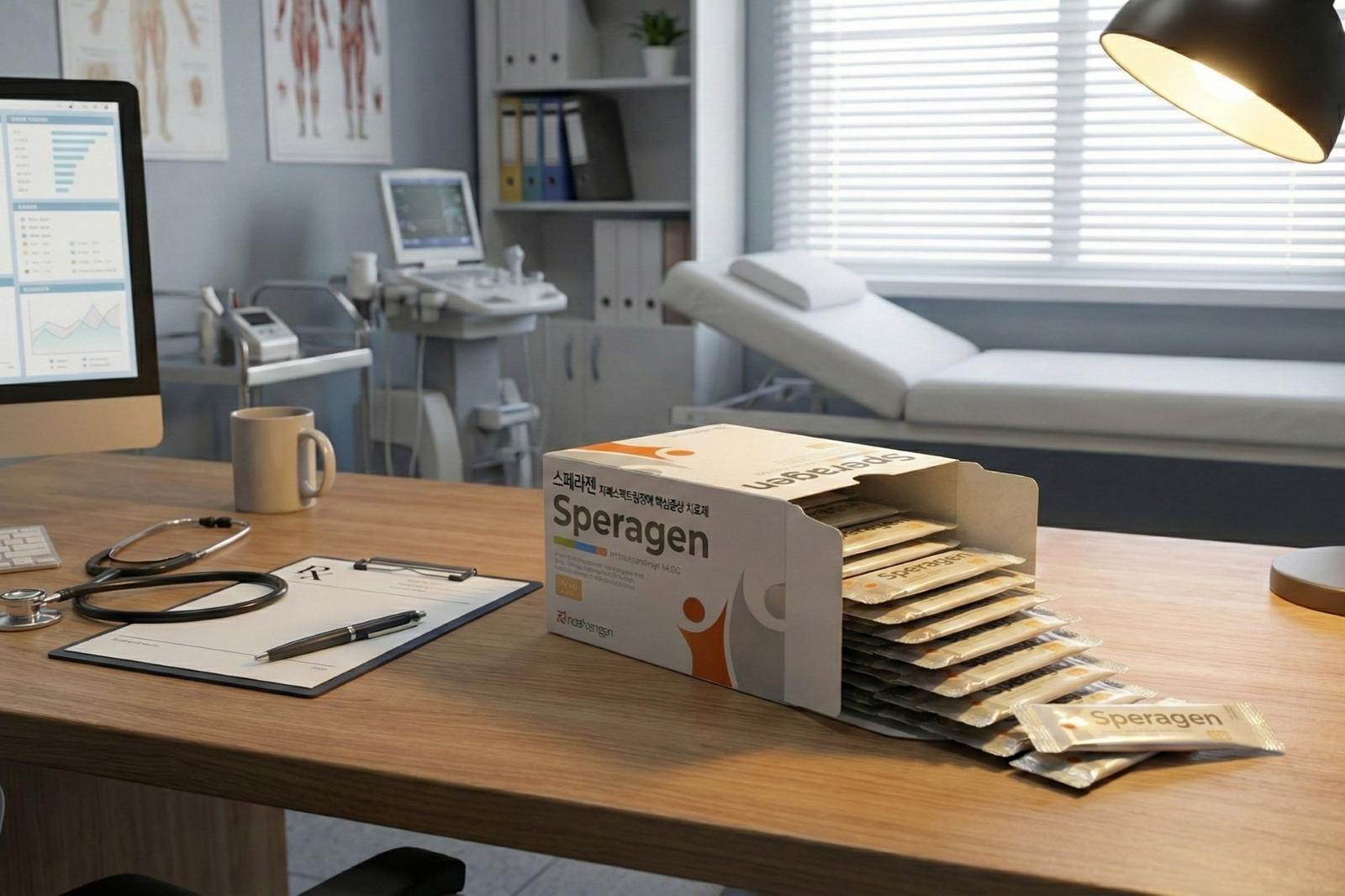
Astrogen is a biotech startup developing “Sperazen (AST-001),” a candidate drug for the core symptoms of autism spectrum disorder. Astrogen has verified Sperazen’s safety and efficacy and confirmed its long-term safety and its effectiveness in improving core symptoms. The company completed its marketing authorization application to the Ministry of Food and Drug Safety (MFDS) this year and aims to commercialize the product in the first half of next year. In addition to an autism spectrum disorder treatment, Astrogen is focusing on new drug development for neurological diseases such as attention-deficit/hyperactivity disorder (ADHD), and aims to play a motivating role that supports patients’ lives before and after medication through various activities that help their social participation.
Limitations of existing treatments… a gap in the golden timeAstrogen CEO Hwang Soo-kyung, a pediatric neurologist, has treated patients with developmental disabilities and genetic disorders on the front line and directly experienced the reality of the absence of treatments in the field. CEO Hwang said, “Through experiences such as having a close family member with a neurological disorder, I deeply empathized with the pain of patients and their caregivers and felt helpless,” adding, “With a desire to create treatments that are genuinely helpful to patients, I came to see new drug development not simply as a business but as a mission.”
According to Astrogen, no drug has ever been approved worldwide that fundamentally improves the core symptoms of autism spectrum disorder (deficits in social interaction and communication). The only currently approved antipsychotic agents, such as Risperidone and Aripiprazole, are used in a limited way solely to alleviate accompanying symptoms such as anxiety and aggression in patients.
The problem lies in the gap that occurs during the “golden time” for treatment. Infancy and early childhood constitute a critical period when neuroplasticity is at its highest, and interventions during this period induce the formation and reorganization of neural circuits, exerting a decisive impact on long-term functional improvement. Early treatment is also crucial for prognoses in autism treatment. However, existing antipsychotic medications are prohibited for use in children under five years old, meaning children with autism spectrum disorder, who can be diagnosed from the age of two, face a treatment void during the most critical period for core interventions. “Astrogen has focused on filling this treatment gap, which has remained the greatest source of despair for parents and medical staff,” CEO Hwang explained.
Core autism symptom treatment candidate “Sperazen”
Astrogen is developing “Sperazen (AST-001),” a candidate treatment for autism spectrum disorder / Source=Astrogen
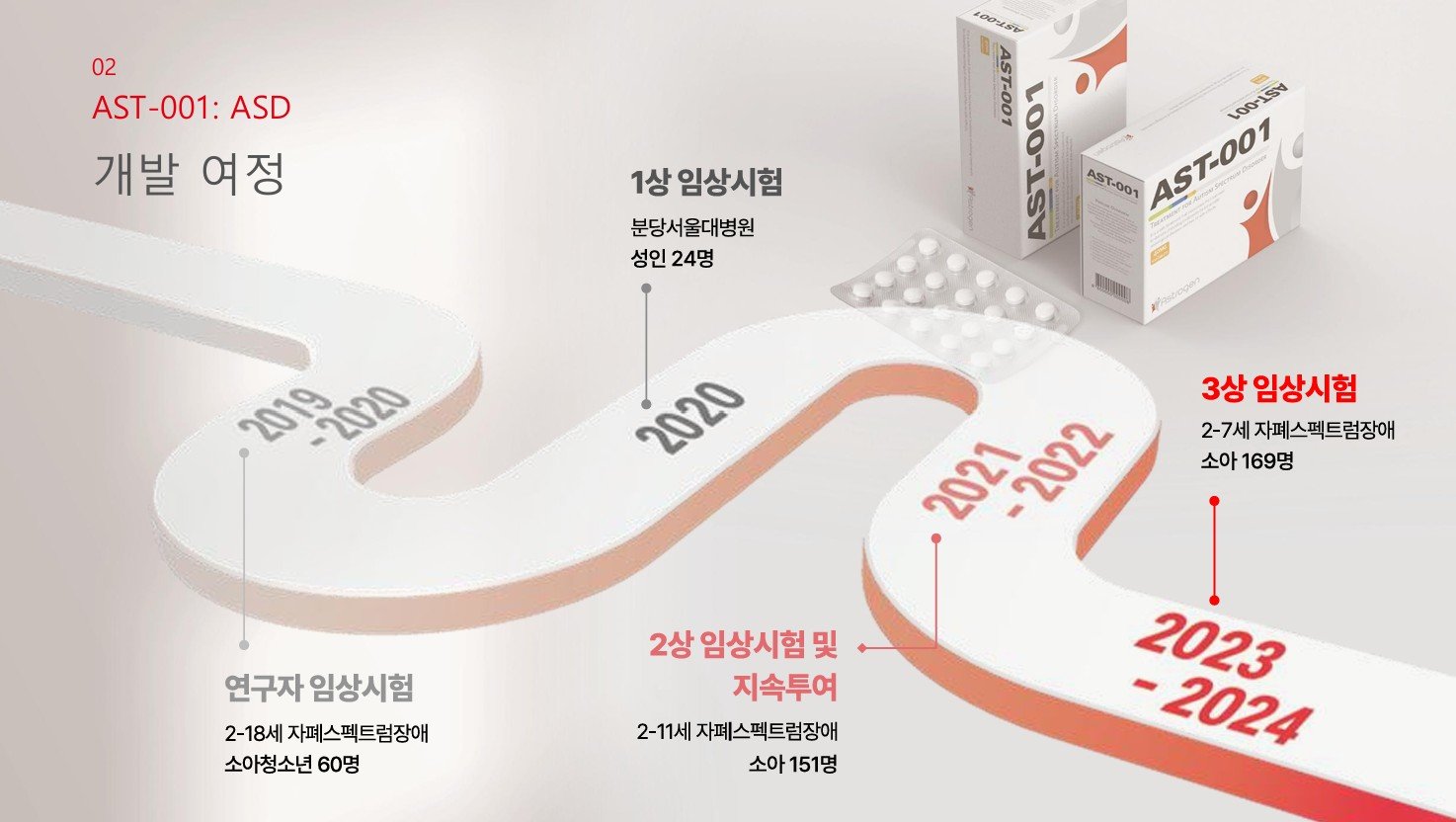
Astrogen’s key pipeline is “Sperazen (AST-001),” a candidate treatment for autism spectrum disorder. From 2019 to 2021, Astrogen conducted investigator-initiated clinical trials to verify Sperazen’s safety and efficacy, and from 2020 to 2024 it completed a total of four clinical trials (Phase 1, 2, 3 + a Phase 2 extension study). In April 2024, Sperazen was designated as an orphan drug in development by the MFDS. Astrogen completed its marketing authorization application to the MFDS in June 2025, and the application is currently under review. “It is evaluated as a clinical trial case that confirmed long-term safety and improvements in core symptoms in the world’s largest pediatric cohort (a total of 320 patients),” CEO Hwang said.
The fact that CEO Hwang remained in clinical practice was a decisive factor enabling Astrogen to achieve rapid progress in the difficult task of developing a core symptom treatment. “We knew clearly which aspects were the most difficult for patients and their caregivers,” she said. In particular, Astrogen focused on using ingredients with verified safety to minimize side effects. “We discovered a substance that can help improve social interaction and communication. Because it was a substance with proven safety, we were able to obtain approval from the university hospital Institutional Review Board (IRB) and conduct investigator-initiated trials (IIT), and subsequently expedite formal clinical trials, thereby shortening the time to approval,” CEO Hwang added.
Sperazen is differentiated from existing treatments in that it targets the core symptoms of autistic children and can be used from the age of two. “In children with autism, the process of synaptic pruning, which eliminates abnormally overproduced synapses, does not proceed smoothly. Sperazen helps normalize this by activating neuroplasticity,” CEO Hwang explained, adding, “The period before elementary school, when neuroplasticity is at its peak, is the golden time when treatment efficacy is greatest. When treatment is administered during this period, we have observed cases in clinical trials where social abilities recovered to within the normal range.”
Astrogen is confirming both the urgent needs of patients and the effects of the new drug through the clinical trial enrollment process. “Children who had never made eye contact since birth looked at their parents for the first time, and children who had been unable to speak uttered their first words. Beyond the core symptoms, patients’ anxiety and hypersensitivity decreased, and their overall daily lives improved,” said CEO Hwang. “Caregivers were so satisfied that they even submitted petitions to continue access to the drug’s benefits after the trial ended,” she added.
Social responsibility beyond new drug development… providing self-help education programs
Astrogen pursues a long-term goal of caring for patients’ entire lives before and after medication, going beyond new drug development alone / Source=Astrogen
Astrogen aims for a long-term goal that goes beyond new drug development to encompass caring for patients’ entire lives before and after medication. To this end, the company launched “Stellar Steps” in April this year, offering free self-help and independent living education programs for adolescents with autism and developmental disabilities. “What severely developmentally disabled children need most is not cognitive enhancement, but motivation for life and support in performing activities of daily living,” CEO Hwang said. At Stellar Steps, participants practice essential daily skills such as bathing, dressing, and doing simple housework independently without a caregiver. Going forward, the program plans to support job placement and provide caregivers with opportunities for emotional recuperation.
Pointing to the lack of support systems in adulthood, CEO Hwang noted, “According to statistics from the Ministry of Health and Welfare, the average life expectancy of people with autism in Korea is 23.8 years, the shortest among all disabilities. This is lower than in other advanced countries (53.8 years in Sweden, 46.2 years in Canada), and is influenced by the weaknesses in support systems after adulthood.” She went on to share a case in which Astrogen directly hired a person with autism, stating, “When people with autism live together with others, their expressive ability, social skills, and cognitive abilities can improve. It is important not to impose limits, but to provide an environment where their social skills can be nurtured.”
Pursuing development of follow-up pipelines… aiming to broaden “positive impact”
Sperazen development journey / Source=Astrogen
Founded in 2017, Astrogen has been growing step by step, and in September this year it was selected as a preliminary unicorn by the Ministry of SMEs and Startups. Based on the completion of MFDS marketing authorization for Sperazen, the company is targeting domestic launch in the first half of 2026. In parallel, it is also pursuing global expansion into markets such as the United States, China, and the Middle East. In particular, for entry into the Middle East—where large-scale, government-led healthcare investments are active—the company is in discussions on a large-scale contract with a major pharmaceutical distributor.
Astrogen is systematically expanding its follow-up pipelines across a broad range of central nervous system disorders and is preparing for an IPO. Noting that 80% of autism patients also have comorbid ADHD, the company is developing a non-stimulant ADHD treatment with fewer side effects, targeting clinical entry in 2026. It is also working on treatments for intractable neurological diseases such as Rett syndrome (a disorder characterized by reduced head growth and loss of previously acquired cognitive, motor, and language functions) and Parkinson’s disease.
Seoul Business Agency’s (SBA) Seoul Startup Hub has supported Astrogen’s growth. “The Seoul Startup Hub has provided practical office space for staff in the Seoul area, and laid the foundation for startup growth through acceleration, education, and consulting. It also offered opportunities for collaboration and growth with other resident companies,” CEO Hwang said.
Finally, CEO Hwang emphasized a vision to define growth not as mere financial figures, but as an “expansion of positive impact.” She added, “Astrogen hopes to help patients and their families regain an ordinary daily life, not only through new drug development but also through social initiatives that support adolescents with developmental disabilities and their caregivers. We will be a company that continuously builds connections between science and people, and fills in the gaps.”
IT Donga reporter Kim Ye-ji (yj@itdonga.com)
ⓒ dongA.com. All rights reserved. Reproduction, redistribution, or use for AI training prohibited.
Popular News