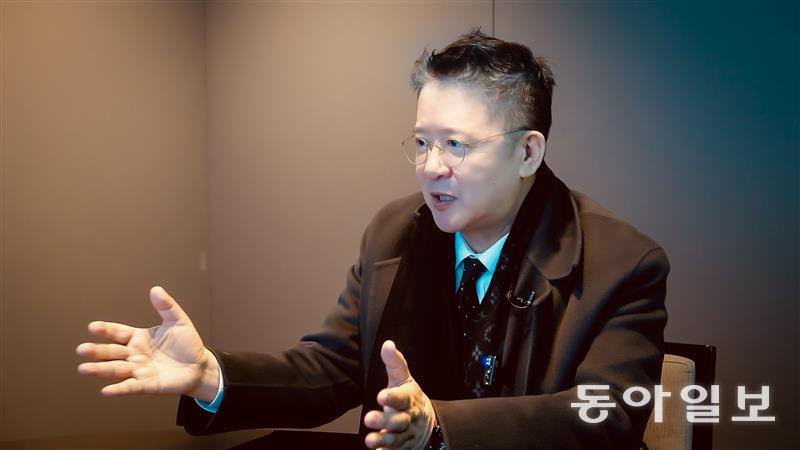
Lee Seok-hwan, CEO of Rokit Healthcare
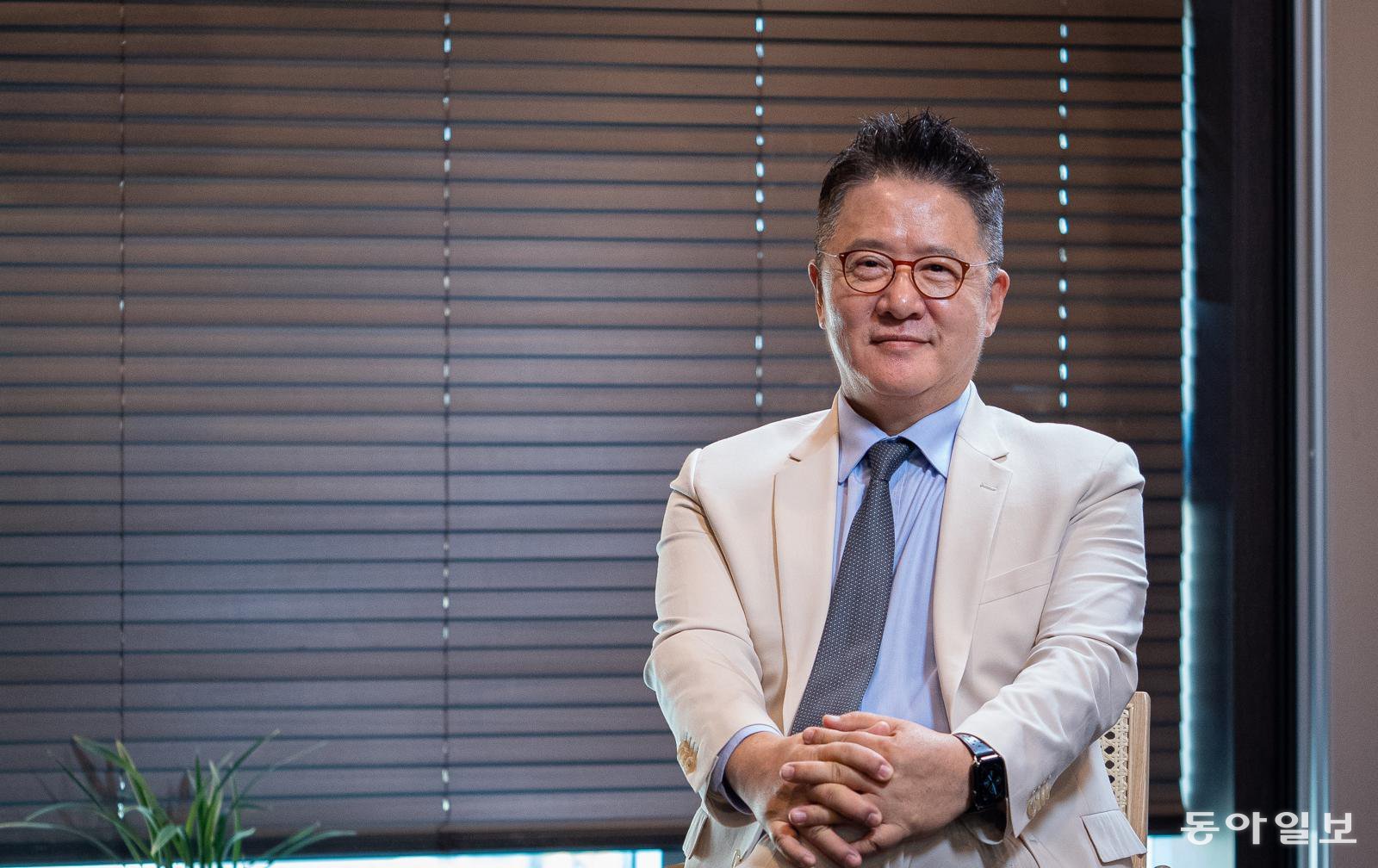
Yoo Suk-hwan, CEO of Rokit Healthcare. Provided by Rokit Healthcare
“If the defect rate of a car were 50%, could that company survive? But in new drug development, a 50% patient response rate is considered remarkable. Of course, these are very different industries, but it made me think, ‘Why shouldn’t that be possible for drugs as well?’ I came to believe that ultra-personalized customized therapeutics could be the answer.”
Yoo Suk-hwan, CEO of Rokit Healthcare, explained his reason for entering the bio business in this way during an interview at the company’s office in Geumcheon-gu, Seoul, on the 10th. Rokit Healthcare has developed a regenerative treatment platform for “diabetic peripheral neuropathy (hereinafter diabetic foot),” in which necrosis occurs in the foot, the most distal part of the body, when long-standing diabetes damages peripheral nerves. Using 3D bioprinting, the company produces regenerative patches precisely fitted to the necrotic area, which differs for each patient.
For Yoo, who joined Daewoo Motor in 1980 and spent some 20 years as a “Daewoo man,” the bio sector was truly “a whole new world.” However, drawing on the spirit of challenge he had developed while working closely with former Daewoo Group Chairman Kim Woo-choong, he went on to head Celltrion Healthcare under Celltrion Group Chairman Seo Jung-jin in 2007. “At Celltrion Healthcare, I learned a great deal about the bio-industry ecosystem while working on global supply contracts,” Yoo said. “Based on that experience, I founded what is now Rokit Healthcare.”
Rokit Healthcare, which has exported its diabetic foot regenerative treatment platform to 46 countries in regions including North America, the Middle East, and Europe, successfully listed on KOSDAQ in May this year. Yoo describes next year as the “first year” of Rokit Healthcare’s business expansion. He discussed the company’s business plans.
Is the diabetic foot regenerative treatment platform an ultra-personalized customized therapeutic?
Yes. It is probably best to first explain the patch we have developed. Using 3D bioprinting, we produce regenerative patches that precisely fit the necrotic area, which differs from patient to patient. The material for the patch consists of various signaling substances (proteins) that can stimulate stem cells and regenerate damaged tissue, extracted from the patient’s adipose tissue. It is safe because it uses the patient’s own autologous cells.
In severe cases of diabetic foot where the patient is unable to walk, reconstructive surgery is sometimes performed in which part of the patient’s tissue is removed and used to fill the necrotic area. However, there has been a limitation in that it is difficult to properly connect the blood vessels of the new tissue to those of the foot tissue.
Because our platform is based on the idea of inducing regeneration from inside the foot, it can overcome such limitations. To date, about 7,000 patients in 46 countries have used our patch, and approximately 90% of them have achieved regeneration.
Yoo Suk-hwan, CEO of Rokit Healthcare. Provided by Rokit Healthcare
Can the patch be produced directly in the operating room?
When medical staff photograph the necrotic area of the patient’s foot with a camera, artificial intelligence (AI) analyzes the image and calculates the area and volume of the site with 99% accuracy. A 3D bioprinter then dispenses the corresponding amount of bio-ink to produce the patch. This entire process can be completed within tens of minutes.
If the patch regenerates tissue, it seems it could be applied to other tissues as well.
We are currently working on expanding its application to cartilage, kidneys, and even the heart. For cartilage, we plan to launch multinational clinical trials soon in 17 countries, including Korea, the United States, South American countries, and Egypt. (On the 15th, Rokit Healthcare officially announced the start of multinational clinical trials for cartilage regeneration.) As with diabetic foot, this involves using autologous cell-based bio-ink and 3D bioprinting to produce a customized patch that precisely fits the patient’s cartilage and then transplanting it. We expect to obtain clinical results in the first half of next year (January–June).
For the kidney regenerative patch, we plan to conduct clinical trials on three patients at Asan Medical Center in Seoul, Korea, starting at the end of this year. If the kidney trial is successful, it could be considered a major medical breakthrough. The kidney is a representative organ that is difficult to restore once damaged. When kidney function declines to about half, dialysis or kidney transplantation is required. Our goal is to attach a regenerative patch to the kidney and restore its function. We have confirmed efficacy in animal studies involving mice and pigs, and plan to apply for “new medical technology assessment” after reviewing the results of the Korean clinical trial.
The heart is still at the research stage. We plan to conduct joint research with Harvard University in the United States. As people age, the heart muscle becomes thinner, which is the cause of many cardiovascular diseases. We intend to apply patches to help the heart muscle grow properly. We plan to start preclinical animal studies in the first half of next year and obtain results in the second half (July–December).
ⓒ dongA.com. All rights reserved. Reproduction, redistribution, or use for AI training prohibited.
Popular News