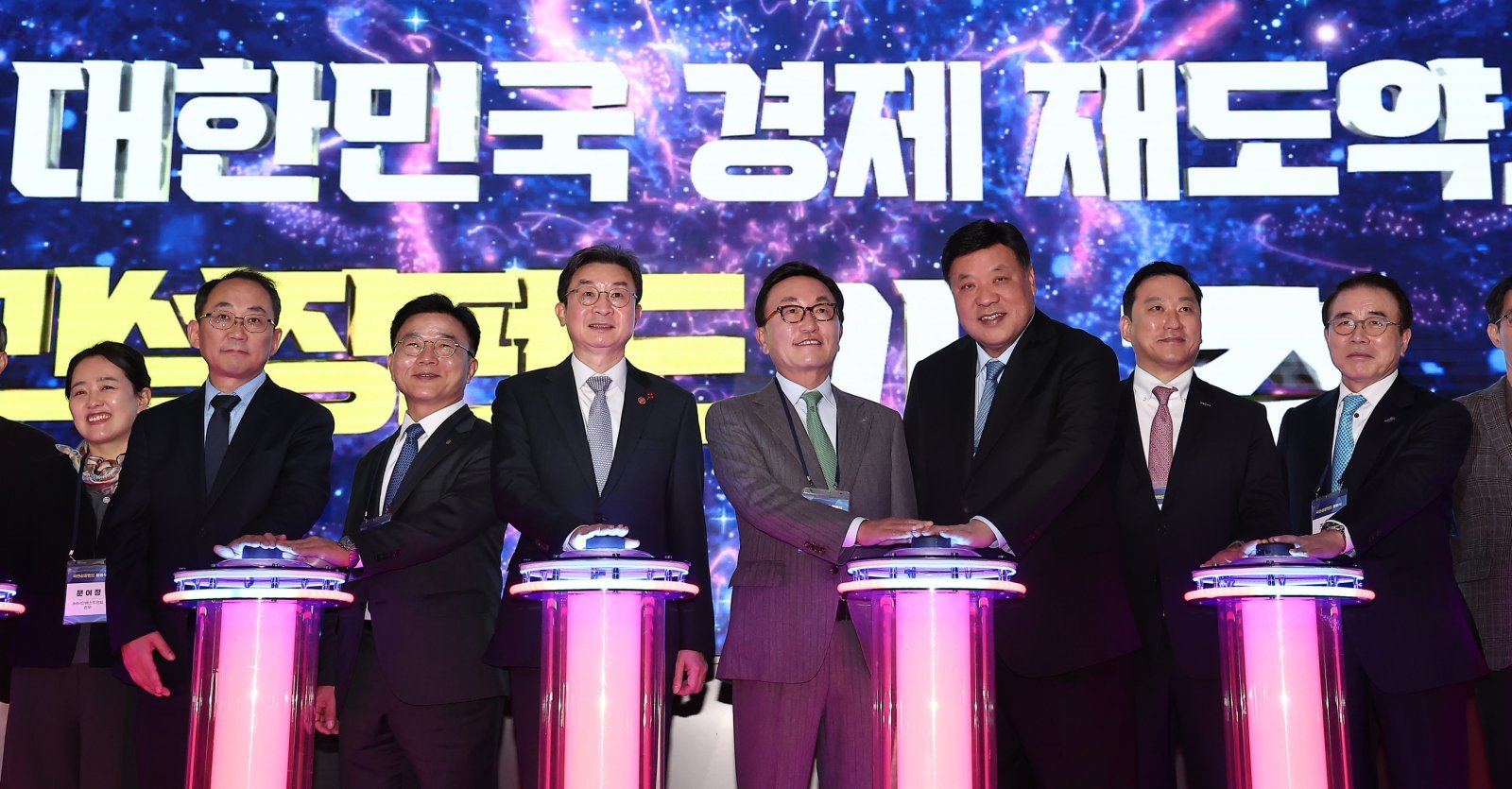
Participants including Korea Development Bank Chairman Park Sang-jin (third from left), Financial Services Commission Vice Chairman Lee Eok-won, Mirae Asset Chairman Park Hyeon-joo, and Celltrion Group Chairman Seo Jeong-jin pose for a commemorative photo at the launch ceremony of the National Growth Fund held at KDB’s head office in Yeouido, Seoul on the 11th. 2025.12.11. News1
The government will inject KRW 30 trillion next year into advanced industries such as artificial intelligence (AI) and semiconductors out of the KRW 150 trillion National Growth Fund. It also plans to create a KRW 600 billion public participation fund that reduces loss risk and offers tax benefits so that the public can share in the gains.
On the 16th, the Financial Services Commission and related ministries announced the management plan for next year for the National Growth Fund, which will inject KRW 150 trillion into advanced industries over five years.
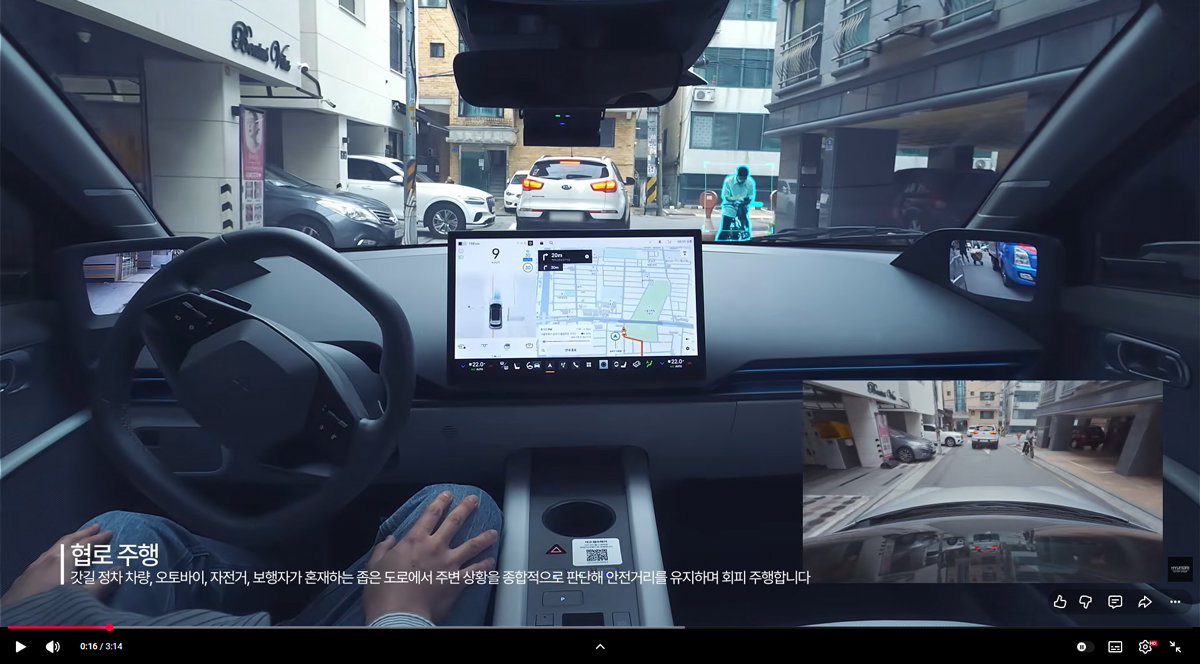
By industry, KRW 6 trillion will go to AI, KRW 4.18 trillion to semiconductors, KRW 3.08 trillion to future cars and mobility, KRW 2.32 trillion to bio and vaccines, and KRW 1.58 trillion to secondary batteries. By support method, KRW 3 trillion will be allocated to direct investment, KRW 7 trillion to indirect investment, KRW 10 trillion to infrastructure investment and financing, and KRW 10 trillion to ultra-low-interest loans.
Direct investment refers to participating in equity for corporate capital increases or plant expansions. For example, investment demand has been received for projects such as next-generation AI solution software developers, the establishment of special purpose companies (SPCs) for the AI robot ecosystem, and capital increases for expanding semiconductor specialty gas plants at small and medium-sized enterprises.
Indirect investment is a method in which the advanced industries fund and private capital (banks, pension funds, retirement pensions, etc.) jointly create funds to make equity investments. Among these, a public participation fund in which ordinary citizens can directly participate will be created with a scale of KRW 600 billion. The government has decided to reduce loss risk through a subordinated structure with fiscal resources of up to 20%. Detailed measures, including tax benefits, are scheduled to be announced in the first quarter of next year (January–March).
Infrastructure investment and financing funds will be used for building power grids, power generation, and water supply facilities. Ultra-low-interest loans will be used to provide long-term funds for facility investment and research and development (R&D) at interest rates at the 2–3% range, comparable to treasury bond yields.
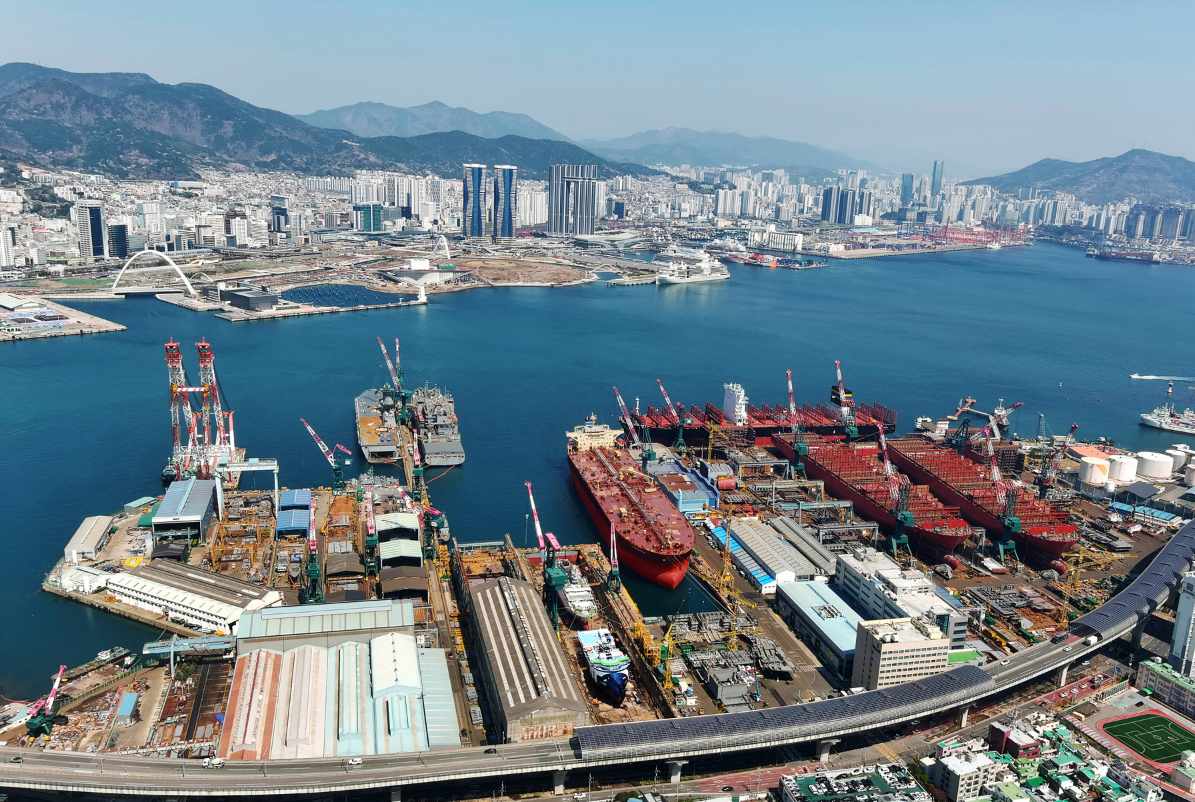
In addition, the government will seek to secure global logistics and supply chain hubs by expanding 40 overseas publicly supported logistics bases and securing 10 overseas port terminals by 2030. To this end, it will establish a KRW 1 trillion global container terminal investment fund.
The government will also expand the distribution of heat pumps as part of the green economy. Heat pumps are devices that draw on geothermal and hydronic heat for cooling and heating, helping to reduce carbon emissions. The government plans to deploy 3.5 million heat pumps by 2035 and is reviewing a plan to exempt household heat pumps from the progressive residential electricity tariff.
ⓒ dongA.com. All rights reserved. Reproduction, redistribution, or use for AI training prohibited.
Popular News