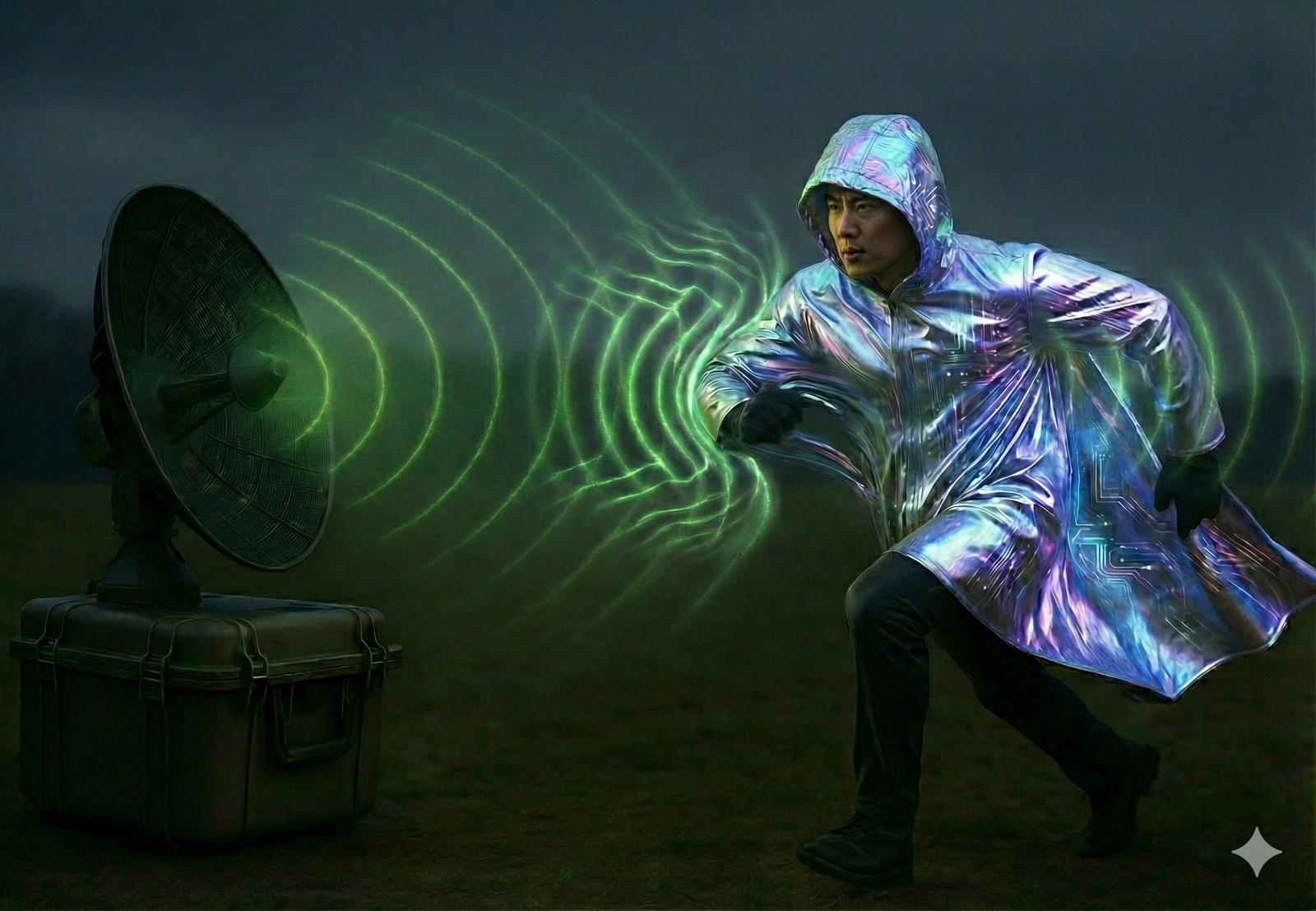
AI-generated research reference image. KAIST
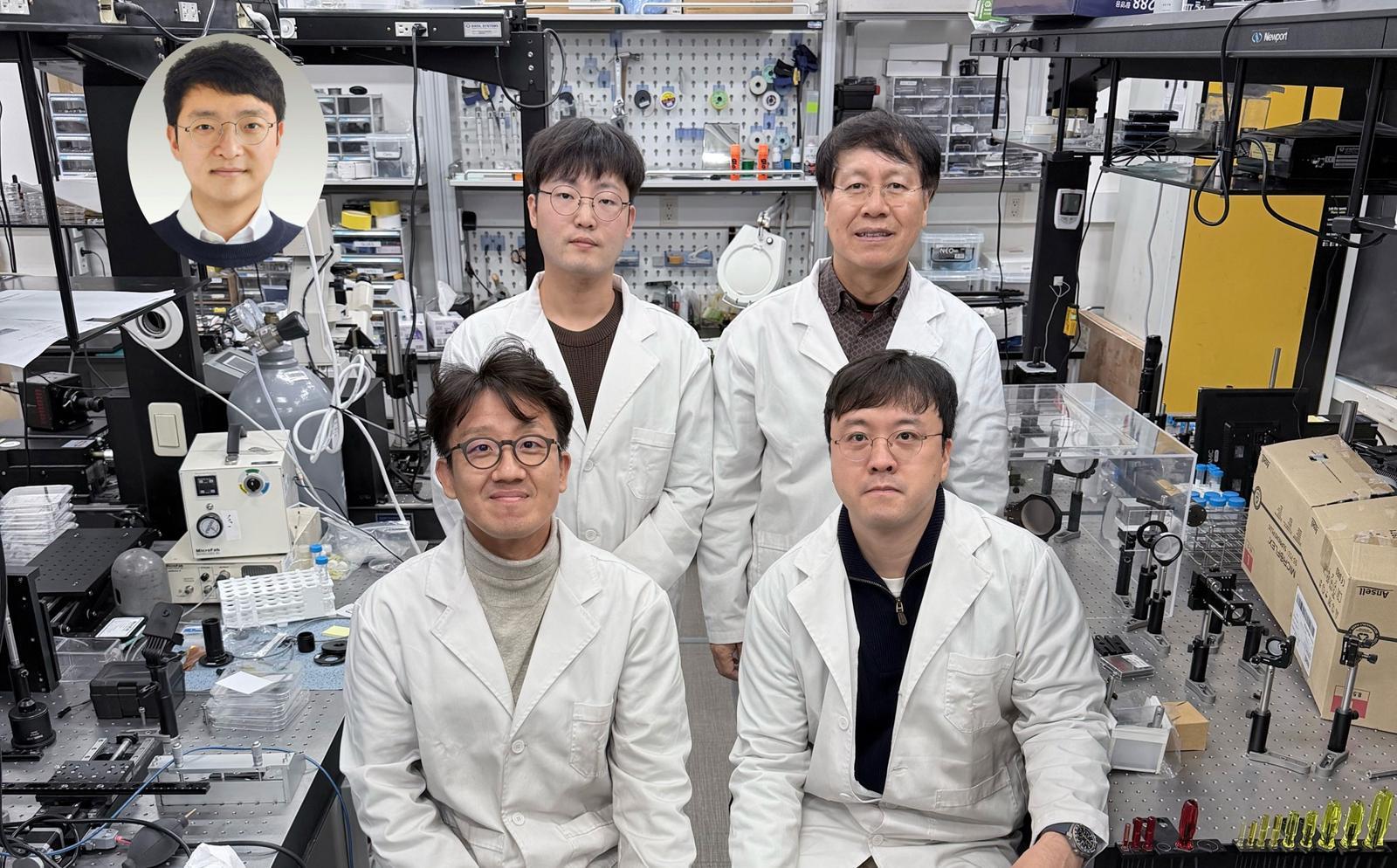
From the top row, left to right, clockwise: Lee Hyun-seung, KAIST doctoral candidate; Choi Wonho, Professor at the KAIST Department of Nuclear and Quantum Engineering; Park Sanghoo, Professor at the KAIST Department of Nuclear and Quantum Engineering; and Kim Hyungsoo, Professor at the KAIST Department of Mechanical Engineering. At the top left is Dr. Pyeon Jeongsoo. Provided by KAIST.
The fundamental technology to realize an invisibility cloak like the one featured in the “Harry Potter” films has been developed by a Korean research team. It is expected to open up new possibilities such as “stealth weapons” mounted on robots and drones that cannot be detected by radar or sensors.
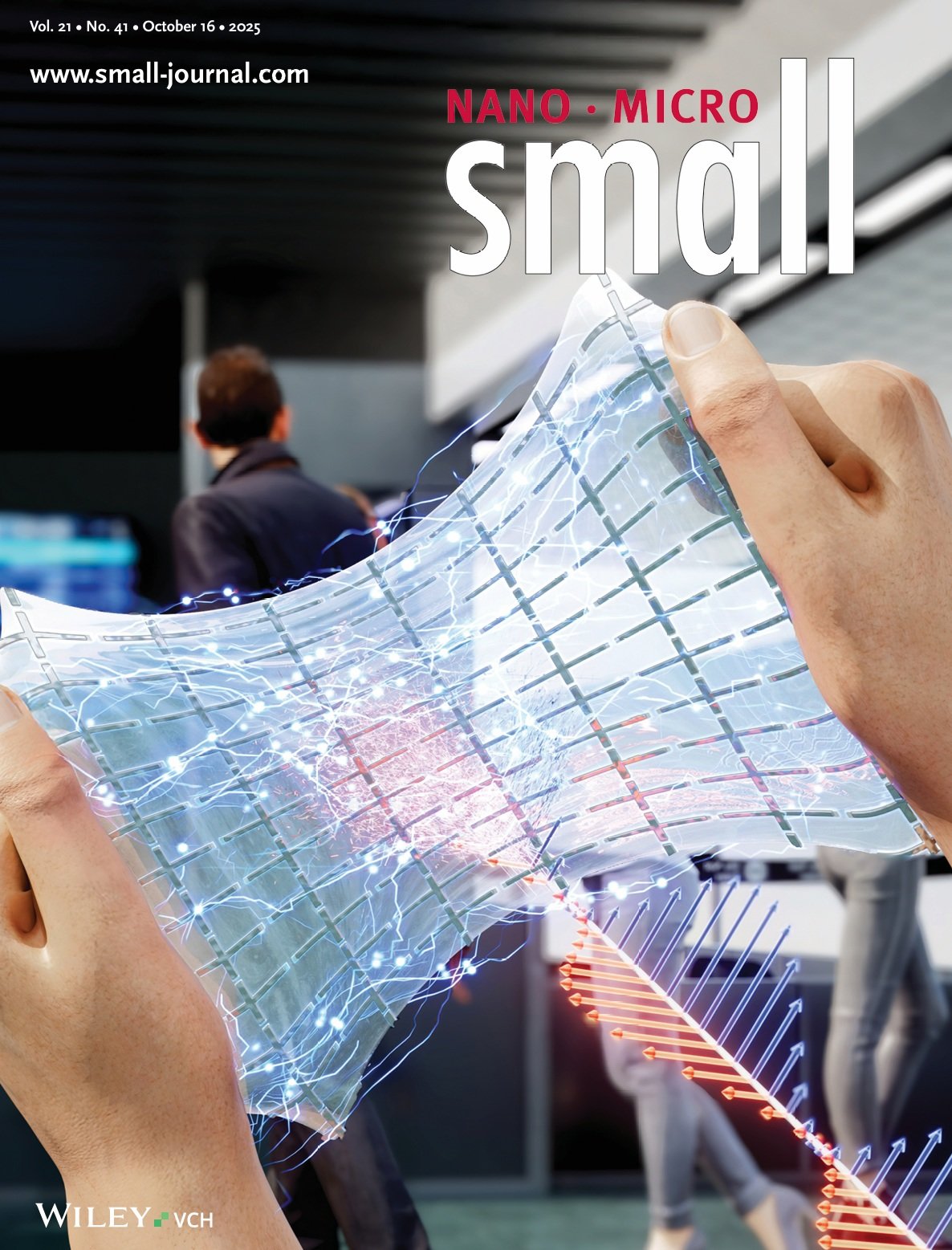
KAIST announced on the 16th that a research team led by Professor Kim Hyungsoo of the Department of Mechanical Engineering and Professor Park Sanghoo of the Department of Nuclear and Quantum Engineering has developed a liquid-metal composite ink that creates an “invisibility cloak” undetectable by radar. This research was selected as the cover article of the October issue of the international journal Small.
Cover of the international journal “Small” featuring the research
Radar works by transmitting radio waves toward a target and receiving the waves reflected back to determine the target’s location. In other words, to evade a radar network, the reflected radio waves must be prevented from reaching the receiver. The newly developed liquid-metal composite ink absorbs radio waves so that the target does not appear in the “eyes” of the radar.
There have been previous attempts to develop stealth materials that evade radar detection, but conventional liquid metals used to date had the limitation of easily oxidizing upon contact with air, causing a loss of performance. Just as an oil film forms over a drop of water, an oxide layer quickly formed on liquid-metal particles, severing the connections between particles and causing them to corrode.
The newly developed liquid-metal composite ink forms a “mesh-like” structure as the liquid-metal particles self-connect during the drying process. According to the research team’s experiments, this structure exhibited high stability, maintaining performance without rusting for over one year. In addition, the structure maintained electrical conductivity even when stretched up to 12 times its original length. The research team explained that it is “as soft as rubber, while fully retaining the functions of metal.”
The fabrication process is also simple. The ink developed in this study only needs to be printed with a printer or applied with a brush and then dried.
AI-generated research reference image. KAIST
This liquid-metal composite ink is expected to be applicable to various weapons systems that require radar stealth technology. It can also be used as a material for electronic devices, including wearable devices. For example, if applied to the folding sections of foldable smartphones, it can provide stretchability while maintaining a stable structure. Professor Kim stated, “We have enabled electromagnetic-wave functionality using only printing processes without complex equipment,” adding, “It is expected to be utilized in a wide range of future technologies.”
ⓒ dongA.com. All rights reserved. Reproduction, redistribution, or use for AI training prohibited.
Popular News