[ITDonga x SparkLabs] The Southeast Region ICT Innovation Square Expansion Project is supervised by the Busan IT Industry Promotion Agency and aims to cultivate digital talent in the Busan, Ulsan, and Gyeongnam areas, promote the digital transformation of local specialized industries, and build a startup ecosystem. ITDonga is introducing startups being nurtured by SparkLabs through this project.
Onboarding is the process of visually guiding new customers through the steps needed to get familiar with the service’s core functions for the first time / Source=Shutterstock
“Onboarding” refers to the process of visually guiding new customers through the steps needed to get familiar with a service’s core functions when they first encounter it. As onboarding gains prominence as a strategy to prevent customer churn, BubbleCloud is targeting the B2B SaaS (software-as-a-service for enterprises) market with “StepBy,” a solution that helps build customized onboarding in just one day.
Why has onboarding recently attracted attention?Onboarding has become a key strategy determining the success or failure of SaaS companies that provide cloud-based software as a service. This is because the initial experience when a customer first encounters a service is the critical key to leading to successful long-term use. Effective onboarding reduces service churn and increases the rate at which new users convert into active users, thereby becoming a growth driver for SaaS companies.
However, if onboarding is limited to simple user instructions, it is difficult to achieve real impact. The true purpose of onboarding is to shorten TTV (Time To Value), that is, the “time to value realization” for the customer. Reducing the time it takes for customers to perceive the value of a service is essential to preventing churn and increasing conversion rates. Well-designed onboarding shortens this period and helps customers quickly experience the full value of the service. The longer the TTV, the higher the likelihood that customers will fail to perceive value and leave, leading to lower retention. When TTV is shortened, the probability that new users will convert into active users or paying customers increases.
Onboarding is particularly effective for customers who are hesitating to purchase, rather than those with no purchase intent at all. For example, in a supermarket, offering a sample to a customer who is unsure about purchasing can eliminate uncertainty about the taste, thereby increasing the likelihood that the product will end up in the shopping cart. Similarly, providing appropriate onboarding to customers who have signed up to try a service—potential customers who already show interest—can significantly increase conversion rates.
Global SaaS companies such as Slack, Dropbox, and Zoom have already recognized the importance of onboarding and are expanding its adoption. Rather than relying heavily on sales representatives or marketing in the initial stage, these companies draw in customers and prevent churn by enabling them to experience the service directly.
The reality of SaaS onboarding in Korea… Why is it progressing slowly?
Domestic SaaS companies have only just begun to introduce onboarding / Source=BubbleCloud
What is the current status of onboarding adoption among Korean SaaS companies? It is still at a very early stage. While onboarding has already become a core requirement for SaaS companies in the United States, the SaaS industry in Korea has only recently entered a growth trajectory, so onboarding remains unfamiliar. Another reason is that many companies are accustomed to traditional sales methods and do not yet fully recognize the importance of onboarding.
Another factor behind the reluctance of Korean companies to adopt onboarding is a “shortage of development resources.” There is a prevailing perception that developing interactive in-app onboarding in-house requires considerable time and effort from planning to development and testing, and that even minor UI changes necessitate repeated updates, creating a heavy management burden. As a result, many companies are hesitant to implement onboarding even when they recognize its importance.
As a realistic alternative to these challenges, experts recommend a hybrid approach that appropriately combines automated onboarding with human support. Global SaaS companies, regardless of the capabilities of their sales staff, at minimum have onboarding processes embedded within the service and are leveraging them to improve sales efficiency. A balanced strategy that uses automated onboarding to guide users when needed and brings in human support where appropriate is now required for Korean SaaS companies as well.
Onboarding that once took 40 days to build, now completed in one day with StepBy
StepBy helps easily create various types of in-app guides / Source=BubbleCloud
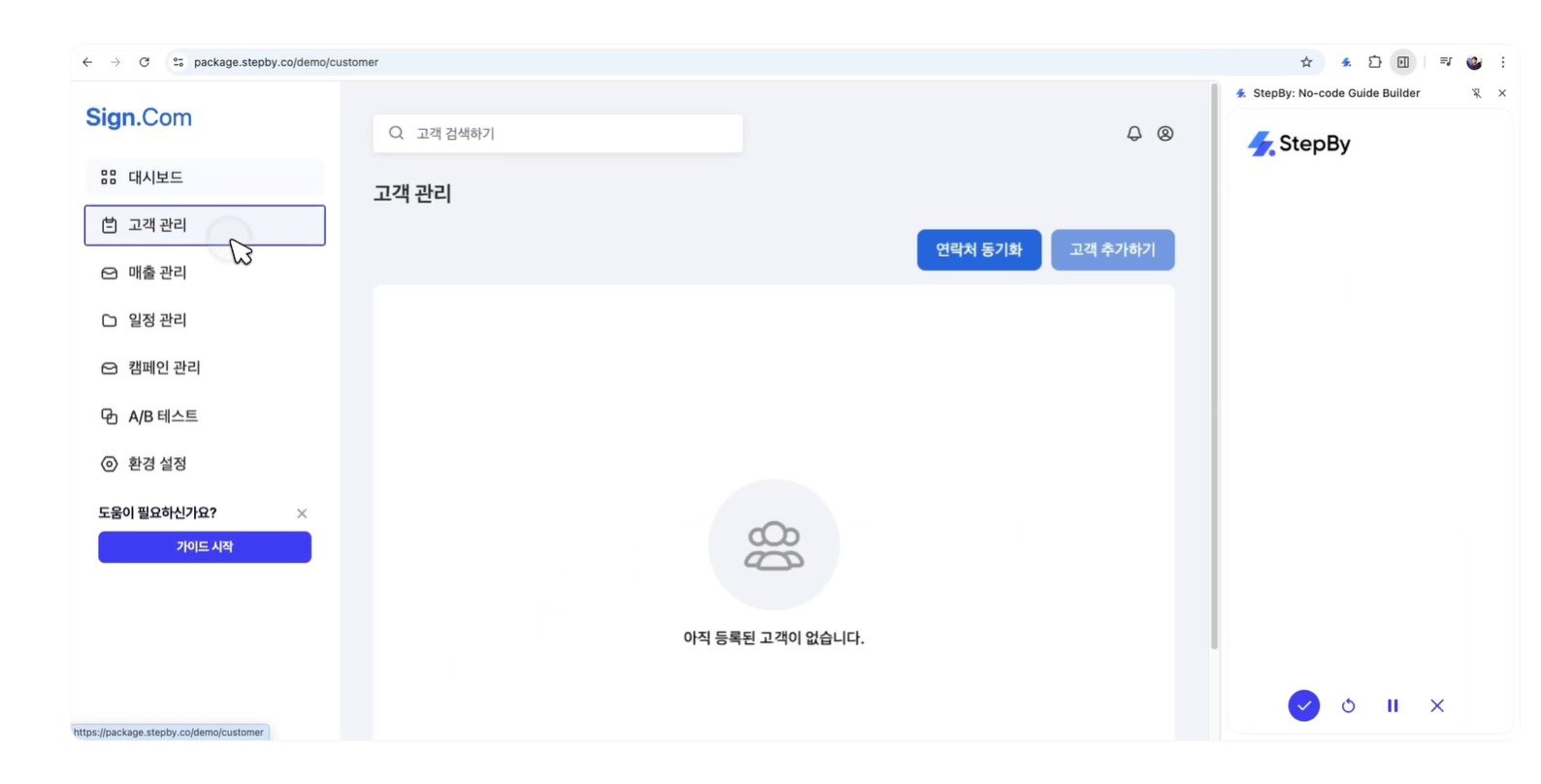
To address these pain points in the Korean SaaS market, BubbleCloud has introduced “StepBy,” a personalized onboarding builder. StepBy allows companies to easily create various types of in-app guides such as tutorials, manuals, and video guides, minimizing the need for developer involvement and aiming to contribute to acquiring active users and increasing revenue by providing a better onboarding experience. BubbleCloud CEO Kim Tae-hoon explained, “When a company develops an onboarding system in-house, it takes an average of more than 40 days, but with StepBy it can be built in just one day, which is its biggest strength.”
The key differentiator of StepBy is its “personalization” strategy. Because initial churn in the B2B SaaS environment is determined in a short period of time, it is essential to selectively provide customized guides based on customer behavior and attribute data. Instead of offering the same guide to all users, StepBy identifies each customer’s purpose of use and characteristics and delivers tailored guides for each individual.
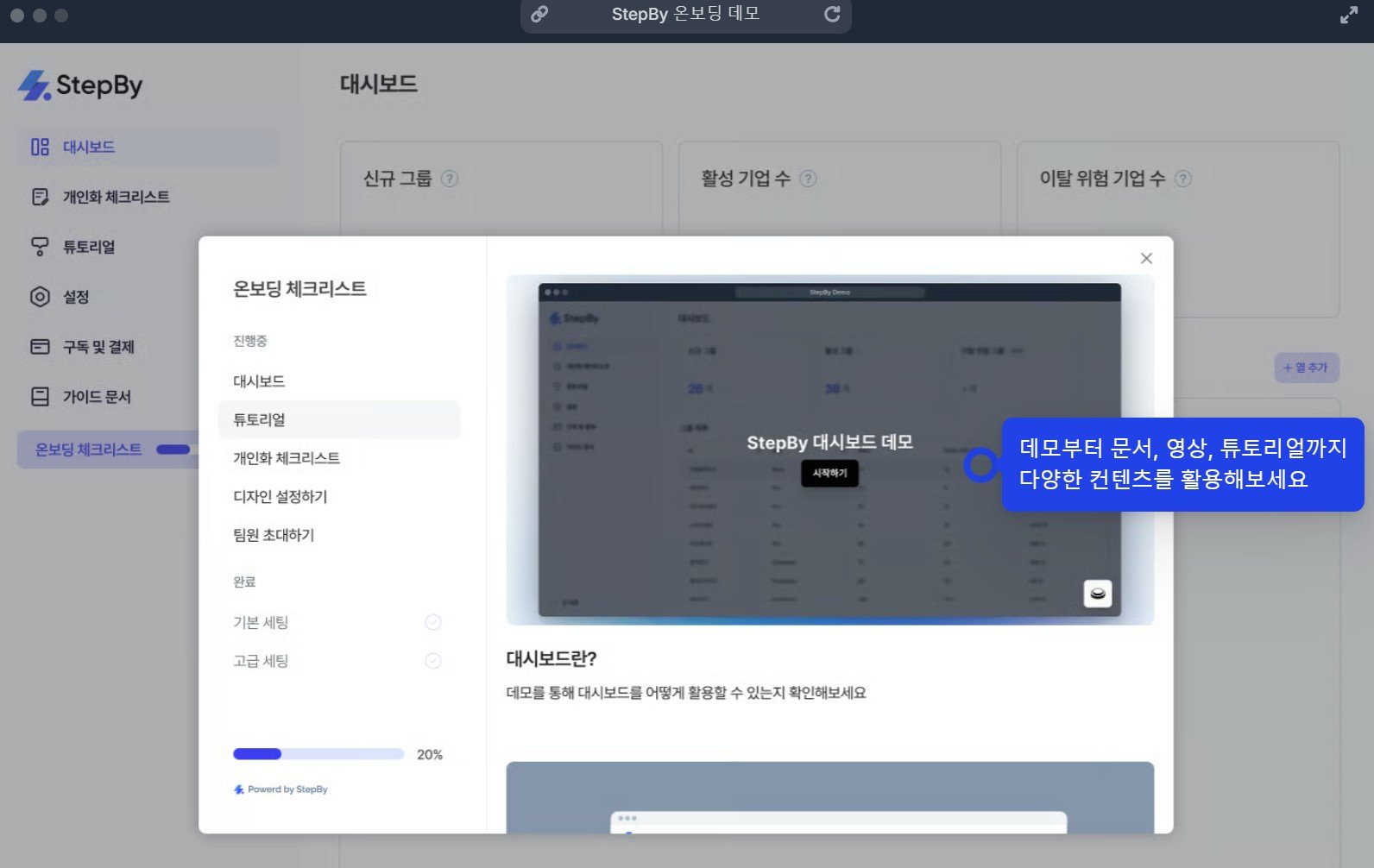
StepBy provides a B2B-customized analytics dashboard / Source=BubbleCloud
In particular, StepBy provides a B2B-customized analytics dashboard. Through this dashboard, companies can gain at-a-glance insight into data such as onboarding progress by user, engagement level, and recent login status. Based on this, they can analyze where users are experiencing difficulties, improve the onboarding flow, and thereby increase conversion rates. It also helps detect changes in usage frequency to proactively respond to churn risk. For example, sales representatives can directly contact clients with low activity levels or provide separate feature usage guides tailored to specific customer segments.
In addition, in B2B SaaS, many end users are grouped under a single client company, and StepBy supports a function that aggregates and displays all user data at the company level. By providing insight into the entire onboarding process in this way, it helps SaaS operations teams develop strategies to prevent early churn and maximize activation.
Looking ahead, BubbleCloud plans to apply artificial intelligence (AI) to StepBy to maximize the personalization of onboarding experiences. AI will analyze user behavior data to automatically generate optimal onboarding flows and create tailored tutorials for all functions. The company is also envisioning a next-generation onboarding experience where users can converse with AI in natural language to easily find the functions they need.
CEO Kim Tae-hoon said, “Even before the official launch, we conducted technology verification with several companies such as Bespin Global and Pluuug, and some companies achieved results such as reducing onboarding build time by 90% compared to their previous systems.” He added, “As the Korean SaaS market enters a full-fledged growth phase, we will raise awareness of the importance of onboarding and help more companies build onboarding with ease,” expressing his ambition that “StepBy will become an onboarding platform recognized for its competitiveness in overseas markets as well.”
Reporter Kim Ye-ji, ITDonga (yj@itdonga.com)
ⓒ dongA.com. All rights reserved. Reproduction, redistribution, or use for AI training prohibited.
Popular News