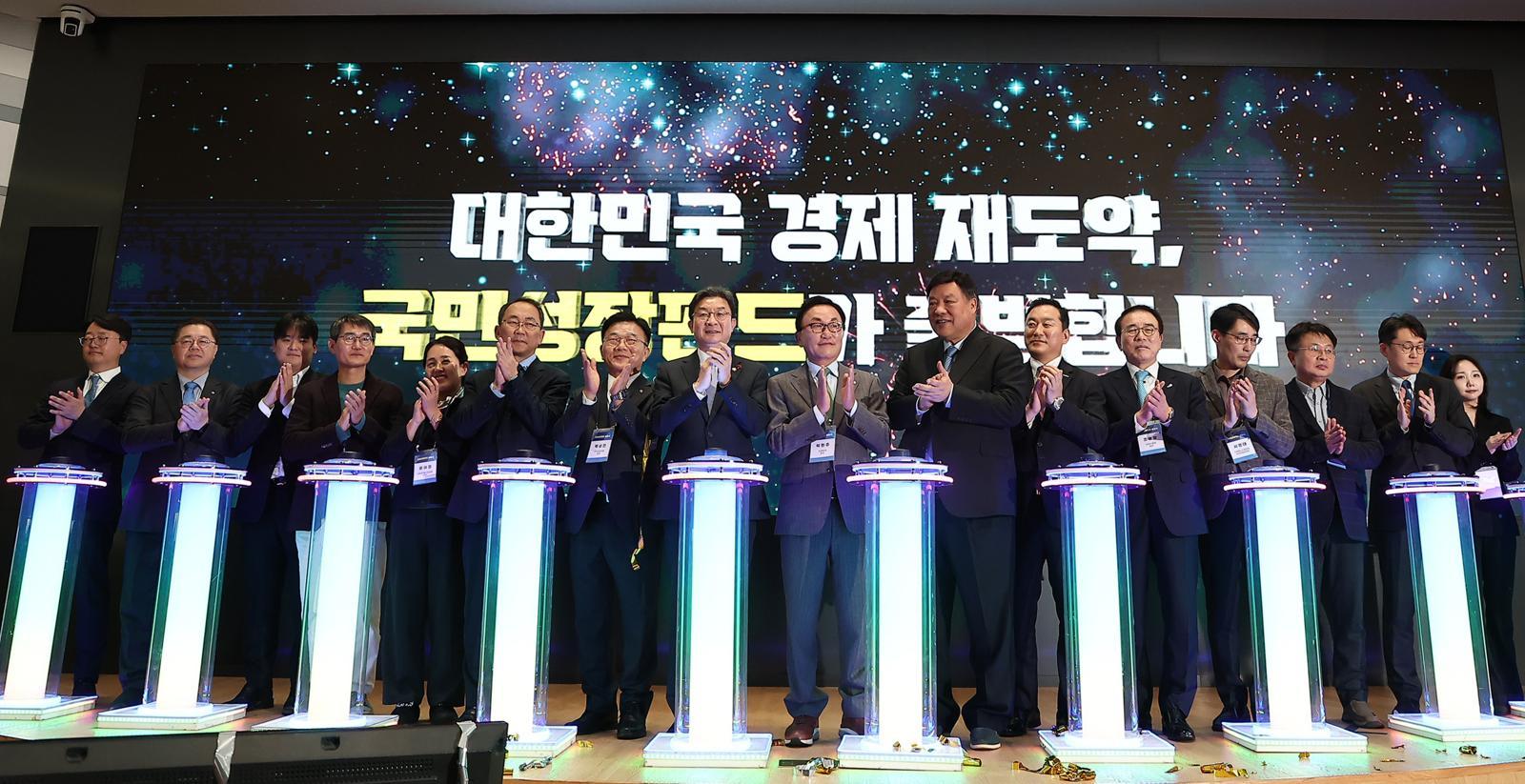
Vice Chairman Lee Eok-won of the Financial Services Commission, Mirae Asset Chairman Park Hyun-joo, Celltrion Group Chairman Seo Jung-jin and other participants pose for a commemorative photo at the launch ceremony of the National Growth Fund held at Korea Development Bank’s head office in Yeouido, Seoul, on the 11th. 2025.12.11 (Seoul=News1)
The KRW 150 trillion “National Growth Fund,” established to support advanced strategic industries such as artificial intelligence (AI) and semiconductors, which are core national policy tasks of the Lee Jae-myung administration, was launched on the 11th. More than 40% of the total capital will be allocated to regional areas to stimulate local economies. The first investment destinations under review include the National AI Computing Center in Haenam-gun, Jeollanam-do, SK hynix’s Yongin Cluster, and the Sinan Ui offshore wind power project in Sinan-gun, Jeollanam-do.
The Financial Services Commission held the “National Growth Fund Launch Ceremony and 1st Strategy Committee Meeting” at Korea Development Bank in Yeouido, Yeongdeungpo-gu, Seoul, on the 11th and announced the future investment structure and decision-making framework. Park Hyun-joo, Chairman of Mirae Asset Group, and Seo Jung-jin, Chairman of Celltrion, joined the public-private joint Strategy Committee, an advisory body that will discuss fund management strategy and allocation of resources.
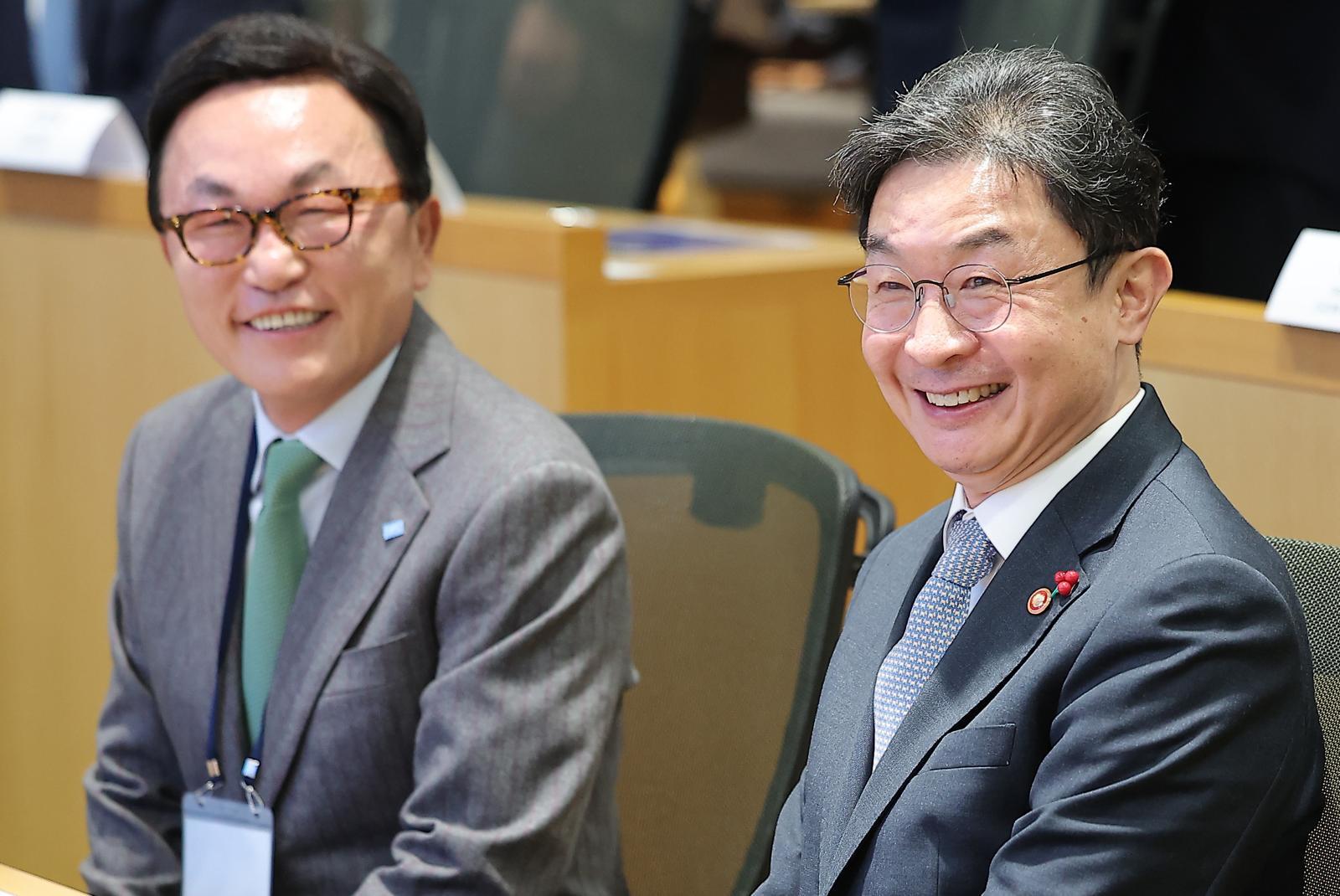
Vice Chairman Lee Eok-won of the Financial Services Commission (right) and Mirae Asset Chairman Park Hyun-joo smile during the launch ceremony of the National Growth Fund held at Korea Development Bank’s head office in Yeouido, Seoul, on the 11th. 2025.12.11 (Seoul=News1)
The National Growth Fund will comprise KRW 75 trillion in government-guaranteed bonds and KRW 75 trillion in private capital, totaling KRW 150 trillion. Over five years, KRW 15 trillion will be deployed for direct investment, KRW 35 trillion for indirect investment, KRW 50 trillion for infrastructure investment and loans, and KRW 50 trillion for ultra-low-interest loans. More than 40% of the total capital will be allocated to regional areas.
The direct investment method involves participating in capital increases for small and mid-sized enterprises and mid-tier companies that find it difficult to issue corporate bonds or obtain low-interest loans, as well as capital injections into special purpose companies (SPCs) established for large-scale plant expansion. An official from the financial authorities explained, “To date, companies developing next-generation AI solutions and projects to establish SPCs for building an AI robot ecosystem have applied for investment.”
Indirect investment will take the form of equity investments aligned with policy objectives. The financial authorities stated, “We will support long-term investments of more than 10 years in promising companies that require patient long-term capital,” adding, “We plan to enhance transparency by disclosing management performance and minimize overlap among ministry-level funds through a standing inter-ministerial consultative body.”
Infrastructure investment and loans will support infrastructure development projects such as power grids, power generation, and water supply facilities that can be jointly utilized by advanced and technology companies. The financial authorities said, “Projects that have applied for investment include a semiconductor plant wastewater reuse project, a floating solar power project to support advanced industries, and a district energy generation project for a semiconductor cluster.”
Ultra-low-interest loans will provide funding at 2–3% interest rates, comparable to treasury bond yields, to companies undertaking large-scale facility investments or research and development (R&D).
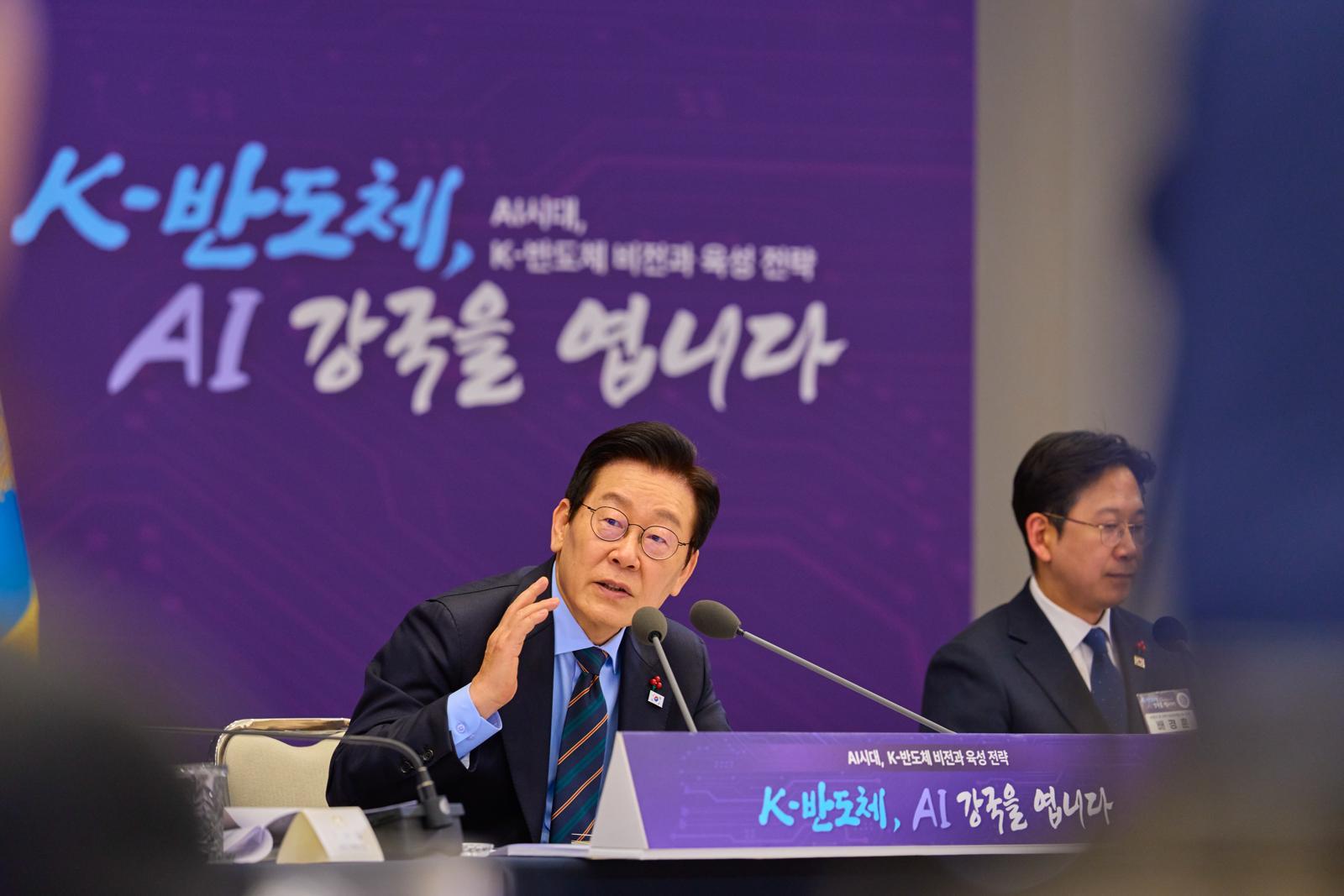
President Lee Jae-myung speaks at a briefing on the vision and development strategy for K-semiconductors in the AI era, held at the presidential office building in Yongsan, Seoul, on the 10th. (Provided by the Presidential Office) 2025.12.10
The government plans to invest KRW 30 trillion in the AI sector, KRW 20.9 trillion in the semiconductor sector, KRW 15.4 trillion in mobility, KRW 11.6 trillion in the bio and vaccine sector, and KRW 7.9 trillion in secondary batteries through the National Growth Fund.
When selecting companies to receive investment, an “Investment Review Committee” will first shortlist potential investment targets, after which the “Fund Management Deliberation Committee” will make the final decisions.
Candidates under review by the financial authorities and Korea Development Bank as potential “first investment destinations” reportedly include the National AI Computing Center to be built in Solaseado, Haenam-gun, Jeollanam-do, the Yongin Cluster currently under development by SK hynix, and the Sinan Ui offshore wind power project in Sinan-gun, Jeollanam-do. An official from the financial authorities said, “It is highly likely that multiple sites will be selected as the first investment destinations,” adding, “The final decision will be made by the Fund Management Deliberation Committee, which is composed of nine private-sector experts.”
ⓒ dongA.com. All rights reserved. Reproduction, redistribution, or use for AI training prohibited.
Popular News