National Institute of Health studies cognitive impairment in infected patients
Virus found to disrupt brain neuron function
Getty Images Bank
A study has found that the novel coronavirus disease (COVID-19) virus affects brain function and reduces cognitive ability.
The Korea Disease Control and Prevention Agency (KDCA) National Institute of Health announced on the 10th that it has scientifically identified, through animal experiments, the causes of “cognitive impairment” such as reduced concentration and memory reported after COVID-19 infection.
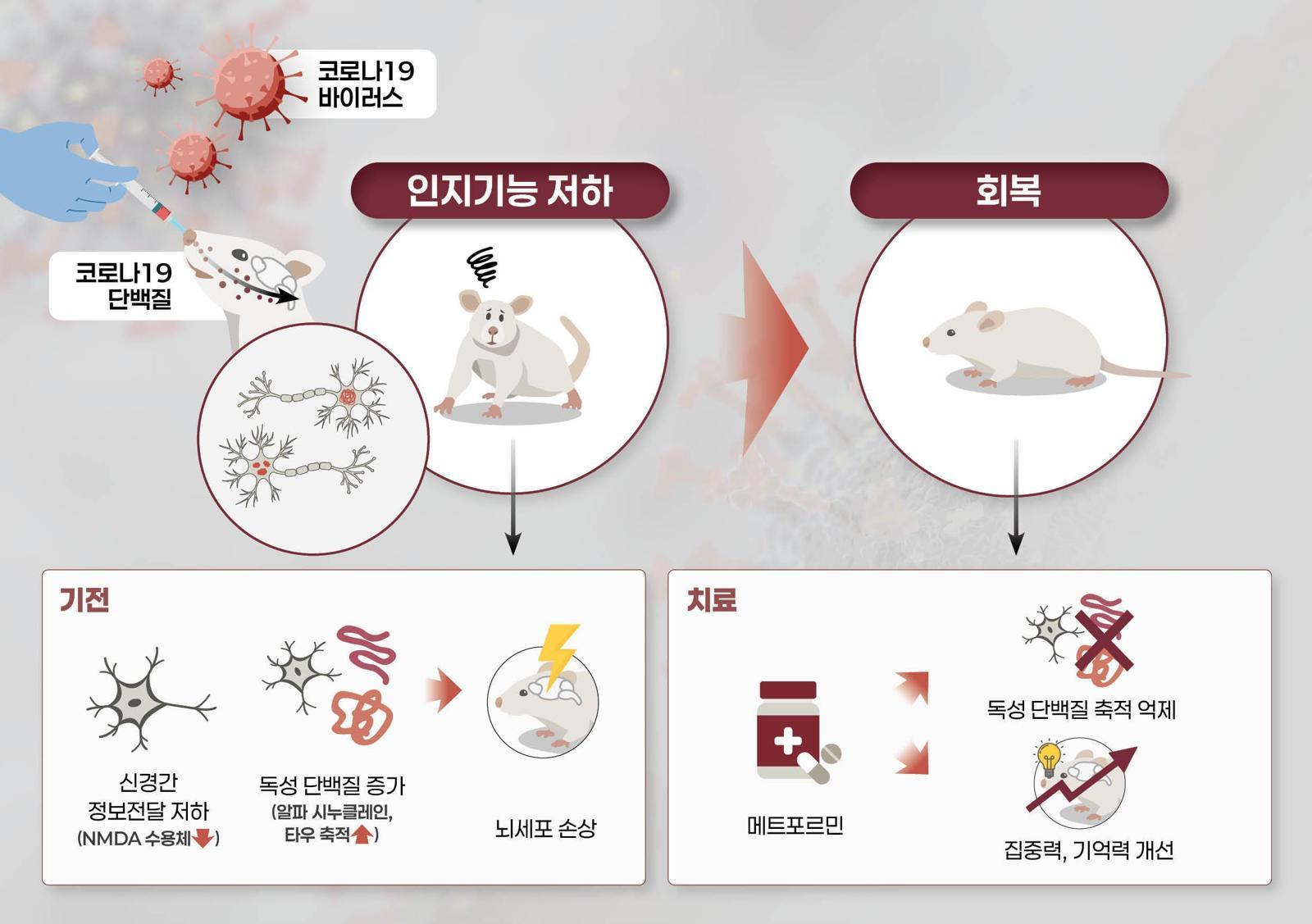
The study found that the spike protein (S1) of the COVID-19 virus reaches the brain, disrupts synaptic connectivity between neurons, and reduces the expression of NMDA receptor genes, which are important for memory formation. It was also confirmed to increase the accumulation of toxic proteins that cause dementia and Parkinson’s disease.
In animal experiments, when the spike protein (S1) of the COVID-19 virus was administered intranasally to mice, their learning and memory abilities declined, as evidenced by an increased time required to find a hidden platform. Symptoms similar to cognitive decline observed in humans after COVID-19 infection were observed, such as increased anxiety-related behavior in unfamiliar environments.
The research team stated, “Six weeks after administration, a reduction in the number of neurons in the brain and accumulation of pathological proteins seen in degenerative brain diseases were confirmed, raising the possibility of long-term brain damage.”
Overview of the study analyzing the effects of the COVID-19 virus on brain function. Provided by KDCA.
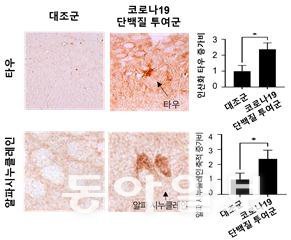
An increase in the toxic proteins “tau” and “alpha-synuclein” was confirmed in the COVID-19 virus–treated group. Provided by KDCA.
The research team found a clue to restoring brain function in a diabetes treatment. In experiments where the diabetes drug “metformin” was co-administered, neuronal function recovered and the accumulation of toxic proteins was reduced.
The research team led by Dr. Ko Young-ho at the National Institute of Health said, “This study is significant in that it elucidated the pathological mechanisms of cognitive impairment that appear after COVID-19 infection and suggested the possibility that metformin, which is widely used in clinical practice, could suppress these mechanisms,” adding, “Clinical studies are needed to evaluate its potential as a treatment for chronic post-COVID-19 sequelae.”
Im Seung-kwan, Commissioner of the KDCA, said, “Research on patients who suffer from long-term symptoms after COVID-19 is necessary,” and added, “We will continue to support research to establish infectious disease policies based on scientific evidence.”
ⓒ dongA.com. All rights reserved. Reproduction, redistribution, or use for AI training prohibited.
Popular News