Aesthetic medical device company ‘ViOL’ opens Pangyo era
World’s first to commercialize microneedle RF
“We will become a medical device company chosen in global markets”
Accelerating expansion into emerging markets in Asia and the Middle East following North America and Europe
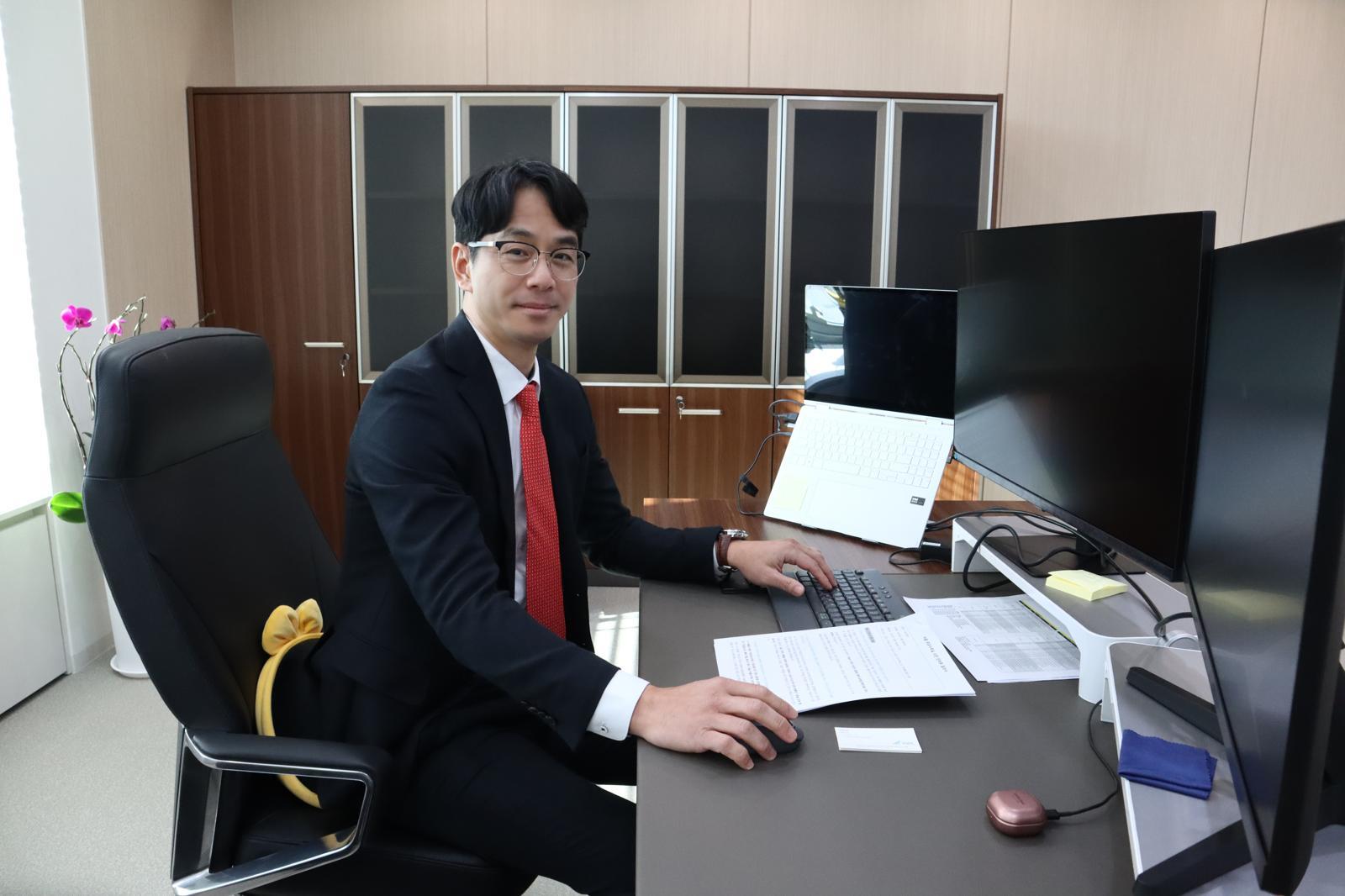
Lee Eun-cheon, CEO of Viol. Viol
Amid a global economic slowdown and intensifying competition in the aesthetic medical market, medical device company Viol is accelerating its leadership change and organizational restructuring. CEO Lee Eun-cheon, who took office at the end of August, has spent 25 years in healthcare and medical device sales and marketing at Johnson & Johnson Medical, Samsung Electronics’ Healthcare & Medical Equipment (HME) division, and Handok. Since his inauguration, he has relocated the headquarters to Pangyo and reorganized the corporate structure, unveiling a strategy to transform Viol into a medical aesthetics platform company based on precision, intelligence, and convergence technologies.
Viol is known as the first company in the world to commercialize Micro-needle RF (MNRF) technology. MNRF is described as a skin aesthetic procedure that uses radio frequency and micro-needles. Based on this technology, the company also generates more than 90% of its total revenue from overseas markets.
Lee plans to leverage Viol’s R&D and clinical capabilities to expand its influence in key markets such as North America, Europe, and the Middle East, while simultaneously preparing new RF and HIFU (High-Intensity Focused Ultrasound)-based products and new businesses, including home-care and skin boosters. At Viol’s Pangyo headquarters, he spoke about the company’s potential and future strategy. The following is a Q&A.
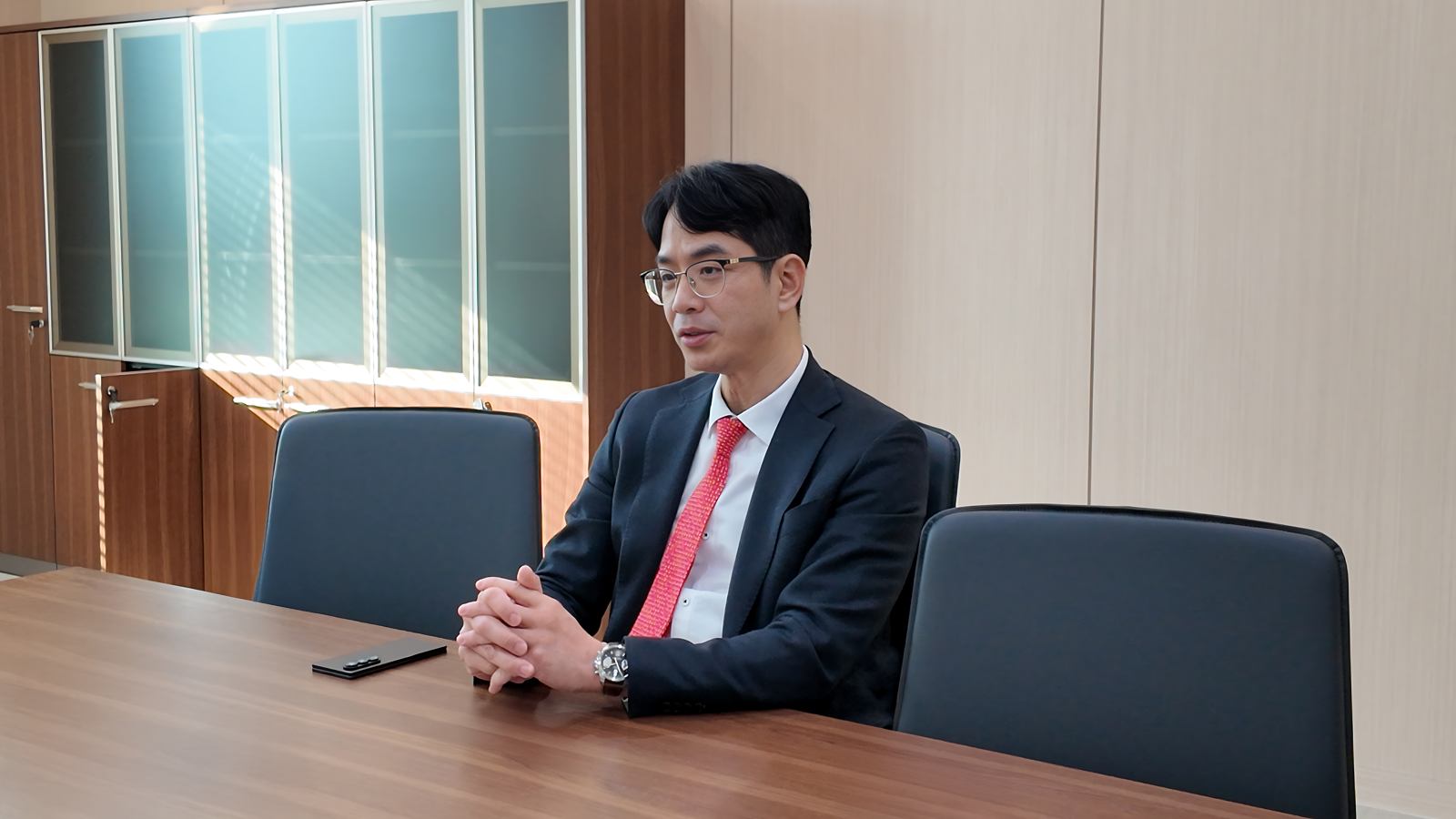
Lee Eun-cheon, CEO of Viol. Viol
-What are your thoughts on taking office and what is your management philosophy for Viol?“Viol is already a global company with original technologies. It was the first in the world to commercialize Micro-needle RF, and more than 90% of its revenue is generated overseas. There is a strong sense of responsibility in taking on the role of leading such a company to a new leap forward. Immediately after taking office, the first philosophy I set was ‘maximizing global scalability through the precise integration of technology and markets.’ The intention is to strengthen the company’s approach to overseas markets. The goal is not merely to manufacture good devices, but to become a brand chosen in global markets based on objective clinical data and trust.”
-You have 25 years of experience at companies such as Samsung Electronics, Johnson & Johnson (J&J), and Handok.“For 25 years, I have focused on how to make technology-based products succeed in global markets. At J&J, I was responsible for marketing and sales in North Asia, and at Samsung Electronics’ medical device division, I oversaw global sales and marketing. At Handok, I ran the medical device division and gained experience in how large pharmaceutical companies structure their device businesses. Through this, I learned firsthand how clinical, regulatory, partnership, distribution, and branding functions must be organically connected to deliver results in global markets. I plan to systematically apply this experience to Viol’s technology, clinical, and product strategies.”
-What made you decide to join Viol?“Leaving a large corporation for a small or mid-sized company is never an easy decision. However, after directly reviewing Viol’s R&D personnel and technologies, I gained confidence. Its strengths include a unique original technology in micro-needle non-insulated RF, extensive clinical data, and a global partner network. The conviction that, based on these strengths, the company can be developed into a ‘precision-, intelligence-, and convergence-driven medical platform company’ was the biggest reason I decided to take this role.”
-What is Viol’s fundamental competitive edge in the market?“The first is its original technology. Viol holds global patents in the field of micro-needle non-insulated RF. It has already established a premium position in major markets, including North America. Next is the highly reliable data backed by clinical evidence. The company has published more than 27 papers, obtained certifications in about 30 countries, and built a database based on real-world data from sales in 70 countries. Its global network is also a strength. It conducts clinical research with key medical professionals and has built a cooperation system with partners in around 70 countries. It is not just a sales-oriented company, but one that already has a trusted brand image as a ‘clinical-based medical brand.’”
-How is Viol’s product portfolio structured?“Viol’s main portfolio can be summarized as an ‘energy-based medical aesthetics platform’ that spans RF, HIFU, and microneedle fractional devices. The core products are the invasive RF device ‘Cellinneve’ and the HIFU dual device ‘Duotite.’ The main lineup consists of devices for treating vascular and pigmentary disorders such as flushing and melasma. For the laser segment, we will determine the timing of investment in line with market trends, and if necessary, we are also considering bolt-on M&A.”
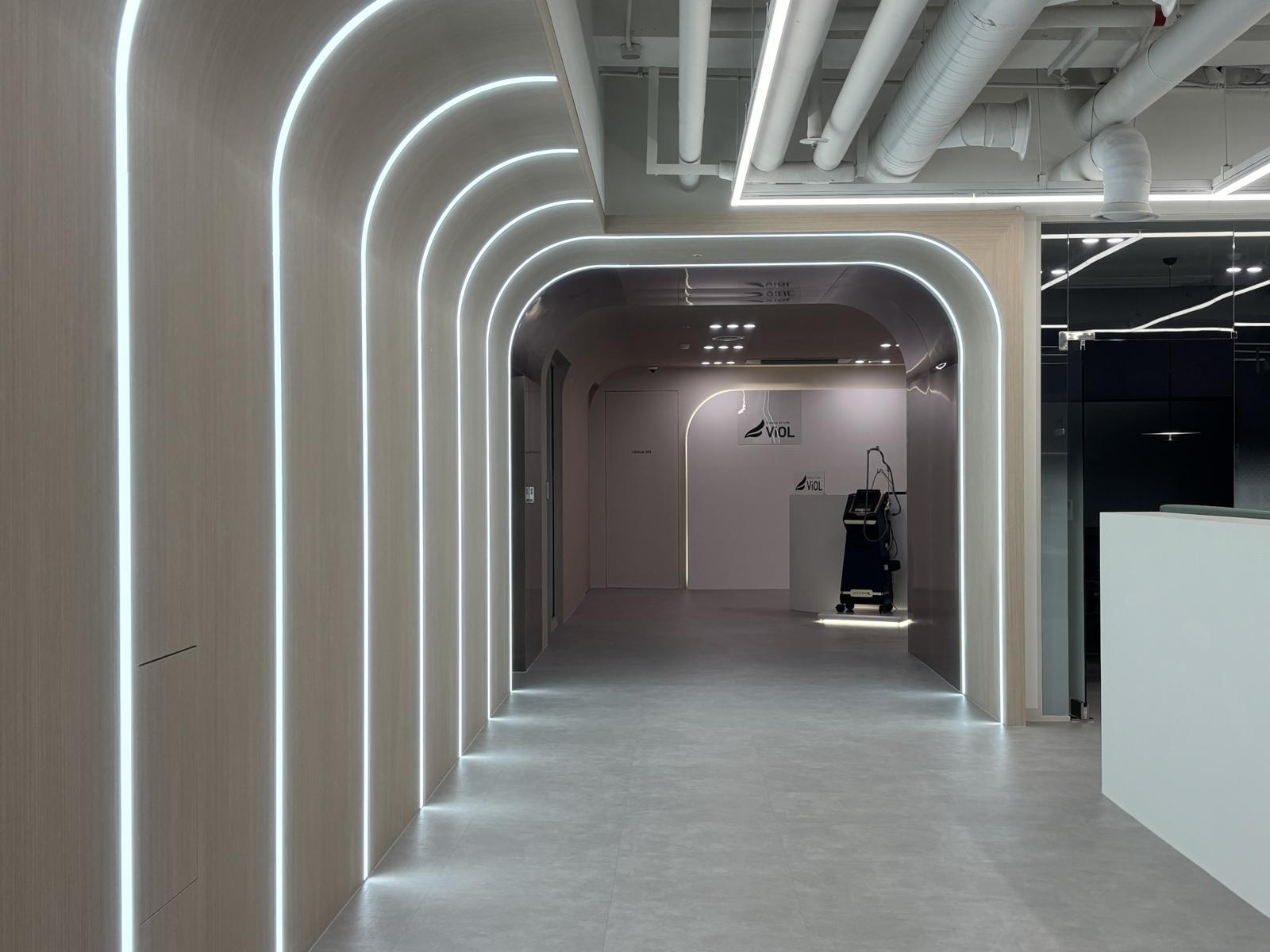
Exterior view of Viol’s new Pangyo headquarters. Reporter Hwang So-young fangso@donga.com
-What is the purpose of relocating the office to Pangyo, and what is the direction for organizational management?“I hope the relocation to Pangyo will be understood not as a simple move but as a process of realigning the company’s image and strategy. We judged that the old Bundang Technopark did not adequately reflect Viol’s technological capabilities and global status. Pangyo, on the other hand, is a hub for IT and R&D companies and aligns well with the technology-driven corporate image that Viol pursues. In terms of environment, we expect it to help attract key talent, enhance communication with global partners, and drive changes in the internal organizational culture. Although rent has increased by more than KRW 100 million per month, we view it as an essential investment from a long-term growth perspective. We will shift away from a reporting-centered culture toward an execution-centered, data-driven, and open collaborative structure.”
-What organizational changes are underway in R&D and sales?“In R&D, we are restructuring toward platformization of devices by combining precision and intelligent functions such as energy control algorithms, user interfaces, and AI (artificial intelligence) application technologies. In sales, we are strengthening dedicated domestic and overseas lines and systematizing training for partners and medical professionals. We plan to increase headcount by more than 30% from current levels by next year and are recruiting talent across all areas, including R&D, quality, overseas sales, and domestic sales.”
-What are the medium-term strategies for the next 1–3 years?“There are three main pillars in our medium-term strategy. First, development of next-generation platform-based products. We are moving away from a structure where the relationship ends with a one-time device sale, and instead creating a structure where products continuously evolve through software updates. Second, expansion of global market share. We plan to strengthen partner collaboration, training, and regulatory approvals in high-growth markets such as the Middle East and Asia, as well as in North America and Europe. Third, expansion into new technologies and new categories. We are reviewing entry into laser and next-generation energy segments in addition to RF and HIFU. Our strategy is to broaden our scope into a comprehensive aesthetics company through collaboration with home-care, skin boosters, fillers, and botulinum toxin products.”
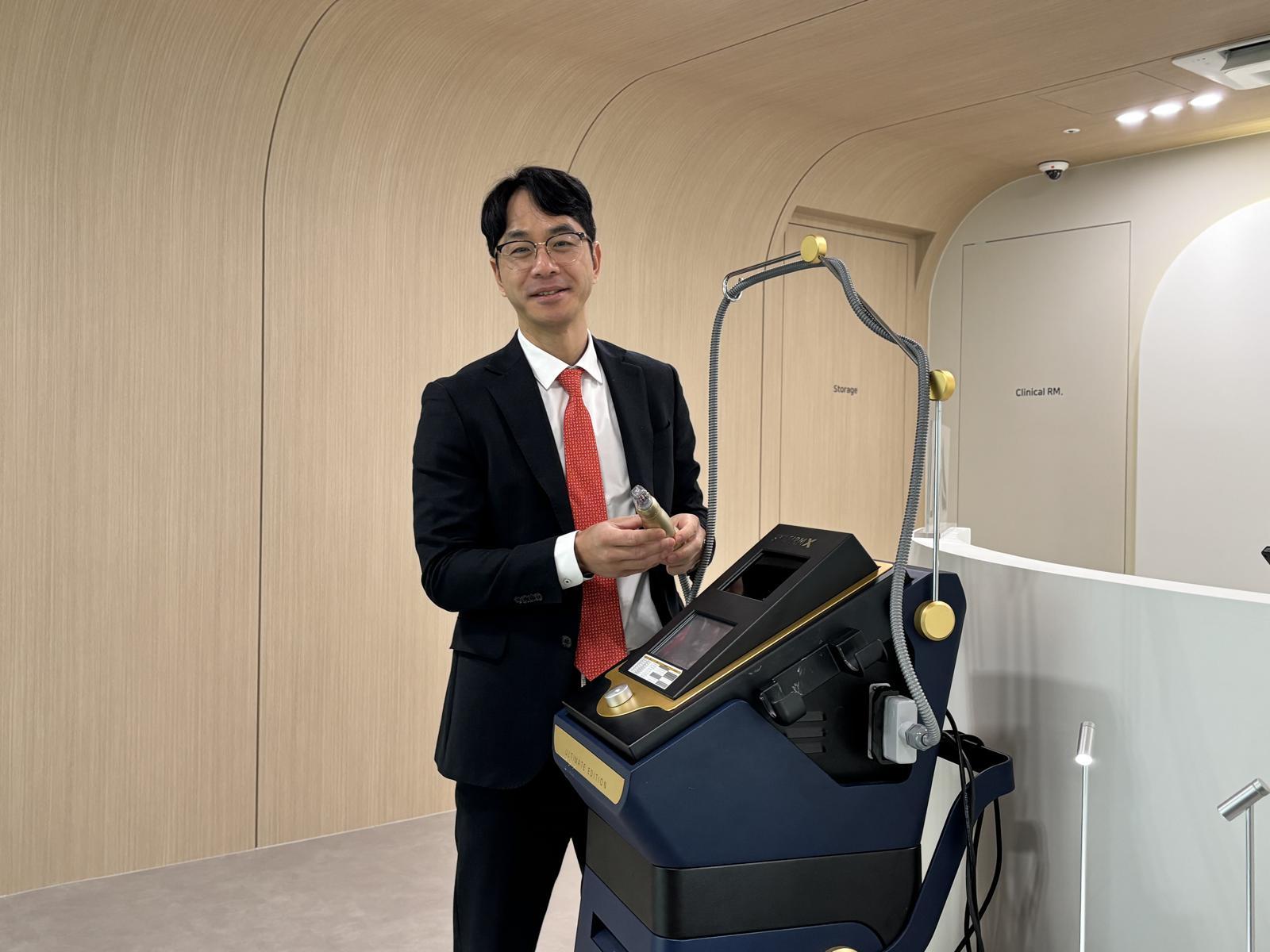
CEO Lee Eun-cheon of Viol introduces Silfirm X, the company’s flagship product. Reporter Hwang So-young fangso@donga.com
-How are you responding to recent trends such as low pain, short downtime, and AI integration?
“Both patients and medical professionals prefer treatments that maintain long-lasting effects while minimizing pain and recovery time. Viol is advancing precision control technologies to deliver energy only to target tissues and is developing algorithms that reduce pain even at the same energy levels. We are also introducing data-based AI functions. For example, AI can analyze treatment logs to recommend energy settings or monitor post-procedure responses. The concept is not that AI replaces doctors, but that it serves as an auxiliary medical intelligence to enhance the safety and consistency of procedures.”
-What are your strategies for domestic and overseas markets and your mid- to long-term vision?“In the domestic market, our dual focus is on product competitiveness grounded in clinical evidence and strengthening training for medical professionals. Patients want fast and safe results, and medical professionals look for devices that can increase repurchases and revisit rates. Viol is striving to meet these needs with validated clinical data and training programs. Overseas, North America and Europe are strategic markets where we must consolidate our brand position, while the Middle East and Asia can be classified as fast-growing emerging markets. Working with partners in about 70 countries, Viol is pursuing product, marketing, and regulatory strategies tailored to each region. Recently, our micro-needle RF device became the first in Korea to obtain European MDR approval, once again validating our technological strength and safety. In the mid- to long term, Viol aims to become a global medical platform company based on precision, intelligence, and convergence technologies. We plan to build an expandable structure that encompasses not only skin energy devices, but also pharmaceuticals, solutions, and home-care.”
-What is your ultimate management goal, and what message would you like to convey?“Viol now stands at a technological and organizational inflection point. We aim not to remain defined solely as the first company to commercialize MNRF in the world, but to leap forward as a ‘next-generation medical platform company’ that combines precision energy, clinical data, and AI-based functions. In our view, technological accuracy, clinical trust, and capabilities in addressing global regulatory requirements are the key conditions for aesthetic medical device companies to be chosen in the market. By upgrading Viol’s R&D assets and global network, we intend to grow into a company that medical professionals, partners, and investors can trust and choose with confidence. The move to Pangyo is the starting point for realizing this corporate vision and will serve as an inflection point that determines the next 10 years.”
Conference room at Viol’s new Pangyo headquarters. Reporter Hwang So-young fangso@donga.com
ⓒ dongA.com. All rights reserved. Reproduction, redistribution, or use for AI training prohibited.
Popular News