■
Yonsei University College of Medicine–University of Utah Strengthen Cooperation on Global Medical Device Development
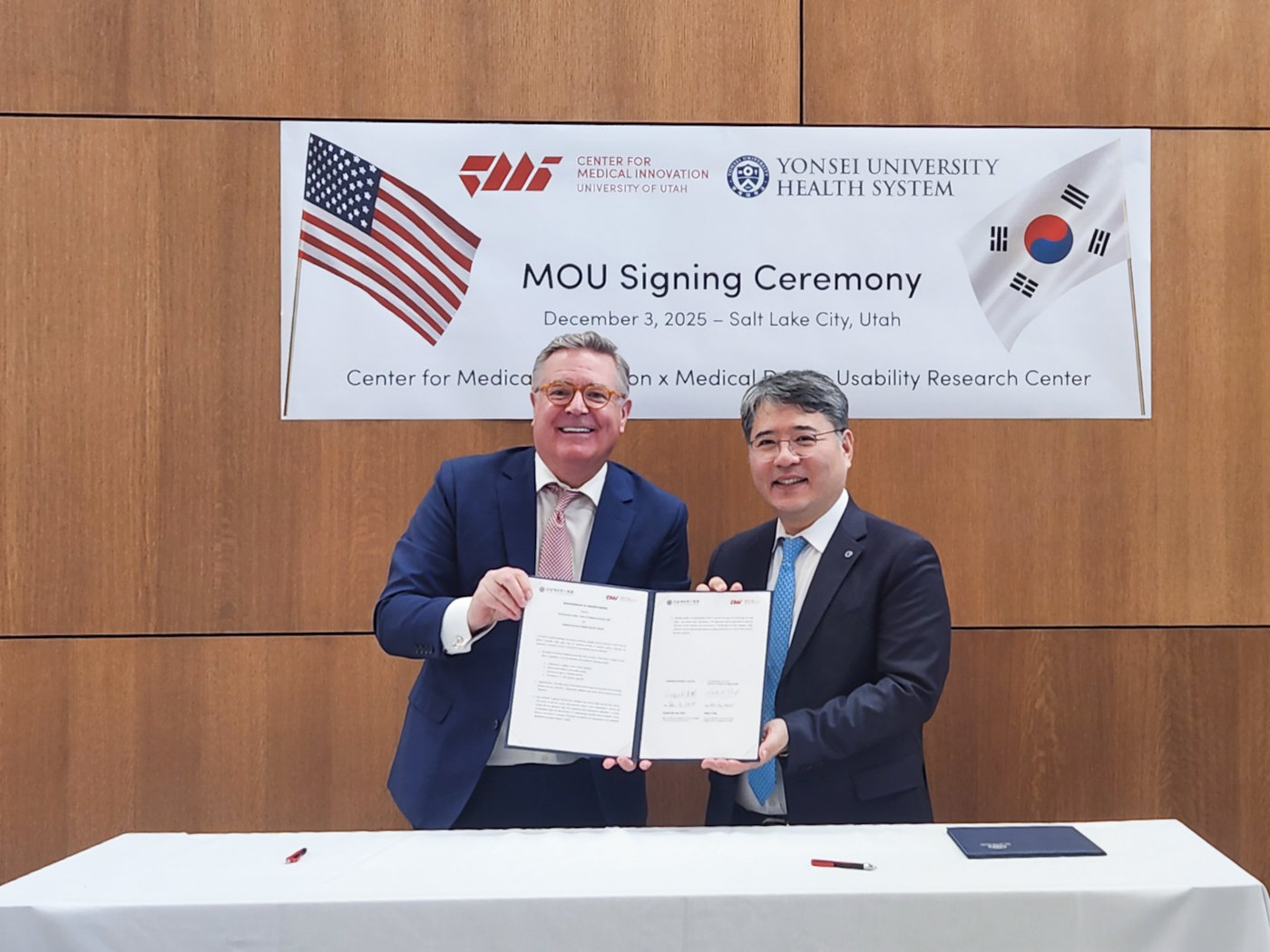
The Graduate School of Medical Device Industry at Yonsei University College of Medicine has signed a memorandum of understanding (MOU) with the Center for Medical Innovation (CMI) at the University of Utah to strengthen cooperation in global medical device development. The agreement is expected to accelerate medical technology innovation across borders and further reinforce the foundation for overseas expansion of the domestic medical device industry.
At the signing ceremony held on 3 December (local time) at the University of Utah, attendees included Koo Seong-wook, Director of Gangnam Severance Hospital and Chair Professor of the Department of Medical Device Industry, and Mark Paul, Director of the University of Utah Center for Medical Innovation.
Under the agreement, the two institutions will promote practical cooperation for medical device development and overseas expansion through: △joint research and academic exchange in medical technology △global clinical validation and usability evaluation △joint operation of educational programs and international seminars △advisory support related to U.S. FDA approval. In particular, the University of Utah’s Center for Medical Innovation is a specialized institution with a system that supports all stages of medical device development, from prototype evaluation and regulatory compliance to commercialization.
Director Koo stated, “It is meaningful that professional cooperation has been established for the FDA approval process, which is the key gateway to entering the global medical device market,” adding, “This agreement is expected to present a new model for international clinical, research, and industrial collaboration.”
This agreement was concluded as part of the support project for the Graduate School of Medical Device Industry at Yonsei University College of Medicine. Since 2024, the college has secured more than KRW 4 billion in project funding over five years to nurture experts with practical capabilities and global expertise. Both sides plan to generate tangible results through follow-up initiatives such as concluding detailed agreements for individual projects and implementing exchange student programs.
■
GeronBio Validates Stem Cell Therapy Technology in Indonesia
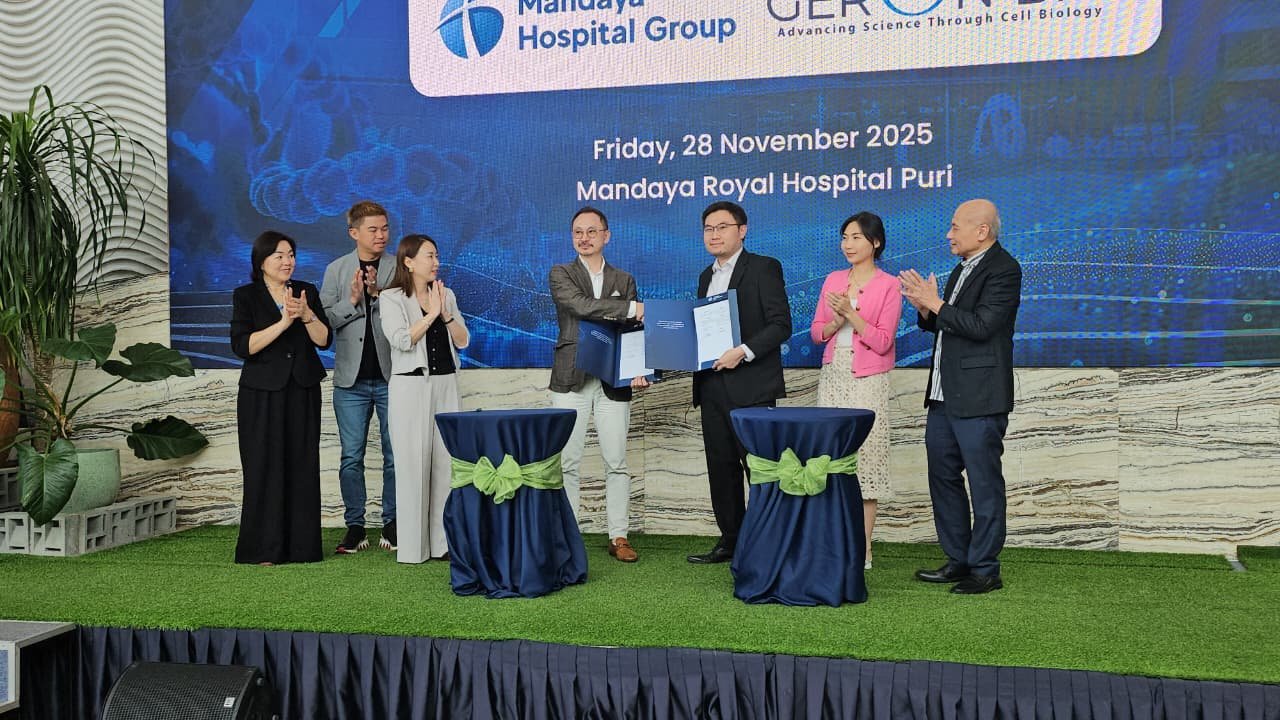
Cell therapy manufacturer GeronBio has signed a contract with Indonesia’s Mandaya Group, embarking on full-scale technology application and clinical data collection in the Southeast Asian medical market. The contract goes beyond simple cooperation; it has drawn industry attention as a case where GeronBio’s advanced cell culture technology and GMP (Good Manufacturing Practice) capabilities, already validated in Korea, will be directly evaluated in overseas clinical settings.
Mandaya Group operates Mandaya Royal Hospital Puri, a large private hospital in Indonesia with more than 250 beds and operating rooms. Leveraging this infrastructure, GeronBio plans to immediately apply its immune and stem cell therapy technologies to local patients and secure diverse clinical data to strengthen its global competitiveness.
GeronBio has built technological strength based on top-tier domestic levels of cell viability and manufacturing quality. According to the industry, the company’s core competitiveness lies in its high cell survival rate, precise culture processes, and the stability of its proprietary cell culture media.
The most significant aspect of this contract is that securing an environment for actual patient treatment overseas now enables the production of data that can objectively demonstrate the company’s technological capabilities.
Lee Sang-eun, CEO of GeronBio, said, “This contract is a decisive opportunity to directly prove, in overseas medical settings, the technological capabilities whose safety and quality have been verified in Korea.” He continued, “Clinical data from real patient applications are key to entering the global market, and we plan to rapidly secure diverse patient data based on Mandaya’s infrastructure to formally demonstrate the excellence of Korean technology on the international stage.”
Following the contract signing, the two organizations plan to immediately finalize detailed operational plans and begin initial patient treatments. The collected data are expected to be used across various areas such as technology validation, expansion of regulatory approvals, and development of overseas partnerships, significantly strengthening GeronBio’s international presence.
■
Ajou University Hospital Transfers Liver Cancer Diagnosis and Treatment Technology to Bio Company
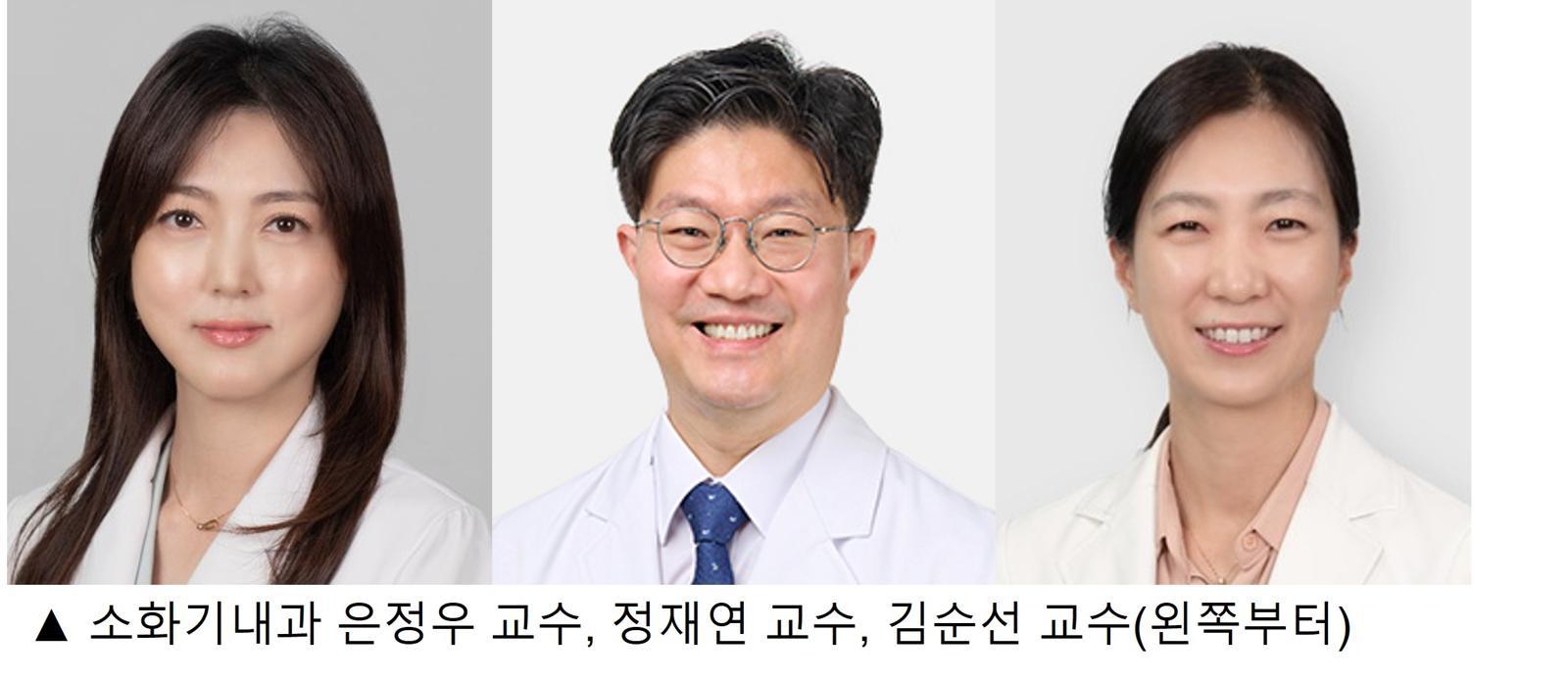
The precision diagnosis and treatment technology for liver cancer developed by Professor Eun Jeong-woo’s team in the Division of Gastroenterology at Ajou University Hospital has been transferred to a bio company, demonstrating the hospital’s strong research capabilities and success in technology commercialization.
Ajou University Hospital (Director: Cho Jae-ho) announced that on the 25th of last month it signed a technology transfer agreement to transfer the “composition for prevention and treatment of liver cancer targeting liver cancer-inducing genes,” developed by Professor Eun Jeong-woo’s gastroenterology team, to DermoaGen (CEO: Kang Tae-wook). Through this agreement, Ajou University Hospital secured a technology transfer fee of KRW 200 million.
This is the third technology transfer achievement by the liver research team led by Professors Eun Jeong-woo, Jeong Jae-yeon, and Kim Soon-seon (Division of Gastroenterology). In particular, graduate student Jang Se-ha newly joined this project and played a key role in refining experimental data and advancing the technology.
The technology developed by the research team includes: △an innovative diagnostic method that enables early detection of liver cancer using only blood samples △a treatment technology that dramatically inhibits liver cancer metastasis by targeting specific genes. The technology successfully demonstrated anti-metastatic effects in in vitro experiments and animal model studies, increasing its potential for clinical application.
Professor Eun Jeong-woo stated, “This technology transfer is a result of the team’s long-term collaboration and accumulated research data,” adding, “We will contribute to the realization of precision medicine by developing patient-applicable personalized diagnostic kits and therapeutics through joint research with DermoaGen.”
DermoaGen, which has acquired the technology, plans to accelerate commercialization research for the development of an early liver cancer diagnostic kit and anticancer drugs based on this technology.
■
Seoul Metropolitan Dongbu Hospital Holds Event to Share ‘Healthcare Quality Improvement’ Achievements
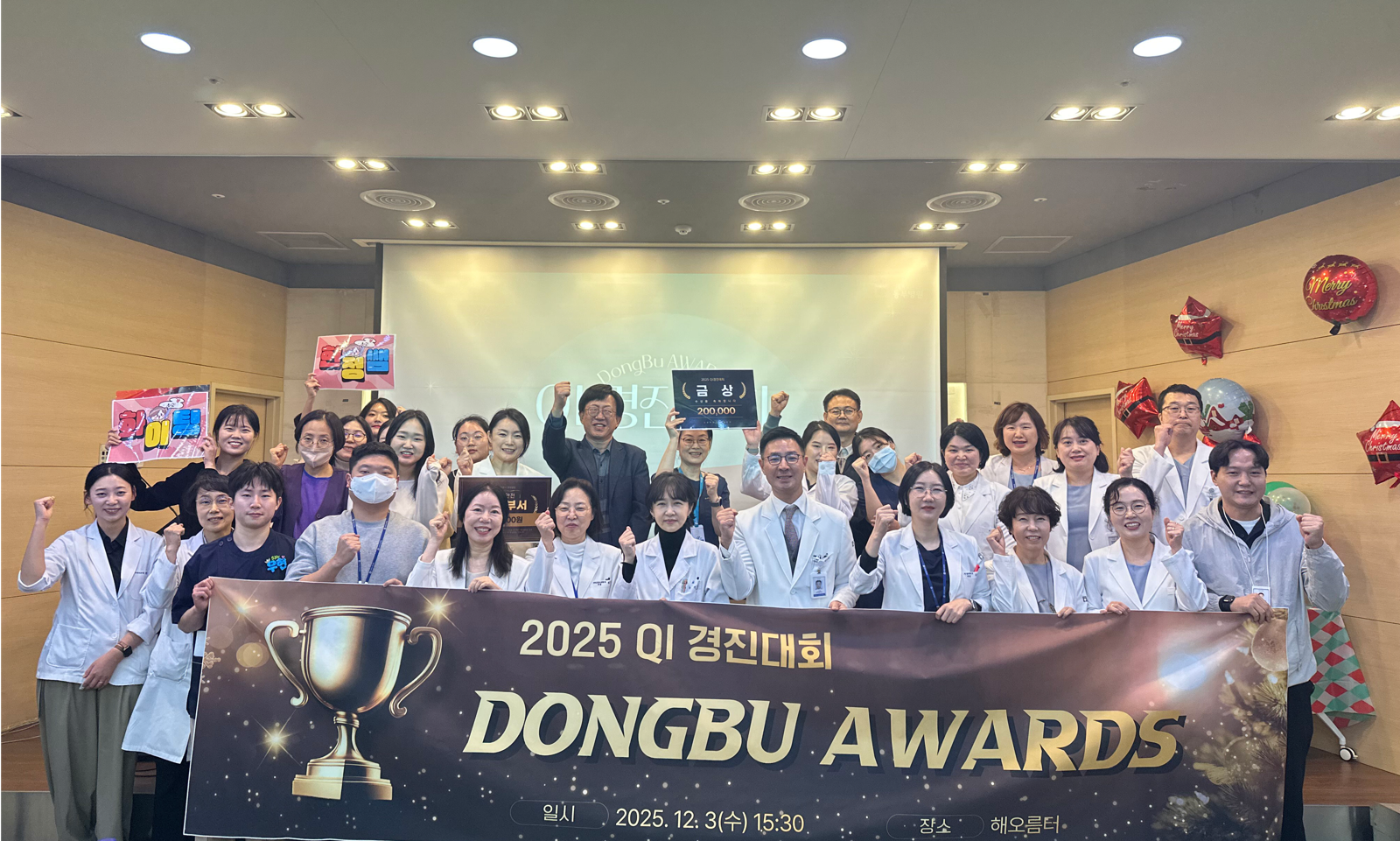
Seoul Metropolitan Dongbu Hospital (Director: Lee Pyeong-won) held the “2025 QI (Quality Improvement) Contest” on 3 December at its main auditorium, Haeoreumteo, providing an opportunity to share achievements in patient safety and healthcare quality improvement. The event showcased efforts to strengthen organizational capabilities and deliver meaningful enhancements to the patient experience.
A total of nine teams participated in the contest, presenting systematic analyses of problems, improvement strategies, implementation processes, and outcomes, while two additional teams took part in a poster exhibition to share their improvement activities.
The Grand Prize was awarded to the Physical Therapy Room for its project on “Enhancing Treatment Outcomes through Development of Standardized Physical Therapy Protocols and Self-Exercise Programs.” The Silver Prize went to the Pharmacy Team for its “Simplification of Oral Medication Administration Methods” initiative.
Bronze Prizes were awarded to the Hospice and Palliative Care Team, the Intensive Care Unit, and Ward 41 for their respective projects: “Making Goodbyes Good,” “Activities to Reduce the Incidence of Pressure Ulcers,” and “Activities to Improve Reporting of Pressure Ulcer Incidence.”
Director Lee Pyeong-won said, “I would like to thank the staff who have achieved meaningful results through various improvement activities over the past year,” adding, “Based on these achievements, I hope the efforts to provide better experiences and safety for patients will spread throughout the entire hospital.” Dongbu Hospital emphasized that it will continue to make every effort to become a trusted public hospital through ongoing quality improvement activities.
ⓒ dongA.com. All rights reserved. Reproduction, redistribution, or use for AI training prohibited.
Popular News