[SeoulTech x IT Donga Joint Planning] Seoul National University of Science and Technology (hereinafter referred to as SeoulTech) operates various support programs to aid the growth of startups, including preliminary and early-stage startup packages, maker spaces, and global collaborations. Furthermore, in collaboration with IT Donga, it provides global news to assist startups in international promotion and expansion, introducing promising deep-tech startups both domestically and internationally.
“Aerosolization and ultrafine particle analysis technology are used in various fields such as environmental and atmospheric science, biology, and engineering. K-Nano has optimized this technology for quality control in liquid processes in high-value-added industries such as semiconductors. While many companies are pursuing similar ideas, only a few have succeeded in implementation, and the fact that the technology has been localized is also significant.”
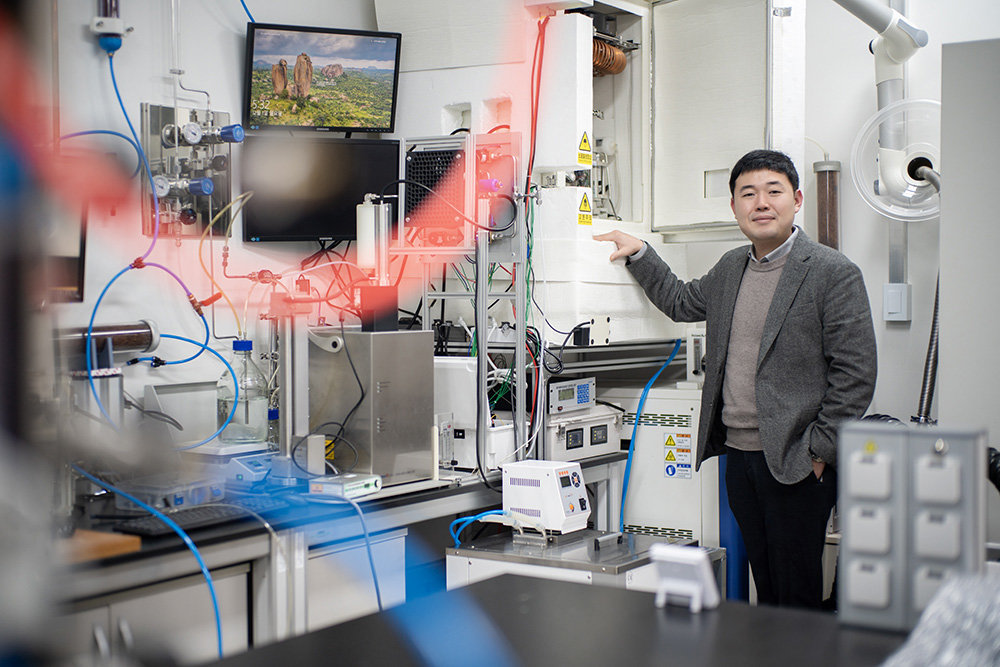
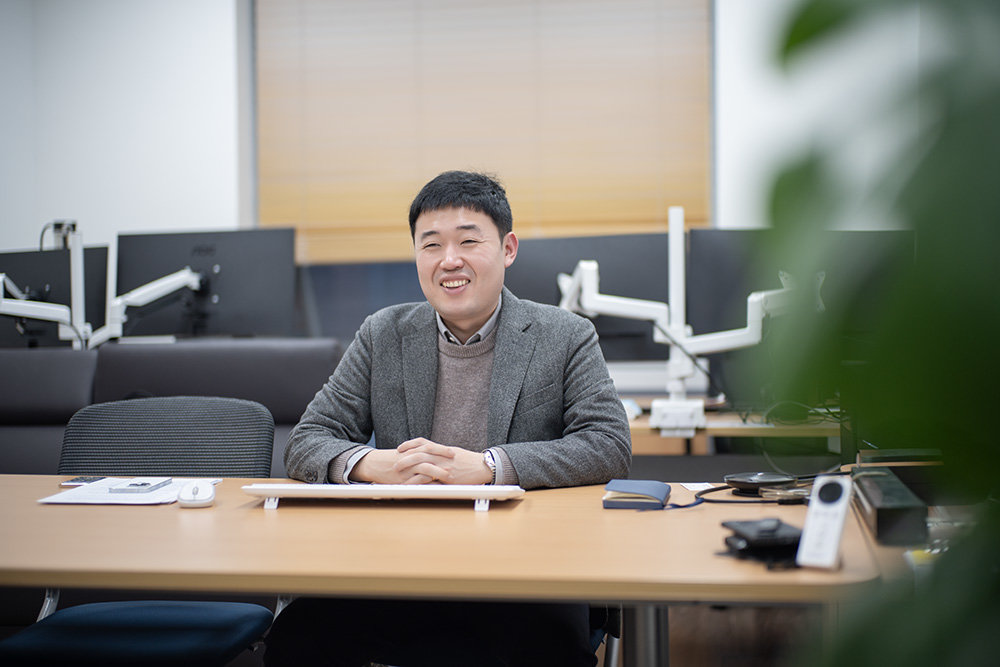
Dongbin Kwak, CEO of K-Nano and Assistant Professor at Seoul National University of Science and Technology MSDE / Source=IT Donga
Dongbin Kwak, CEO of K-Nano, obtained his Ph.D. in Mechanical Engineering from the University of Minnesota in 2023 and has been serving as an assistant professor in the Department of Manufacturing Systems and Design Engineering (MSDE) at Seoul National University of Science and Technology since 2024. As a professor, he operates the 'Nanoparticle Engineering Laboratory' that analyzes fluid particles at the nanometer scale, while also being an entrepreneur who has realized his ideas. An interview with Dongbin Kwak, CEO of K-Nano, explored the overall technological capabilities and commercialization process.
Targeting the Global Market with 'Aerosol'-Based Monitoring Technology
After completing his doctoral program, CEO Dongbin Kwak engaged in industry-academia collaboration at Applied Materials and later gained ideas for K-Nano while working at Onto Innovation, a semiconductor equipment company. CEO Kwak stated, “At Applied Materials, I worked on semiconductor process equipment, and during this process, I conceived the idea of using aerosols to analyze ultrafine particles in ultrapure water for semiconductor cleaning in real-time. R&D engineers around me also said the business potential was excellent, which led to the start of faculty entrepreneurship.”
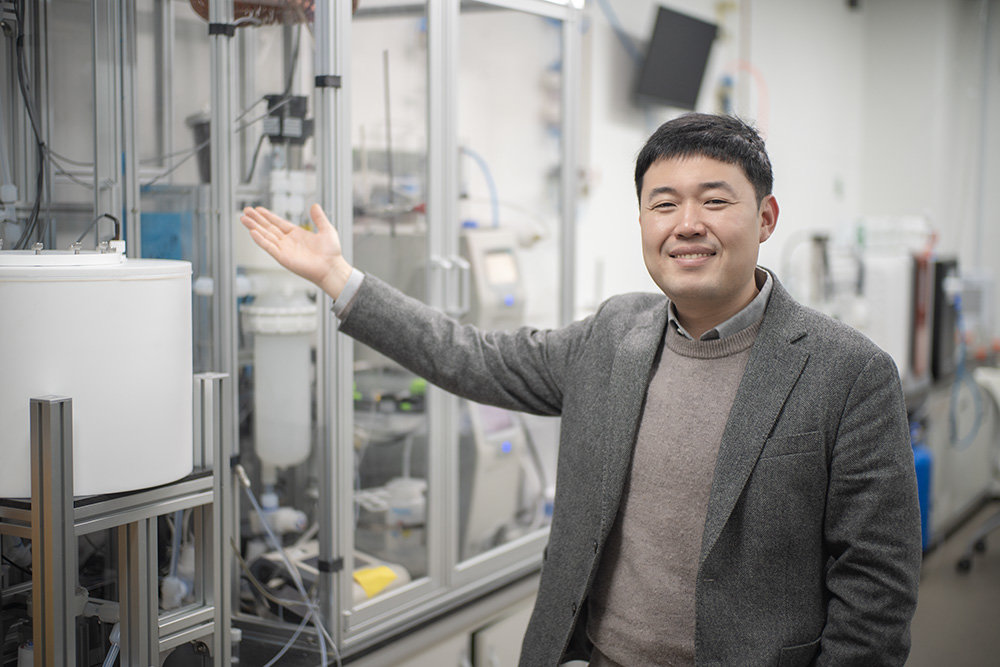
CEO Dongbin Kwak introducing the actually produced aerosol monitoring equipment / Source=IT Donga
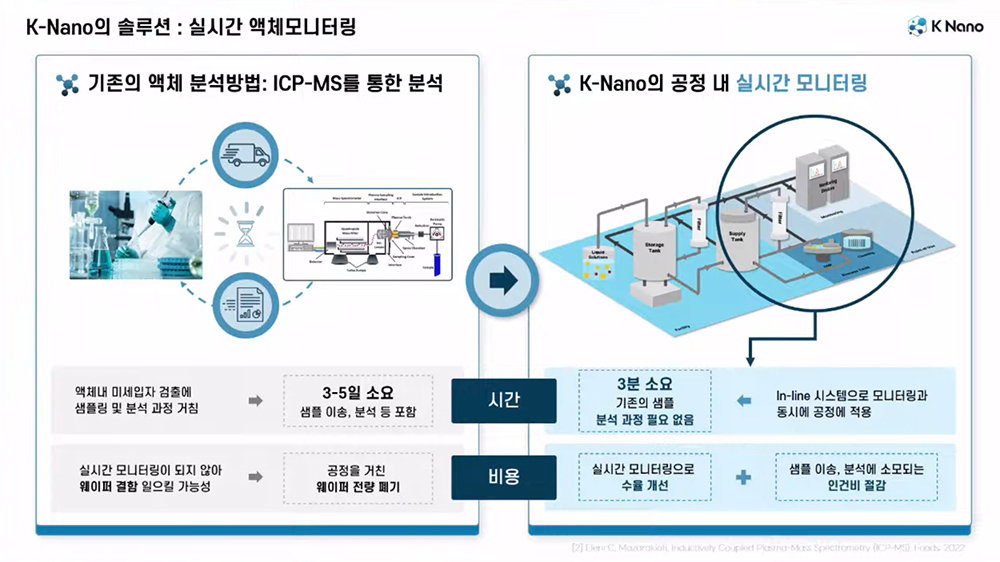
K-Nano's main product is a real-time monitoring device that can complement the industrial liquid monitoring system ICP-MS (Inductively Coupled Plasma Mass Spectrometry). ICP-MS is a device that applies high-temperature plasma to liquid samples to ionize atoms and then measures trace elements using a mass spectrometer. It is used in various fields from R&D to industrial sites, including semiconductors, medicine, pharmaceuticals, and chemistry. CEO Kwak explained, “ICP-MS is used in all R&D facilities, but it is so expensive that it is used communally, and specialized skills are required for handling. Additionally, it takes about 3 to 5 days for sample transport and analysis, making quick response difficult in industrial settings.”
Comparison between analysis through existing ICP-MS and K-Nano's real-time monitoring system / Source=K-Nano
The technology K-Nano is developing is equipment that analyzes in real-time based on aerosols. CEO Kwak stated, “Existing real-time devices produce results based on the degree of light scattering by firing lasers into liquids. Noise occurs due to bubbles in the water, and particles and ions of 20nm cannot be measured. By converting these into gaseous aerosols and detecting them, particles, ions, and multiple particles as small as 1nm can be detected.”
For example, consider analyzing muddy water with salt. In this case, the salt is in an ionic state, and the mud is granular. The existing hydrosol method cannot measure ions and only finds mud granules. While ICP-MS can precisely detect both, it is not in real-time. K-Nano can convert hydrosol into gaseous aerosol to measure salt ions and mud particles by size. CEO Kwak stated, “The drawback is that it cannot precisely analyze whether the analyzed sodium ion is from salt or ramen soup. It is a real-time monitoring device with a complementary nature rather than precise diagnostics.”
Contributing to Technology Localization Alongside Full-Scale Commercialization Early Next Year
CEO Kwak has already completed the prototype development of the aerosol-based equipment and confirmed its potential in semiconductor production processes. The company is currently working on product commercialization with 'ART-Plus,' which develops environmental data analysis and fine dust reduction control technology. CEO Kwak explained, “ART-Plus is an environmental technology venture company that produces various monitoring-related equipment and systems. ART-Plus handles measurement-related equipment, and we provide aerosolization technology and design. We have secured patents for the sensor part and plan to develop and integrate our own software. In the future, K-Nano will be responsible for maintenance, process recipe development, and more.”
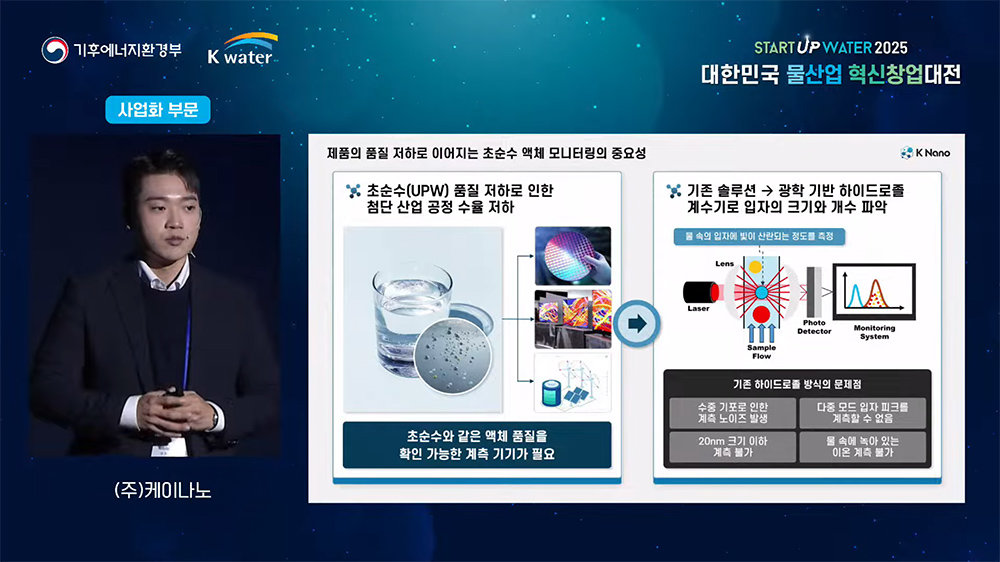
K-Nano participated in the Korea Water Industry Innovation Startup Competition 2025 / Source=Korea Water Resources Corporation
As it enters the commercialization stage, support from the Korea Water Resources Corporation has also begun. The Korea Water Resources Corporation has been pursuing research and development and support for nearly a decade to secure ultrapure water facilities related to the semiconductor industry. Currently, the localization rate of facilities has reached 70%, with a goal of achieving 90% by 2030. K-Nano participated in the Korea Water Industry Innovation Startup Competition 2025 held last September and won an excellence award in the commercialization category. Based on this, it receives support for providing performance testing sites linked to the 'K-Testbed,' participating in exhibitions for domestic and international market exploration, and attracting investments linked to the water industry fund.
The Seoul National University of Science and Technology Startup Support Group is also helping K-Nano grow. CEO Kwak stated, “We are receiving diverse commercialization and funding support, including the preliminary startup package, and have had opportunities to receive investment offers and feedback from investors through demo days. On December 12, we are also invited to the 2025 Creative Capacity Enhancement Networking, providing a foundation for business expansion.”
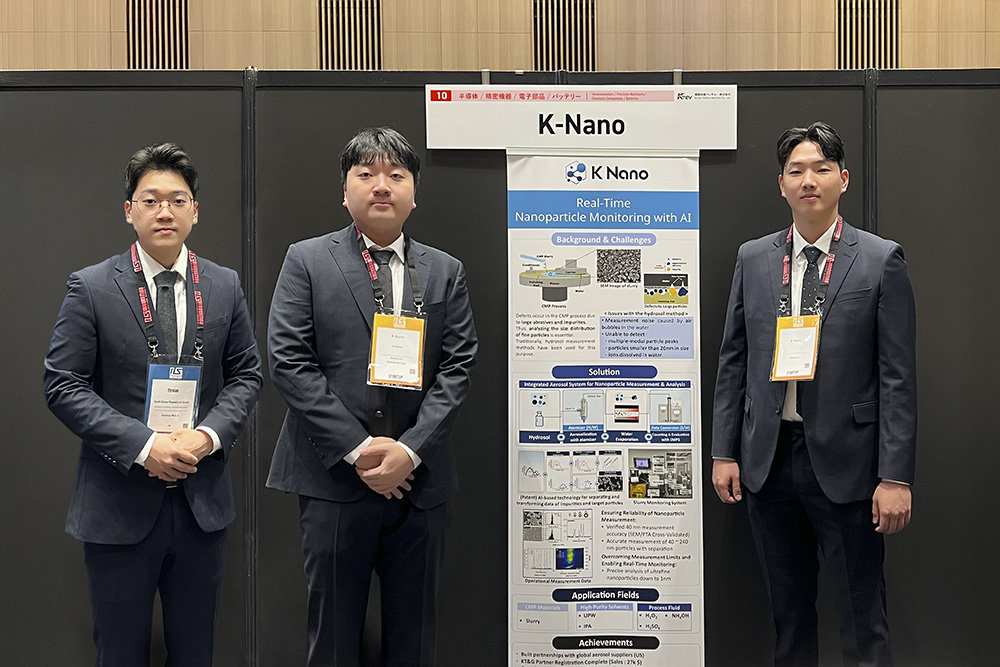
With the help of the SeoulTech Startup Support Group, participated in Japan ILS 2025 / Source=K-Nano
Support was also received for participation in ILS 2025, Asia's largest open innovation expo. As of 2024, ILS is a major open innovation venue in Asia, with 110 major global companies and 800 startups participating to discuss collaboration plans. CEO Kwak stated, “Between December 1 and 5, we participated in Japan ILS 2025, providing opportunities for collaboration with Japanese conglomerates. We discussed collaboration with companies such as Intercompo, Tokyo Electron, and YUASA Trading locally.”
Overcoming the Most Challenging 'Semiconductor' Barrier to Expand into All Industrial Fields
The aerosol monitoring device currently under development targets semiconductor companies. CEO Kwak believes that if they succeed in penetrating the semiconductor market, the device can be introduced into other advanced manufacturing sectors such as secondary batteries and displays, as well as in bio, pharmaceuticals, precision chemicals, food, and cosmetics. The reason for starting with the most challenging semiconductor field is because CEO Kwak is a researcher affiliated with the Center for Filtration Research (CFR), which establishes theories and filtration systems for filter media and system performance.
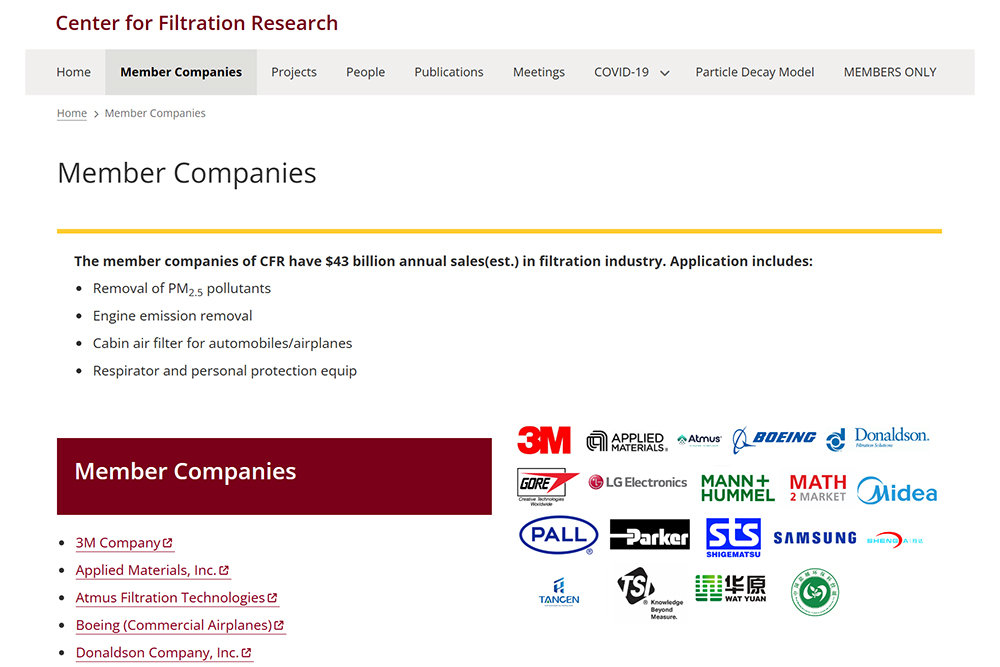
Introduction related to the Center for Filtration Research (CFR), which establishes theories and systems related to filters, with CEO Kwak participating in research and development / Source=CFR
While researching the filter field, there is high participation from environmental and home appliance companies, but companies such as Applied Materials, Samsung Electronics, LG Electronics, Pall Corporation with ultrapure filtering technology, TSI handling fine dust monitoring equipment in cleanroom environments, and Math2Market simulating the microstructure of materials are also affiliated. CEO Kwak plans to inform semiconductor companies of K-Nano's technological capabilities by understanding technology trends and networking while conducting research projects.
K-Nano's goal for next year is to establish mass-produced products and introduce them to the global market / Source=IT Donga
The goal for next year is the successful mass production and process integration of products, as well as generating overseas demand. CEO Kwak stated, “Through the support for the localization of ultrapure water by the Korea Water Resources Corporation, domestic companies have begun to be recognized in the global market. Next year, the goal is to establish mass-produced products with ART-Plus and integrate them into actual processes, and based on this, introduce and recommend the products to overseas companies. The following year, we aim to participate in the UltraFacility Conference, the world's largest semiconductor monitoring equipment exhibition, to promote K-Nano's technology and strive to establish itself as a standard technology company for liquid monitoring across various industries.”
IT Donga Nam Si-hyun Reporter (sh@itdonga.com)
ⓒ dongA.com. All rights reserved. Reproduction, redistribution, or use for AI training prohibited.
Popular News