As the climate crisis threatens daily life, companies and local governments find it increasingly difficult to rely on intuition for environmental responses. Accurate climate decision-making based on data is required in all activities, including carbon emission reduction, greenhouse gas management, and resource efficiency. The spread of ESG management has also increased the demand for companies to objectively prove their Corporate Social Responsibility (CSR). Simple eco-friendly campaigns or declarative activities are insufficient to meet evaluation criteria. Companies must present measurable environmental performance, verifiable carbon reduction effects, and CSR achievements backed by quantitative evidence. For this, advanced data collection and analysis systems and evidence tools based on scientific grounds are essential.
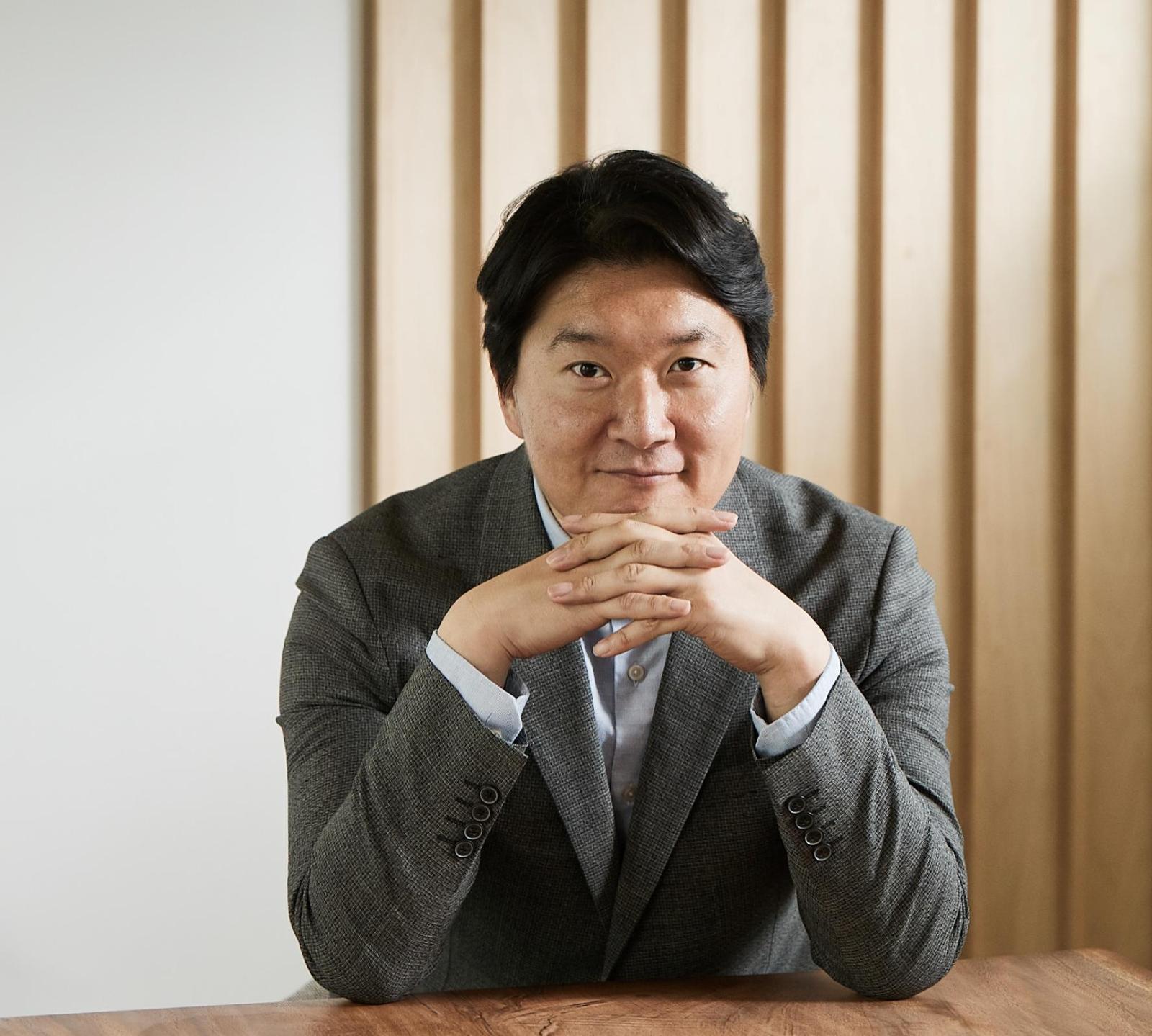
Kim Hyung-jun, CEO of MetaEarth Lab / Source=MetaEarth Lab
To meet this demand, there is a company that quantifies climate change with 'maps and numbers that anyone can easily understand.' This company is the climate tech firm MetaEarth Lab. Led by CEO Kim Hyung-jun, who has a background as a Ph.D. from the University of Tokyo, a researcher at NASA's Jet Propulsion Laboratory (JPL), and a distinguished professor at KAIST, the company was established to bring climate data, previously confined to academia, into industrial and policy fields. It uses technology to visually present climate data easily for various purposes, such as ESG strategy formulation, carbon and ecosystem monitoring, and wildfire risk analysis.
Analysis and Visualization of Climate Change ImpactsCEO Kim Hyung-jun stated, "The increasingly severe abnormal climate is already affecting all areas of life and the economy. For example, the trend of mandatory ESG disclosure due to climate change poses a new burden on companies, governments, and local governments. However, in the field, people still feel overwhelmed by difficult and complex climate data," he said. "Predicting Earth's climate changes and estimating their impact is a specialized area that requires a lot of resources and time. The data from researchers is complex, and there is a significant gap with the decision-making processes of local governments and companies. Easily understandable and trustworthy climate information is essential for appropriate climate responses by local governments and companies," he added.
He continued, "There is a high demand for experts related to climate change response, but there is a shortage of personnel to handle it. MetaEarth Lab was founded to extract the vast climate data that remained in laboratories and turn it into 'practical solutions' that decision-makers can trust and use," he emphasized. "As climate risks grow rapidly, there was a conviction that reliable data must reach the field."
MetaEarth Lab focused its capabilities on deriving methodologies to analyze vast climate data. It developed a hybrid climate analysis engine, AI downscaling models, and visualization platforms that can be used by companies and local governments.
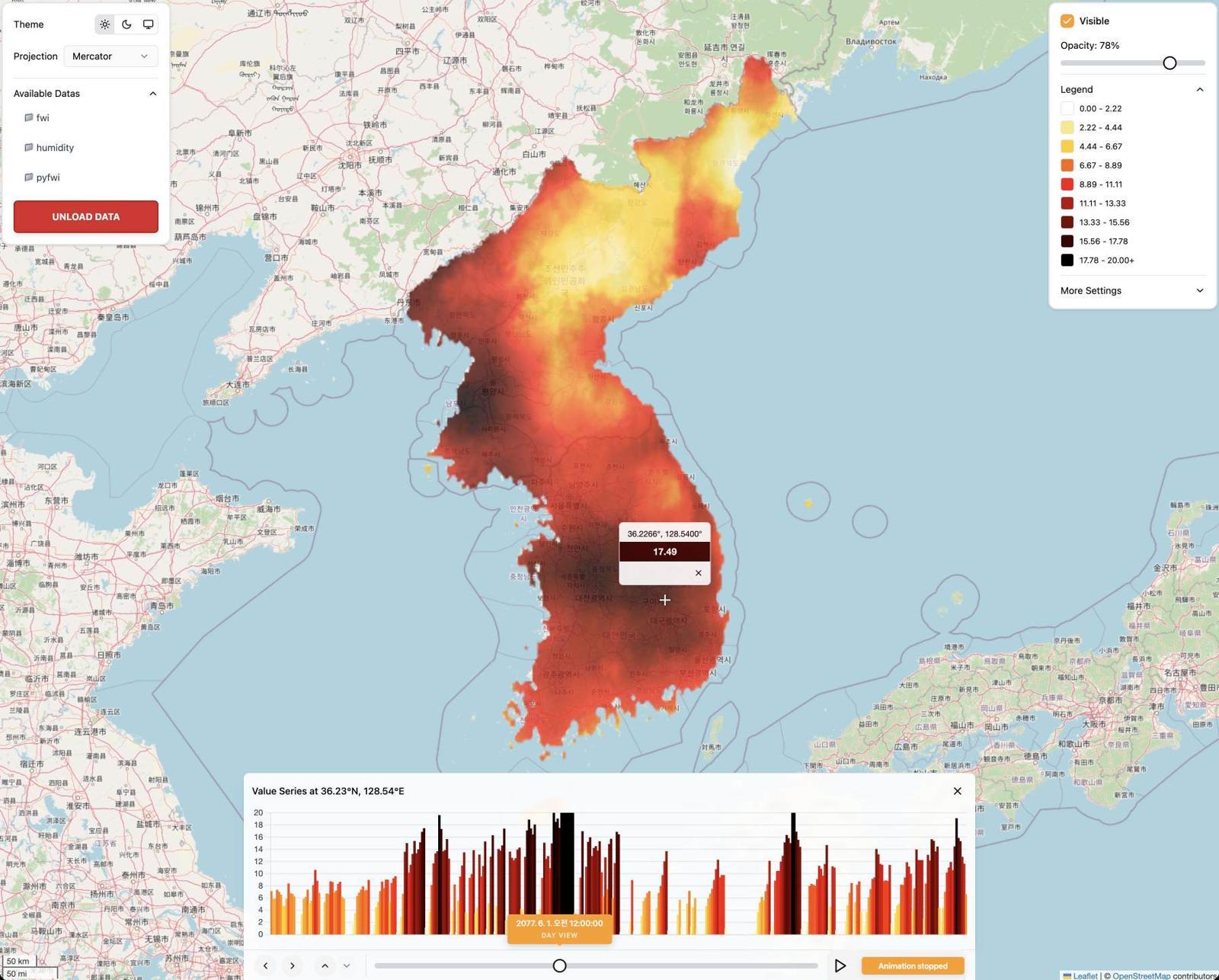
CEO Kim Hyung-jun said, "Based on AI-based climate model downscaling technology, a hybrid analysis engine integrating remote sensing, climate models, and hydrological analysis, a petabyte-level automatic processing pipeline, and a web-based visualization system, we analyze and quantify climate data," he said. "We provide maps, graphs, and web platforms so that anyone can easily verify the impact of climate numerically. Thanks to this, companies or local governments can easily establish ESG strategies with data-based reports. Advanced analysis that integrates satellite, climate, and hydrological models is also possible," he emphasized.
Visualization of climate impacts in the form of maps and graphs on a web platform by MetaEarth Lab / Source=MetaEarth Lab
MetaEarth Lab also revealed urgent tasks to be addressed as a startup.
CEO Kim Hyung-jun said, "Currently, we are conducting climate impact analysis on a project basis, but we plan to establish a climate data SaaS platform so that companies or local governments do not hesitate to make decisions due to a lack of data or feel burdened by excessive costs. We are continuously pursuing the recruitment of specialized personnel in climate, hydrology, and AI fields to enhance solutions," he said. "Expanding partnerships with public, local governments, and companies is also important, as this leads to the establishment of a data-policy-business ecosystem. We plan to focus on productizing and commercializing the technology owned by MetaEarth Lab through such triangular collaboration," he added.
Participation in Open Innovation in the Forestry Sector... Collaborating with Yuhan-Kimberly to Quantify the Carbon Storage Effect of ForestsAs part of expanding partnerships with public, local governments, and companies, MetaEarth Lab participated in the '2025 Open Innovation in the Forestry Sector,' hosted by the Korea Forestry Promotion Institute under the Korea Forest Service and operated by the Seoul Creative Economy Innovation Center. Open innovation is an activity where companies cross the boundaries inside and outside the organization to find innovative technologies and ideas to create results. MetaEarth Lab utilizes technology to meet the needs of Yuhan-Kimberly, which has been engaged in activities to create healthy daily life and forests for over 50 years by making household goods.
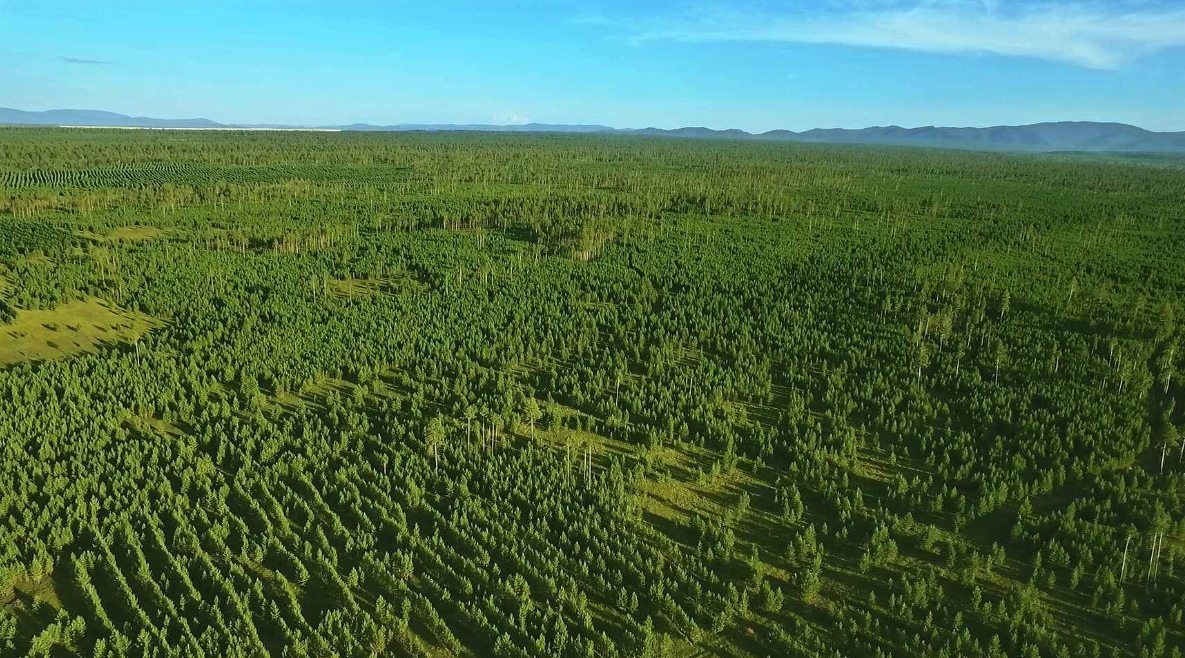
The forest created by Yuhan-Kimberly in the Tujin Nars region of Mongolia / Source=Yuhan-Kimberly
Yuhan-Kimberly has planted and nurtured over 10 million trees in the Tujin Nars region of Mongolia, where severe desertification was progressing due to large-scale wildfires. They have a need to scientifically prove how much carbon has been reduced through this activity.
CEO Kim Hyung-jun said, "The collaboration with Yuhan-Kimberly is an activity to quantify the carbon storage effect of forests. For this, we analyzed satellite images in a time series from 2003 to 2023 to calculate changes in carbon storage. We then developed the results interpreted by integrating climate, precipitation, and ecological factors into a web-based visualization prototype," he said. "Thanks to this, we scientifically proved the carbon storage effect of the Tujin Nars forest in Mongolia, which Yuhan-Kimberly has created over 20 years. It is meaningful in that it presented a new ESG model of environmental value proven by numbers, beyond the vague 'good deed' image of existing corporate CSR activities," he added.
Visualization of the forest restoration process in the Tujin Nars region of Mongolia using AI-based satellite data / Source=MetaEarth Lab
MetaEarth Lab emphasized that it will focus on achieving the popularization of climate data with three future goals.
CEO Kim Hyung-jun said, "We plan to focus on the three goals of the official launch of the aforementioned climate data SaaS platform, expanding collaboration with public institutions and national forest agencies, and entering the global climate data market," he said. "Once the climate data SaaS platform is established, corporate and local government officials can access it anytime to check climate risks, carbon storage, and ecological changes in real-time. This will lead to the 'normalization of climate risk management.' We plan to enhance forest carbon absorption monitoring, climate scenario-based wildfire risk modeling, and high-resolution ecological change detection technology by expanding collaboration with public institutions and national forest agencies. We also confirmed the growth potential of public sector-linked projects through open innovation activities in the forestry sector with Yuhan-Kimberly," he added.
Kim Hyung-jun, CEO of MetaEarth Lab / Source=MetaEarth Lab
He continued, "We will also pursue entry into the global climate data market. Based on the global research partnership with KAIST, we will widely promote Korean technology in the Asian and international climate data markets," he said. "We will focus our capabilities on achieving the goal of transforming climate data from a 'difficult and complex academic domain' to a 'decision-making tool that anyone can understand.' The global research experience of the CEO, the team's AI, remote sensing, and climate analysis capabilities, and the demonstration with Seoul Creative Economy Innovation Center, Yuhan-Kimberly, and the Korea Forestry Promotion Institute are examples that show the potential for MetaEarth Lab to grow into Korea's leading climate data platform company. We will further expand such collaborations," he conveyed.
IT Donga Reporter Kim Dong-jin (kdj@itdonga.com)
ⓒ dongA.com. All rights reserved. Reproduction, redistribution, or use for AI training prohibited.
Popular News