Open innovation involves companies transcending internal and external boundaries to find innovative technologies and ideas to generate results. Yuhan-Kimberly, which has been producing household goods for over 50 years and engaging in activities for a healthy daily life and forest creation, also attempts to create synergy both inside and outside the organization. The company is currently integrating technology into its social contribution activities by partnering with climate tech startups. Details were discussed with Park Yoon-jae, head of Yuhan-Kimberly's Open Innovation Team.
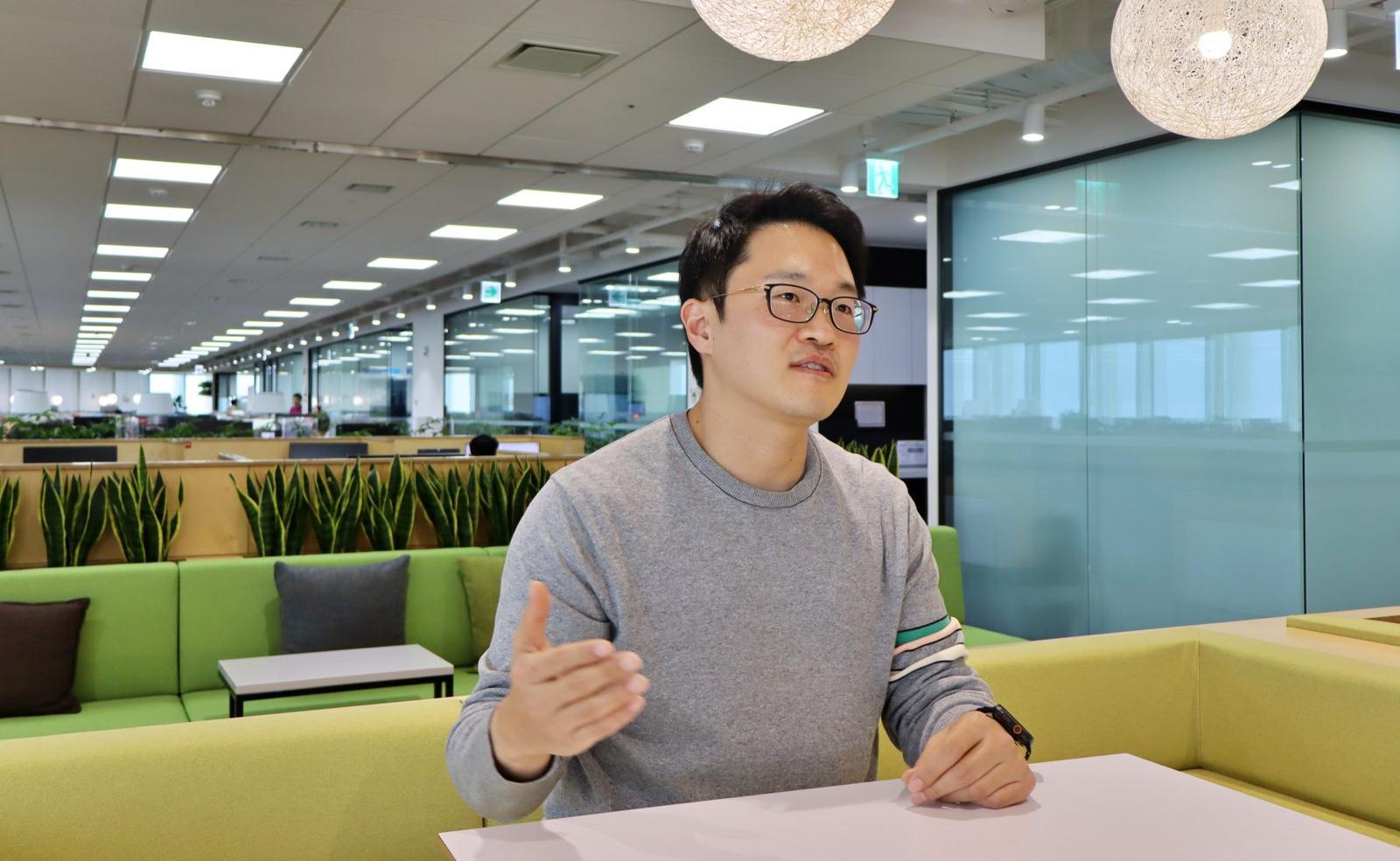
Park Yoon-jae, Head of Yuhan-Kimberly's Open Innovation Team / Source=IT Donga
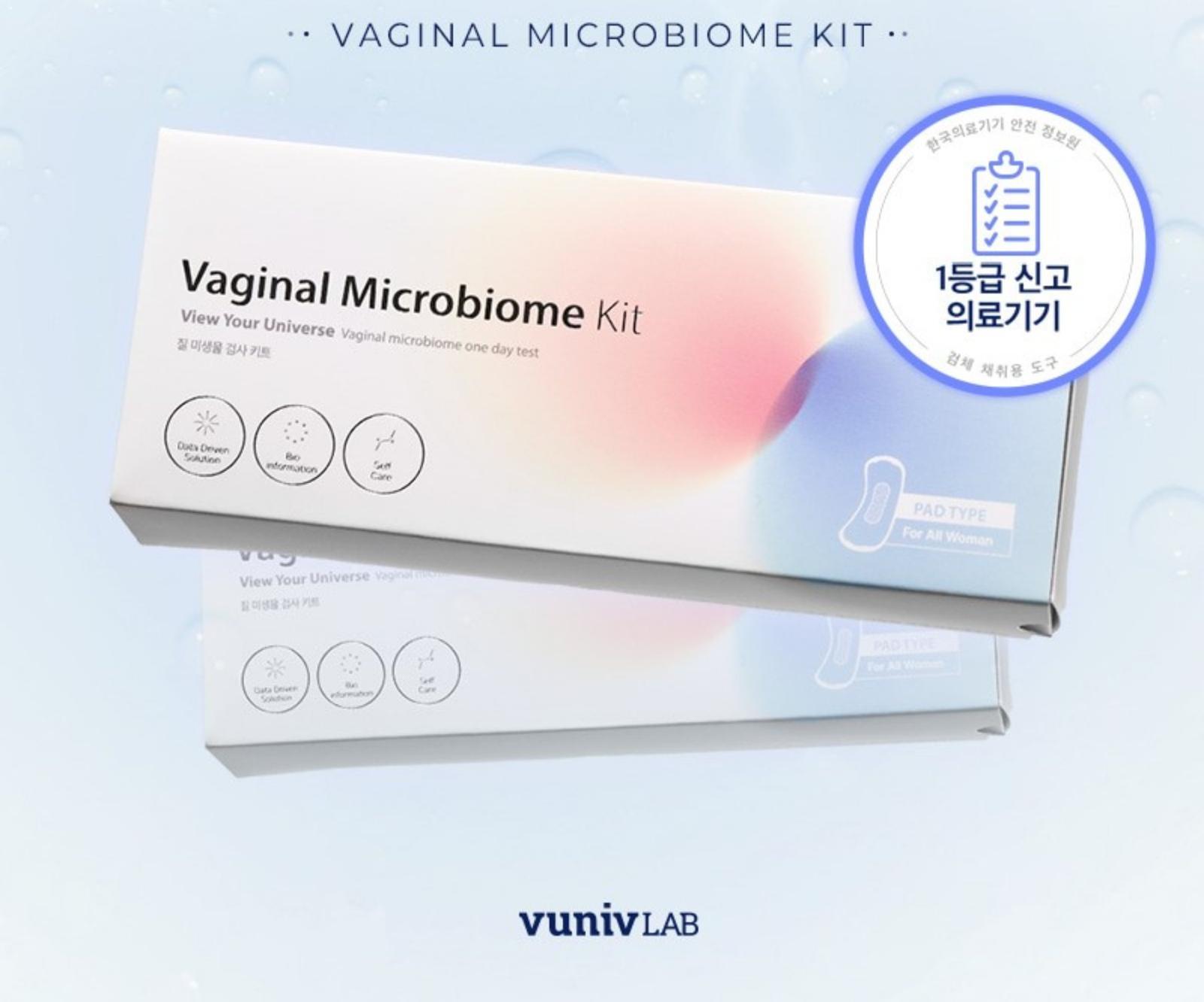
Yuhan-Kimberly and MetaEarth Lab Collaborate to Quantify Forest Carbon Storage CapacityPark Yoon-jae stated, "The biggest differentiator of Yuhan-Kimberly's open innovation is not demanding startups to meet our standards unilaterally, but also making efforts to approach the standards of startups to launch innovative products," adding, "For example, through open innovation with the startup Vuniv Lab, we developed a vaginal microbiome self-test kit that can be easily used at home. Previously, the test was inconvenient as it required inserting a swab into the body, but Yuhan-Kimberly actively adjusted from the pad's properties to line production, introducing a product that allows sample collection directly from a wearable liner."
Vaginal microbiome self-test kit introduced through collaboration between Yuhan-Kimberly and Vuniv Lab / Source=Yuhan-Kimberly
Yuhan-Kimberly has been pursuing open innovation independently since 2019 but faced difficulties in finding an appropriate pool of startups or designing an initial funding structure. However, a turning point was reached by participating in the Open Innovation Partners Day at the invitation of the Seoul Center for Creative Economy & Innovation (hereafter Seoul CCEI) in 2023.
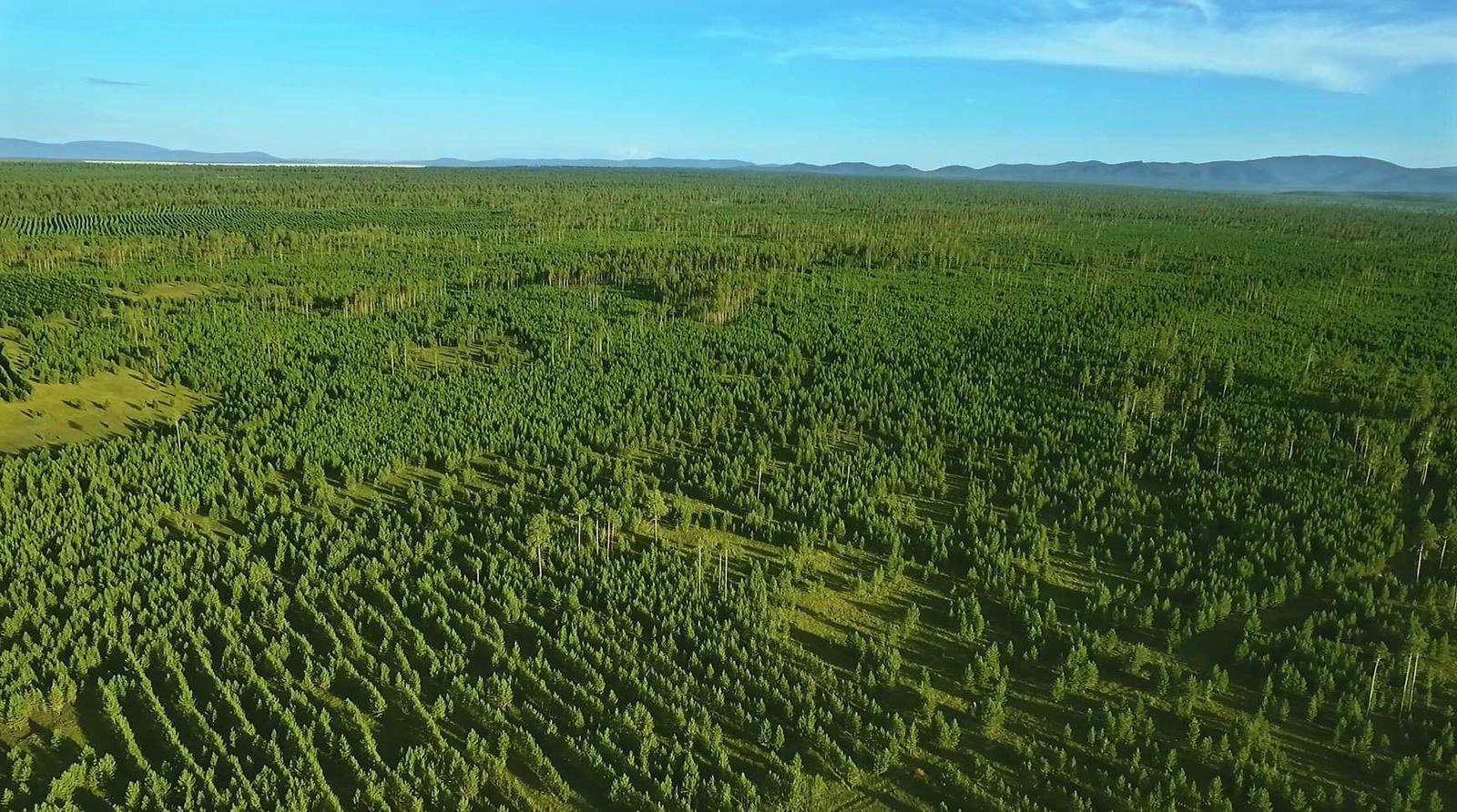
Park Yoon-jae explained, "Yuhan-Kimberly has established itself as a representative company for ESG management, continuing the 'Keep Korea Green' campaign for over 40 years," adding, "For example, since 1984, we have consistently conducted tree planting campaigns in national and public forests domestically and internationally. Particularly, in the Mongolian region of Tujin Nars, where severe desertification was progressing due to large-scale wildfires, we have planted and nurtured over 10 million trees. We are in a situation where we want to scientifically prove how much carbon has been reduced through this activity."
Forest created by Yuhan-Kimberly in the Tujin Nars region of Mongolia / Source=Yuhan-Kimberly
He continued, "To meet such needs, we participated in the forestry open innovation operated by Seoul CCEI to promote the discovery of innovative technologies. The Korea Forestry Promotion Institute under the Korea Forest Service, the host organization, introduced startups and technologies in the forestry and forest industry fields that Yuhan-Kimberly found difficult to understand, expanding the possibilities for collaboration. During the process of reviewing teams with various forestry technologies, CO₂ quantification models, and satellite analysis capabilities, they provided in-depth advice with expertise. Thanks to this, we were able to select the climate tech startup 'MetaEarth Lab,' which can visualize AI technology and scientific data as 'maps and numbers,' as our final partner."
The core of the project being conducted by Yuhan-Kimberly and MetaEarth Lab is 'quantification.' It is not simply about 'planting many trees,' but proving with data 'how much carbon was stored and what positive impacts it had on the ecosystem.'
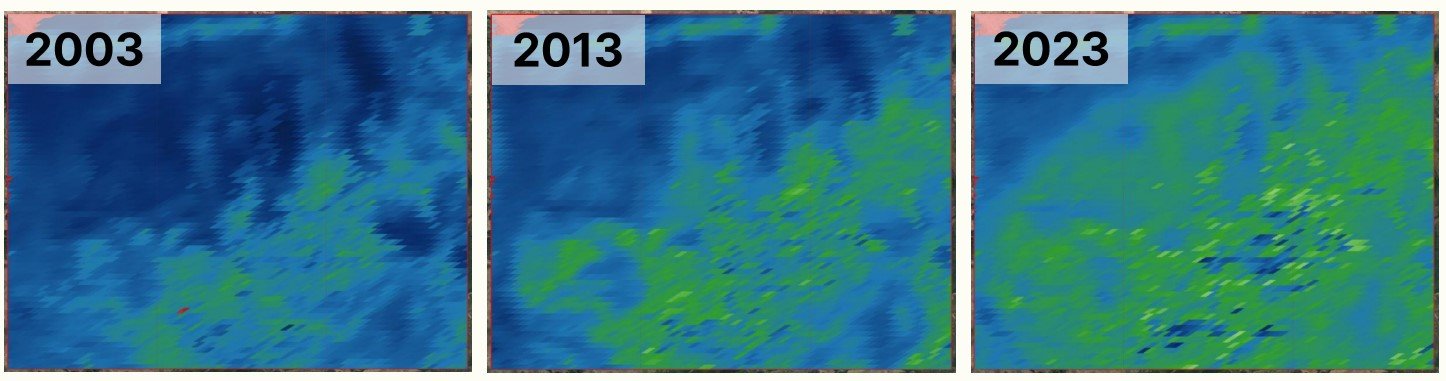
MetaEarth Lab, led by Professor Kim Hyung-jun from KAIST's Moon Soul Graduate School of Future Strategy, is conducting carbon storage modeling of the Mongolian Tujin Nars forest created by Yuhan-Kimberly, utilizing satellite images, infrared data, and AI-based carbon modeling technology.
Visualization of the forest restoration process in the Tujin Nars region of Mongolia using AI-based satellite data / Source=MetaEarth Lab
Park Yoon-jae stated, "MetaEarth Lab is a team that possesses both the depth of academic methodology and the speed of a startup. The combination of our 'brand, manufacturing, and quality capabilities' with their 'data, technology, and experimental spirit' has opened up new possibilities for innovation," adding, "By April next year, a web-based map format of accumulated carbon effects will be available for anyone to check via the 'Keep Korea Green' campaign link. This result will not only serve as basic data for evaluating the potential recognition of corporate carbon credits but also as a useful educational tool to inform the public about how tree planting changes the planet."
'Triangular Collaboration' Connected by Seoul CCEI… Background of Innovation PromotionPark Yoon-jae mentioned impressive experiences from the 2025 forestry open innovation program.
He stated, "During the process of participating in the forestry open innovation program through Seoul CCEI, it was impressive that the government, large corporations, and startups moved organically to solve tasks, rather than the government unilaterally setting and executing tasks as in the past. In this process, Seoul CCEI played the role of 'connector, coordinator, and facilitator,'" adding, "Connecting market demand and technology, and adding accelerators such as funding, programs, and networks necessary for deriving solutions, creating a process that leads to commercializable tasks was impressive. A structure was formed where large corporations commercialized the technology, creating a win-win-win situation for everyone."
He also addressed the realistic constraints encountered while performing open innovation tasks.
Park Yoon-jae stated, "Participating in government-matching-based open innovation requires creating a PoC and results within about six months after executing support funds. Then, the business viability must be proven within the first half of the following year. It is realistically challenging to show everything from pilot to financial impact in such a short time," adding, "There is a need to introduce a multi-year, phased funding structure (PoC→Pilot→Scale-up) rather than a single-year task. Teams with verified performance should be given differentiated periods, budgets, and autonomy. Companies need to improve systems to measure and reward activities for environmental or social impact within the organization as KPIs. Such changes will serve as a catalyst for promoting similar activities. Open innovation is about creating the future. It should be based on long-term impact rather than immediate sales."
Finally, the future plans of Yuhan-Kimberly's Open Innovation Team were discussed.
Park Yoon-jae, Head of Yuhan-Kimberly's Open Innovation Team / Source=IT Donga
Park Yoon-jae stated, "Yuhan-Kimberly's Open Innovation Team plans to focus on three main pillars: ▲Comfortable daily life for women ▲Well-being of seniors ▲Technology to detect micro-signals in infants," adding, "This strategy expands beyond existing household goods to materials, digital health, and new business models. To achieve these goals, we plan to continue developing and applying innovative technologies both inside and outside the organization."
IT Donga Reporter Kim Dong-jin (kdj@itdonga.com)
ⓒ dongA.com. All rights reserved. Reproduction, redistribution, or use for AI training prohibited.
Popular News