[SBA x IT Donga] The Seoul Business Agency (SBA) leads the super-gap open innovation that connects startups researching top 10 super-gap technologies with large and medium-sized enterprises for mutual growth. Based on super-gap open innovation, it introduces the skills and achievements of promising startups that will be active globally.
Graphene, once hailed as the 'dream new material' that would significantly enhance semiconductor performance, has repeatedly shown limitations in commercialization. Its structure, vulnerable to contamination, and its characteristic of conducting current well have revealed fundamental limitations in securing consistent performance. There is a person who has directly tackled this challenge. Jeong Hyun-jong, CEO of A-Barristor, invented a sensor structure called 'Barristor (Barrier + Transistor)' and published the results in the world-renowned journal Science. After 17 years of graphene research at Samsung Advanced Institute of Technology, he succeeded in developing the Barristor. He expressed his ambition to lead the creation of the graphene sensor industry ecosystem in Korea by challenging commercialization beyond the laboratory. Jeong Hyun-jong was met at the A-Barristor office in Gwangjin-gu, Seoul.
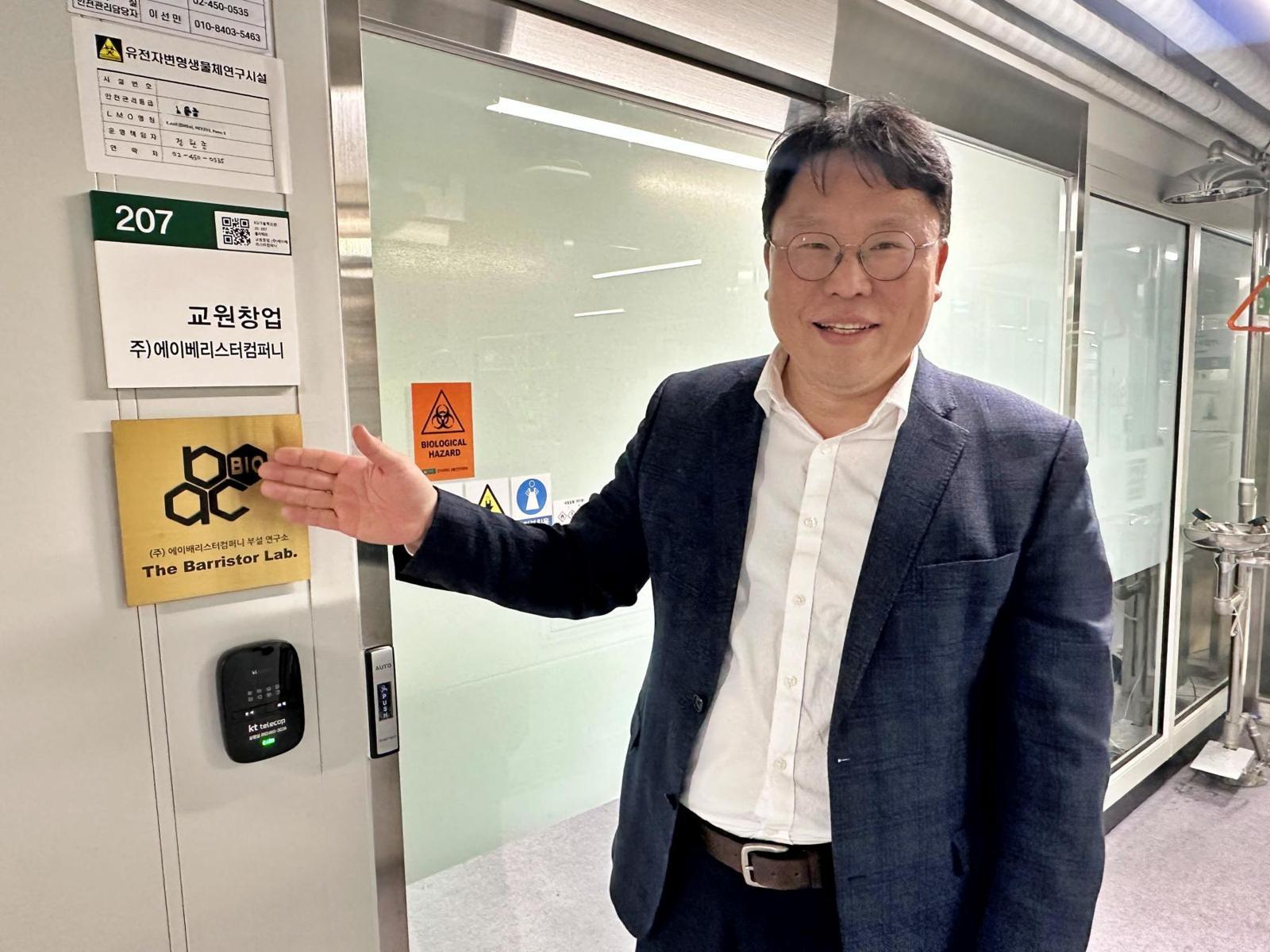
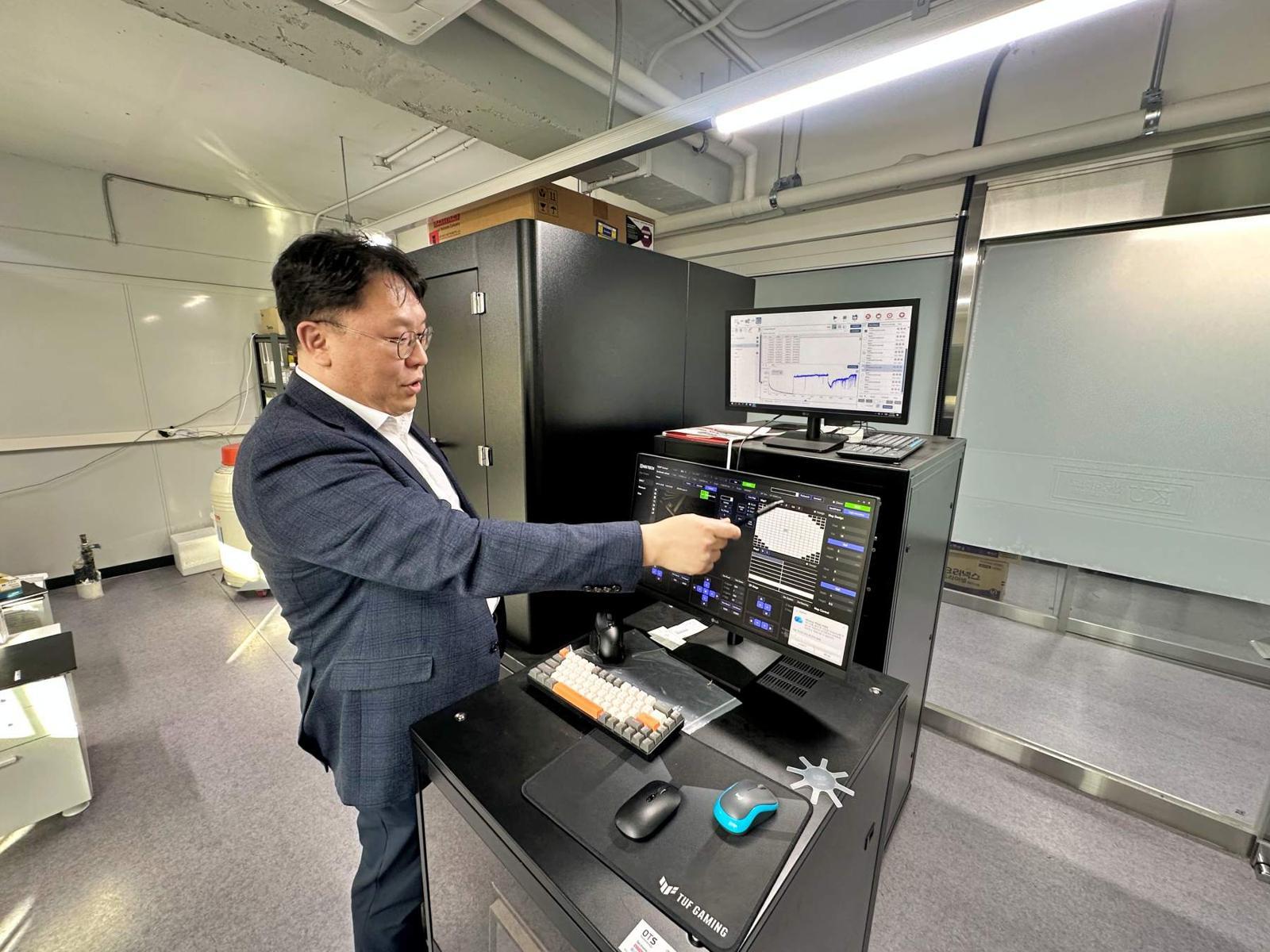
Jeong Hyun-jong, CEO of A-Barristor / Source=IT Donga
Innovative Sensor Structure to Overcome Graphene Limitations…Published in the World-renowned Journal 'Science'Theoretically, graphene's electron mobility is 100 times that of silicon. This led numerous global research teams to attempt to replace existing semiconductors with graphene-based transistors (FET). However, experiments repeatedly failed.
CEO Jeong Hyun-jong explained, "To use graphene as a semiconductor material, it must not only conduct current but also be able to block it. However, graphene has a structural limitation that makes it difficult to block current. The switching efficiency between conductor and insulator states is very low, making it impossible to apply as a semiconductor material. Additionally, its vulnerability to surface contamination makes it difficult to use as a bio/environmental sensor."
Jeong sees this issue as a failure stemming from the 'fixed idea of trying to use graphene like a semiconductor.'
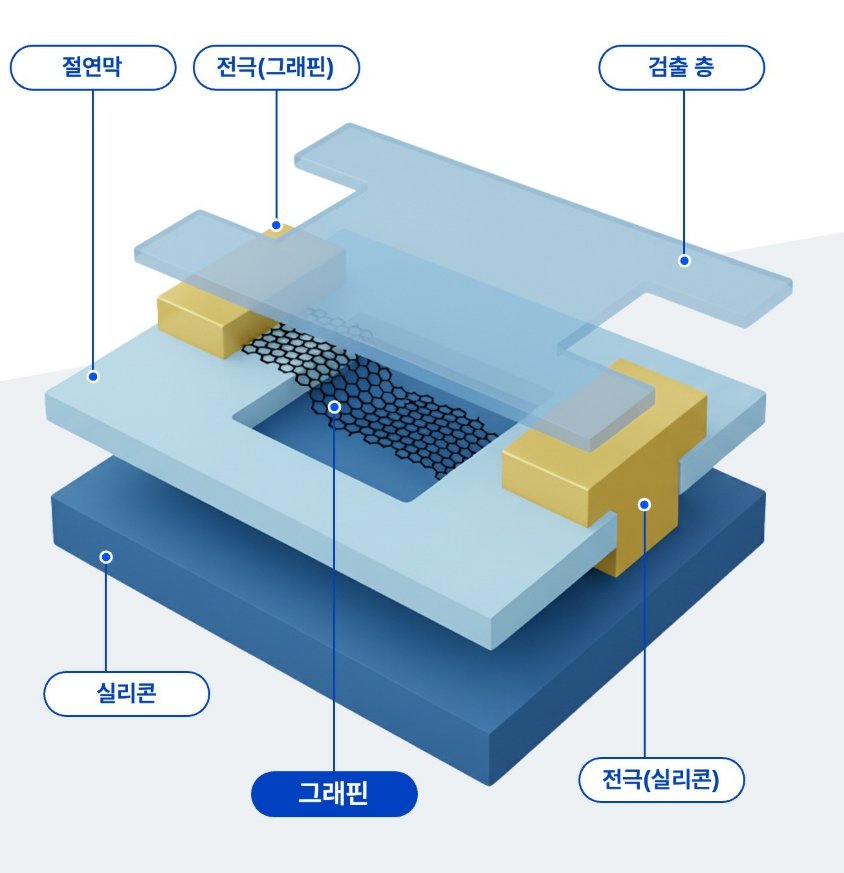
He stated, "To use graphene as a semiconductor material, the flow and blocking of current must be repeated numerous times, but due to its characteristic of conducting current well, it was not suitable. For example, it's like trying to stop a car window from going down, but it's difficult to stop. At Samsung Advanced Institute of Technology, I dedicated myself to solving this problem. As a result, I found a solution in the process of combining silicon and graphene. This is the graphene combination method named Barristor. It precisely adjusts the height of the energy barrier formed at the junction of silicon and graphene to repeatedly flow and block current. This structure derived in this way is the Barristor (Barrier + Transistor)."
Barristor Structure / Source=A-Barristor
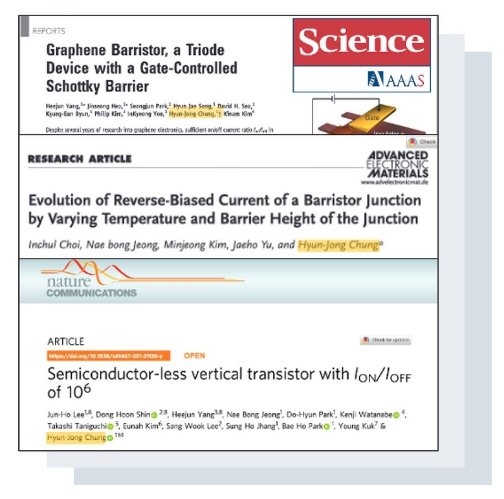
Based on these research results, CEO Jeong published the Barristor in the world-renowned journal Science, and also published research results related to transfer and output characteristics in Nature Communications and Advanced Electronic Materials. These research achievements are particularly evaluated as providing a groundbreaking breakthrough in improving high-performance sensor efficiency, which was considered a difficult problem.
Barristor Research Results Published in Science / Source=Science, Advanced Electronic Materials, Nature Communications
He stated, "The Barristor has been proven to implement a switching ratio more than 1 million times higher than existing graphene transistors and amplify sensor signals 100 times more than before. Especially, since it operates with low power (driving current 1/1000), it is possible to develop products with high performance at a price similar to or cheaper than existing sensors. Due to these characteristics, it can have high competitiveness in the sensor market where ultra-low detection is required."
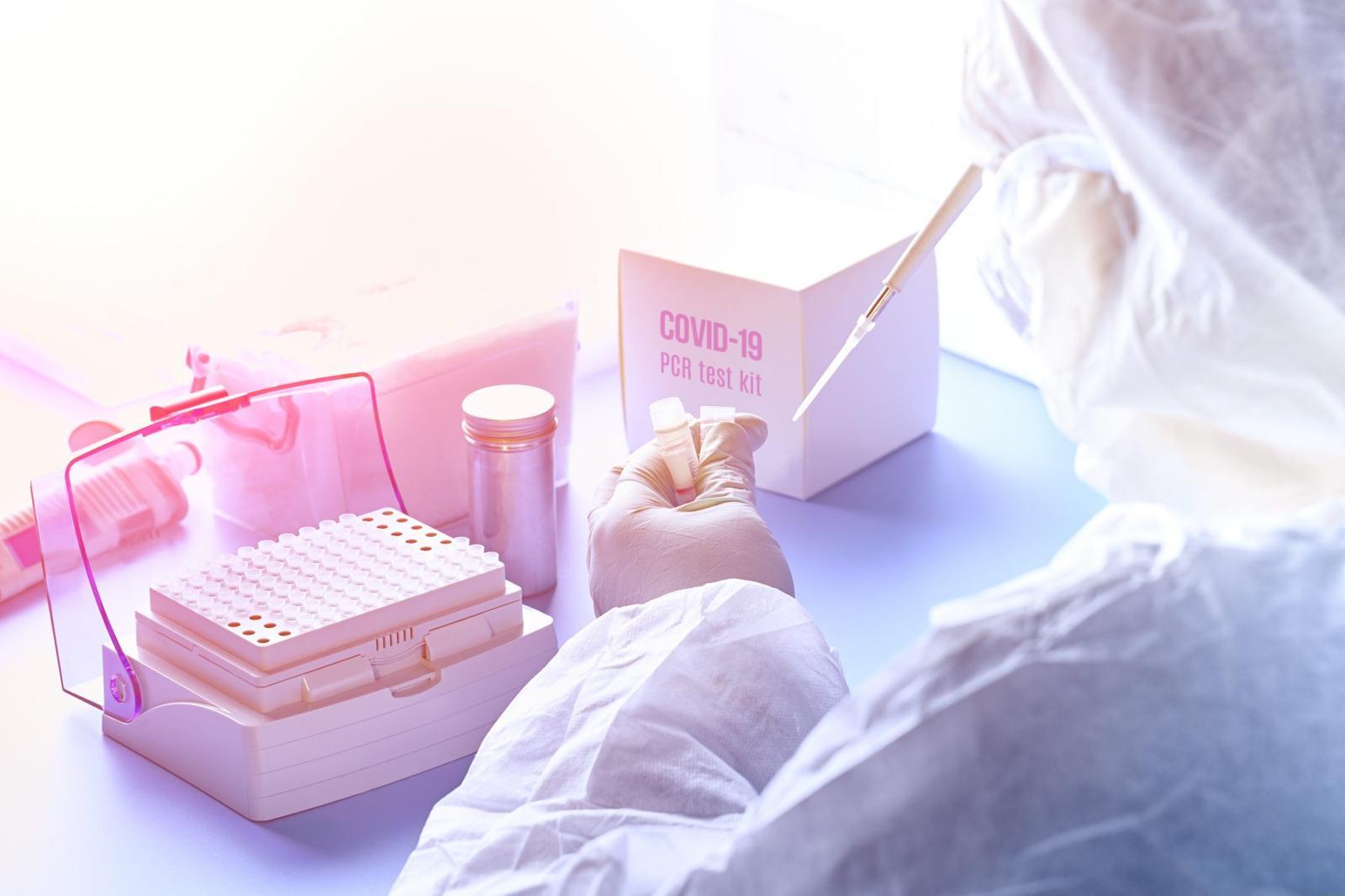
For example, if Barristor technology is applied in the medical field where ultra-low detection is needed, it can enhance PCR test efficiency in situations requiring rapid infection diagnosis like COVID-19. This is because it can quickly confirm infection status with ultra-low samples. Such high-performance testing equipment can be supplied at a price similar to or cheaper than existing ones.
Source=Shutterstock
CEO Jeong stated, "In the case of a Barristor-based COVID-19 diagnostic device, it is possible to conduct on-site diagnosis with saliva, showing a high sensitivity that can detect the coronavirus 50 times more accurately than existing PCR. Based on these achievements, we are producing a prototype of a Barristor-based immunodiagnostic sensor and are undergoing performance review procedures with overseas diagnostic device companies," adding, "We have also independently verified the excellence of detecting the myocardial infarction marker protein Troponin-I at levels below 1 pg/mL."
The reason Barristor devices can be applied to biosensors is that, unlike semiconductors, the graphene surface is chemically stable, so viruses or proteins do not degrade the device's performance. Due to these contamination-resistant characteristics, it can also be applied to military or industrial infrared sensors that need to maintain performance in various temperatures and environments, or LiDAR (Light Detection and Ranging) sensors mounted outside vehicles.
LiDAR stands for light detection and ranging, and it works by emitting laser light and measuring the time it takes for the light to return after hitting an object to detect the distance to the object. It operates by precisely drawing the surrounding appearance, allowing it to alert drivers to the presence of people or objects even in the dark or in poor weather conditions where visibility is difficult.
CEO Jeong stated, "We are focusing on developing a short-wave infrared sensor with a 1550nm wavelength for LiDAR by applying graphene Barristor to far-infrared IR sensors. We plan to supply this product to automobile manufacturers or autonomous driving technology companies," adding, "We have also confirmed its utility in gas sensors. While existing graphene transistor-based gas sensors show about a 4.5% signal change with 1 ppm of NO2 gas, the Barristor produced at the laboratory level showed a response 10,000 times greater."
CEO Jeong Hyun-jong explaining research achievements / Source=IT Donga
Performance Experiment and Verification with SBA Support…“Leading the Establishment of the Graphene Sensor Ecosystem”There is an institution that has spared no support for A-Barristor to experiment and verify such performance. It is the Seoul Business Agency (SBA). A-Barristor is participating in SBA's super-gap open innovation promotion support program. This program is a support project to enhance the external promotion and marketing capabilities of companies through effective promotion support for super-gap selected companies.
CEO Jeong Hyun-jong stated, "In the early stages of the startup, we developed one of the technologies needed for sensor production through the Campus Town Technology Matching Support Project. We were also able to conduct close research and development with university research institutes located in Campus Town. It was precise and useful support for early technology companies as we could carry out projects without corporate burden. Thanks to the super-gap program, we also had the opportunity to widely promote Barristor technology," adding, "This year, as part of the SBA program, we exhibited sensor technology at CES 2025. Thanks to this, we had the opportunity to hear from European LiDAR companies."
A-Barristor identified reference acquisition and enhancement of promotional capabilities as urgent tasks to be solved for the company's growth.
CEO Jeong Hyun-jong stated, "A-Barristor focuses on the licensing business of designing sensors needed by companies. Therefore, in the early stages of the business, we focused on securing original patents. From 2022 to 2023, we registered five patents in Korea and filed one, and completed nine international patent applications in the US, Europe, Japan, China, Taiwan, and Singapore," adding, "We are currently in the stage of securing customers and verifying technology. We aim to generate sales in 2026 from diagnostic companies and gas sensor companies. We are conducting technology verification for Barristor device licensing with a US virus self-diagnosis biosensor development company. We are negotiating the development of infection detection devices with domestic quarantine-related companies and are reviewing collaboration and technology verification with optical sensor companies. We aim to secure major players who are still at the graphene FET (semiconductor type) stage as customers."
He continued, "Most of A-Barristor's members are researchers responsible for the development and evaluation of IR sensors, gas sensors, and biosensors. While all have excellent technology development capabilities, I believe the ability to widely promote this technology is also important," adding, "We are also contemplating ways to organize and promote the technology so that anyone can easily understand it."
Finally, the future plans of A-Barristor were shared.
CEO Jeong Hyun-jong stated, "Recently, the government selected graphene as part of the 15 major projects of the super-innovation economy. The government has set a roadmap for graphene to enter the energy storage material market by 2030 and the sensor material market by 2035. A-Barristor aims to build a Multi Project Wafer (MPW) service based on graphene sensors in response to this roadmap," adding, "MPW is a method used in the early semiconductor industry to build an ecosystem, where various research units (companies, research institutes, schools) that cannot order the minimum production unit quantity of wafers gather their demand (design) to have wafers made at a foundry. In Europe, this method was adopted for graphene FET (semiconductor type) sensors during the graphene flagship project, and currently, European graphene foundry companies are providing this service. If we can provide MPW services based on the innovative graphene sensor technology called Barristor in Korea, it is expected that the graphene sensor ecosystem will be naturally established along with the demonstration infrastructure."

Jeong Hyun-jong, CEO of A-Barristor / Source=IT Donga
He continued, "Next year, we will extensively conduct technology verification processes with customers who want to use A-Barristor's sensor technology. We plan to supply Barristor technology to the market by delivering sensor chips to companies developing diagnostic devices based on Barristor," adding, "If we successfully complete MPW services and technology verification with customers, we will be able to supply graphene to the sensor market five years ahead of the government's roadmap. In this process, we aim to lead the creation of the graphene sensor ecosystem and be evaluated as 'If there is ARM in the semiconductor industry, there is A-Barristor in the sensor industry.'" he expressed his ambition.
IT Donga Reporter Kim Dong-jin (kdj@itdonga.com)
ⓒ dongA.com. All rights reserved. Reproduction, redistribution, or use for AI training prohibited.
Popular News