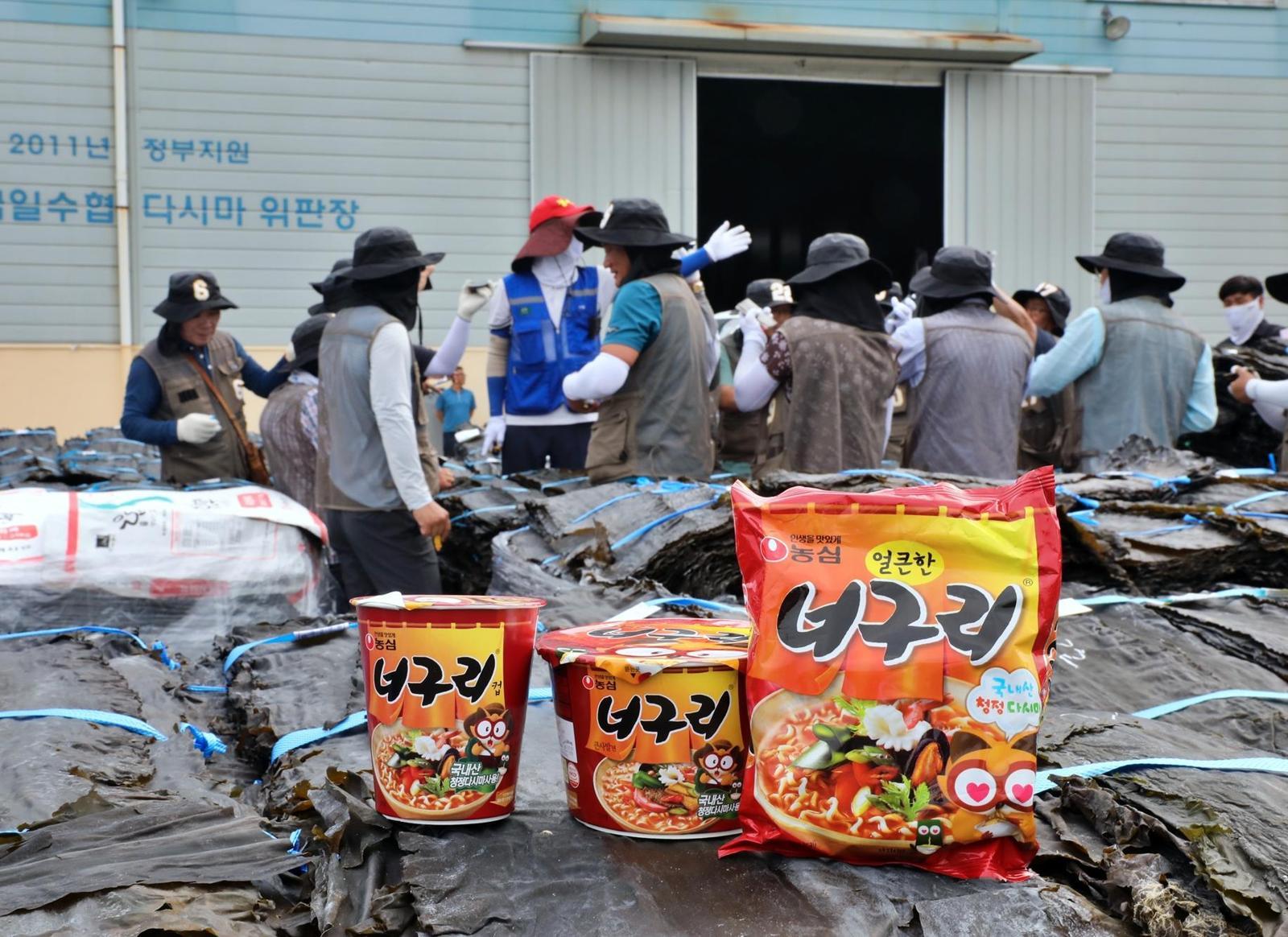
An auction of kelp is taking place at the Wando Geumil Fisheries Cooperative kelp auction house in Wando-gun, Jeollanam-do. Provided by Nongshim
‘It's me, kelp.’
The defining symbol of the 'national ramen' Neoguri is undoubtedly the large piece of kelp. It is the ingredient that immediately greets consumers upon opening the package, akin to the face of Neoguri. Even in its dried state, it exudes a subtle sea aroma, making its presence known, and in boiling water, it completes the rich seafood udon flavor that distinctly separates it from other ramen. Imagining Neoguri without kelp is difficult. A product with two pieces of kelp is considered a 'lucky Neoguri' by consumers. Since its launch in 1982, kelp has played a crucial role in defining Neoguri's identity.
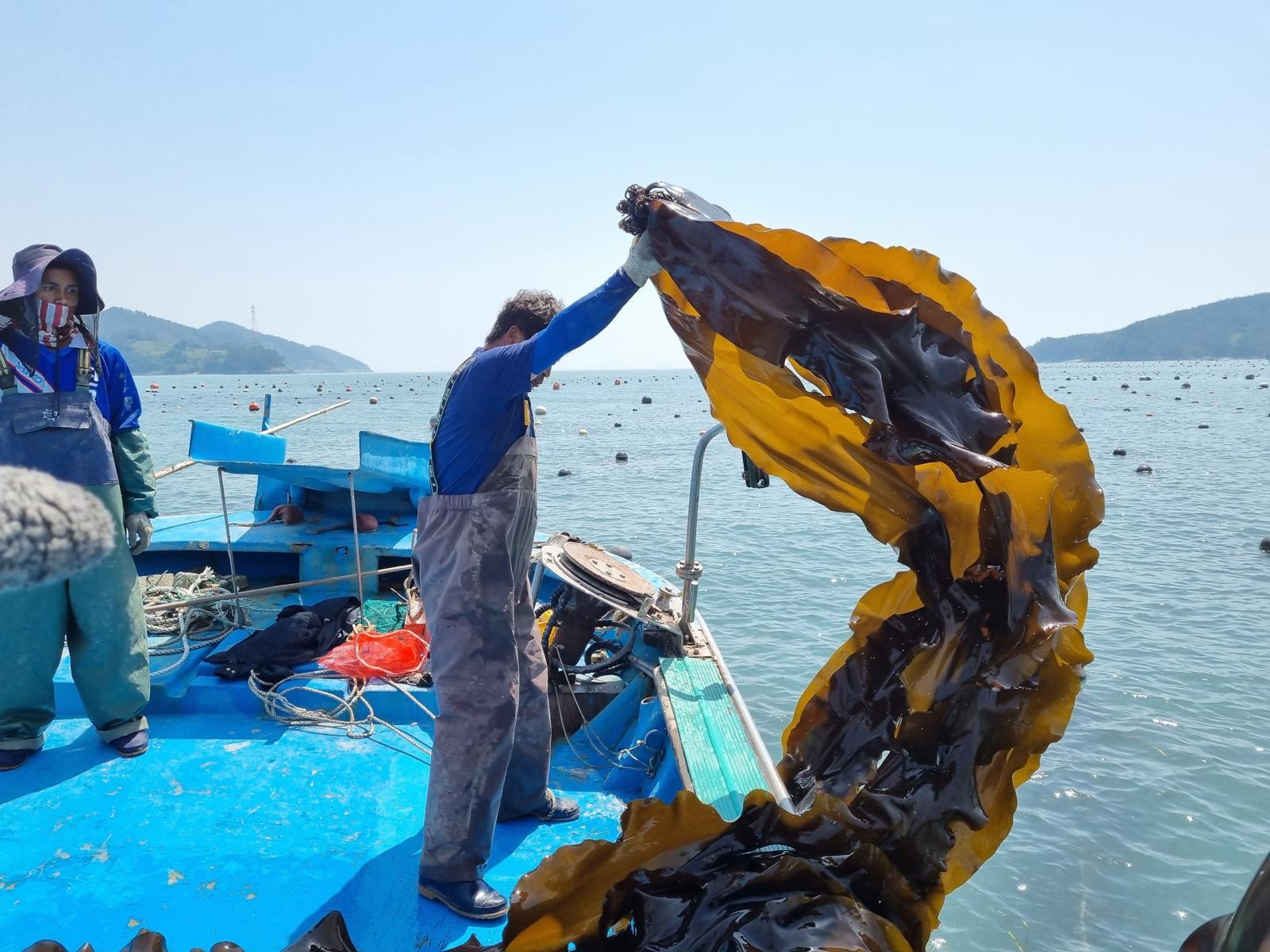
A fisherman from Geumildo, Wando-gun, Jeollanam-do, is harvesting kelp for Nongshim's representative product 'Neoguri'. Provided by Nongshim
The hometown of this kelp is Wando, Jeollanam-do. Since the launch of Neoguri in 1982, Nongshim has established a connection with Geumildo in Wando-gun, known as the 'hometown of kelp'. This area, with its optimal conditions for cultivation such as sunlight and wind, currently accounts for 70% of domestic kelp production. Nongshim purchases around 400 tons of kelp annually, and up to this year, a total of 18,000 tons of Wando kelp have been included in Neoguri packages for consumers. At the time of Neoguri's launch, there were only a handful of kelp farms in the area, but now, 380 out of the 600 households in Geumildo cultivate kelp, thanks to the stable market provided by Nongshim. The kelp farms in Geumildo, which have grown alongside Nongshim, contribute significantly to enhancing the taste of Neoguri by supplying better quality kelp. This is a symbiotic business model where the company and the region grow and evolve together.
● Partnership with Kelp Farms As a leading food company in Korea, Nongshim has been fulfilling its social responsibility while securing high-quality core raw materials and revitalizing the local economy by establishing a sustainable supply chain. This structure creates both social and economic value simultaneously.
It is considered a representative example of Creating Shared Value (CSV) proposed by business scholars Michael Porter and Mark Kramer. CSV refers to creating social value while solving social needs and challenges as the company generates economic value. It focuses on how to create social value in the process of performing the company's core business. It is distinct from Corporate Social Responsibility (CSR), which primarily focuses on charitable activities or environmental protection, and ESG (Environmental, Social, and Governance), which heavily reflects investors' perspectives. Nongshim's case can be examined through two aspects of the shared value creation methods proposed by Porter and Kramer: redefining productivity in the value chain and developing regional clusters.
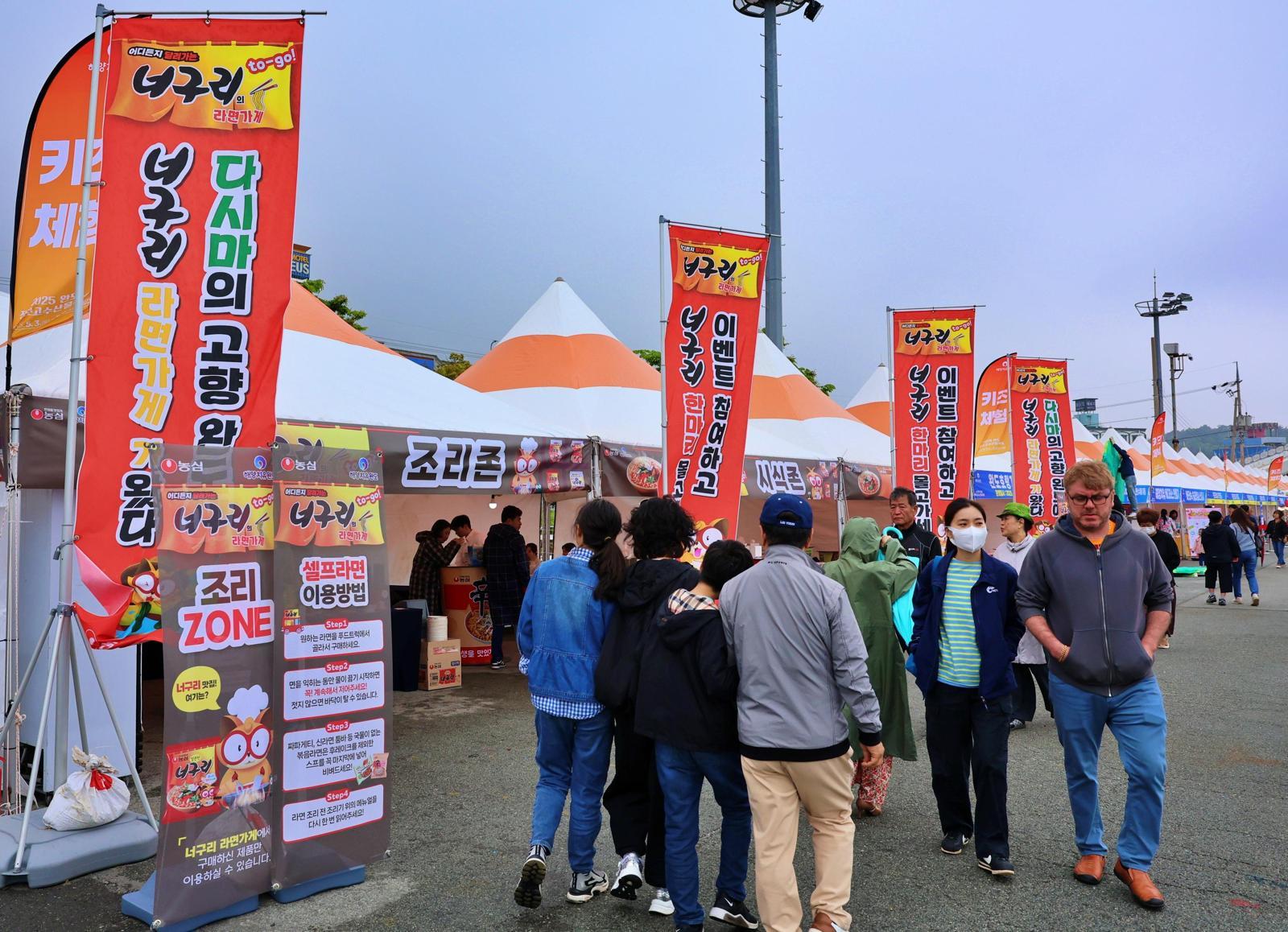
The 'Neoguri Ramen Shop' event prepared by Nongshim is bustling with visitors at the '2025 Jang Bogo Seafood Festival' held at the Wando Beach Park in May this year. Provided by Nongshim
'Regional cluster development' is carried out under the belief that improving the conditions of the local ecosystem, including local communities and partner companies, also benefits the company's performance. Nongshim's establishment of a cooperative relationship with Wando fishermen and revitalization of the local economy is part of regional cluster development. Through long-term and close cooperation, the number of kelp producers in the region has increased, and their capabilities have been enhanced. This has contributed to the establishment of infrastructure for stable kelp production and the revitalization of the local economy.
This naturally leads to 'redefining productivity in the value chain'. As kelp farms grow stably and their production capacity increases, the quality of raw materials improves, and the risk of supply disruption decreases. In a friendly relationship with producers, the predictability of long-term procurement costs also increases. Nongshim's policy of pursuing mutual growth is expected to enhance the brand image.
Kang Shin-hyung, a professor at Chungnam National University's Department of Business Administration, stated, "Nongshim's symbiotic model, which is more closely aligned with local producers, can be viewed from a CSV perspective rather than simple CSR," and added, "While securing the quality and supply stability of core raw materials, it has successfully created shared value by achieving social values such as the development of kelp farms and the revitalization of the local economy." He further noted, "Many companies are interested in and support social issues, but for that support to be sustainable, it must be connected to the company's core business, allowing all stakeholders to grow together and gain benefits."
● Support Project for Returning Young Farmers In addition to its partnership with kelp farms, Nongshim is also engaged in various CSV activities. The 'Together with Young Farmers' program is a representative example. It is a support project for returning young farmers that Nongshim launched in 2021, the first of its kind in the domestic food industry.
Now in its fifth year, the program gained further momentum in March this year when Nongshim signed a Memorandum of Understanding (MOU) with the Korea Agency of Education, Promotion and Information Service in Food, Agriculture, Forestry and Fisheries. Each year, ten young farmers are selected, provided with advance payments before sowing, and the harvested potatoes are received through contract farming.
The purchased potatoes are used in the production of Nongshim's representative snacks 'Sumi Chip' and 'Potato Chip'. Thanks to a stable supply source, young farmers can focus on farming, and Nongshim can secure a large quantity of potatoes that meet product production standards. Over the past four years, Nongshim has purchased 1,210 tons of potatoes through this program.
Support for beekeeping farms follows the same logic. Nongshim procures all the acacia honey, the main ingredient of its representative snack 'Honey Twist', from domestic sources. It purchases about 160 tons of acacia honey annually, not just buying raw materials but also engaging in various activities to revitalize domestic beekeeping farms. Since 2022, Nongshim has been operating the 'Together with Beekeeping' program for the third year in collaboration with the National Institute of Agricultural Sciences and the Korea Beekeeping Agricultural Cooperative. It provides support funds for securing smart beekeeping equipment, honeybee disease diagnostic kits, and nectar trees (honey source trees). It also offers mentoring support by connecting experienced and knowledgeable beekeeping farms with young beekeeping farms. This helps improve the overall productivity and survival ability of the industry ecosystem in a situation where the honeybee population is rapidly declining due to climate change.
ⓒ dongA.com. All rights reserved. Reproduction, redistribution, or use for AI training prohibited.
Popular News