Combining world-leading materials technology and complete vehicle capabilities
Volkswagen Group rolls out “Future Plan 2030” to maximize profitability and efficiency
Strengthening open collaboration with proven partners such as LG Chem
Executive Vice President Kim Sang-min: “A milestone for innovation in future mobility materials”
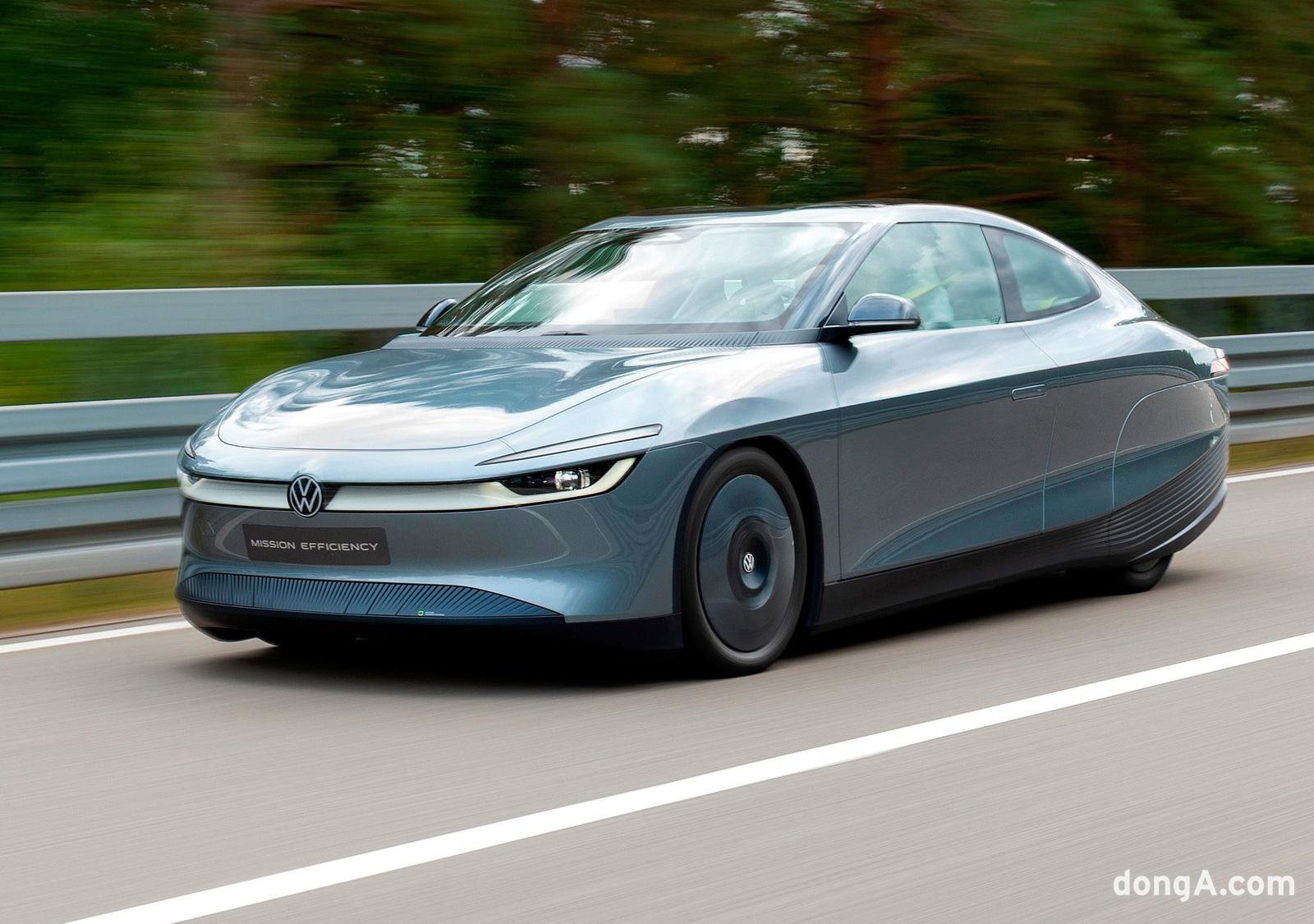
Volkswagen Mission E-fficiency Concept. Provided by Volkswagen
LG Chem has agreed to cooperate with the Volkswagen Group on the development of next-generation materials to strengthen competitiveness in future vehicles.
LG Chem announced on the 28th that it recently signed a memorandum of understanding (MOU) with the Volkswagen Group on the “development and expanded application of next-generation eco-friendly mobility materials.” The signing ceremony was attended by key officials including Kim Sang-min, Executive Vice President and Head of the Petrochemicals Company at LG Chem, and Stefan Gramse, Vice President and Head of the Exterior Procurement Group at the Volkswagen Group.
Under the agreement, LG Chem and the Volkswagen Group will cooperate on vehicle lightweighting, performance enhancement, and the development of next-generation plastics and composite materials by using high-value-added synthetic resins (ABS) and engineering plastics (EP). ABS and EP are high-performance plastics with outstanding impact strength, durability, and processability, and are widely used in exterior materials for home appliances as well as in interior and exterior automotive parts. The companies also agreed to review plans to expand the application of LG Chem’s recycled materials and cost-competitive materials to major finished-vehicle brands within the Volkswagen Group.
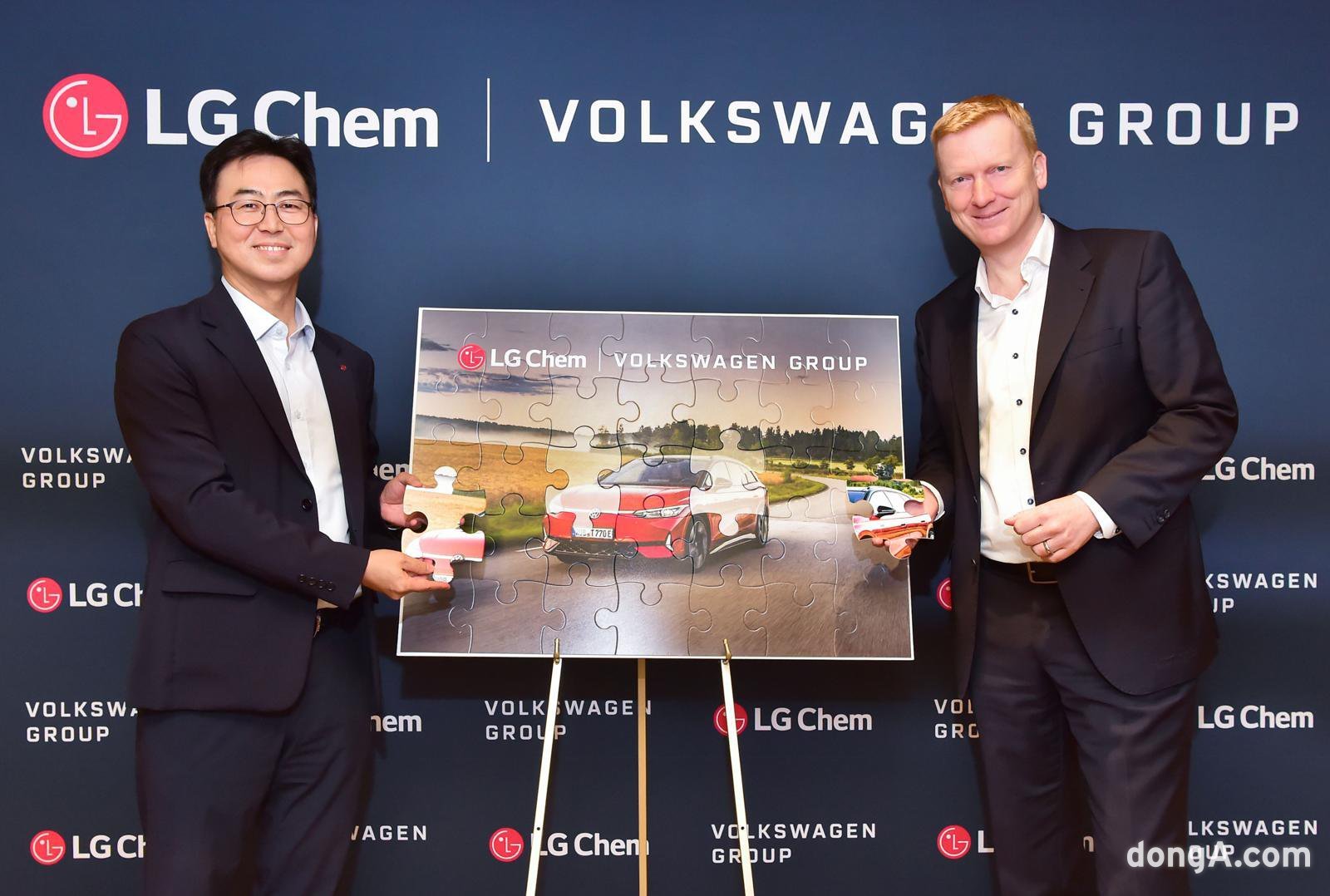
Kim Sang-min, Executive Vice President and Head of the Petrochemicals Company at LG Chem (left), and Stefan Gramse, Vice President and Head of the Exterior Procurement Group at the Volkswagen Group, pose for a commemorative photo after a ceremony in which they assembled puzzle pieces to reaffirm their commitment to cooperation. Provided by LG Chem
An LG Chem representative stated, “This agreement was made possible as LG Chem, which is working to expand the base of high-value-added and eco-friendly automotive material markets such as ABS and EP to strengthen competitiveness in future mobility, and the Volkswagen Group, which is seeking to build a sustainable and integrated raw material supply chain from materials to finished vehicles, found their interests aligned,” adding, “The two companies also decided to actively cooperate on various research and development initiatives, including feasibility reviews for the application of specific materials.”
The Volkswagen Group is implementing its “Future Plan 2030,” which focuses on structural reforms and maximizing efficiency in response to an uncertain business environment, including intensifying competition from Chinese companies and a deterioration in global market conditions. The Group plans to drastically streamline models with low sales or poor profitability and reduce its vehicle lineup portfolio by about 50% compared with the current level, while simplifying complex trims and specifications to improve overall efficiency from production to sales. Its global production network will be scaled down from the current annual capacity of 12 million units to about 9 million units. The Group also intends to move away from a closed stance centered on in-house development and actively pursue collaboration with external companies. Analysts view the latest material development partnership with LG Chem as reflecting this policy direction. Based on these intensive structural reforms and large-scale investments and partnerships, the Volkswagen Group aims to raise its automotive division operating margin to the 8–10% range by 2030.
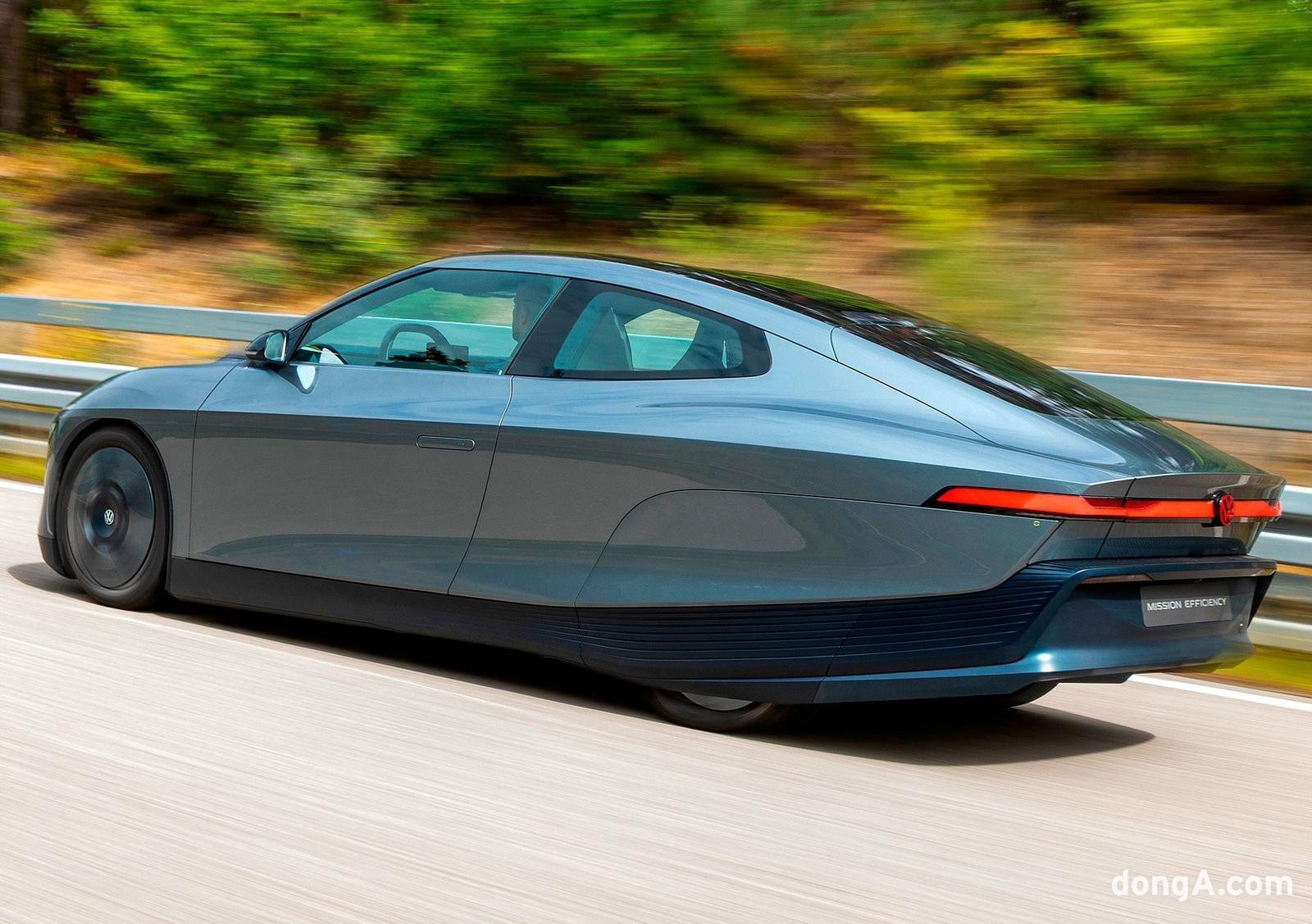
Volkswagen Mission E-fficiency Concept. Provided by Volkswagen
Volkswagen Group executives also visited LG Chem’s Osan plant. At the CS (Customer Solution) Campus, they toured exhibition booths presenting solutions for PCR-based circular economy (Sustainability), electrification (Electrification), high performance (High Performance), and enhanced cost competitiveness (Efficiency), and participated in seminar sessions. They also visited LG Science Park in Magok to examine LG Group’s future growth technologies and research and development capabilities in the mobility sector and exchange views on ways to expand cooperation. Afterwards, at the MOU signing ceremony, representatives from both companies conducted a ceremony in which each assembled puzzle pieces. According to LG Chem, the puzzle symbolized the completion of a single future mobility blueprint through the combination of the two companies’ technologies and capabilities. It also represents their commitment to creating continuous customer value through joint innovation.
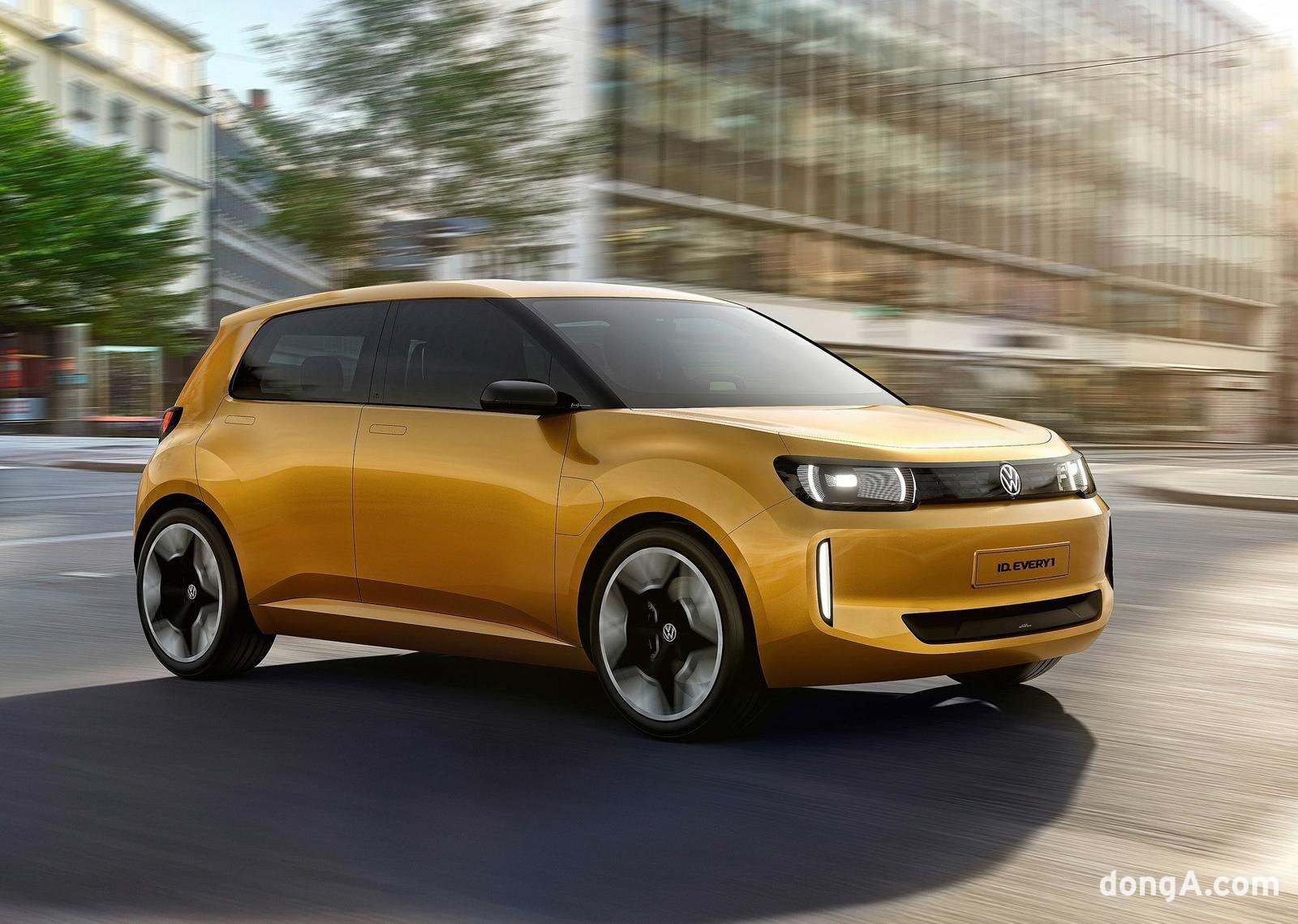
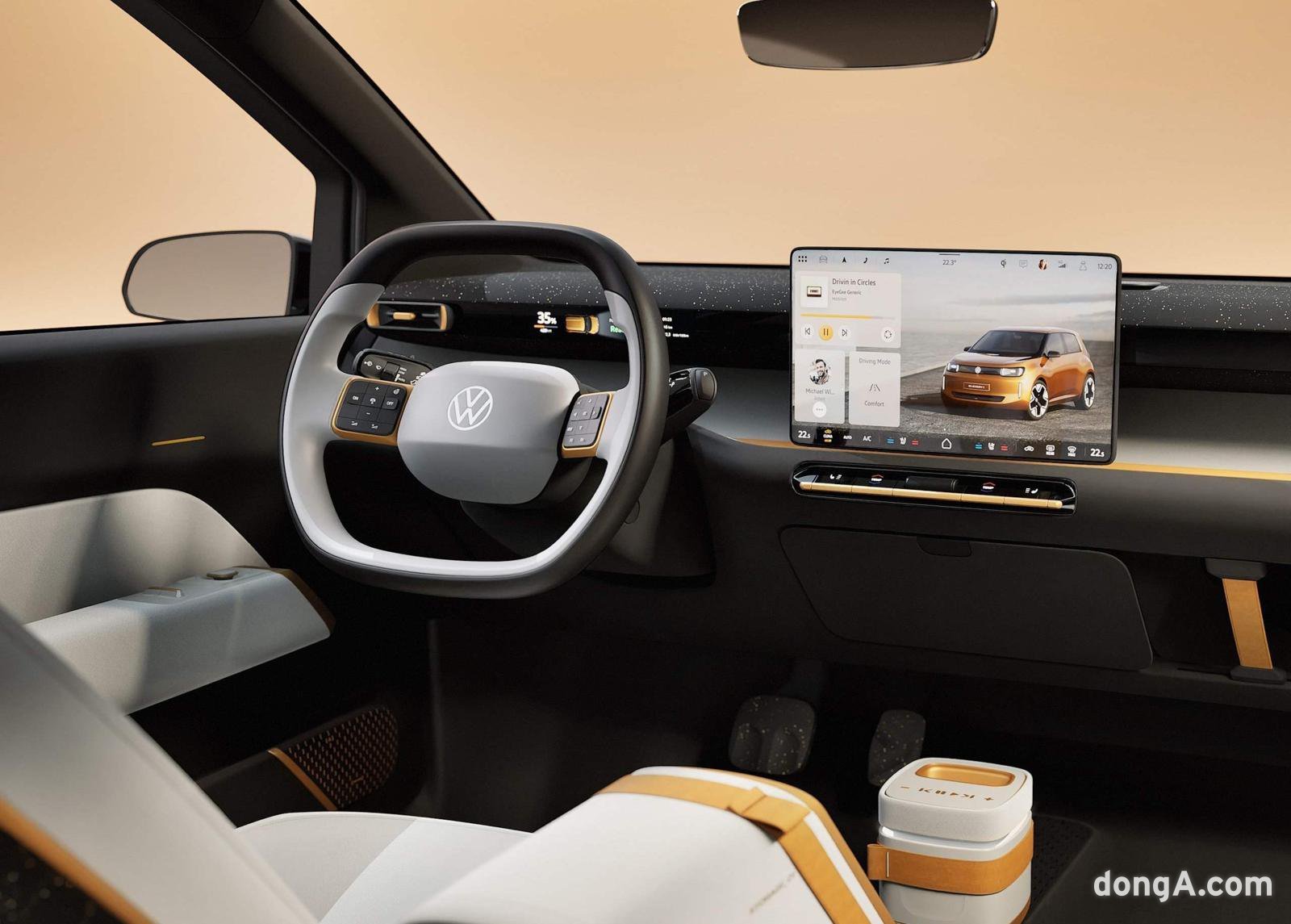
Volkswagen ID. Every1 Concept. Provided by Volkswagen
Kim Sang-min, Executive Vice President and Head of the Petrochemicals Company at LG Chem, said, “This is expected to serve as a meaningful starting point for global automakers and material companies to jointly create innovation in future mobility materials,” adding, “Based on our technological capabilities and competitiveness in high-value-added and eco-friendly materials, we will work with our customers to establish milestones for sustainable growth.”
LG Chem has an annual ABS production capacity of 2.35 million tons globally. The company maintains a portfolio of customer-tailored, high-gloss, high-heat-resistant ABS products suitable for applications such as side mirrors and radiator grilles, including paintless processes. In 2020, it became the first in the industry to successfully produce recycled (PCR) ABS in white. LG Chem is currently continuing to expand its portfolio of PCR materials for automotive interior and exterior parts. In addition, through various automotive solutions that support customers in enhancing cost competitiveness and achieving lightweighting—such as paintless ASA, and high-gloss, high-heat-resistant ABS—LG Chem is strengthening cooperation with global automakers.
ⓒ dongA.com. All rights reserved. Reproduction, redistribution, or use for AI training prohibited.
Popular News