Emergency National Safety Response Research Project Under Way… Kim Yong-ho, Professor of Nano Engineering at Sungkyunkwan University
Antibody development for a single drug takes 1.5 years… AI protein sensor–equipped kits speed up the process
Confirms “what and how much” was taken… Easily tests for drug use during treatment
Goal to roll out to police and hospitals by 2027
Domestic online drug offenses are surging and new types of narcotics are spreading, driving accelerated development of a portable rapid test kit that can quantitatively detect narcotic components within 10 seconds by adding only a few drops of urine sample. The plan is to produce a prototype between late 2026 and early 2027 and, as early as 2027, distribute it to front-line sites such as police and hospitals.

With this goal in mind, Professor Kim Yong-ho (photo) of the Department of Nano Engineering at Sungkyunkwan University, who is conducting a National Life Safety Emergency Response Research project under the Ministry of Science and ICT and the Ministry of the Interior and Safety, was interviewed on July 29 at Sungkyunkwan University in Suwon, Gyeonggi Province. Professor Kim said, “New types of narcotics are emerging at a very rapid pace and their structures are continuously modified, making it difficult to detect and identify them with existing analytical techniques,” adding, “Detection technologies that can be designed quickly and flexibly are needed.”
● New narcotics and analogues are difficult to addressAccording to the Korea Customs Service last month, countries in the Asia-Pacific region, including Korea, conducted a joint operation to crack down on drug smuggling between May and June this year and seized a total of 785 cases and 2,100 kg of narcotics. New synthetic drugs such as ketamine were the most prevalent.
New narcotics are characterized by the fact that existing detection equipment does not easily recognize them if only the side-chain structure of the substance is slightly altered. When a new substance is discovered, it is difficult to immediately determine whether it is a pharmaceutical or a narcotic with potential for abuse and misuse.
In particular, benzodiazepine- and phencyclidine-type narcotics have similar structures for each drug, and it is difficult to accurately identify the components of new analogues. In the United States and Europe, deaths from overdose are rapidly increasing and addiction cases among teenagers are rising; among these, alprazolam and flunitrazepam are referred to as date-rape drugs and are associated with sexual crimes.
Existing antibody-based tests develop antibodies that detect specific narcotics through random mutation and repeated screening. It takes about a year and a half to develop antibodies for each type of narcotic, and approximately KRW 200 million is spent solely on antibody screening, making rapid and flexible response difficult. Antibody sensors are also temperature-sensitive and vulnerable to humidity, which limits their application in the field.
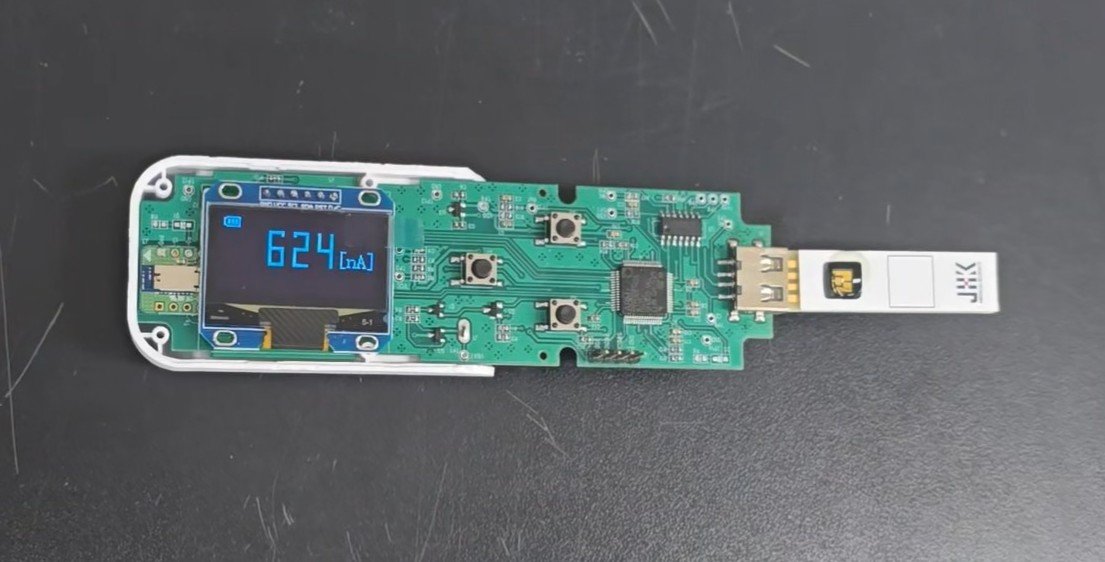
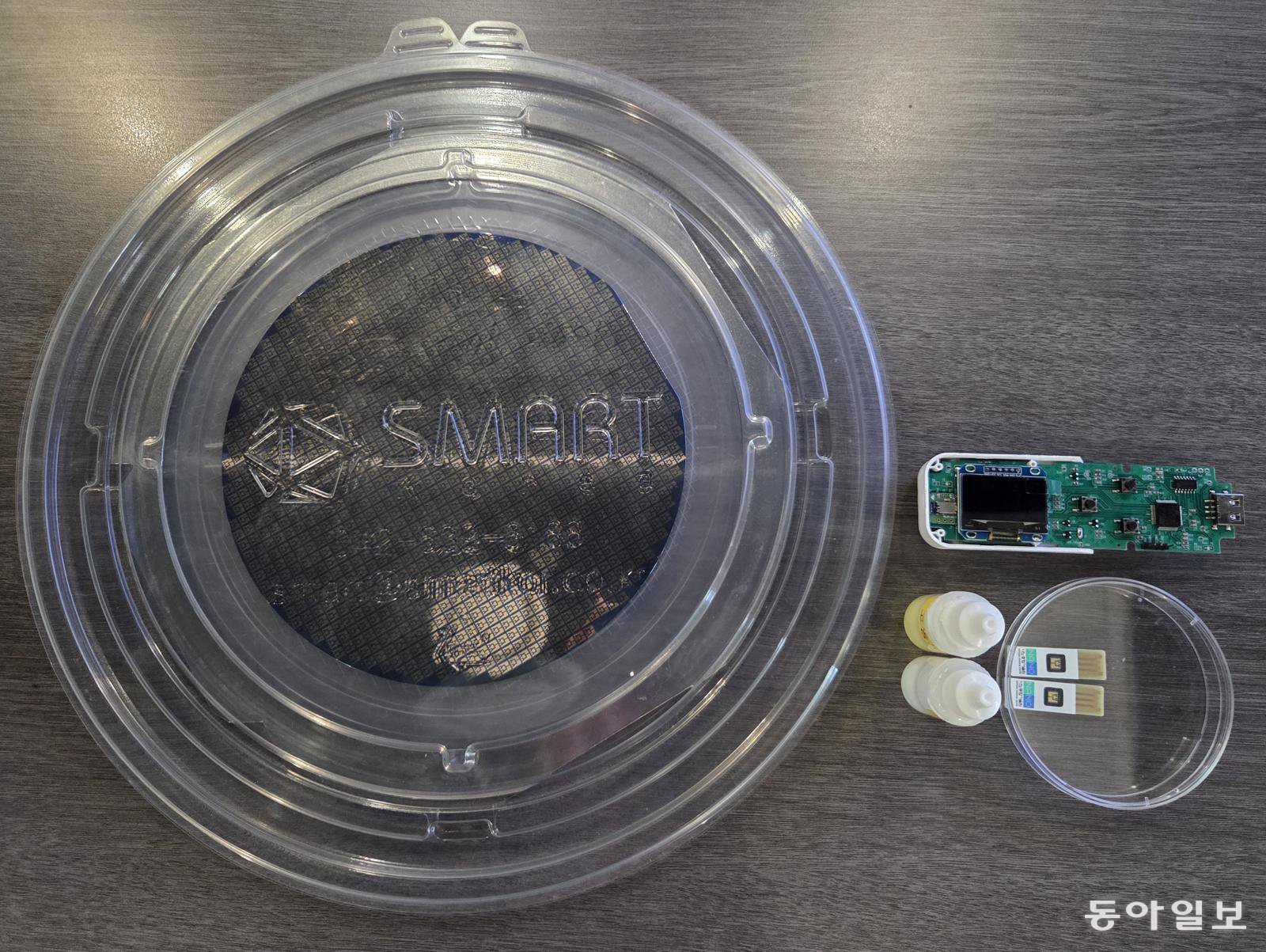
Prototype of an artificial intelligence (AI)-designed protein-based test kit that quantitatively displays narcotic signals within 10 seconds when a few drops of urine sample are added. Provided by Professor Kim Yong-ho
Professor Kim, a “protein designer” who implements proteins that do not exist in nature using generative artificial intelligence (AI), has been developing proteins for the treatment and diagnosis of brain diseases and infectious diseases. Kim’s team directly designs, via computer, proteins that bind to the common backbone structures of narcotic analogues. They analyze the chemical properties and common functional groups of narcotic molecules, design a binding pocket inside the protein, and then simulate whether the narcotic molecules bind stably in practice. Instead of searching for numerous one-to-one cases that happen to bind well among many candidates, they design and produce a one-to-N structure in which a single protein responds to multiple analogues.
AI-designed protein-based narcotics detection sensor chip, kit-type prototype, and urine sample. Lee Byung-gu, Dong-A Science reporter 2bottle9@donga.com
The developed sensor is implemented as a portable kit by linking it with semiconductor manufacturing facilities such as KAIST NanoFab. Professor Kim explained, “It is a device that quickly confirms what and how much the test subject has actually taken,” adding, “It is useful for repeatedly checking on-site whether a person undergoing addiction treatment has taken narcotics again.”
He added, “I was told that if mass-produced, the unit cost of the kit can be reduced to the KRW 1,000 range per item,” and said, “It is expected to be used not directly by the general public, but by front-line police officers and narcotics investigators, the National Forensic Service, and medical personnel.”
● Rapid clinical trials and certification are key to early kit adoption The timing of commercial kit deployment cannot be guaranteed solely by the will of basic technology researchers. Professor Kim stressed, “Even if a detection technology is implemented, it cannot be immediately used by the police,” and added, “Without securing clinical samples and then linking subsequent certification procedures, it is impossible to move forward.”
At present, the project is at the stage of experimenting by mixing narcotic reference materials synthesized and supplied by the Ministry of Food and Drug Safety into the urine of healthy individuals. It will be necessary to secure actual addicts’ dosing histories and urine samples, obtain Institutional Review Board (IRB) approval, verify clinical performance, and then, after kit development, pass diagnostic device certification by the Ministry of Food and Drug Safety. The view is that a separate fast-track needs to be established to enable rapid progress, rather than simply easing existing regulations.
Professor Kim said, “In the long term, there is also interest in developing neutralizing therapeutics for narcotics,” and added, “If there is a protein that strongly captures narcotic molecules, it could be used not only in sensors but also as a therapeutic that captures narcotics in the body and blocks them from moving to the brain or binding to receptors.”
ⓒ dongA.com. All rights reserved. Reproduction, redistribution, or use for AI training prohibited.
Popular News