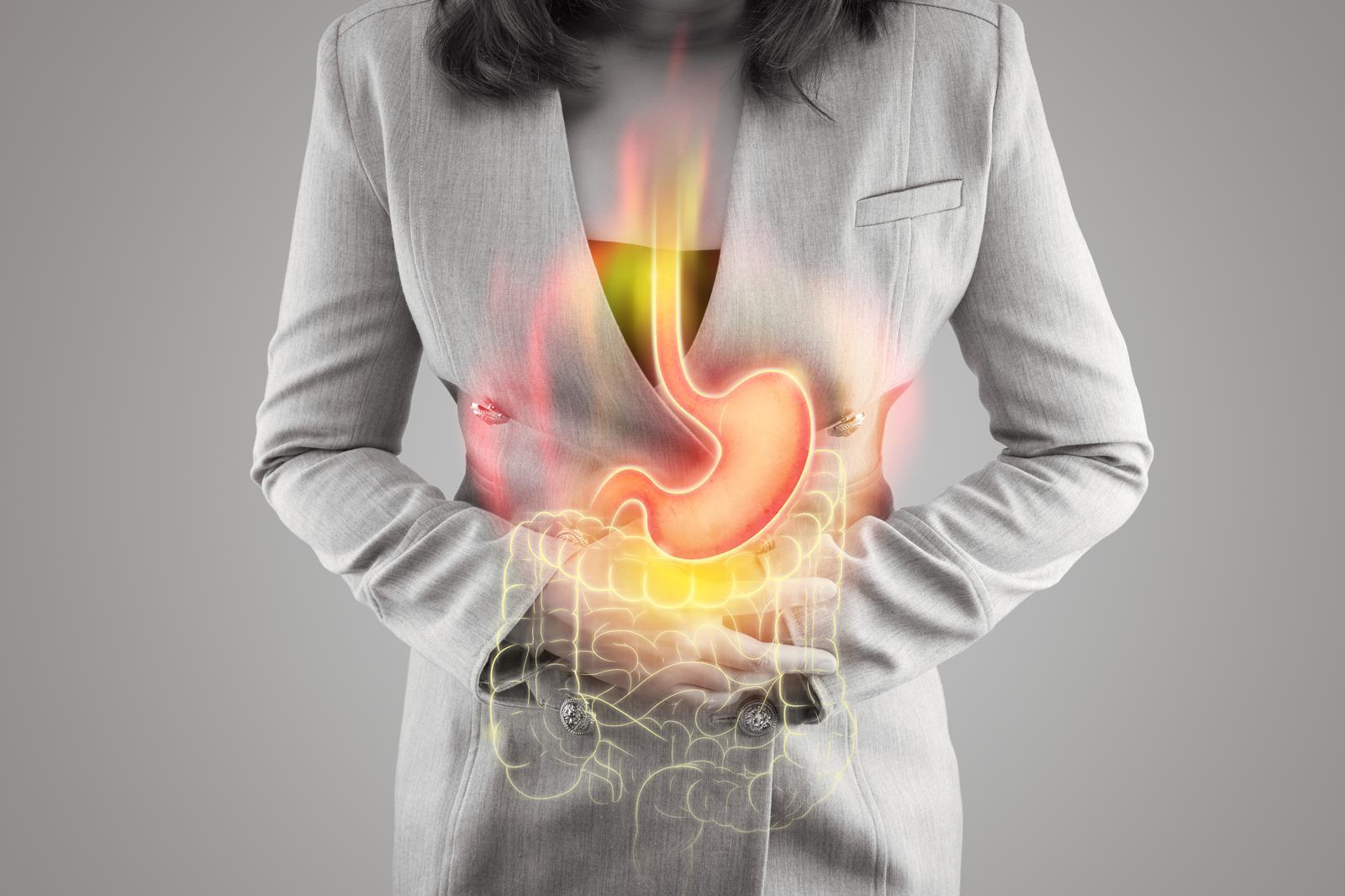
Peptic ulcer disease is a condition in which the mucosa of the stomach or duodenum is damaged and wounds form. In severe cases, it can lead to serious complications such as bleeding or perforation. Getty Images Bank
There is a perception that “stomach ulcers are a man’s disease,” but this can change after the age of 80. A domestic study found that the incidence and mortality rates of bleeding peptic ulcers were higher in older women than in men.
Researchers analyzed that as the number of elderly women taking arthritis medication over long periods increases, the risk of gastrointestinal bleeding is rising in parallel. A research team led by Professor Kim Na-young of the Division of Gastroenterology at Seoul National University Bundang Hospital, President Kim Byung-wook of the Korean Society of Neurogastroenterology and Motility and Helicobacter (Catholic University College of Medicine), and Professor Bang Chang-seok of Hallym University College of Medicine analyzed 68 related studies and published the results in the international journal “Gut and Liver,” they announced on the 22nd.
Peptic ulcer disease is a condition in which the mucosa of the stomach or duodenum is deeply damaged, resulting in wounds. In older adults in particular, typical symptoms such as heartburn or abdominal pain are often absent, so the disease is sometimes detected only after complications such as bleeding or perforation have already occurred.
According to the research team, in the past, male patients with peptic ulcer disease outnumbered female patients by about two to one, but this gap has narrowed significantly in recent years. In some Korean data, the incidence of bleeding peptic ulcers in women aged 80 and older was found to exceed that of men in the same age group.
Differences were also observed in mortality. Analysis of nationwide data showed that the 30‑day mortality rate for patients with bleeding peptic ulcers was 3.20% for women and 1.83% for men. For perforated peptic ulcers, the rates were 10.03% for women and 2.03% for men, indicating a higher risk among female patients.
● Why is the risk of stomach ulcers higher in older women?The researchers identified the decrease in estrogen after menopause as the main cause.
Estrogen plays a role in protecting the mucosa of the stomach and duodenum, and when its secretion declines after menopause, this protective effect can weaken. In fact, women who experience early menopause have been reported to have about a 38% higher risk of peptic ulcers than premenopausal women of the same age.
Medication use was also found to have an impact. Many older women take nonsteroidal anti-inflammatory drugs (NSAIDs) for extended periods for chronic conditions such as arthritis. While NSAIDs reduce pain, they also inhibit the production of substances that protect the gastric mucosa, thereby increasing the risk of ulcers. According to the research team, about 75% of NSAID users aged 65 or older in Korea are women.
The researchers explained that increasing use of antiplatelet agents and anticoagulants, along with age-related decline in physical function, may further heighten the risk of gastrointestinal bleeding.
(From left) Professor Kim Na-young of Seoul National University Bundang Hospital, Professor Kim Byung-wook of the Catholic University College of Medicine, and Professor Bang Chang-seok of Hallym University College of Medicine
● Clinical guidelines have yet to reflect the risk in ‘older women’The research team also analyzed 13 major international clinical guidelines related to peptic ulcer disease, upper gastrointestinal bleeding, and gastric protection.
They found that most guidelines identified older age, a history of ulcers, and the use of NSAIDs and antithrombotic agents as risk factors, but none officially included sex, menopausal status, or hormonal status as risk assessment items.
The researchers emphasized that because the risk of peptic ulcer disease does not appear equally in men and women, future diagnostic and treatment guidelines need to incorporate sex and life-stage considerations.
President Kim Byung-wook of the Korean Society of Neurogastroenterology and Motility and Helicobacter and Clinical Practice Guideline Development Committee Chair Bang Chang-seok stated, “We are currently developing new clinical guidelines for drug-induced peptic ulcers and are reviewing sex, menopausal status, and other hormonal conditions as important variables.”
Professor Kim Na-young said, “Older women, particularly those using antiplatelet agents or anticoagulants, may face a higher risk of severe complications and death,” adding, “For women aged 70 or older, gastric protection strategies such as the use of acid-suppressing agents, along with care that considers sex-based differences in drug response, are necessary.”
ⓒ dongA.com. All rights reserved. Reproduction, redistribution, or use for AI training prohibited.
Popular News