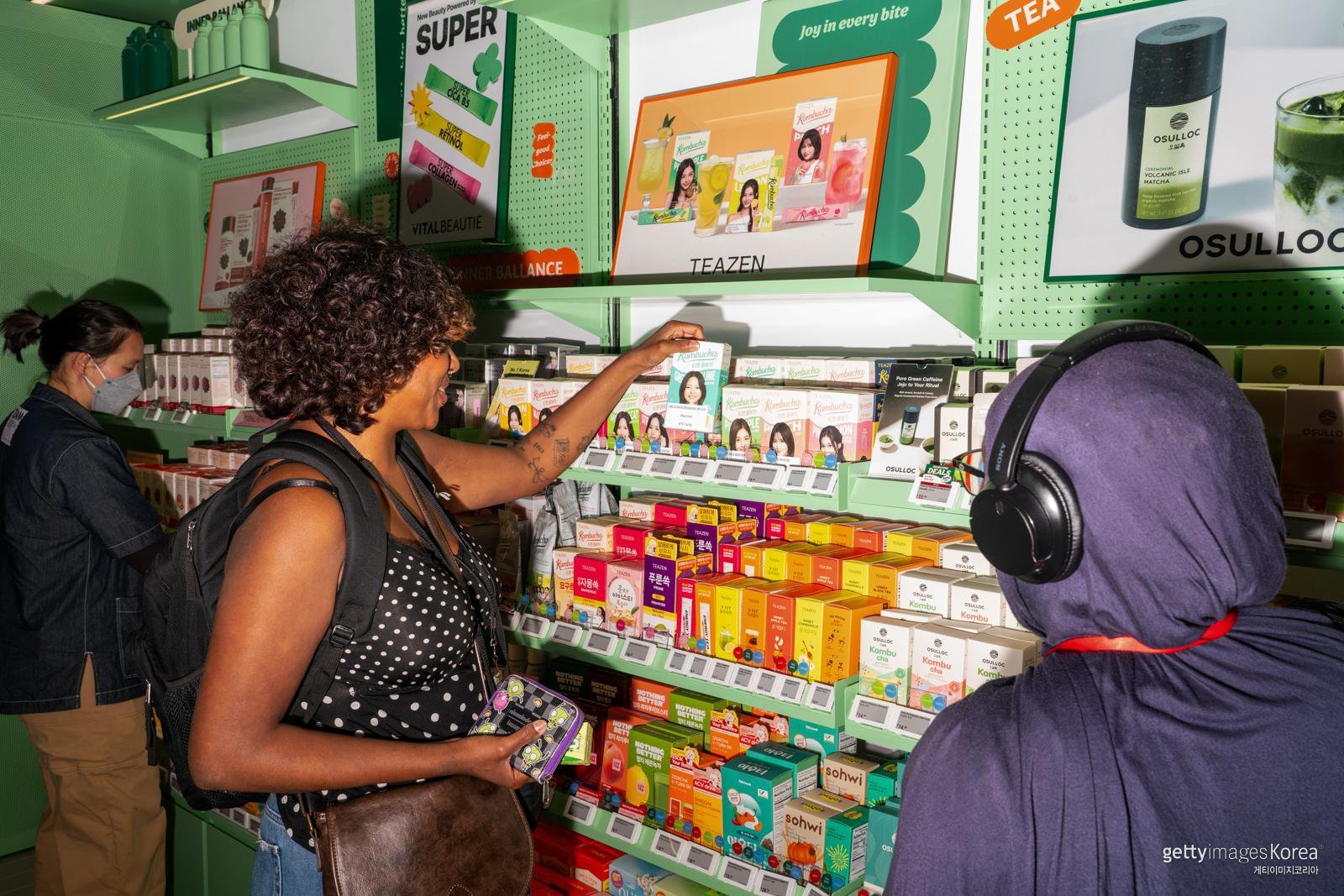
Products are displayed at CJ Olive Young’s first U.S. store, which opened on May 29 (local time) in Pasadena, California. Photo=Getty Images
The inner beauty segment, often referred to as “ingestible cosmetics” in the global beauty market, is emerging as a new growth axis. As the popularity of GLP-1 obesity treatments expands the weight-management market, a clear consumption trend is forming that goes beyond simple weight loss to encompass gut health, skin condition, and aging care.
In particular, as demand grows for managing nutritional balance and gut health, which can become insufficient during weight management, “beauty-from-within” products that combine digestive enzymes, probiotics, and plant-based ingredients are spreading rapidly.
● Expanding inner beauty market…Driven by Gen Z and Millennials The inner beauty market is growing rapidly both domestically and overseas. According to the Shinhan Investment Corp. Research Center, the Korean inner beauty market grew from approximately KRW 721.6 billion in 2019 to about KRW 1.1942 trillion in 2022, and is projected to reach around KRW 1.9763 trillion by 2025, based on an average annual growth rate of 18.3%.
The global market is also viewed as entering a structural growth phase that goes beyond a temporary fad. Market research firm Future Market Insights forecasts that the global inner beauty market will grow from about USD 7.5 billion in 2025 to around USD 16.6 billion in 2035, corresponding to a compound annual growth rate (CAGR) of approximately 8.2%.
Sophia Wu, Asia-Pacific (APAC) beauty strategist at global consumer trend forecasting agency WGSN, explained, “Among Generation Z and Millennials, there is a strengthening tendency to place importance on gut health, longevity, and skin condition that starts from within the body.”
She added, “Japan is leading the market by combining biotechnology with traditional plant-based ingredients, and China’s Gen Z is rapidly embracing ingestible ‘healthy aging’ products.”
● “Korea’s strength lies in the combination of traditional ingredients and K-beauty aesthetics”Experts cite Korea’s ability to differentiate itself in the global inner beauty market through traditional ingredients, innovative formats, and the unique brand experience of K-beauty.
According to Sophia Wu, “Korean brands are strong at creating products that are easy for anyone to consume yet stylish enough that consumers want to share them on social media.”
She continued, “Korean traditional ingredients such as ginseng, fermented soybeans, black sesame, and perilla seeds—long regarded as beneficial for health and longevity—are being seamlessly incorporated into modern inner beauty products,” adding, “New formats such as portable powder sticks and jelly strips, which make the act of consumption enjoyable in itself, are also a competitive edge unique to Korean brands.”
However, she stressed that strategies tailored to the expectations of local consumers are essential for targeting global markets.
“Korean brands need to meet the stringent regulatory standards, clean-label requirements, and formulation expectations demanded by Western consumers,” she said, forecasting that “strategies that connect ingestible products and cosmetics into a single experience—an ‘Inner-Outer Ecosystem’—will become the next growth driver for Korean brands.”
● Exhibition attracts 20,000 visitors…K-beauty expanding into ingredients, bio, and inner beauty
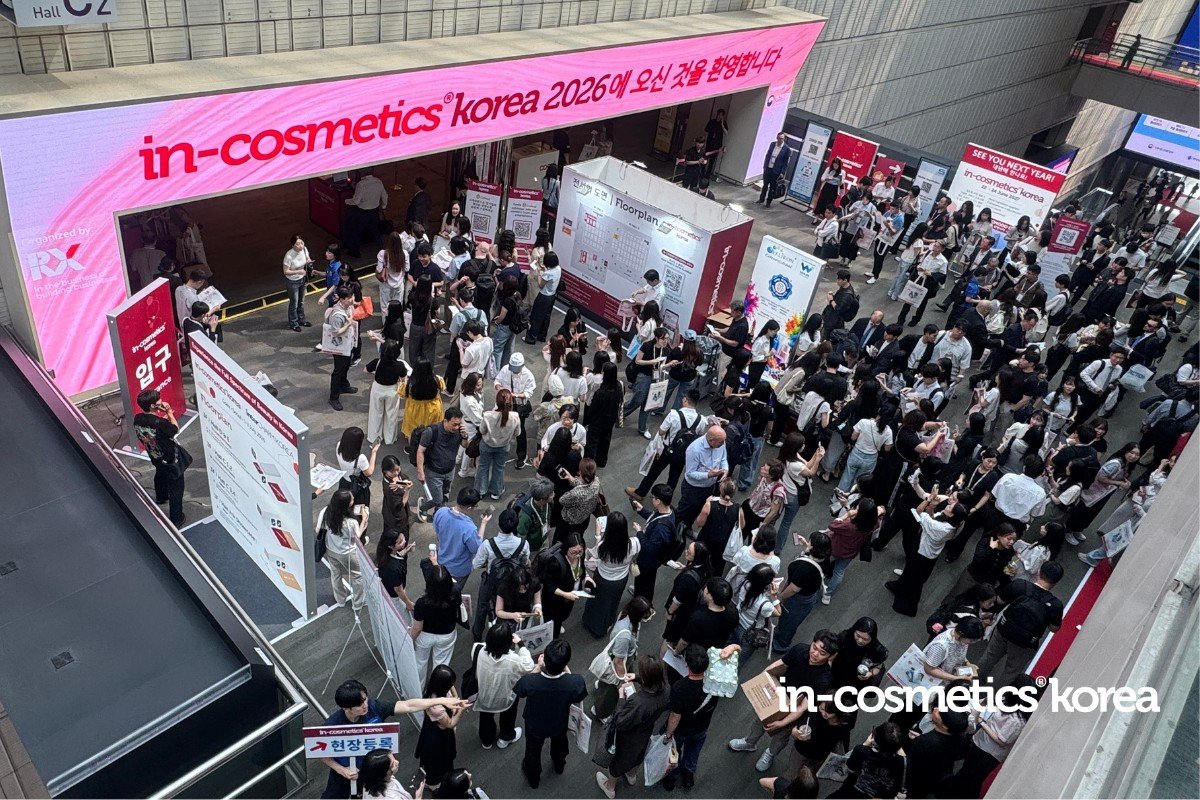
Photo=Provided by the organizer
This trend was also evident at a recent cosmetics ingredients trade show.
From July 1 to 3, “in-cosmetics Korea 2026,” held at COEX in Seoul, brought together 390 companies including domestic and international cosmetics ingredient manufacturers and suppliers, as well as research and testing equipment firms. Approximately 20,000 visitors (including InterCHARM crossover attendees) participated over three days, marking a record high and an increase of about 47% from the previous year.
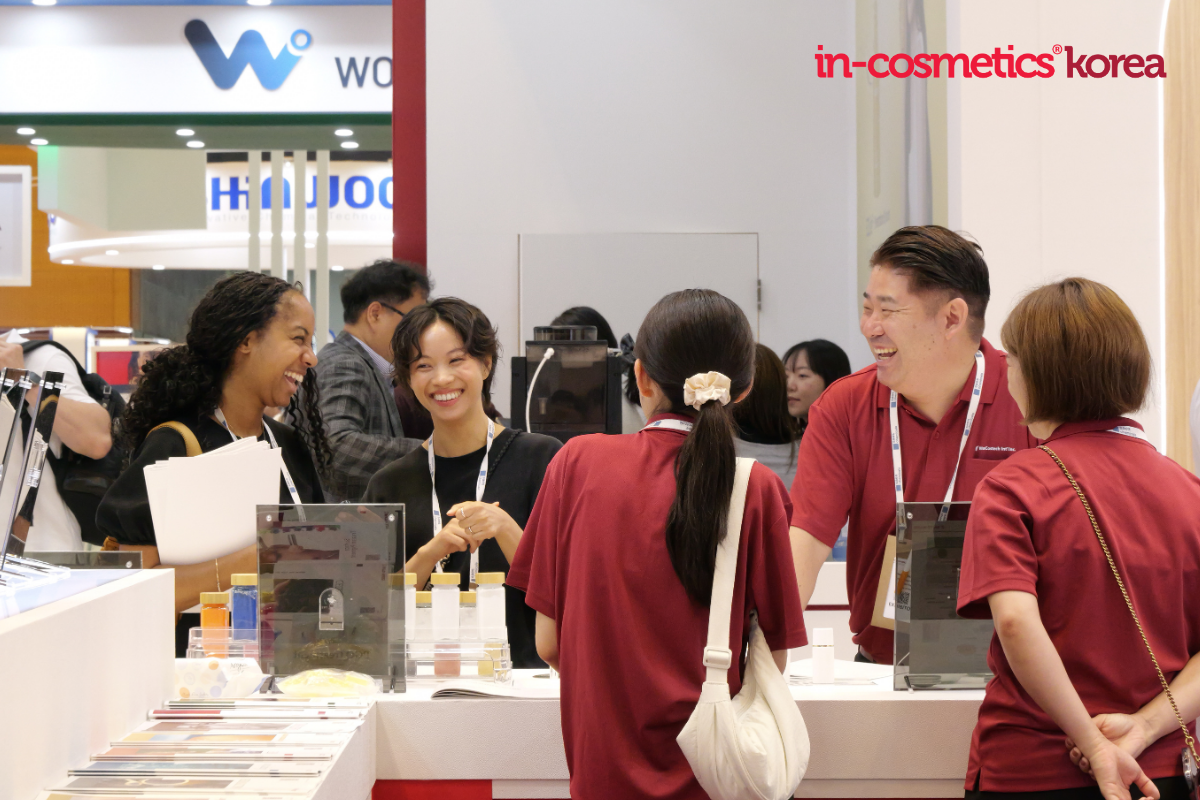
In particular, the “Inner Beauty Zone,” first introduced last year, significantly enhanced experiential content this year. Participants sampled flavors and formats of products at the Inner Beauty Taste Bar, while the Inner Beauty Talk seminars, which shared the latest market and technology trends, drew strong interest from industry insiders.
Photo=Provided by the organizer
The K-Beauty Zone operated under the theme of “Age Management.” By showcasing ingredients and technologies that can help with skin aging and barrier care, it highlighted a skincare trend focused on proactive management rather than simple improvement. The Innovation Zone featured 64 new ingredients reflecting the latest trends, including fermentation, microbiome, scalp care, and sustainability.
Sarah Gibson, Exhibition Director of in-cosmetics Korea, said, “This year’s exhibition confirmed that K-beauty’s competitiveness is expanding into a wide range of areas, including ingredients and formulation, biotechnology, and inner beauty.”
● K-beauty rises to world’s No. 2The domestic cosmetics industry is also maintaining its growth trajectory. According to the Ministry of Food and Drug Safety, Korea’s cosmetics exports reached USD 10.2 billion in 2024, surpassing USD 10 billion for the first time, and then hit a record high of USD 11.4 billion in 2025, an 11.8% increase from the previous year. As a result, Korea rose from the world’s No. 3 cosmetics exporter in 2024 to No. 2 in 2025, overtaking the United States and ranking behind only France.
Experts forecast that K-beauty’s competitiveness will extend beyond basic skincare to encompass biotechnology, inner beauty, and wellness going forward.
ⓒ dongA.com. All rights reserved. Reproduction, redistribution, or use for AI training prohibited.
Popular News