[Hanwha Systems: K-Defense Takes Flight on the Global Stage]
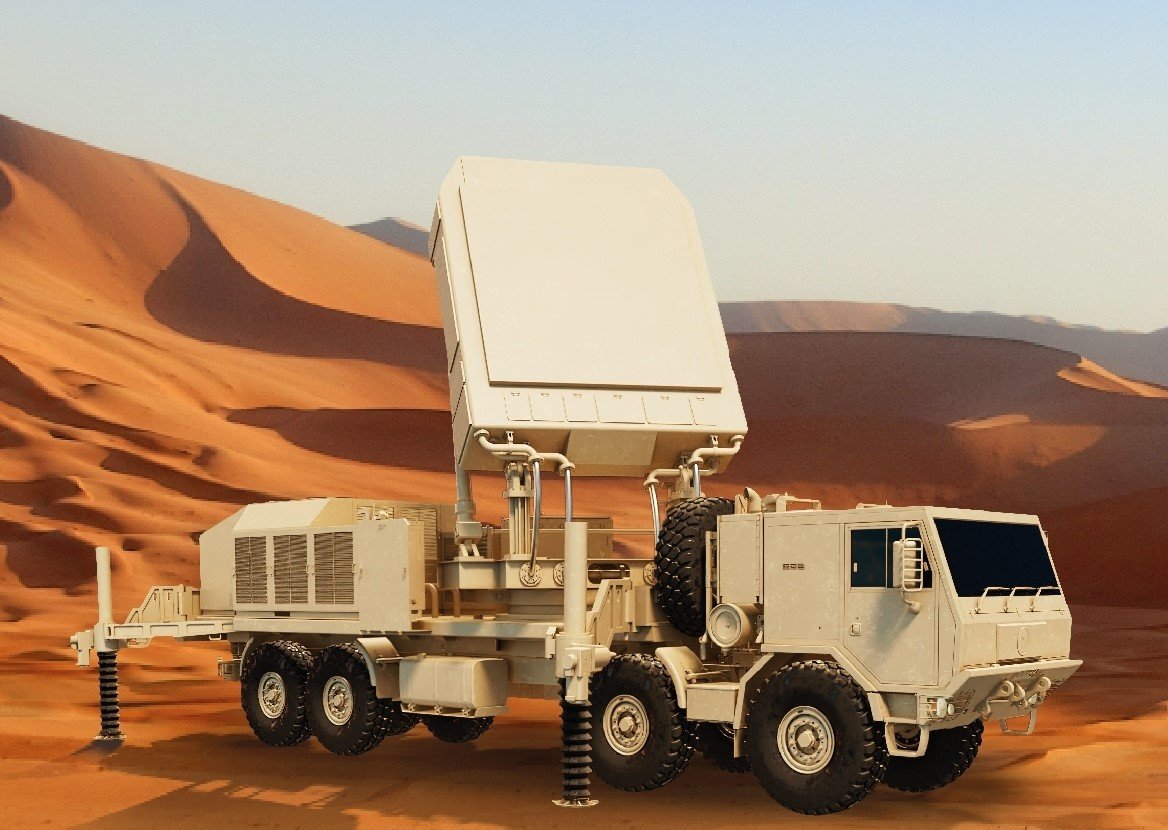
Export model of the Cheongung-II multifunction radar (MFR) developed by Hanwha Systems. Provided by Hanwha Systems
In the recent Iran war, the competitiveness of Korea’s defense industry drew significant attention. According to Rep. Yoo Yong-won of the National Assembly’s National Defense Committee (People Power Party) on the 5th, it became known that the Republic of Korea’s medium-range surface-to-air missile system “Cheongung-II,” which is in operational use in the United Arab Emirates (UAE), recorded a 96% hit rate in actual combat while responding to Iran’s large-scale air raids. Hanwha Systems, known as a “master of radar,” is responsible for the radar of the Cheongung-II and is safeguarding the skies of the Middle East.
Over the past 50 years, Hanwha Systems has supplied combat management systems (CMS) to nearly all of the Navy’s ships, establishing itself as a powerhouse in maritime systems. In particular, by supplying combat systems to a total of 15 Philippine Navy vessels, it has also demonstrated its presence in the global defense market.
Core multifunction radar of Cheongung-II for “airtight” air defense Having signed export contracts for the Cheongung-II multifunction radar (MFR) with the UAE in 2022, Saudi Arabia in 2024, and Iraq in 2025, Hanwha Systems is presenting a Korean-style “integrated multi-layer air defense solution” to the Middle Eastern market together with Hanwha Aerospace. Exports of the Cheongung-II to the three Middle Eastern countries amounted to KRW 4 trillion each for the UAE and Saudi Arabia, and KRW 3.7 trillion for Iraq, with Hanwha Systems’ MFR—corresponding to the “eyes” of the air defense system—accounting for 30% of the total export value.
The medium-range surface-to-air missile system, widely known as the “Korean Patriot,” is the most important asset in the Korean-style Missile Defense (KAMD) system that intercepts hostile aircraft and ballistic missiles from the ground.
Hanwha Systems’ “Cheongung-II MFR” can simultaneously detect and track hostile fighter aircraft and ballistic missiles approaching from all directions. It integrates the functions of multiple radars into a single system, performing complex missions in one 3D phased array radar, including △detection and tracking △identification friend or foe (IFF) △countering jamming (electronic interference) △acquisition, tracking, and communication with interceptor missiles.
In addition to the △medium-range multifunction radar, Hanwha Systems is developing and building a range of air defense systems capable of countering various airborne threats, including a △long-range multifunction radar △multi-target simultaneous engagement multifunction radar and △mobile anti-drone systems.
Successive calls from the Philippines… “Combat system” as the brain of warships The “combat management system (CMS),” which serves as the brain of a warship, detects and analyzes multiple simultaneous threats using the sensors installed on the vessel, then transmits this information to weapons systems such as naval guns and issues commands to neutralize them.
Hanwha Systems is the only domestic company that has supplied indigenously developed CMS, based purely on its own technology, to a variety of surface and subsurface vessels of the Republic of Korea Navy, including high-speed combat ships, large landing ships, destroyers, frigates, and submarines. For the past 50 years, it has supplied CMS to nearly all of the Navy’s ships, earning recognition for its technological capabilities.
Based on the know-how and expertise accumulated in the field of maritime systems, Hanwha Systems is maximizing the peacetime availability of combat systems on Korean Navy ships. Starting with the combat system contract for two 2,600-ton Philippine frigates (FF) won in 2017, Hanwha Systems signed its fifth export contract to supply CMS and a tactical data link (TDL) worth KRW 40 billion to two 3,200-ton next-generation frigates of the Philippine Navy by December 2025. As a result, it will supply combat systems to a total of 15 Philippine vessels. Hanwha Systems is also actively participating in new ship acquisition projects to be pursued as part of the Philippine Navy’s modernization plan.
Hanwha Systems plans to leverage the competitiveness of domestically produced ship combat systems in Korea’s defense industry to expand its export markets to Southeast Asia, the Middle East, and beyond.
Hanwha Systems is also developing an Integrated Combat System (ICS) for ships, which integrates and manages various onboard equipment for future-oriented warships. The ICS enables the integrated operation of various shipboard systems—previously operated separately—within a single control environment, including △the integrated engineering control system (ECS) △the integrated bridge system (IBS) and △manned-unmanned teaming (MUM-T).
ⓒ dongA.com. All rights reserved. Reproduction, redistribution, or use for AI training prohibited.
Popular News










 About Dong-A Ilbo