Interview with Lee Sang-yup, KAIST Vice President for Research
World’s first ‘spider silk protein’ developed
No domestic production facilities, so clinical trials have not proceeded… “Only bold incentives will attract top talent”
China investing trillions of KRW in biofoundries
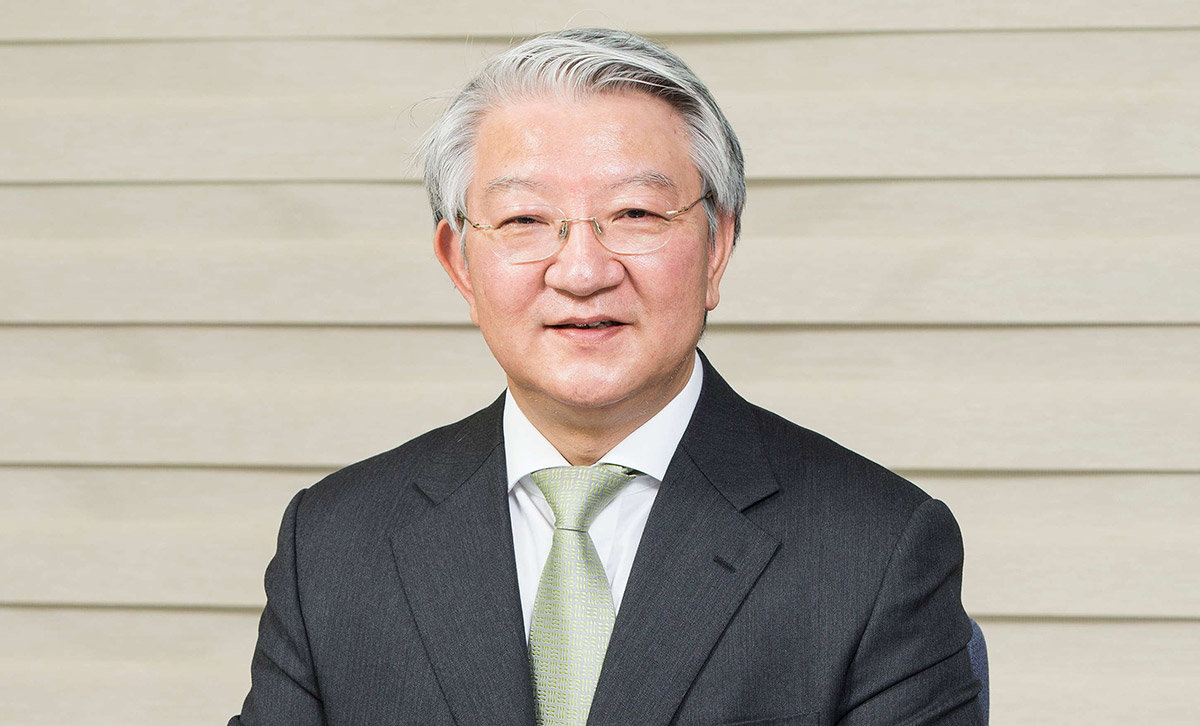
Lee Sang Yup, Vice President for Research, KAIST
With the Synthetic Biology Promotion Act set to take effect in April, Lee Sang Yup, Vice President for Research at KAIST (pictured), who has taken office as the inaugural president of the Korea Association for the Advancement of Synthetic Biology, cited the establishment of production infrastructure as the top priority for fostering Korea’s bio industry. His diagnosis is that “even when technology is developed, there are no facilities to produce it.”
In a recent interview at KAIST, Lee stated, “We were the first in the world to succeed in producing spider silk protein using microorganisms, but there are no domestic production facilities that meet the requirements for medical productization, so we have been unable to move into the clinical stage,” adding that “production infrastructure in Korea equipped with fermentation processes based on living modified organisms (LMOs) is woefully insufficient.” Spider silk protein is used in the development of treatments for intractable skin diseases such as bedsores due to its skin regeneration and wound-healing effects, but there are no domestic production facilities capable of supporting clinical entry, he pointed out.
Synthetic biology is a technology that creates functions or substances not found in nature by engineering components of living organisms such as deoxyribonucleic acid (DNA) and ribonucleic acid (RNA). It is applied in a wide range of fields including pharmaceuticals, bioplastics, and functional food ingredients. To systematically foster related technologies, the government has enacted the world’s first Synthetic Biology Promotion Act, which will come into force in April. The Korea Association for the Advancement of Synthetic Biology, composed of representatives from academia, industry, and research institutes, has also been officially launched on the basis of this Act.
Lee also highlighted the investment gap with China alongside the lack of production infrastructure. China has already made trillion-KRW-level investments in two biofoundries, which are automated facilities that design and build biological systems. In contrast, after several years of preliminary feasibility studies, Korea secured only KRW 126 billion. “If it becomes a contest of scale, we will inevitably lose,” Lee stated firmly.
The breakthrough Lee proposes is the pursuit of irreplaceable technologies. “If, when a pandemic breaks out, we alone possess a universal therapeutic effective against all types of influenza, the entire world will come to us,” he said, stressing that “the strategy is to secure technologies across various fields for which there are no alternative means in specific crisis situations.” In other words, securing an unchallenged lead in particular technologies.
As a means of securing irreplaceable technologies in synthetic biology, he pointed to the combination of artificial intelligence (AI) and robotics. In synthetic biology, the Design-Build-Test-Learn (DBTL) cycle is core. AI proposes optimal pathways at the design stage, robots conduct synthesis and experiments, and AI interprets the results and feeds them back into the next design. An early adopter who began deep learning research using gaming graphics cards in 2015, Lee asserted that “nothing can be done without AI.”
As a way to secure talent, he proposed a bold compensation scheme: selecting the top 1,000 individuals in science and technology each year and paying performance bonuses of KRW 500 million to KRW 5 billion according to their contributions. “The current generation is motivated not by patriotism but by rewards,” he said. “Only when待遇 exceeds that of medical doctors will top talent come into engineering and bio fields.”
On genetically modified organism (GMO) regulations, he argued that even industrial microorganisms are subject to excessive controls and called for regulatory reform based on scientific evidence. He emphasized that once the National Bio-Innovation Committee is launched, it must address regulatory issues in earnest.
The Ministry of Science and ICT is also aware of the infrastructure gap Lee pointed out. A ministry official stated that, separate from the public biofoundry now being built with a focus on research, the ministry is planning, together with the Ministry of Trade, Industry and Energy, to establish production infrastructure that connects through to the commercialization stage. Private-sector participation is also to be expanded, and procedures are under way to secure budget approval. With the implementation of the Synthetic Biology Promotion Act, the construction of biofoundries, and the launch of the association, the institutional framework is taking shape. “What must be addressed before law and budget,” Lee stressed, “is that once a world-unique technology is created, there must be a place to produce it,” adding, “If we cannot outproduce China’s volume offensive, then we should make what no one else can make.”
ⓒ dongA.com. All rights reserved. Reproduction, redistribution, or use for AI training prohibited.
Popular News









 About Dong-A Ilbo