Song Jae-hoon, Chairman of Mint Venture Partners, who runs a company that creates companies
Operating a venture studio that reviews commercialization potential and strategic direction to support stable startups
“When medical papers are turned into products and services, many patients and their families gain a new life”
“Also effective for expanding companies’ bio divisions… the government should support mechanisms that unlock this potential”
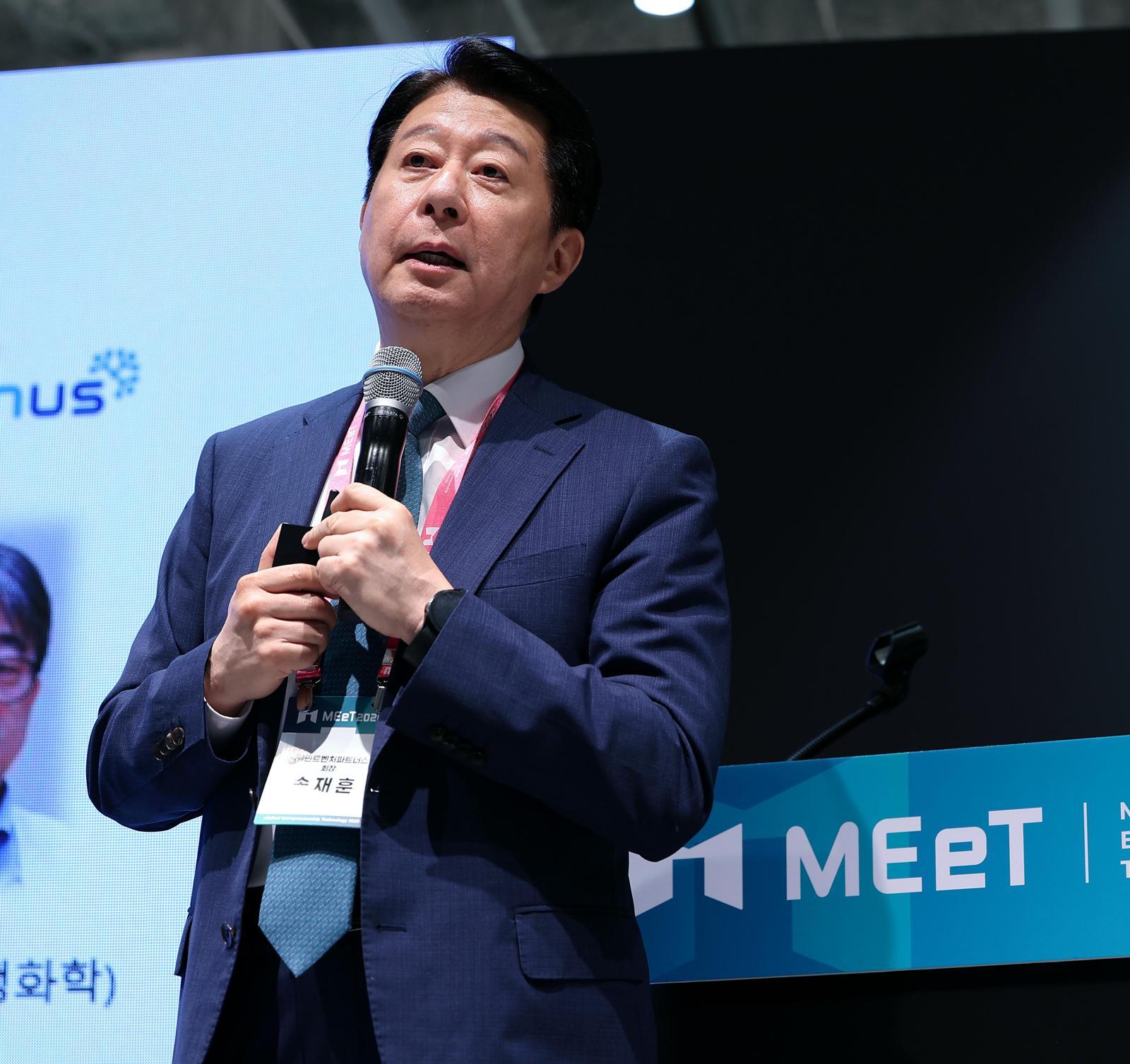
Song Jae-hoon, chairman of Mint Venture Partners, delivers a lecture on “Physician Entrepreneurship Using the Venture Studio Model” at “MEeT 2026,” Korea’s first medical technology commercialization conference, held at COEX in Seoul on the 10th. He believes that the spread of the venture studio model, which helps commercialize technologies, will also play an important role in realizing the nation’s potential. Provided by the MEeT Secretariat
In 2019, at the first Starbucks store in Seattle, USA, Song Jae-hoon (68), chairman of Mint Venture Partners, spoke for five hours with Professor Steve Hahn, a pediatrician at the University of Washington School of Medicine. The topic was Wilson’s disease, a genetic disorder in which copper accumulates in the body and severely damages the liver and brain. Treatments exist, but there is no method for early diagnosis. If treatment starts after onset, patients must live with significant disabilities. In his clinic, Prof. Hahn had repeatedly seen parents bringing in 3- to 4-year-old children saying, “Something is wrong with my child.” Deeply concerned, he spent 10 years developing, and publishing a paper on, the first diagnostic method for detecting Wilson’s disease by measuring blood proteins. But that was as far as it went. When Chairman Song proposed, “Let’s commercialize this technology,” Prof. Hahn replied, “I don’t even know how to start a company.”
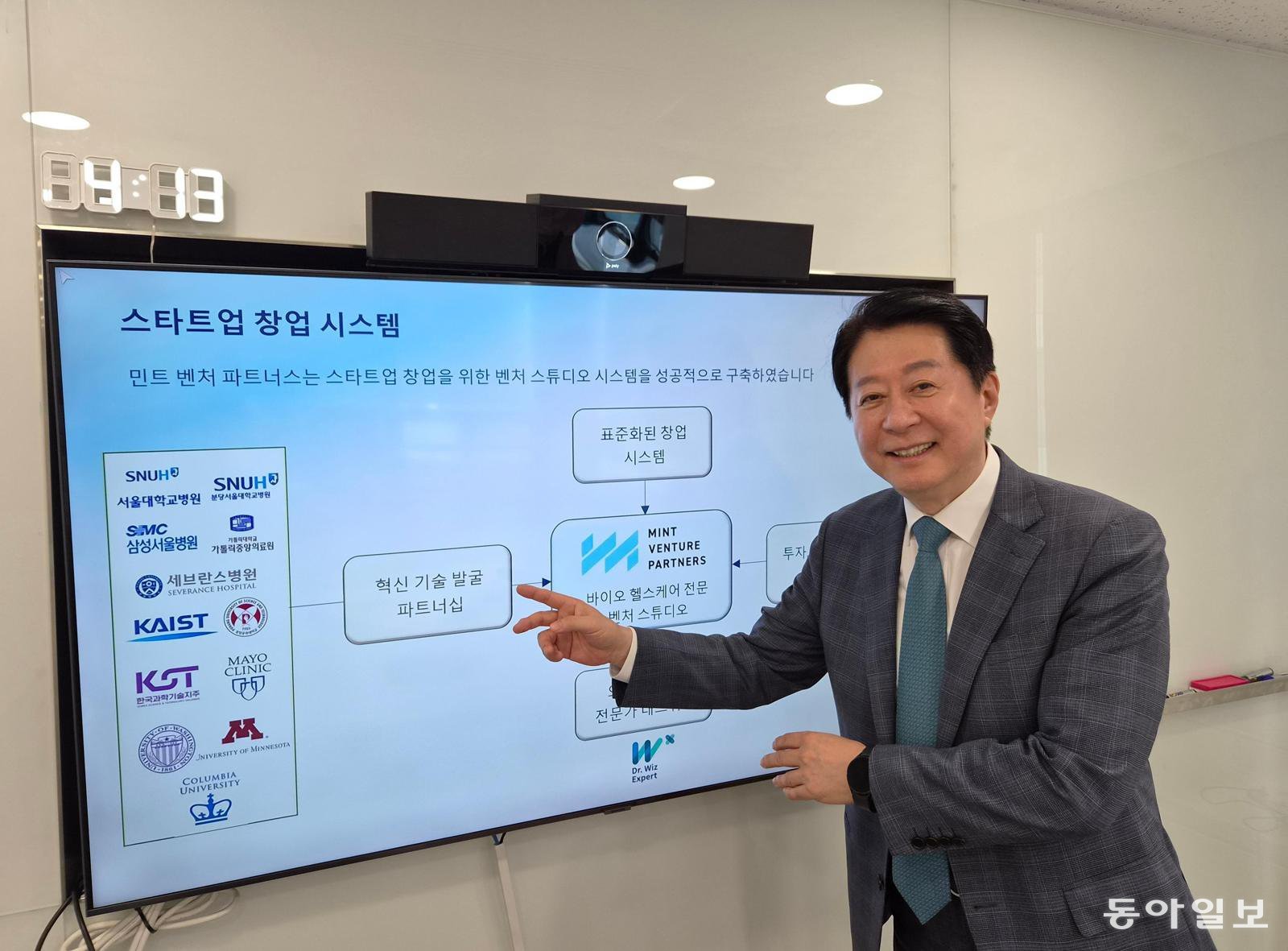
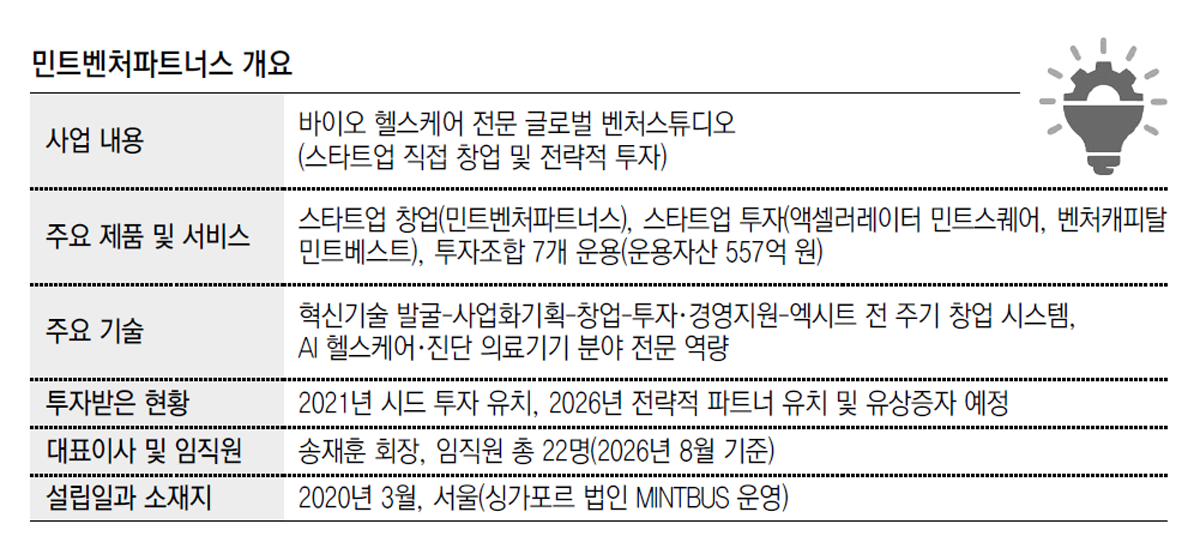
That five-hour conversation led to the startup “Kyproteo.” The company launched a service that can screen for 20 genetic diseases that are treatable if detected early, using just a drop of blood taken immediately after birth, for which no early diagnostic methods had existed. The test costs USD 25 (about KRW 35,000). The state of Washington completed clinical trials on 30,000 newborns. As medical textbooks suggest, one child out of the 30,000 was found to have Wilson’s disease. Washington State has confirmed the introduction of this test in 2026, and it is currently under review for approval by the U.S. Food and Drug Administration (FDA). In an interview on the 14th at his office in Gangnam District, Seoul, Chairman Song said, “Kyproteo would not have been created at all without a partner to support commercialization. Now, thanks to this test, children with genetic diseases detected early and their families will walk a completely different path in life.” Mint Venture Partners is a company that operates under a venture studio model that discovers technologies that may otherwise have been shelved or are needed by society, assesses their commercialization potential and direction, creates companies, and then grows them together with the founders.
● Bringing needed diagnostic methods into the world
The Korean startup “ViewBrain Healthcare” followed a similar path. One day, Prof. Na Deok-ryeol, Korea’s leading authority on dementia research and a neurologist at Samsung Medical Center, visited Chairman Song. Prof. Na was one year away from retirement. He presented a blueprint for treating dementia with stem cells. After reviewing the materials for two weeks, Song said he had to firmly conclude, “This will not work.” Instead, he requested other research data. There, he found a treasure with strong commercialization potential. The AI-based diagnostic method developed by Professors Na Deok-ryeol and Seo Sang-won can detect the accumulation of amyloid, a protein considered a causative factor in Alzheimer’s dementia, with over 95% accuracy using only standard CT (computed tomography) and MRI (magnetic resonance imaging) scans that are commonly taken, and can even predict the rate of disease progression. After six months of commercialization planning, ViewBrain Healthcare was founded in 2022, with a target of listing on KOSDAQ in 2028.
Had Mint Venture Partners not been involved from the pre-startup stage, the various technologies developed by multiple organizations might have remained dormant on laboratory shelves.
● Why a former hospital president turned to a venture studio
Chairman Song is an infectious disease specialist who has served as president of the Korean Society of Infectious Diseases, dean of the Sungkyunkwan University School of Medicine, and president of Samsung Medical Center. After becoming hospital president in 2012, he declared at his first faculty meeting that “research limited to publishing papers is research confined within the hospital,” and pushed technology commercialization as the hospital’s top policy priority. The Samsung Genome Institute and the Refractory Cancer Research Center were established during this period. After he left, 15 faculty-founded startups emerged. In that process, Song also saw the limitations. “We could provide support up to patents and business plans, but there was no entity within the hospital to actually lead and operate a newly established corporation. The same is true for universities when it comes to commercializing science and engineering technologies,” he observed. What was missing was a “conversion device” to turn technology into companies. To build this, he founded Mint Venture Partners in 2020, adopting the venture studio approach that had been operating in the United States to “produce” startups. Because it creates companies, it is also called a “company builder.”
On the 10th, at “MEeT 2026,” Korea’s first medical technology commercialization conference held at COEX in Seoul, Song gave a lecture on “Physician Entrepreneurship Using the Venture Studio Model.” In the lecture, he explained that startups founded by venture studios halve the time needed from establishment to securing seed funding, double their success rate in attracting Series A investment, and shorten the time to exit—through acquisition or listing—by more than 30%. “Considering that 70% of startups experience a ‘valley of death’ where funds dry up within one to three years of founding, replacing the trial-and-error of the first one to two years with a standardized system fundamentally alters their survival probability,” he said.
His thinking, refined over more than six years of building startups, is clear: “A venture studio is an accelerator that shortens the time it takes for medical technologies to reach the market and a system that changes the structure of entrepreneurship. It is not ‘an organization that helps one company,’ but ‘an organization that accumulates the very method of building companies as an asset.’”
● Two pillars for activation: government support and corporate partnerships
Chairman Song Jae-hoon of Mint Venture Partners explains entrepreneurship using the venture studio model at his office in Gangnam District, Seoul, on the 14th. Photo by reporter Heo Jin-seok, jameshur@donga.com
Song hopes that venture studios, which can increase the success rate of startups, will become one of the standard forms of entrepreneurship in Korea as well. His conviction is that more venture studios need to be established. The problem, however, is that Korea lacks the soil to nurture this system. “The Korea Fund of Funds supports venture capital, and TIPS supports accelerators, but venture studios do not even have a category,” he said. Government support programs are designed on the premise of already established startups or individual founders, meaning that venture studios—which develop business plans and engage in co-founding even before incorporation—fall into a blind spot in terms of evaluation and support.
He cited the private sector as the other pillar needed for activation. “Large and mid-sized companies that want to start or expand a bio-healthcare business can secure expertise quickly and safely by forming strategic partnerships with specialized venture studios,” he said. Rather than financial returns alone, strategic investment for joint business—partnering with a venture studio and holding equity in newly created companies—is a model that is already common overseas, he noted. Mint Venture Partners is currently working to establish such strategic partnerships.
● “Entrepreneurship must become an industry process, not just an individual choice”
Since 2020, Mint Venture Partners has founded two startups in the United States and two in Korea. It also engages in investment activities: its first fund has achieved an average return of 13.4 times, including a 23.1-fold return on its investment in Aimed Bio. Portfolio companies Organoid Science, Aimed Bio, and Meju have all been listed on KOSDAQ in succession.
“To make the venture studio model a standard option for healthcare entrepreneurship within 10 years, the government must now step forward,” Song said. “Korea has world-class medical institutions and researchers, nationwide medical data, manufacturing capabilities, and AI-based technologies. Aside from the United States, Korea is virtually the only country that possesses all these conditions. What is needed is a repeatable commercialization system that can convert these capabilities into companies and products.”
He continued, “The future status of a country that leaves entrepreneurship solely to individual capabilities and a country that produces and nurtures startups through a system will naturally diverge in 10 years.” To transform the medical sector—where the best talents have flocked over the past 30 years—into a driver of national growth, he argued, the only option is to build a repeatable commercialization system that can convert that potential into bio-healthcare companies and products. He called this a “reallocation of social energy.”
This issue is not confined to the medical community. “Startups founded by professors or researchers with professional expertise must not remain an exceptional choice, but become one of the standard options,” he said. “Transforming entrepreneurship from a matter of personal determination into an industrial process is the key to realizing Korea’s potential.”
Profile: Chairman Song Jae-hoon
△ 2018–2019 Chairman, CHA Bio Group
△ 2012–2015 8th and 9th President, Samsung Medical Center
△ 2012–2013 Dean, School of Medicine, Sungkyunkwan University
△ 2011–2012 President, Korean Society of Infectious Diseases
△ 1999 Founded the Asia-Pacific Foundation for Infectious Diseases
△ 1983 Graduated from Seoul National University College of Medicine
ⓒ dongA.com. All rights reserved. Reproduction, redistribution, or use for AI training prohibited.
Popular News









 About Dong-A Ilbo