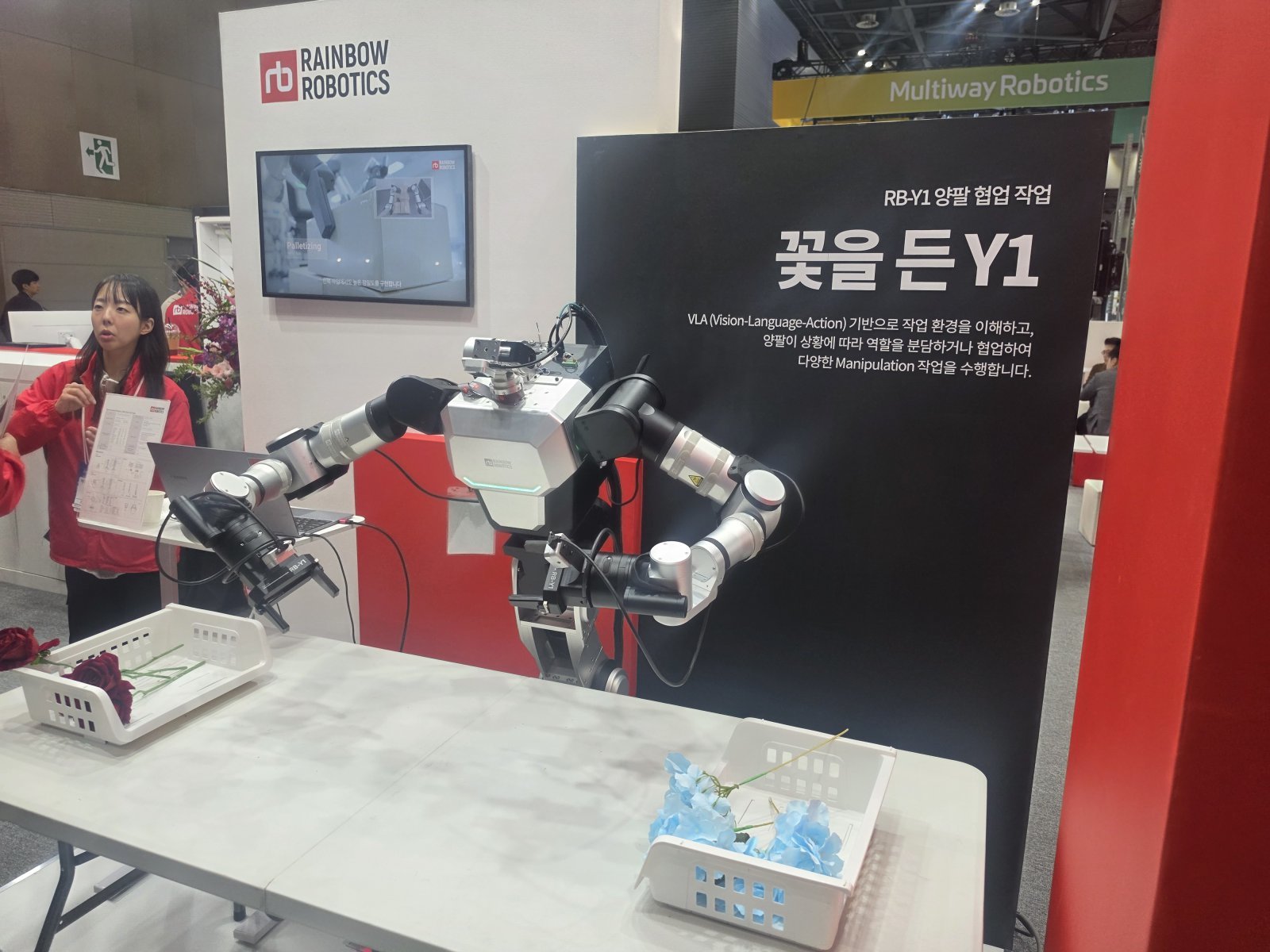
Rainbow Robotics’ Y1 humanoid demonstrating a test that classifies blue and red flowers. Reporter Choi Jae-ho cjh1225@donga.com
Humanoid robots have begun to be deployed in factories and logistics centers, but it will still take a long time before they reach the stage where they can independently make decisions and work like humans. Repetitive tasks that follow predefined motions are highly accurate, but in the process where artificial intelligence (AI) recognizes surrounding conditions and determines how to perform tasks, errors occur frequently and human intervention is required.
“Tasks that repeatedly execute pre-input commands have almost no errors. But at the stage where robots make their own decisions, every company in the world still has many errors.”
This was how a representative of Rainbow Robotics described the technology at “RoboWorld 2026,” held at KINTEX in Goyang, Gyeonggi Province, from 4 to 7 November. The representative acknowledged that the vision-language-action (VLA)-based robot demonstrated at the exhibition could make mistakes at a level similar to those made by humans when classifying blue and red flowers. VLA is an AI technology that allows a robot to recognize its surroundings with a camera, interpret verbal commands, and translate them into physical actions.
Five domestic robot companies met at this exhibition—Rainbow Robotics, Neuromeka, ROBOTIS, Didden Robotics, and Magenta Robotics—mostly described themselves as being at the demonstration or early adoption stage. The companies cited the accuracy of autonomous decision-making and training data, precision task capabilities, safety certification, and high introduction costs as key challenges for commercialization.
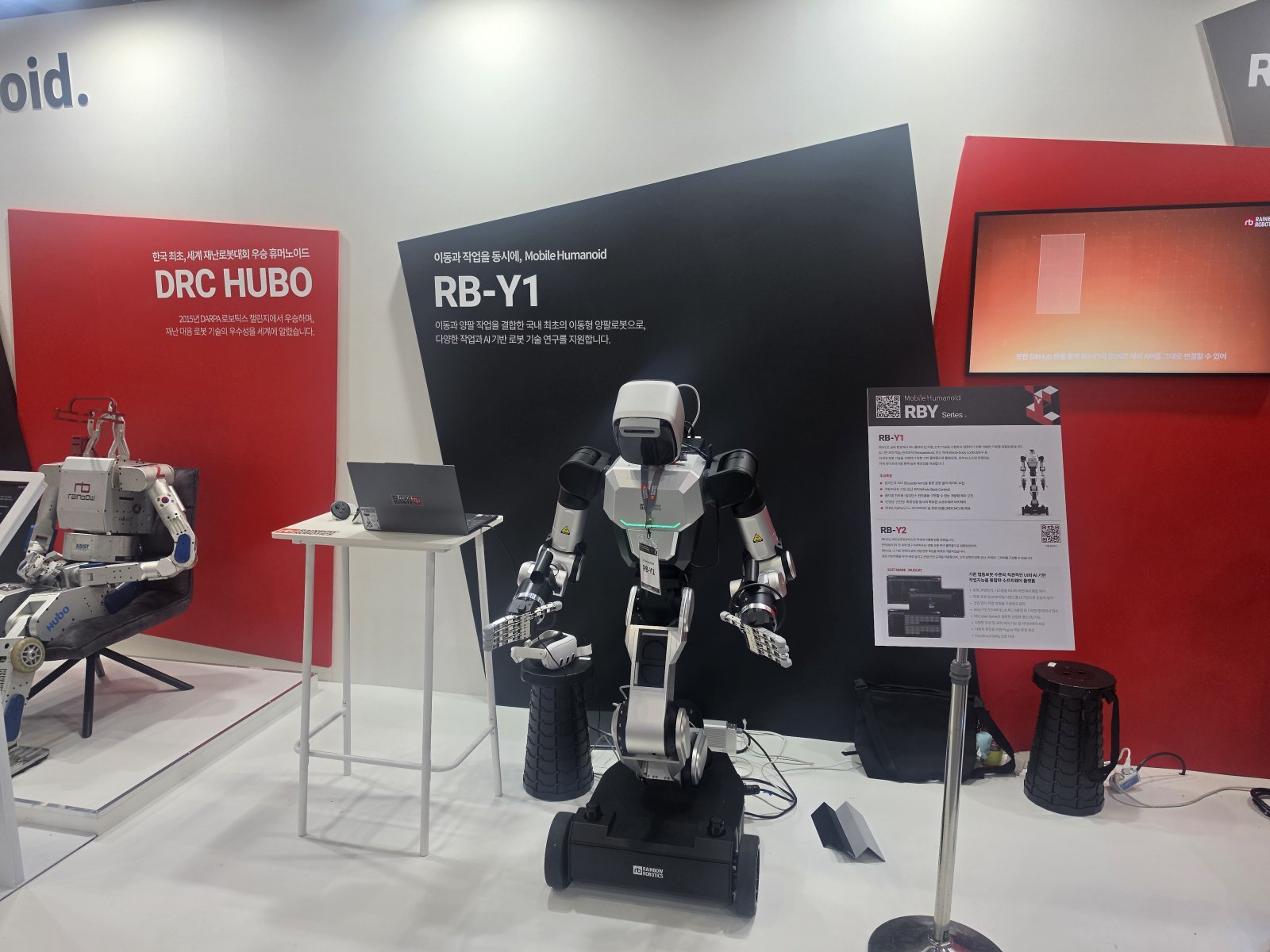
Y1 humanoid exhibited by Rainbow Robotics at RoboWorld 2026. Reporter Choi Jae-ho cjh1225@donga.com
● Rainbow Robotics developing ‘RB-Y2’ for factories…Focusing on wheeled robots rather than bipedal typesRainbow Robotics, a subsidiary of Samsung Electronics, has been supplying the mobile dual-arm robot “RB-Y1” as a research platform. According to a company representative, about 200 units have been sold, including purchases by research institutes such as the Massachusetts Institute of Technology (MIT) in the United States. One U.S. company reportedly deployed dozens more units to its factory after an initial purchase.
The next-generation industrial mobile dual-arm robot “RB-Y2” was developed in response to customer requests to improve the research-use robot so that it can be used in actual factories.
RB-Y2 was first unveiled at the Seoul International Manufacturing Technology Show (SIMTOS) in April this year. The company is refining the design with a focus on safety and precision in manufacturing environments and is pushing for mass production in mid-2027. However, safety certification procedures remain, so the timing of certification completion and the mass production and sales schedule need to be distinguished.
Rainbow Robotics does not believe that robots deployed in factories must walk on two legs. Bipedal walking requires maintaining balance and also entails the risk of falling. The company judges that in flat factories, wheeled mobility can be advantageous in terms of stability and work efficiency.
For these reasons, the company has been developing robots that combine a wheeled mobile platform with two arms. This summer, together with SFA, it built an integrated demonstration system in which a mobile dual-arm robot, an autonomous mobile robot (AMR), and a collaborative robot work together on a single production line. The goal is to evolve this into a form that can be applied to actual factories.
However, AI does not handle all tasks autonomously. Instead, AI is combined with required functions according to the needs of industrial sites. Using integrated software, even non-developers can designate fixed tasks such as welding sections through simple button operations, while AI can be added for more complex tasks such as object recognition and classification. The company plans to use real-field demonstrations to determine to what extent human intervention is necessary.
Securing training data is also a challenge. The RB-Y1, developed for research, had limitations for direct deployment in factories, and the company plans to expand industrial demonstrations with the improved RB-Y2. The explanation is that data accumulated from actual work processes will be essential to enhance the robot’s autonomous decision-making capabilities.
The company is also pursuing localization of core components. Rainbow Robotics already develops some components in-house, such as motors and encoders, but uses external products for speed reducers while simultaneously working on proprietary technologies. A speed reducer is a component that lowers the rotation speed of a motor and increases torque to precisely control a robot’s joints. The company plans to expand in-house production of major components over the long term.
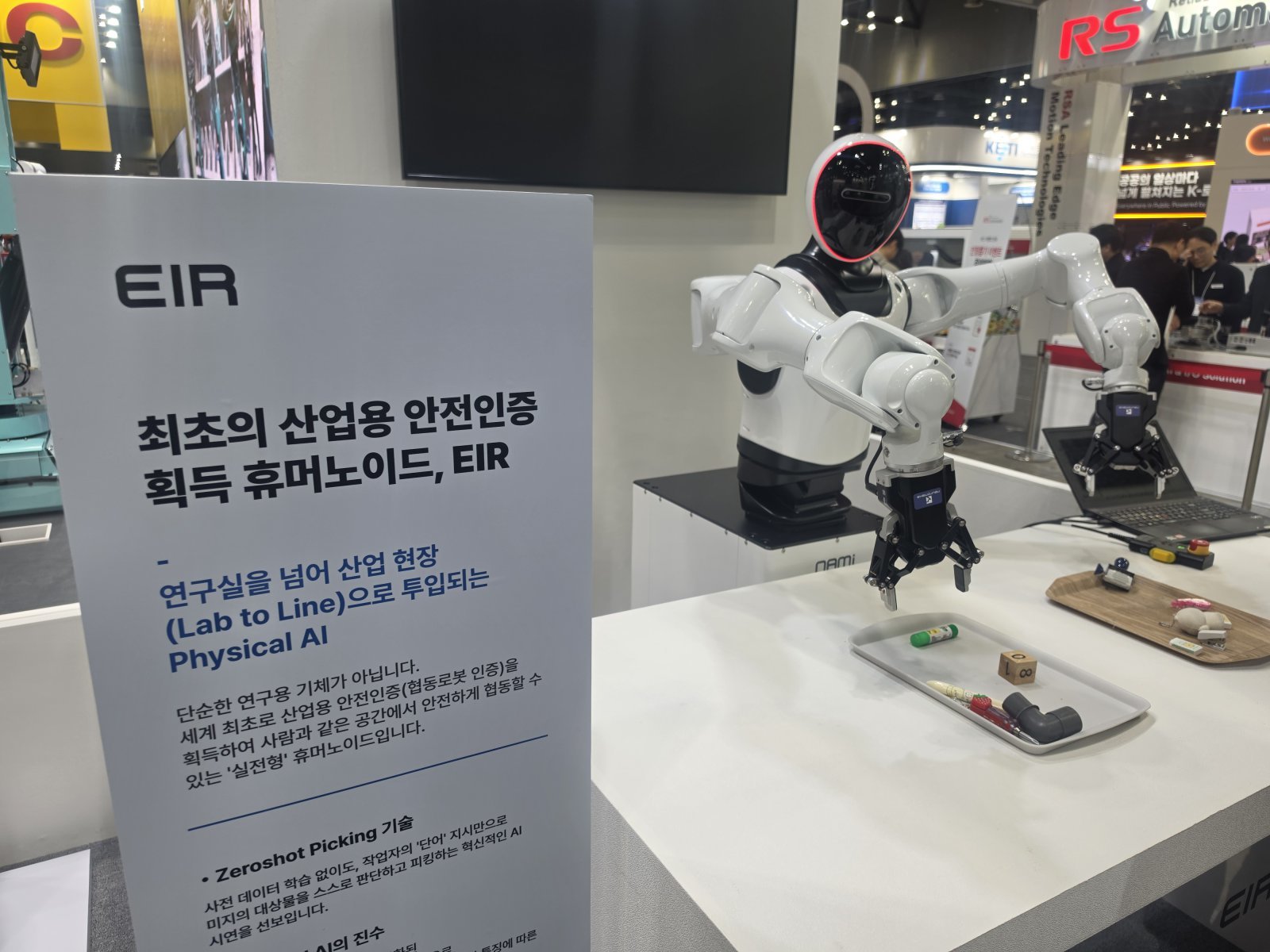
EIR humanoid exhibited at Neuromeka’s booth. Reporter Choi Jae-ho cjh1225@donga.com
● Neuromeka validating two-handed assembly at auto parts factories…Harness assembly still out of reachNeuromeka stated that it is conducting field trials of humanoids at the manufacturing site of a first-tier Hyundai Motor partner in the Daegu region. It is still in the early stage, having been less than a year since it began full-scale humanoid development. The company built a production line this year to create prototypes and is targeting mass production in 2027.
The company cited manufacturing as the first field where humanoids will likely be actively used. It explained that while factories already have extensive automation equipment, there remain processes that are difficult to handle with existing systems.
The most basic task is “pick and place”—picking up an object and moving it to another location. Neuromeka is going beyond this, validating tasks in which the robot holds components with both hands and assembles them. Its goal for next year is to demonstrate two-handed component assembly.
By contrast, it believes assembly of wiring harnesses, the bundles of automotive wires, remains difficult. To insert flexible wires into fixed positions, the robot’s hands must exhibit precise motion and force control, supported by AI decision-making. A company representative described this as a high-difficulty task close to the final stage of humanoid technology, emphasizing that precision and work speed must be further improved.
For AI models, the company is leveraging open-source models instead of developing its own foundation model from scratch. The robot is equipped with an onboard AI computing unit, enabling it to run some functions without an internet connection, but certain inference capabilities are limited unless connected to a data center. In large corporations’ factories, where access to external networks is restricted, a separate server must be set up, which is another challenge.
The company also cited safety certification as an issue that needs resolution. A Neuromeka representative explained that specific certification standards for humanoids have not yet been sufficiently established. The company is reviewing assessments such as the CE conformity evaluation used in the European market. However, CE marking alone does not necessarily mean that all safety requirements for domestic industrial sites are met.
The company further pointed out that small and medium-sized enterprises find it difficult to purchase humanoids due to high prices. Neuromeka expects that if the government supplies domestically produced robots to universities and research institutes and supports the accumulation of field data, it will help domestic manufacturers develop technologies.
The Ministry of Economy and Finance in August announced a plan to begin with the purchase of 250 domestically produced humanoids in 2027 and to supply a total of 1,080 units to universities and national research institutes by 2030. If non-humanoids such as quadruped robots are included, the government’s purchase volume next year will be about 1,700 units.
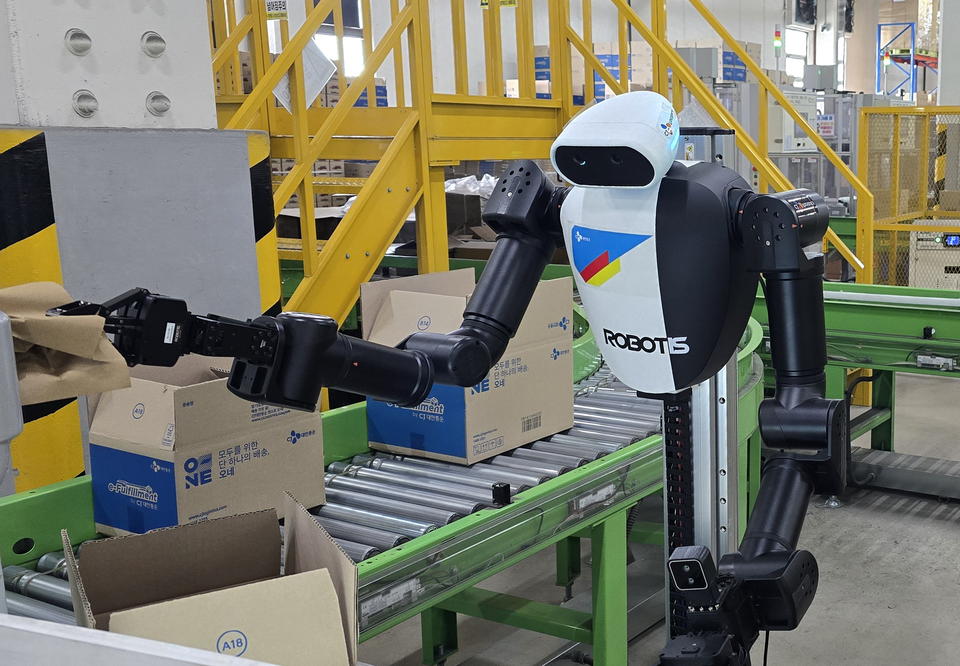
Validation in progress at CJ Logistics’ logistics center. Provided by ROBOTIS
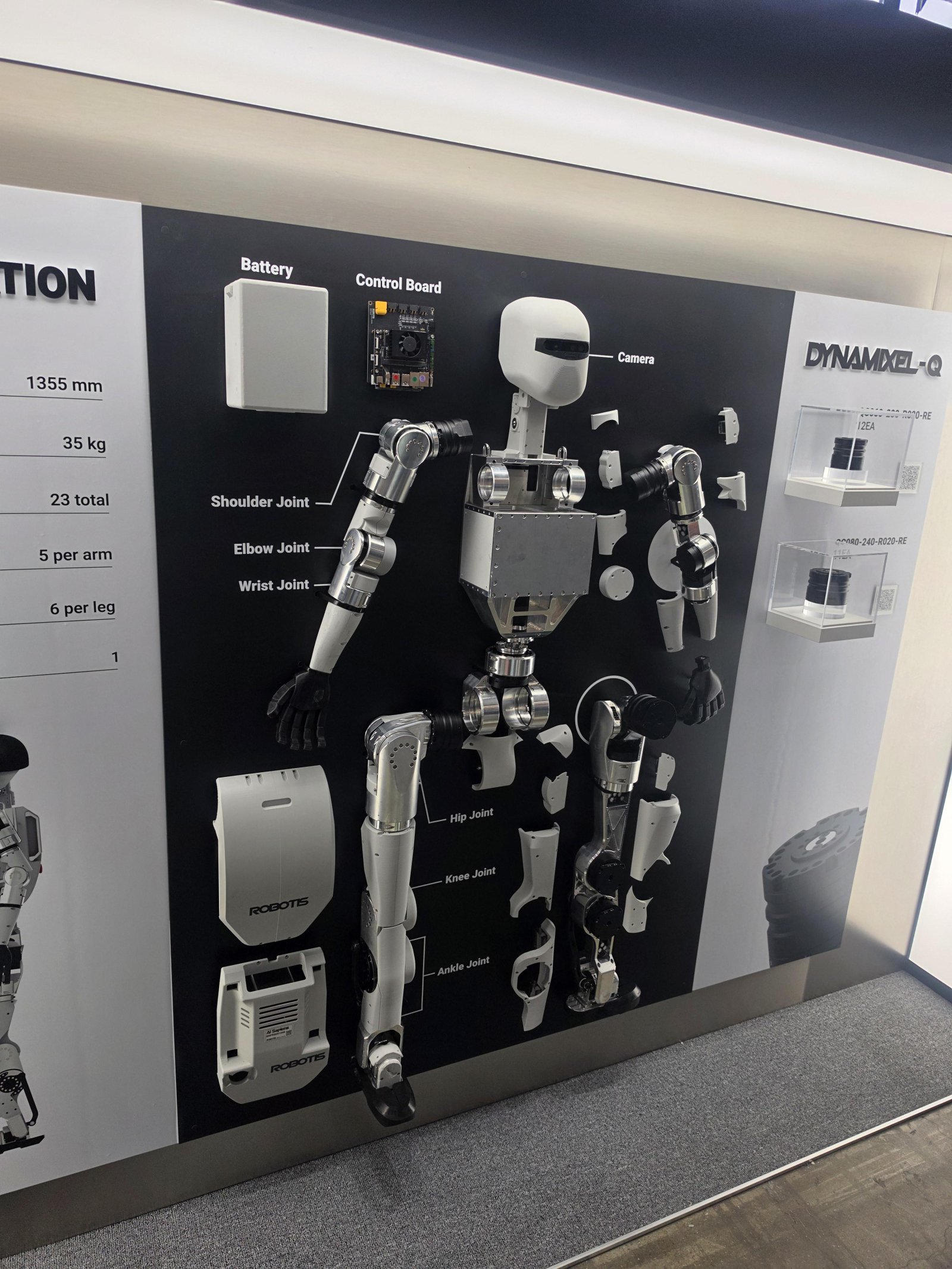
● ROBOTIS, first deployment at Olive Young logistics center…Starting with inserting cushioning materialROBOTIS is pushing into industrial sites with its task-oriented humanoid “AI Worker.” A company representative explained that customers are split between industrial sites and university/corporate research institutes, with each segment accounting for roughly half.
There is now a live operational case. In September, CJ Logistics deployed two AI humanoid dual-arm robots, in whose hardware development ROBOTIS participated, at Olive Young’s Yangji logistics center in Yongin, Gyeonggi Province. After field trials at the Gunpo fulfillment center last year, the company expanded the scope of application to processes handling actual customer logistics.
The robots’ current task is to place cushioning material inside boxes used for packing products. The company began with this relatively simple task formerly performed by humans and plans to gradually expand the robots’ role to product picking, sorting, and inspection.
A ROBOTIS representative explained that humanoids require separate training data to adapt to the unique working environments of different companies. Because each company has different product shapes, layouts, and workflows, it is difficult for manufacturers to pre-produce and provide data for all sites. As a result, proof-of-concept (PoC) projects are sometimes carried out jointly with customers, or companies collect their own data.
The company has released “Cyclone,” an open-source software platform that supports the entire chain from data collection and labeling/selection to inference-based motion learning. It can also utilize data generated in virtual environments for training by linking with NVIDIA’s robot simulation platform “Isaac Sim.”
Through this, the company aims to enable firms using its actuators and robot platforms to accumulate technologies within the same development ecosystem. It added that its AI models also leverage NVIDIA technologies.
AI humanoid exhibited at the ROBOTIS booth. Reporter Choi Jae-ho cjh1225@donga.com
ROBOTIS ultimately aims to realize “dark factories,” plants operated without human intervention. However, this does not mean that current humanoids can fully replace human workloads.
A company representative assessed that robots must reach at least 70–80% of a human’s workload for companies to seriously consider adopting them. If a robot can complete in 10–12 hours what a human does in 8 hours, there is room to examine economic feasibility, the representative explained.
The AI Worker can operate for about 8–12 hours on a single charge, and the company lists the maximum operating time, including idle time, at around 16 hours. In practice, however, it assumes about 8 hours of operation. Even in logistics facilities, robots are currently operated only in limited environments where workspaces are separated from humans.
Production capacity is another bottleneck. The company said that incoming orders exceed its production capacity. It expects that once its plant in Uzbekistan is completed at the end of this year and starts operations in the first half of next year, production constraints will ease.
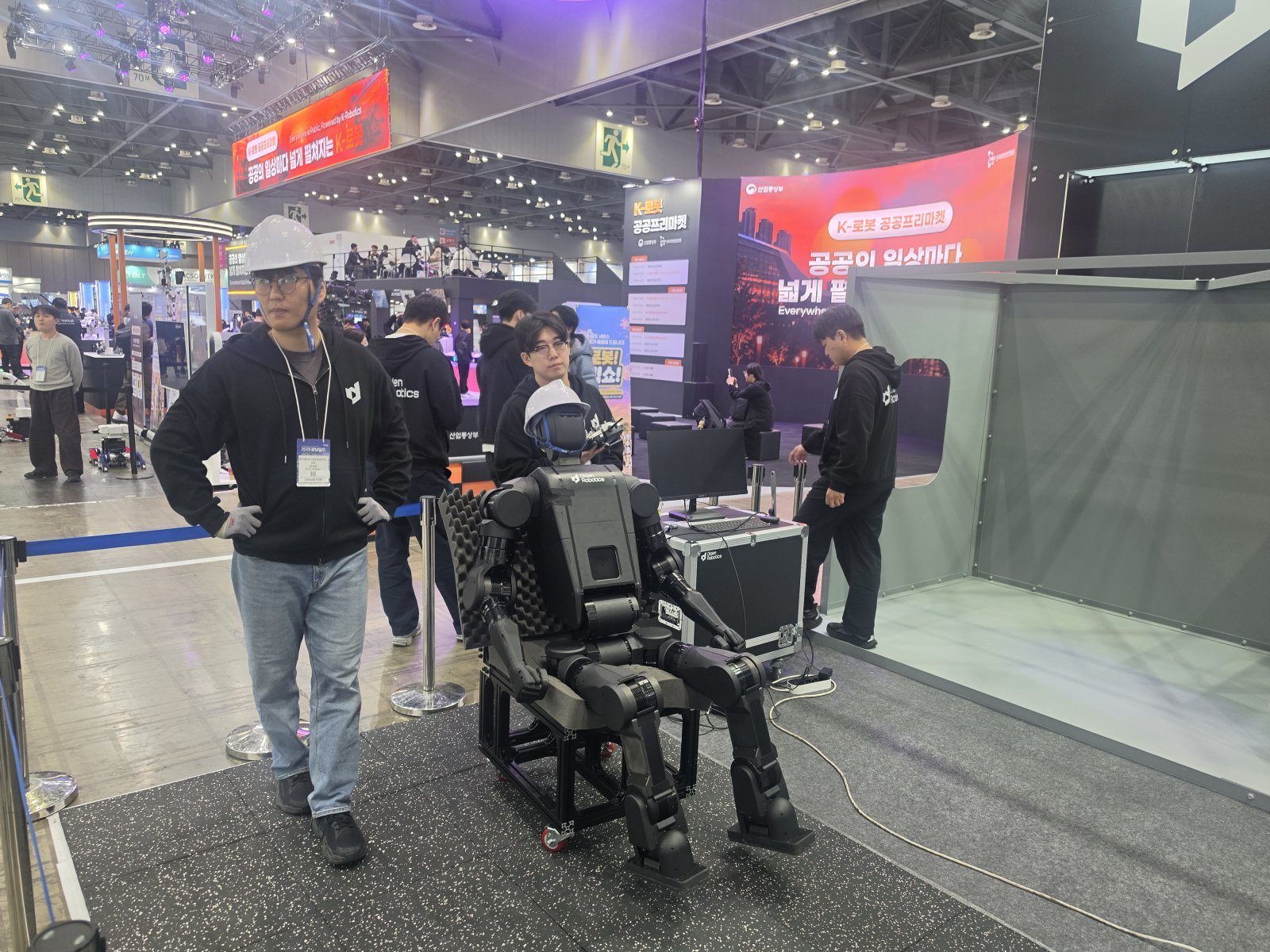
Didden Robotics’ V2 humanoid unveiled at RoboWorld 2026. Reporter Choi Jae-ho cjh1225@donga.com
● Didden Robotics targets ship inspection and maintenance…Welding still difficultDidden Robotics is developing humanoids targeting ship maintenance and construction sites.
According to a company representative, it completed its first prototype (V1) in April this year, about six to seven months after starting development. It then redesigned the robot with mass production in mind and unveiled V2 for the first time at this exhibition.
The company directly designed its actuators to enable the robot to continuously lift 30 kg with both arms and handle a maximum of 50 kg, and says it has achieved this goal. However, these figures represent target performance for mass production and should be distinguished from work capabilities validated in real-world environments.
The initial target market is maintenance work conducted while vessels are in operation. The vision is to have robots open heavy steel doors inside ships, climb ladders, check control panels, and operate valves.
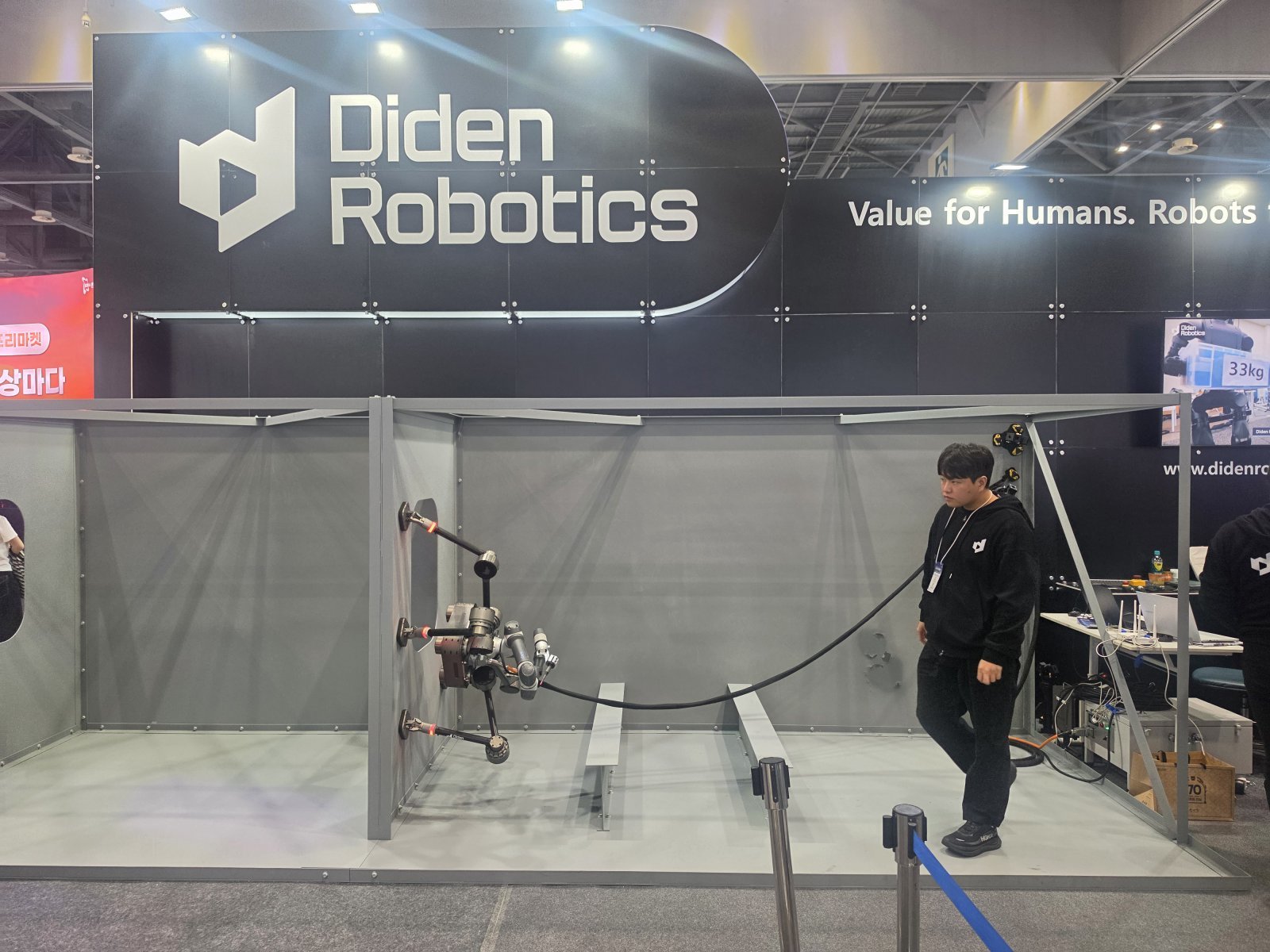
Spider robot from Didden Robotics unveiled at RoboWorld 2026. Reporter Choi Jae-ho cjh1225@donga.com
The company noted that a significant share of personnel on board ships are responsible for maintenance, but recruiting such workers is difficult and labor costs are high. It used as a benchmark for calculating return on investment (ROI) the example of maintenance staff accounting for about half of a 12-person crew, with annual salaries around KRW 100 million.
Actual deployment on ships will require verification of safety and the reliability of inspection results. Didden Robotics has completed the selection of test items for evaluating humanoid performance in cooperation with the Korean Register. A key task is securing official recognition of the robots’ ship inspection results.
However, robots will not be able to handle all ship maintenance tasks. The company said that welding and crack repair technologies applied to its shipyard spider robots are currently difficult to implement on its humanoids.
A company representative explained, “To absorb shocks smoothly while walking, a quasi-direct drive (QDD) system with a low reduction ratio is advantageous, but because the reduction ratio is low, it is harder to achieve precise positioning and some backlash remains between gears,” adding, “For welding, which requires highly precise position control, harmonic drives (strain-wave type precision reducers) with almost no backlash may be more advantageous.”
The company also plans to utilize external technologies for AI rather than developing its own foundation model. It is reviewing cooperation with other firms for operating systems that deploy and control multiple robots simultaneously and diagnose failures.
While Didden Robotics acknowledges that full-scale commercialization of humanoids will take considerable time, it expects industry-specific products to begin appearing on the market around 2029–2030. The company anticipates that different types of robots will be adopted depending on the working environments of each industry.
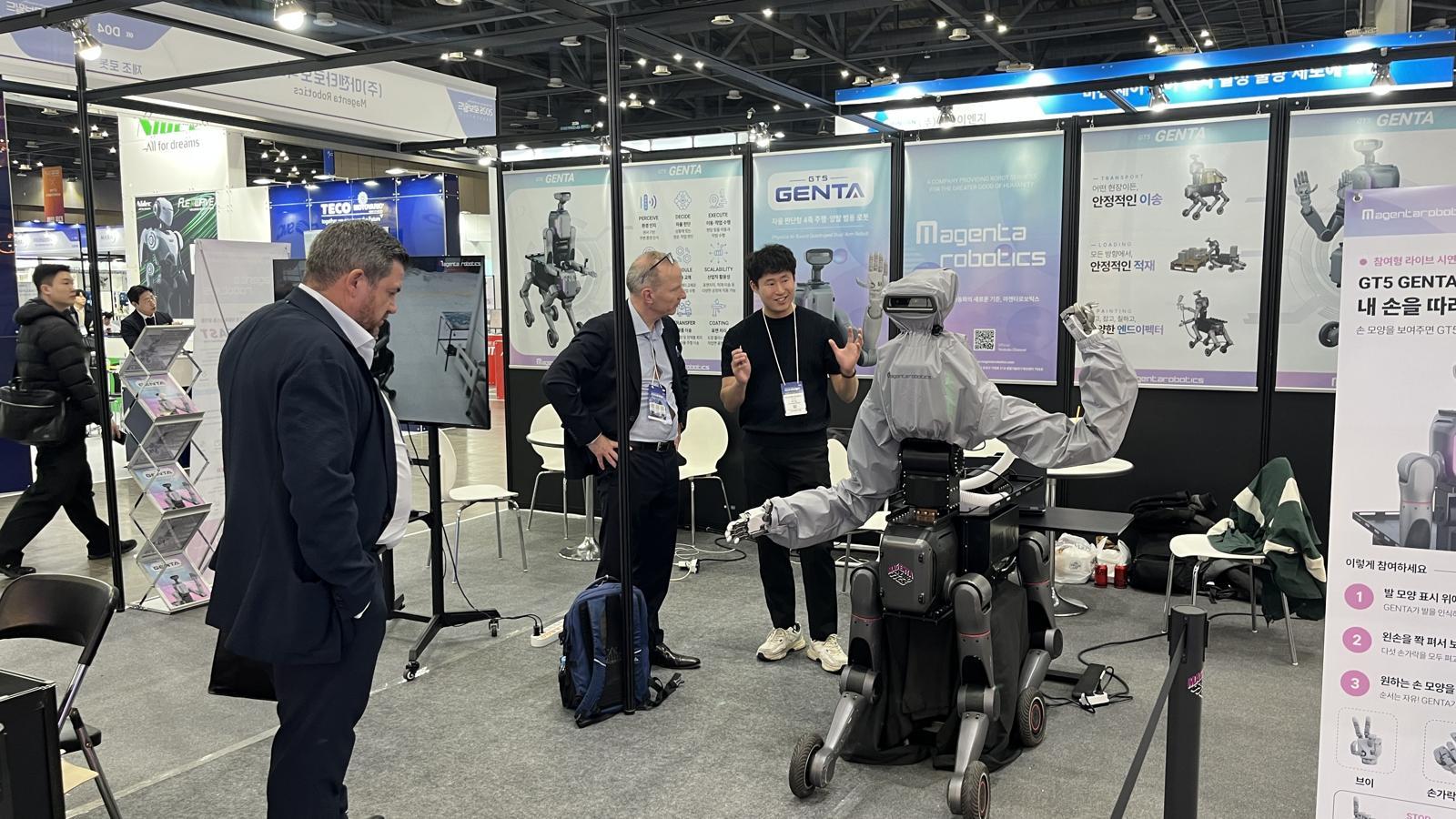
Interaction with Magenta Robotics’ “GT5 Zenta.” Provided by Magenta Robotics
● Magenta Robotics’ four-legged ‘Zenta’…Aiming for first deployment at battery plant next yearMagenta Robotics showcased “GT5 Zenta,” a robot with a human-like upper body and four wheeled legs—a so-called centaur-type robot.
The robot has not yet been deployed in actual industrial sites, and the company plans its first application at a battery cell manufacturing partner in early 2027. It will be tasked with removing battery cells from jigs that serve as fixtures, stacking them, and transporting them to other locations.
The company is targeting processes that involve handling heavy objects or have a high risk of industrial accidents. It explained that processes such as loading heavy objects, painting, and working at heights can make it difficult to recruit workers due to musculoskeletal strain and exposure to hazardous substances.
A Magenta Robotics representative said the robot’s current work efficiency reaches up to around 80% of a human’s level, depending on the process. However, this figure reflects the company’s own assessment and cannot be generalized to all processes or other companies’ robots.
The robot’s autonomous decision-making capabilities are being developed in stages. At present, it can create a map of its workspace, recognize and avoid nearby people or obstacles, and move to designated work positions.
Going forward, the company plans to develop the system so that when a person verbally instructs the robot to move a specific object, it will understand the command, locate the object with its camera, grasp it, and transport it. It also aims to enable collaboration among multiple robots and between robots and humans.
GT5 Zenta’s four legs move independently, and the structure is designed to reduce vibration and maintain balance while moving. The company emphasized that it is better able to handle level differences than typical wheeled robots. It added that it has developed functions for recognizing and using stairs and elevators.
The company has independently developed its vision recognition technology and is applying reinforcement learning to lower-body movements. It is also leveraging autonomous driving and mapping data accumulated over more than five years of developing its existing GT3 model for Zenta.
Inquiries have come from overseas markets including Türkiye
ⓒ dongA.com. All rights reserved. Reproduction, redistribution, or use for AI training prohibited.
Popular News










 About Dong-A Ilbo