(1) How AI Is Transforming Agriculture
On the 11th at Gangnam-daero in Seocho District, Seoul. In the basement of an office building lined with high-rise towers in the city center, a robot was harvesting lettuce. After passing through an air shower wearing a white dustproof suit, a long robotic arm was seen moving between shelf-type cultivation units. The robot meticulously checked the lettuce’s weight and density with a camera, then used a gripper to pick out heads of lettuce with high marketability and place them into a basket. It is an AI smart farm where Internet of Things (IoT) cultivation units manage the growth environment and artificial intelligence (AI) robots handle monitoring and harvesting.
The smart farm, which previously operated according to values set by farmers, is evolving into a system where AI determines the cultivation environment and robots take charge of farm work. In Goheung County, Gwangju, South Jeolla Province, technologies are being tested in which AI, trained on paprika cultivation data from high-performing farms, presents target temperatures and ventilation/heating set values and controls roof vents and other facilities. According to the Ministry of Agriculture, Food and Rural Affairs, the policy-supported area of smart agriculture in protected horticulture increased 48.6%, from 6,540 ha in 2021 to 9,720 ha last year.
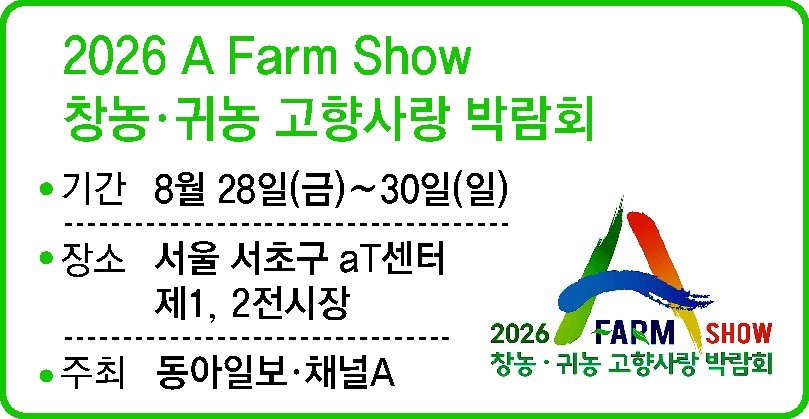
The Dong-A Ilbo and Channel A will hold the “2026 A Farm Show – Start-up Farming · Returning-to-Farming Hometown Love Expo” at the aT Center in Seocho District, Seoul, from August 28 to 30. A range of exhibitions and events will highlight K-Food and the future of agriculture led by AI.
AI farmer that has learned success know-how handles everything on its own… Even beginners can farm paprika
[2026 A Farm Show Start-up Farming · Returning-to-Farming Hometown Love Expo]
Sensors measure greenhouse sunlight and temperature in real time
Curtains and HVAC controlled based on AI decisions
Robots harvest only crops with high marketability
“Need to support technology firms entering agriculture”
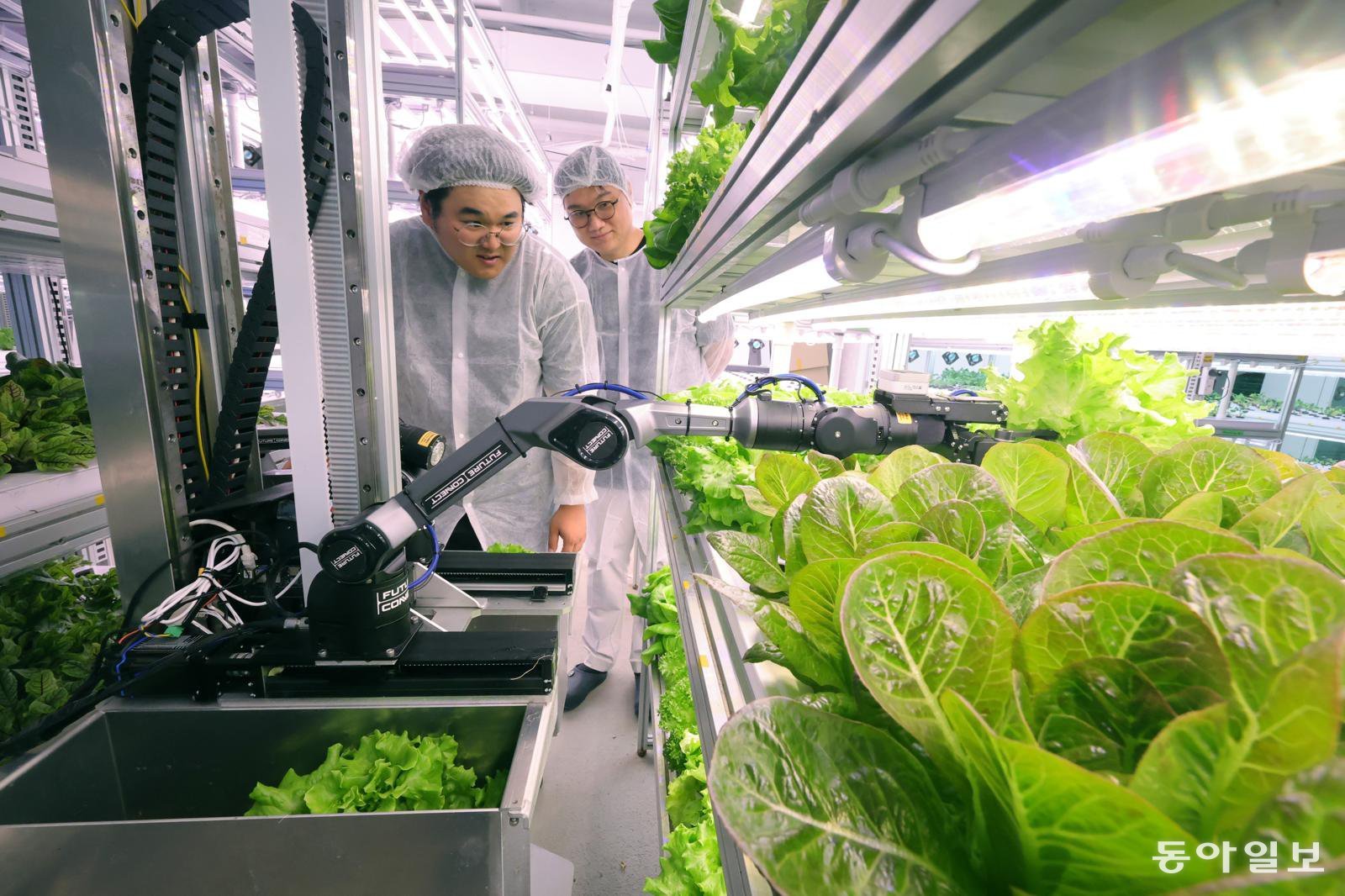
On the 11th at FutureConnect’s smart farm in Seocho District, Seoul, an artificial intelligence (AI) robot examines the condition of lettuce with a camera before harvesting it. Photo by Jang Seung-yoon tomato99@donga.com · Goheung = Reporter Park Young-chul
On the 10th at the Smart Farm Innovation Valley in Goheung County, Gwangju, South Jeolla Province. Inside a glass greenhouse of about 660 m², densely grown paprika vines towered well above adult height. As temperatures in the greenhouse rose in the August heat wave, shading curtains quietly slid into place, roof vents opened, and the ventilation system started up. Sensors inside and outside the greenhouse measured sunlight, temperature, humidity, wind, and other factors in real time, and artificial intelligence (AI) determined the optimal cultivation environment, automatically operating the roof vents, curtains, and heating and cooling systems.
This greenhouse is where agri-tech company GreenCS develops and tests AI smart farm technology. Conventional smart farms automatically operated facilities in line with pre-set temperatures, humidity, and other conditions determined by the farmer. Recently, however, technologies have been developed in which AI, trained on cultivation data from high-performing farms, determines the optimal environment and controls facilities.
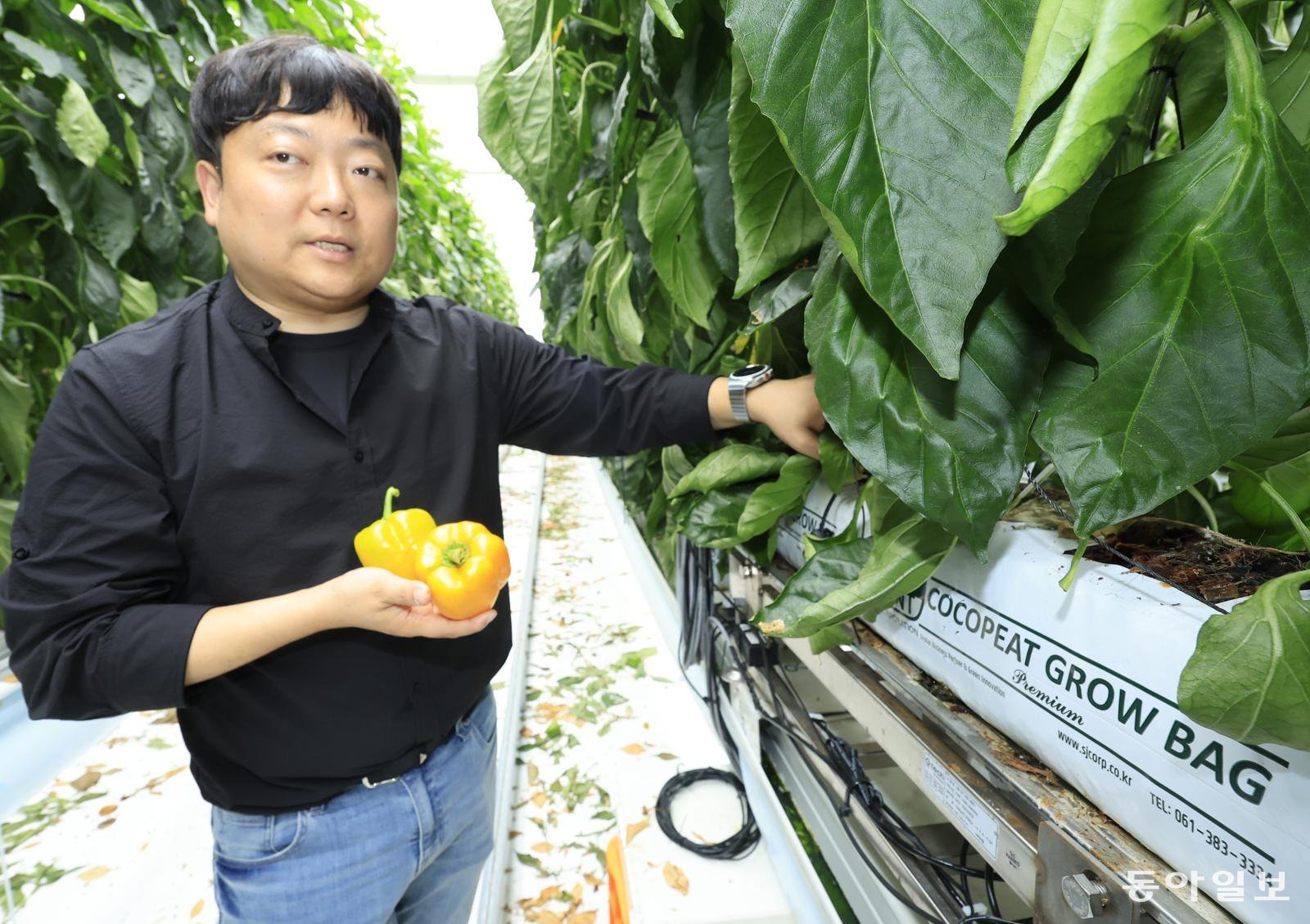
Smart farms that used to operate based on values set by farmers are evolving into a stage where AI determines the cultivation environment and robots even perform farm work. On the 10th at the Smart Farm Innovation Valley in Goheung County, Gwangju, South Jeolla Province, Jang Young-gyun, head of the GreenCS research center, holds paprika grown under AI-controlled conditions and says, “Even those farming for the first time can grow crops above a certain standard with AI support.” Photo by Jang Seung-yoon tomato99@donga.com · Goheung = Reporter Park Young-chul
● AI farmer trained on professional farmers’ know-howGreenCS is conducting demonstration tests of AI smart farm technology for paprika at the request of the Rural Development Administration. When sensors collect data on air temperature, humidity, solar radiation, wind direction, and wind speed, AI, based on cultivation data from a high-performing paprika farm in Hwasun County, Gwangju, South Jeolla Province, presents target temperatures and ventilation/heating set values. In the past, farmers themselves had to set as many as about 80 variables, but AI now replaces part of the judgment that skilled farmers used to make based on experience and intuition.
There is no professional farmer in this greenhouse. A single GreenCS employee manages the paprika with AI assistance. “We are verifying whether people farming for the first time can grow crops above a certain level by using AI,” said Jang Young-gyun, head of the GreenCS research center. Performance is also being tested at about 10 ordinary farms.
As smart farms become more sophisticated, technologies that reduce waste of water and fertilizer are also gaining importance. In hydroponic cultivation, nutrient solution not absorbed by crops drains away as runoff, and in many cases about half of the supplied volume is discarded. According to the Rural Development Administration, the domestic hydroponic cultivation area expanded to 4,671 ha in 2024, but recirculating hydroponic systems that reuse runoff account for only 5% of the total. If runoff is discharged directly, fertilizer components such as nitrogen and phosphorus can flow into soil and rivers, raising concerns about environmental pollution.
“Recently, we have also been testing heat treatment methods to eliminate pathogens remaining in runoff,” Jang said. “This can reduce fertilizer costs and lower soil and water pollution caused by fertilizer components.”
● AI smart farms taking root in city centers
Smart farm technology is also changing where farming is done. It has become possible to grow crops inside urban buildings close to consumption centers, regardless of weather or season. On the first basement level of an office building on Gangnam-daero in Seocho District, Seoul, a 330 m² urban smart farm operated by FutureConnect has been established. Shelf-type cultivation units are stacked with layers of lettuce, arugula, basil, and other crops.
After donning a white dustproof suit and passing through an air shower into the interior, harvesting and monitoring robots were seen checking crop conditions and even performing harvesting. IoT-enabled cultivation units manage growth conditions such as temperature and humidity. Cameras analyze crop weight and density to sort out those with high marketability. “Using AI robots can reduce required labor by about 30%,” explained FutureConnect Chief Technology Officer (CTO) Oh Sang-hyun.
Vegetables grown here are sold to the company’s own salad store “Live Farm,” through an online mall, and to nearby restaurants. FutureConnect operates urban smart farms at nine locations in the Seoul metropolitan area, including the duty-free zone of Incheon International Airport Terminal 1, Sinchon, and Magok in Seoul, and has also expanded to New York and Atlanta in the United States. Its strengths include shortening distribution stages and supplying vegetables of consistent quality year-round, even during heat waves or torrential rain.
● High-cost robots and data acquisition remain challengesThe Ministry of Agriculture, Food and Rural Affairs classifies smart farms into four generations: first-generation remote facility control, second-generation data-based growth management, third-generation AI-driven decision-making, and fourth-generation unmanned autonomous systems. Technologies currently commercialized in Korea are assessed as being at the second-generation level.
There are still considerable challenges to overcome before third- and fourth-generation smart farms using AI and robots can be commercialized. To allow AI to determine the optimal cultivation environment, sufficient data must be secured by variety, growth stage, and season, and technologies must be standardized so they can operate in greenhouses and with equipment that differ from farm to farm. Harvesting and pest control robots can cost as much as several KRW billion per unit, creating a heavy burden for farms considering adoption.
The global agricultural robot market is projected to grow from USD 18.0 billion in 2026 to USD 41.3 billion in 2031, with a compound annual growth rate of 18.1%. However, Korea’s agricultural robot technology level stands at 84% of that of the United States. “It is necessary to foster companies that possess both an understanding of agricultural field conditions and core technologies such as AI, and to support technology firms from other industries in entering the agricultural sector,” advised Jeong Do-chae, research fellow at the Korea Rural Economic Institute.
ⓒ dongA.com. All rights reserved. Reproduction, redistribution, or use for AI training prohibited.
Popular News








 About Dong-A Ilbo