Leveraging semiconductor and water treatment expertise
Government approval for domestically developed hemodialyzer
Outperforming imports in waste filtration efficiency
Morocco exports followed by expansion into Europe and the U.S.
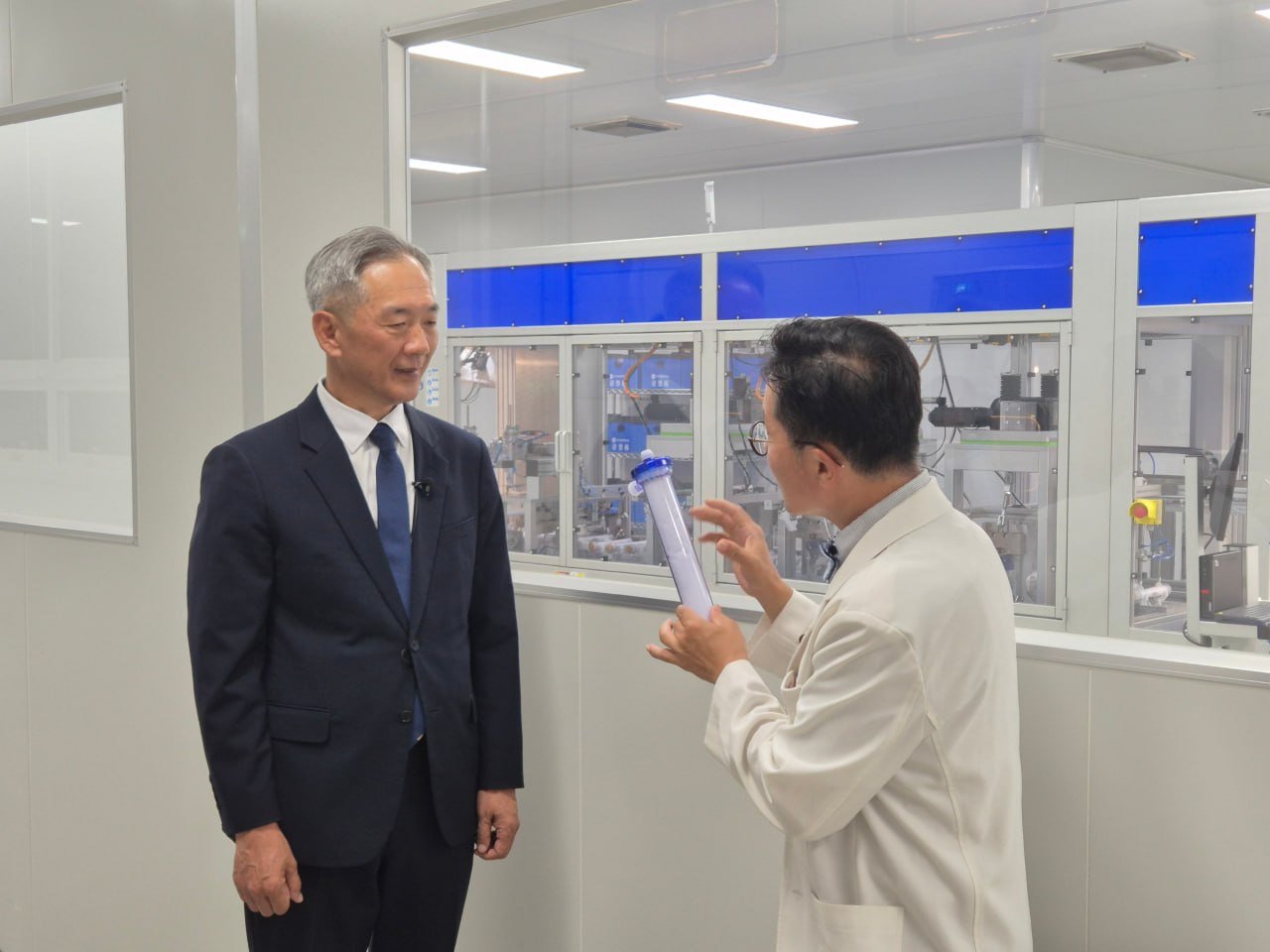
At the Sinopharm business site in Dongtan, Hwaseong, Gyeonggi Province, Kang Chang-ho, head of division at Sinopharm (left), explains the hemodialysis filter held by this newspaper’s reporter. Sinopharm, which possesses unrivaled filter production technology in Korea, has succeeded in localizing hemodialysis filters that previously depended entirely on imports and is now accelerating its entry into overseas markets. Provided by Sinopharm.
Medical News Editor and Physician Lee Jin-han
The Sinopharm business site located in Hwaseong, Gyeonggi Province. Here, robotic arms instead of humans produce filters used for hemodialysis through advanced processes. Until now, Korea had relied entirely on imports for hemodialysis filters, but Sinopharm has succeeded in localizing the filters by applying its industrial filter technology accumulated over more than 40 years to the bio and medical sectors.
The company is now recognized for its technological capabilities to the extent that it stands shoulder to shoulder with leading global players. Sinopharm recently obtained approval from the Ministry of Food and Drug Safety for a hemodialysis machine (artificial kidney HD) developed with purely domestic technology and is preparing for full-scale launch. This is the first such case in Korea. The newspaper met with Head of Division Kang Chang-ho, who oversees sales and marketing, to hear about Korea’s filter technology and the current status of hemodialysis medical devices.
―What kind of company is Sinopharm? “It started as an information technology (IT) component company and has grown into an eco-friendly bio-technology company that leads the localization of semiconductor materials and equipment as well as medical devices. It also manufactures semiconductor packages (PBA), which are core components used in smartphones. In addition, the company has Korea’s unrivaled filter technology required to produce ultra-purified water used by leading domestic semiconductor manufacturers. Based on this filter technology, we have expanded into the blood filtration filter business for hemodialysis machines to create a new growth engine for the company.”
―What products are mainly produced at this plant? “This plant produces the hemodialysis filter, called a ‘dialyzer,’ which forms the basis of hemodialysis treatment. When kidney function is lost, waste products in the body can no longer be filtered out naturally and accumulate in the body. We manufacture the core filter device that artificially removes these waste products.”
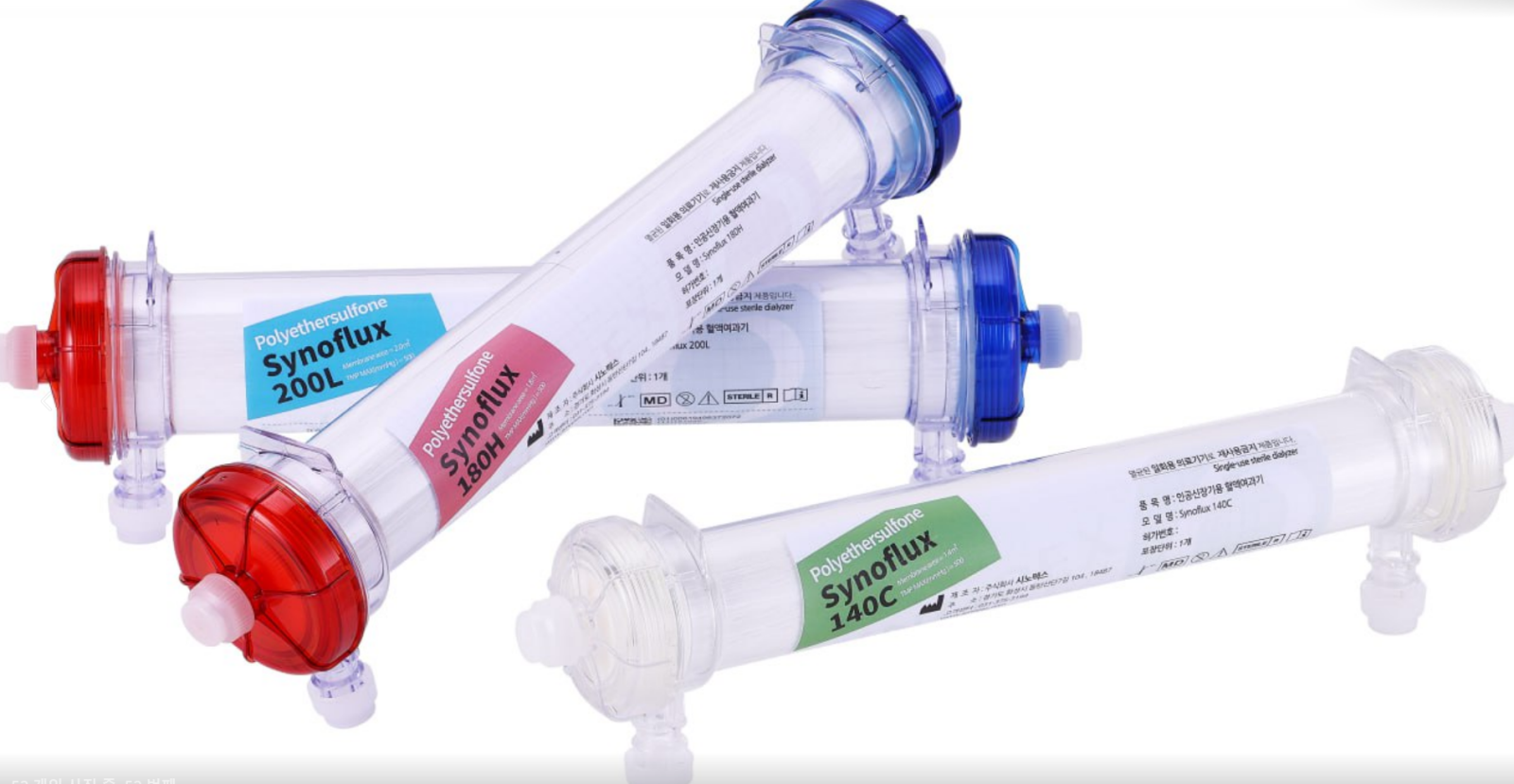
Sinopharm’s hemodialysis filter made with domestic technology. Inside the filter are fine tubes that remove waste products from the blood.
―Looking inside the filter, it contains countless thin thread-like lines. “The thread-like components are hollow fiber tubes. Each product contains more than 10,000 tubes. The patient’s blood flows through the hollow center of each tube, while ultra-purified water from the purification system flows along the outside of the tubes. By the principles of osmosis and diffusion, waste products in the blood move out into the water.”
―What feedback has there been from actual clinical use? “There is a recent case heard directly from a professor at a university hospital. There was a patient who experienced persistent hypotension during dialysis and complained of restless legs syndrome, which caused difficulty sleeping. After our filter was used for about one month in this patient’s treatment, the symptoms reportedly improved markedly. This is because the filter efficiently removes middle-molecule waste products such as ‘beta-2 microglobulin,’ which are difficult to eliminate with conventional filters. When middle-molecule substances accumulate in the body, they can cause bone and joint pain and restless legs, and it appears that effectively filtering these substances has improved the patient’s quality of life.”
―How does it differ from overseas products? “There are three main points. First, the excellence of the material. While 70% of the domestic market uses polysulfone, we use ‘polyethersulfone (PES),’ whose hydrophilicity has been greatly enhanced. Because it combines well with blood, which is mostly water, the efficiency of waste filtration is higher. Second, we have sophisticated membrane thin-film technology and cross-section cutting technology. The tube walls are made thin to facilitate waste transfer, yet are designed to withstand pressure. By cutting the cross-section uniformly and firmly, we also minimize blood coagulation reactions. Third, our ‘spacer yarn’ technology. By inserting a special material into every 30 tubes, we prevent the tubes from clumping together and ensure a stable space for waste products to exit.”
―Has performance and academic value also been verified? “Clinical trials were conducted at five major university hospitals in Korea, including Seoul National University Hospital, comparing our products with existing German imports. The results confirmed the superior removal rate of middle-molecule substances by our products, and the findings were published in an international journal indexed in the Science Citation Index (SCI).”
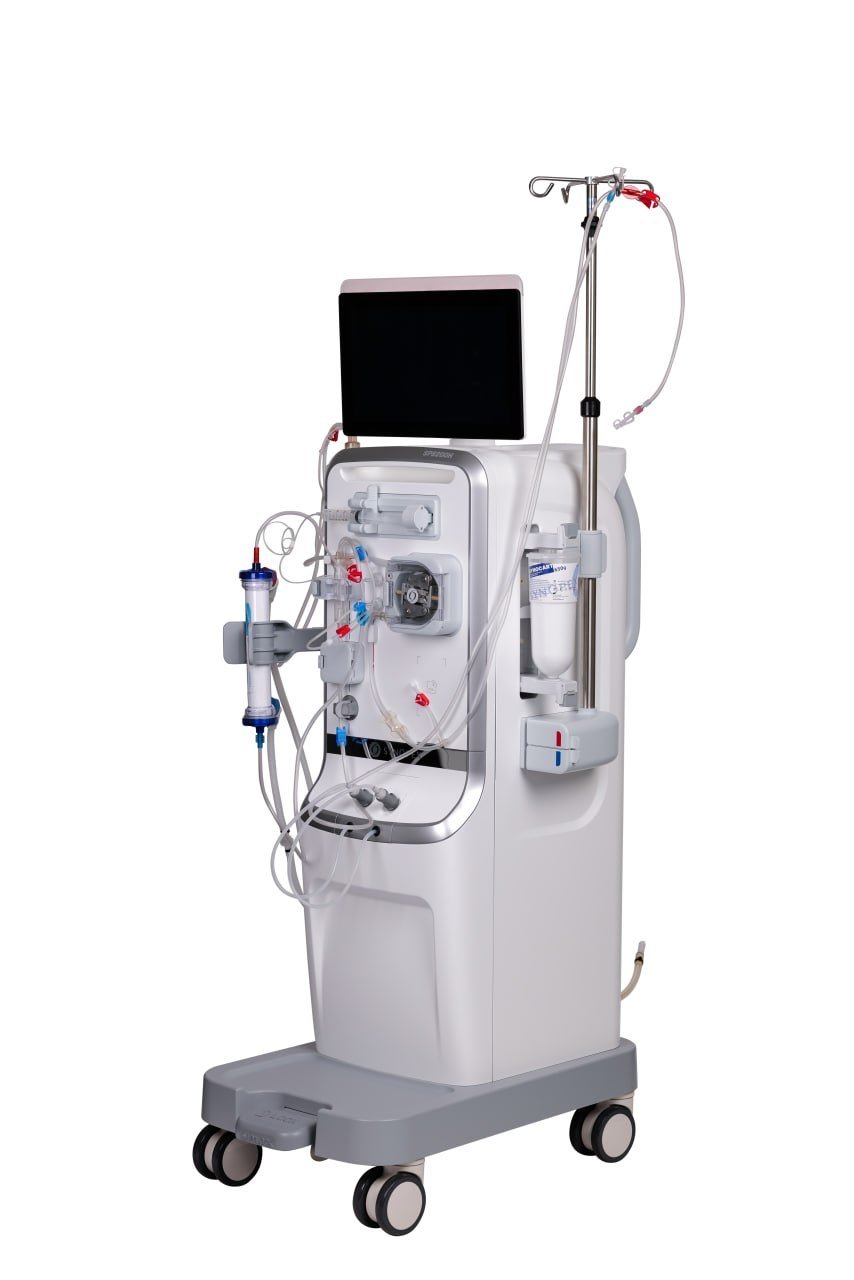
―In addition to the filter, the hemodialysis machine and water purification system are also important. “Hemodialysis treatment requires the perfect integration of three elements: the filter, the hemodialysis machine, and the personal reverse osmosis (RO) water purification system. The dialysis machine continuously monitors pressure and status in real time so that patients can receive treatment safely and comfortably during dialysis. The water purification system produces the ultra-purified water needed for diffusion of waste products.”
A purely domestically produced artificial kidney device (HD), recently approved for the first time in Korea by the Ministry of Food and Drug Safety.
―What are the unique features of Sinopharm’s water purification system (PRO 800)? “It is a product that integrates the water treatment technology the company has accumulated over 40 years. To overcome the limitations of existing imported equipment, it was developed by incorporating feedback from actual medical staff. A representative feature is the eco-friendly ‘eco mode’ function. This technology drastically reduces the volume of wastewater discarded during non-operating times such as dialysis standby or disinfection, and it has recently attracted significant attention in the medical community, with related findings presented at the Korean Society of Nephrology.”
―What are the plans for future entry into global markets? “In April this year, we successfully completed our first export to Morocco and are in discussions with several countries regarding supply. In particular, we are preparing to enter Europe and the United States, which can be considered the home ground of dialysis. The European Conformity (CE) certification process is in its final stages, and once obtained, we plan to launch a full-scale drive into global markets.”
ⓒ dongA.com. All rights reserved. Reproduction, redistribution, or use for AI training prohibited.
Popular News










 About Dong-A Ilbo