K-Beauty Competitiveness | The Power of Ingredient Technology
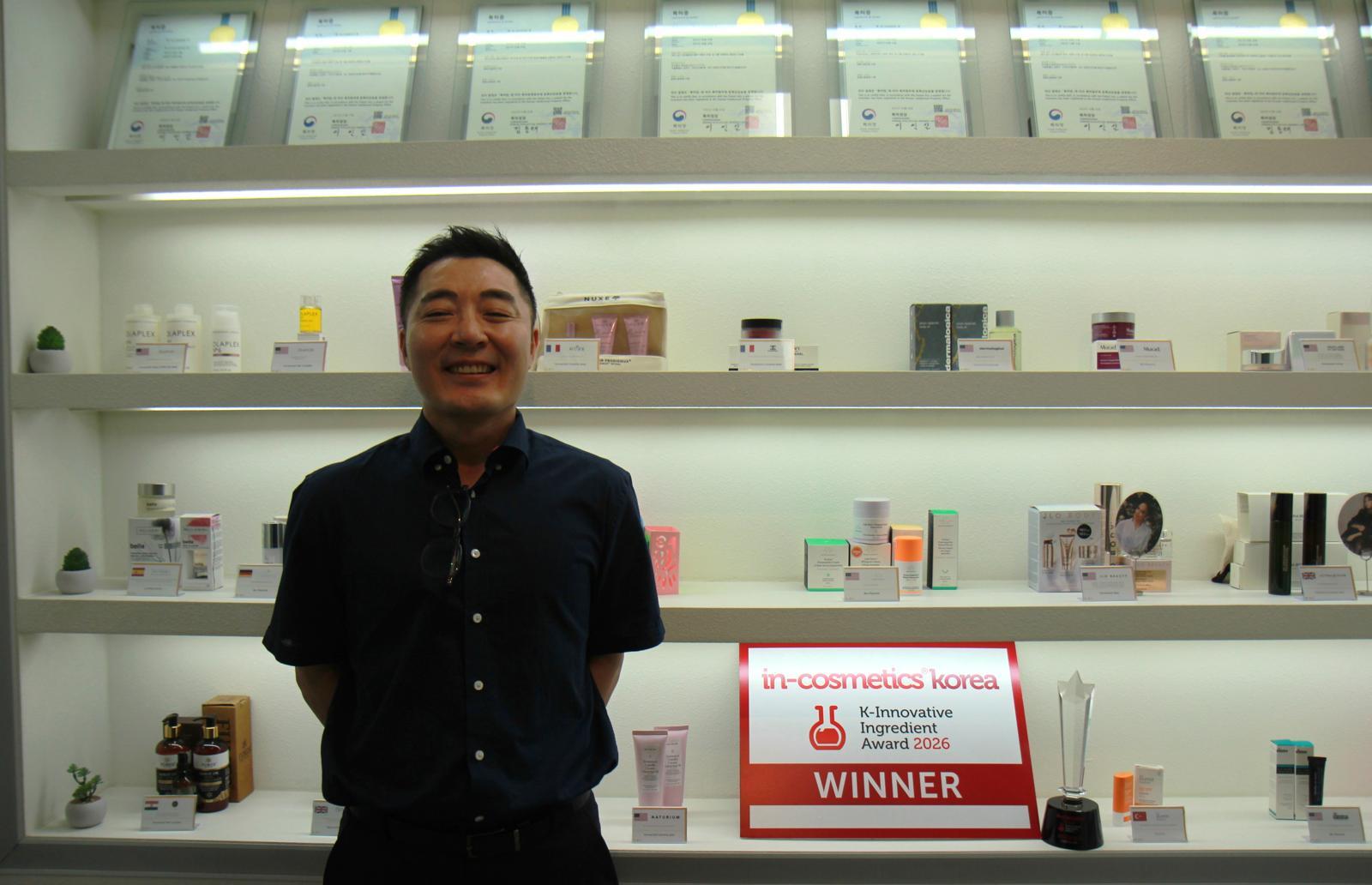
Ravio Director Kang Sang-min stands in front of products formulated with the company’s ingredients and a display of awards related to its raw materials. Hwang Soo-young, Reporter
K-beauty exports are reaching all-time highs, and as the sector expands, industry attention is shifting from finished products to cosmetic ingredients and manufacturing technologies.
Domestic ingredient companies, which had previously attracted relatively little attention compared with finished-product brands, are also increasing their presence in global markets. As more consumers select cosmetics based on ingredients and demand grows for eco-friendly and vegan raw materials, companies are emerging that are targeting overseas markets by leveraging Korea’s unique plant resources and differentiated manufacturing technologies.
Korean cosmetic ingredient company Ravio is one of the firms drawing attention amid this trend. Ravio received the newly established “K-Innovative Ingredient Award” at “in-cosmetics Korea 2026,” a trade show specializing in cosmetic raw materials held this year.
in-cosmetics Korea is the only domestic trade show dedicated to personal care ingredients, organized by global exhibition company RX. It is regarded as an event where domestic and international ingredient companies, as well as cosmetics research and development (R&D) and manufacturing professionals, showcase the latest ingredients and technologies.
The K-Innovative Ingredient Award won by Ravio is presented to the Korean company’s ingredient that receives the highest evaluation among those exhibited in the show’s Innovation Zone. This year’s winning entry, “BIO-Placenta Target,” was developed based on Ravio’s core fermented oil technology.
● From Taean oil spill research to cosmetic ingredientsThe starting point for the fermented oil technology was environmental research, not cosmetics.
Ravio focused on oil-degrading microorganisms during eco-friendly pollution remediation studies conducted after the Taean oil spill in 2007. During the research process, the company confirmed that the metabolites produced by these microorganisms reduce the surface tension of oil, and subsequently developed this finding into a cosmetic ingredient technology.
According to the company, this technology uses microbial fermentation to maintain the inherent properties of naturally derived oils while enhancing spreadability and absorption. A key feature is that it can improve the sensory feel of products without using silicones.
Ravio currently exports cosmetic ingredients to 35 countries worldwide. Last year, the company recorded sales of KRW 16 billion and has maintained an average annual growth rate of 15–20% over the past five years.
● Data on ingredients is key to overseas market entry
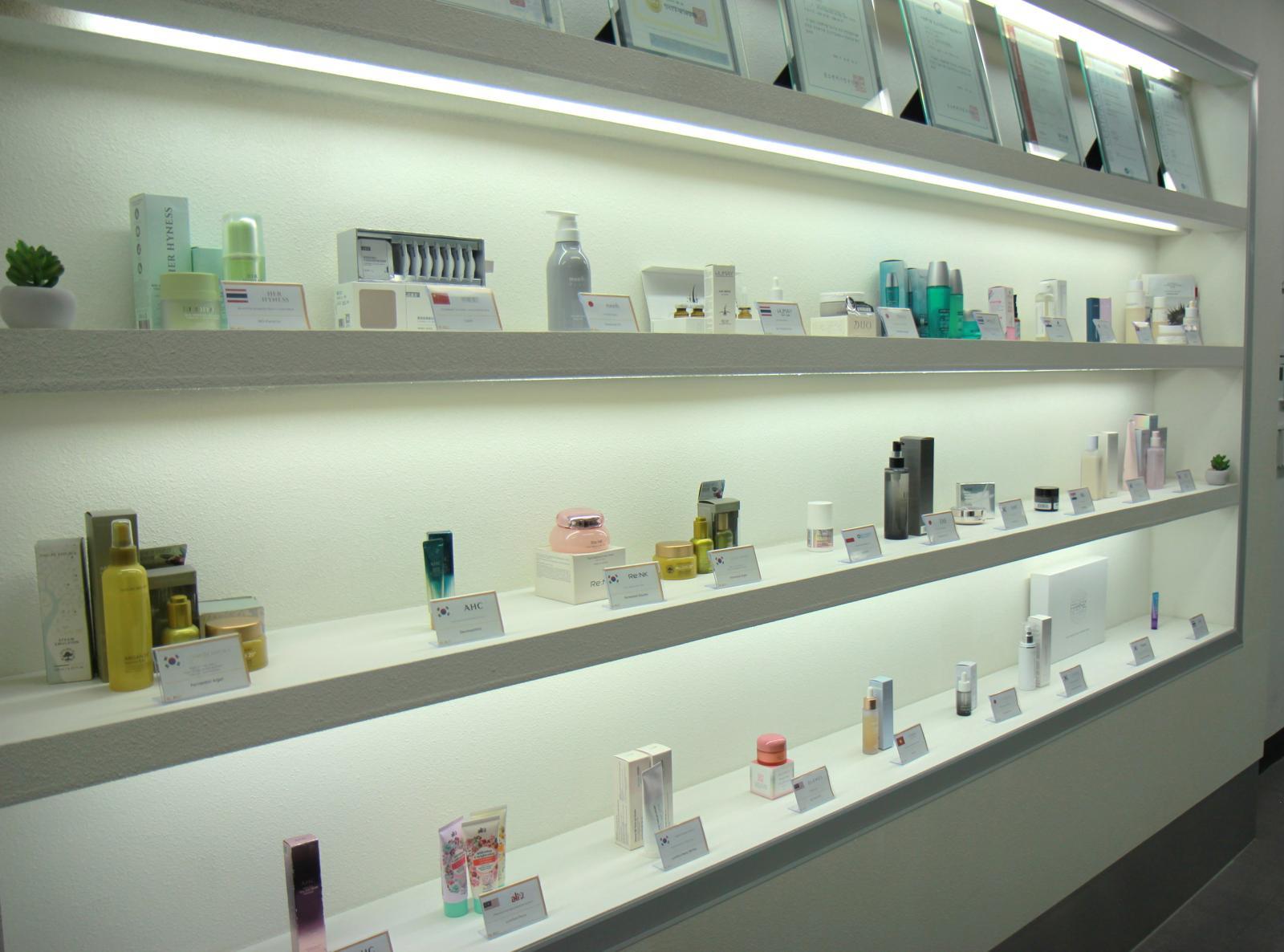
Products from European cosmetic brands formulated with Ravio’s fermented oils are on display. Hwang Soo-young, Reporter
However, in overseas markets, developing excellent ingredients alone is not enough to secure competitiveness. Data and certifications that can objectively verify ingredient safety, production processes, and quality control systems are also required.
“In the European market, there is long-term verification not only of the ingredient composition but also of safety data, environmental compatibility, production processes, and quality management systems,” Director Kang Sang-min of Ravio said. “To do business with global brands, it is necessary to have not only R&D capabilities but also data and certification systems accumulated over a long period.”
He added, “If the domestic ingredient industry is to move beyond the Chinese and Southeast Asian markets into global markets such as Europe and the United States, it will be crucial to have R&D capabilities that can meet these standards.”
Products from Asian cosmetic brands formulated with Ravio’s fermented oils are on display. Hwang Soo-young, Reporter
● K-beauty competitiveness shifting from finished products to ingredientsAs K-beauty grows abroad, differentiation at the ingredient level is also emerging as a key competitive factor. Market research firm NIQ (NielsenIQ) cited differentiated ingredients such as snail mucin and fermented extracts, competitive prices, and collaborations with TikTok Shop and creators as major drivers behind K-beauty’s growth in the U.S. market.
“Korea is not traditionally a powerhouse in basic chemicals, but it has the strength of rapidly translating the textures and trends that consumers want into products,” Kang said. “Going forward, in addition to such planning capabilities, ingredient companies also need to accumulate data and R&D capabilities that meet global standards.”
The case of research that began as an environmental cleanup effort after the Taean oil spill and evolved into cosmetic ingredient technology demonstrates that basic research can expand into unexpected industries. As K-beauty’s competitiveness extends beyond finished products to ingredients and R&D, the role of domestic ingredient companies is also growing.
ⓒ dongA.com. All rights reserved. Reproduction, redistribution, or use for AI training prohibited.
Popular News










 About Dong-A Ilbo