Enzyme-based health supplements compete on ‘absorption rate’ Hit products with cumulative sales of KRW 510 billion Upgrading functional completeness of products Improving efficiency in manufacturing and storage processes
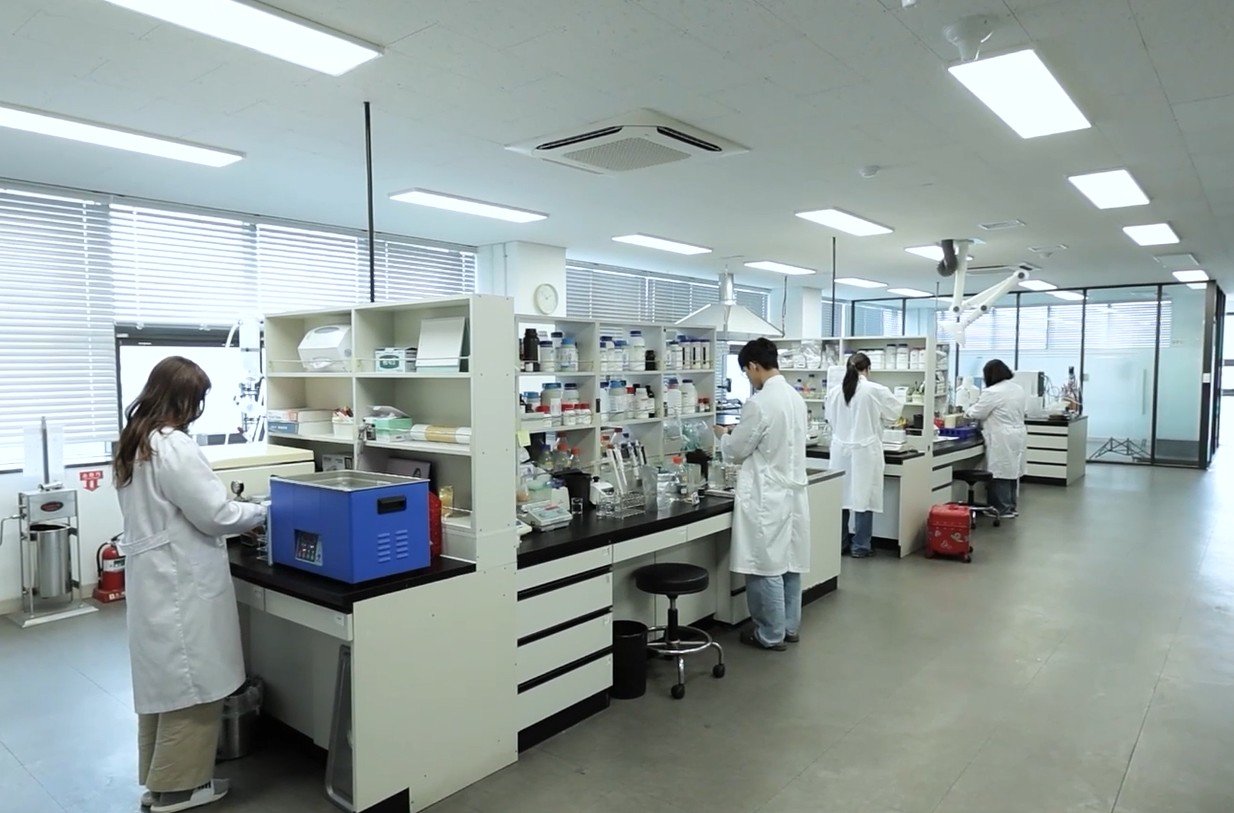
Grain On Ancient Grains Materialization Research Institute. Provided by Grain On
The center of gravity in the domestic health functional food and enzyme market is shifting from simple raw material content and marketing competition to “technologies that control in vivo absorption rates and safety of ingredients.” Conventional enzyme products have had formulation engineering limitations in which, during passage through the stomach after ingestion, a substantial portion of the active ingredients is destroyed by strong gastric acid and digestive enzymes, reducing the bioavailability that actually reaches the intestines, where absorption occurs.
Against this backdrop, Grain On Co., Ltd. has achieved a technological improvement by completing patent registration for its proprietary “acid-resistant microencapsulation technology” that enhances enzyme survival in the body. To date, Grain On has sold a cumulative 680 million sachets and recorded cumulative sales of KRW 510 billion, securing a solid position in the market by winning the “Consumer Satisfaction Brand Award” for three consecutive years. The company plans to use this patent to further raise the functional completeness of its products.
The newly registered patent is for a “method for producing acid-resistant microencapsulated powder of fermented emmer wheat (farro) ancient grain mixture.” The core is to enhance acid resistance and enzyme stability by overcoming the physical and chemical limitations in which enzyme foods are denatured by gastric acid before they reach the intestines.
The main engineering technology applied is precision encapsulation using “fluidized bed coating.” A sophisticated fermentation process was conducted using two strains: Aspergillus oryzae and Bacillus licheniformis. This microcapsule layer is designed to form a protective barrier in highly acidic environments such as gastric acid (pH 1.2–2.0) to protect the internal enzymes, and then release the enzymes once they reach the intestines.
Meaningful results were confirmed in acid-resistance tests conducted in a pH 1.2 environment similar to gastric acid. In strong acidic conditions, general enzyme powder without coating treatment showed a significant reduction in the activity of key digestive enzymes amylase and protease. In contrast, the powder produced using Grain On’s acid-resistant microencapsulation technology maintained higher activity under the same conditions, recording superior values compared with uncoated enzymes.
This encapsulation technology not only improves the rate at which enzymes are delivered to the intestines, but also enhances industrial efficiency in the processes of product manufacturing and storage. The encapsulated powder has uniform particle size and excellent fluidity, allowing it to be applied smoothly to various types of food processing. In addition, by reducing environmental influences such as exposure to light, moisture, and air, it minimizes declines in enzyme activity (potency) that may occur during distribution and secures high storage stability.
A Grain On representative stated, “The essence of enzyme products lies not in the reputation of the raw materials, but in the technological mechanism of ‘how many active enzymes can withstand gastric acid and reach the intestines,’” and added, “By securing this patented acid-resistant microencapsulation process, we will continue to build solid technological competitiveness in the high-functionality, customized food ingredient market.”
Kim In-gyu
AI-translated with ChatGPT. Provided as is; original Korean text prevails.
ⓒ dongA.com. All rights reserved. Reproduction, redistribution, or use for AI training prohibited.










 About Dong-A Ilbo