Enhancing PEM water electrolysis electrode durability through interfacial stabilization technology
Findings published in the international journal Nature Communications
Complementing the drawbacks of conventional alkaline water electrolysis
Expected to cut CAPEX and OPEX by reducing the use of expensive metals
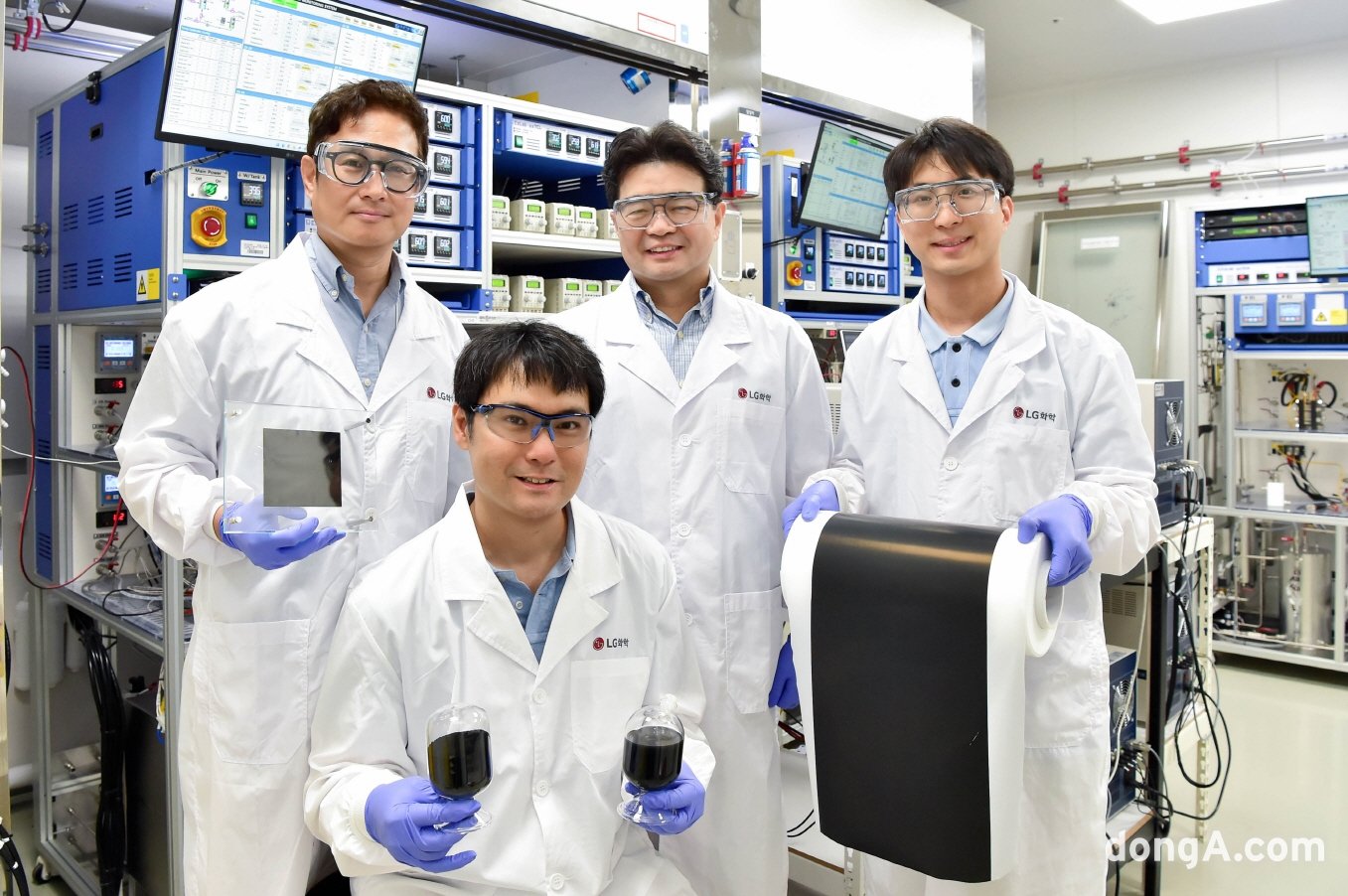
LG Chem researchers who developed interfacial stabilization catalyst technology for water electrolysis, a core element in green hydrogen production, pose for a commemorative photo. (From left) Senior Principal Researcher Kim Ki-hwan (membrane electrode assembly), Principal Researcher Kim Eu-tae (catalyst and electrode coating ink), Executive Director Kim Noma (co-author of the paper), and Principal Researcher Son Ho-yeon (electrode). Provided by LG Chem
LG Chem has developed polymer electrolyte membrane (PEM) water electrolysis electrode technology that enables long-term stable hydrogen production even with a small amount of iridium (Ir). This is assessed as increasing the commercialization potential of next-generation green hydrogen production materials.
LG Chem announced on the 26th that a research team at its Basic Materials & Fundamental Technology Research Institute under the CTO organization has developed an interfacial stabilization technology that dramatically improves the performance and durability of PEM water electrolysis electrodes.
The research team led by Senior Researcher Ko Jae-hyun at the Korea Institute of Science and Technology (KIST) participated in elucidating the operating mechanism of the developed material. The research results were published on the 21st in the international journal Nature Communications (paper title: Dual-interface stabilization of low-iridium anodes for durable proton exchange membrane water electrolysis; co-author: LG Chem Executive Director Kim Noma; first author: LG Chem Principal Researcher Kim Eu-tae; corresponding authors: LG Chem Senior Principal Researcher Kim Ki-hwan and KIST Senior Researcher Ko Jae-hyun).
Green hydrogen is a key energy source for realizing a decarbonized society and is produced by decomposing water using electricity generated from renewable energy. Environmentally friendly water electrolysis technologies that make this possible are drawing attention. In particular, PEM water electrolysis is regarded as a next-generation green hydrogen production technology due to its higher hydrogen productivity and superior response to output fluctuations compared with alkaline water electrolysis.
Alkaline water electrolysis decomposes water into hydrogen and oxygen by passing electricity through an alkaline aqueous solution such as potassium hydroxide (KOH) or sodium hydroxide (NaOH) used as an electrolyte. It is known as the oldest and most widely commercialized green hydrogen production technology. As it uses inexpensive catalysts such as nickel, equipment costs are low and it is advantageous for large-scale green hydrogen production. However, its drawbacks include large equipment size and limited rapid response under conditions where the power supply is unstable, such as from renewable energy sources (wind, solar, etc.).
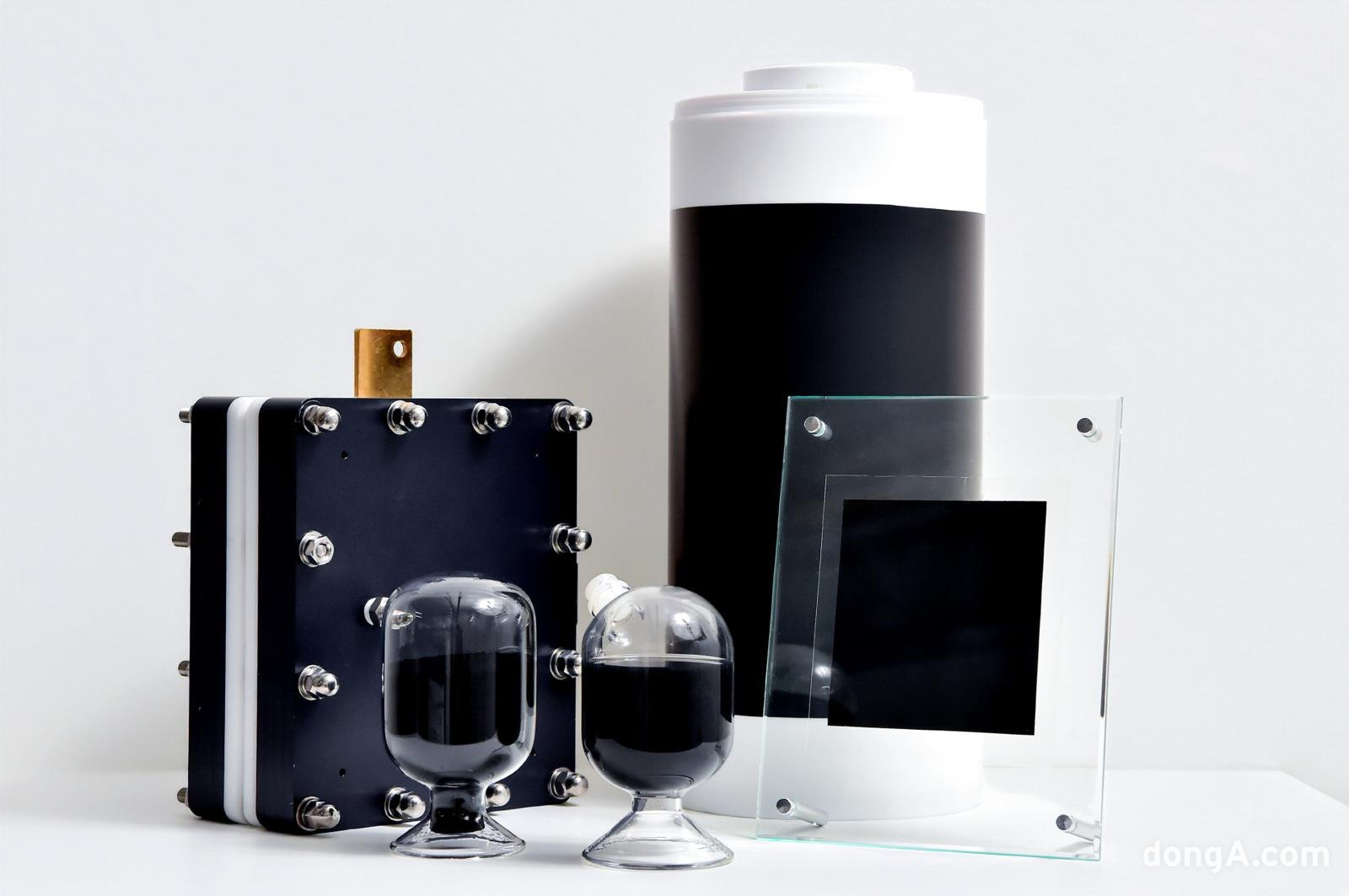
Core LG Chem materials and components for water electrolysis. (From left) Water electrolysis cell, iridium catalyst, electrode, and membrane electrode assembly (MEA). Provided by LG Chem
LG Chem has been pursuing PEM water electrolysis technology development to address these drawbacks of alkaline water electrolysis. In PEM water electrolysis, iridium, an expensive rare metal catalyst, is used on the electrodes, making economic feasibility a key challenge. In particular, when only a small amount of iridium is used on the electrode, catalyst dissolution and electrode structural degradation can occur, leading to performance decline during long-term operation, which in turn shortens equipment replacement cycles and increases operating expenses, cited as the biggest hurdles to commercialization. LG Chem stated that it has resolved these issues through catalyst interfacial stabilization technology. By applying an atomic-level coating layer on the surface of the iridium catalyst, the company suppressed iridium dissolution caused by excessive oxidation while at the same time enhancing the bonding strength with ion-conductive polymers within the electrode, thereby reinforcing electrode structural stability.
As a result, the company reports that it has succeeded in reducing iridium usage by more than half compared with existing levels, while more than doubling the stable hydrogen production time under high current density conditions. It expects this to help reduce both initial capital expenditures and maintenance costs for PEM water electrolysis systems.
In addition, LG Chem has completed the fabrication and performance verification of large-area electrodes using a continuous process based on its proprietary electrode fabrication technology. This has demonstrated the potential for mass production and commercialization of the technology. Co-author of the paper, LG Chem Executive Director Kim Noma (Head of the Basic Materials & Fundamental Technology Research Institute), is currently conducting product evaluations with multiple global water electrolysis system companies. The company plans to continue technology development with the goal of commercializing the electrode products.
LG Chem CTO Executive Director Shim Kyu-seok said, “This research outcome is a case in which LG Chem’s material technology competitiveness has been recognized globally,” adding, “The company will continue to expand a wide range of related R&D efforts to secure competitiveness in next-generation hydrogen production technologies.”
ⓒ dongA.com. All rights reserved. Reproduction, redistribution, or use for AI training prohibited.
Popular News








 About Dong-A Ilbo