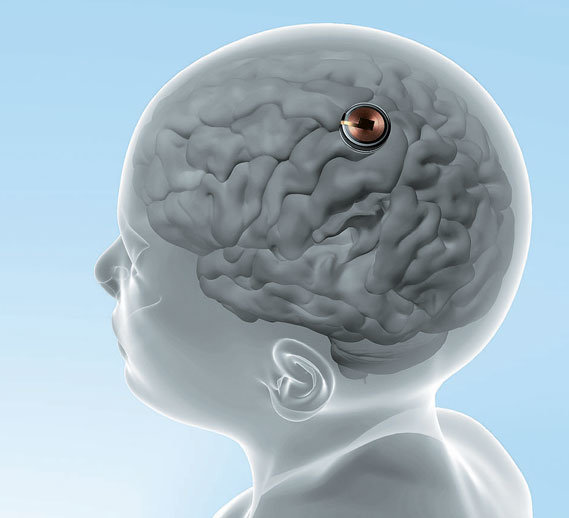
Brain-computer interface (BCI) technology that restores the voice of patients who have lost their speech and revives the sense of touch in patients who have lost sensation has been developed. Getty Image Bank
Brain-computer interface (BCI) technology is showing increasing potential to become a practical tool that patients can use beneficially over long periods in daily life. One BCI technology restores the thoughts of patients who have lost their voice into speech, while another has revived the sense of touch in paralyzed patients, with analysis showing it operated safely for 10 years.
BCI refers to technology that connects the brain and a computer so that the computer reads neural signals generated in the brain and uses them to control a robotic arm, a computer mouse cursor, and other devices, or conversely delivers electrical signals generated by the computer to the brain so that the user can feel sensations or obtain information. Interest has grown further since Neuralink, founded by Elon Musk, disclosed plans for mass production of BCI devices.
● AI-based BCI technology that restores thoughts into voiceOn the 16th (local time), the “AI Award Winners” section of the international academic journal Science introduced a study on “speech neuroprosthesis” by a research team led by Professor Sergey Stavisky of the Department of Neurological Surgery at the University of California, Davis (UC Davis). The team’s work on speech neuroprosthesis, a BCI technology that converts brain neural activity into sentences and speech in real time, has been selected as the 2026 winner of the “Tianqiao & Chrissy Chen Institute–Science AI Accelerator Award.”
The Tianqiao & Chrissy Chen Institute–Science AI Accelerator Award is given by the American Association for the Advancement of Science (AAAS) and the Tianqiao & Chrissy Chen Institute to young researchers who have achieved scientific advances in the field of AI.
The research team developed an AI-based BCI technology that restores in real time the speech of a patient who has lost normal speaking ability due to amyotrophic lateral sclerosis (ALS), a disease in which muscles throughout the body gradually become paralyzed. A 45-year-old ALS patient participating in the clinical trial received implants of 256 microelectrode chips of an invasive BCI in three areas of the cerebral cortex associated with speech production.
When the patient attempted to speak, the neural signals from the brain transmitted to the microelectrode chips were decoded in real time into 39 phonemes (the smallest units of sound) by a deep learning algorithm. An AI language model reconstructed the array of phonemes into words and sentences, and a text-to-speech (TTS) AI system, trained on recordings of the patient’s voice from before the onset of illness, restored the words and sentences in the patient’s own voice.
On the first day the team’s technology was applied, the ALS patient thought of the necessary words from a vocabulary limited to 50 words, and the AI correctly identified the patient’s intended words with an accuracy of 99.6%. On the second day, even after the vocabulary was greatly expanded to 125,000 words, the system still achieved an accuracy of 90.2%. With repeated training, the AI’s accuracy eventually reached 97.5%.
The time from when the patient formed a thought to when it was output through a speaker was only 30 ms (milliseconds). The patient was able to converse naturally with family members, control a computer to conduct video conferences and write documents, and even start working full time as an activist for a civic organization.
The research team stated, “Advances in AI have made it possible to decode increasingly complex brain signals,” adding, “This brings us one step closer to creating high-performance, sophisticated voices that are indistinguishable from a real human voice.”
● ‘Brain chip’ durability confirmed over 10 years… Long-term safety of BCI demonstratedThe long-term safety of BCI technology that enables spinal cord injury patients without hand sensation to feel touch has also been demonstrated. A research team led by Professor Robert Gaunt of the Department of Physical Medicine and Rehabilitation at the University of Pittsburgh developed a BCI technology that allows patients to feel sensations when moving a robotic hand by implanting microelectrode chips in brain regions associated with hand sensation in patients with limb paralysis due to spinal cord injury, and on the 15th (local time) published findings on its safety and effectiveness in the international journal Science Translational Medicine.
Five adult male patients who had sustained spinal cord injuries in accidents participated in the study. The team implanted microelectrode chips in the areas of the cerebral cortex responsible for hand sensation and developed a “microstimulation technique” that induces tactile sensation by delivering fine electrical stimulation to the patients’ brains.
Each patient lived with the microelectrode chips implanted for 3 to 10 years. Over time, the tactile sensations—such as pricking or pressing—that occurred when moving the robotic hand continued to be maintained. The locations where sensations arose were also found to change very little.
Safety was also demonstrated. Examination of the microelectrode chips implanted in the patients’ heads revealed no signs of damage. The patients’ brains likewise showed no injury. No serious adverse events such as brain infection, cerebral hemorrhage, or seizures were observed.
There were cases of side effects in which the sensation persisted for several seconds even after the electrical stimulation ended. However, such cases were rare, occurring about once in every 23,000 stimulations. The duration of the persistent sensation was short, at less than 10 seconds.
The research team commented, “It has been proven that technology that restores sensation by implanting chips in the brain remains safe and practical even after 10 years,” adding, “This suggests that BCI can improve the quality of life of patients with impairments.”
ⓒ dongA.com. All rights reserved. Reproduction, redistribution, or use for AI training prohibited.
Popular News










 About Dong-A Ilbo