[Towards a 100-Year Company] Sooil Development Co., Ltd.
‘K-medical devices’ used in over 60 countries… now moving into AI artificial pancreas
Approved by FDA, CE, and NMPA… technology recognized first by global markets
Secured approval for ‘nighttime hypoglycemia prevention’ technology… unveiling next-generation insulin delivery system
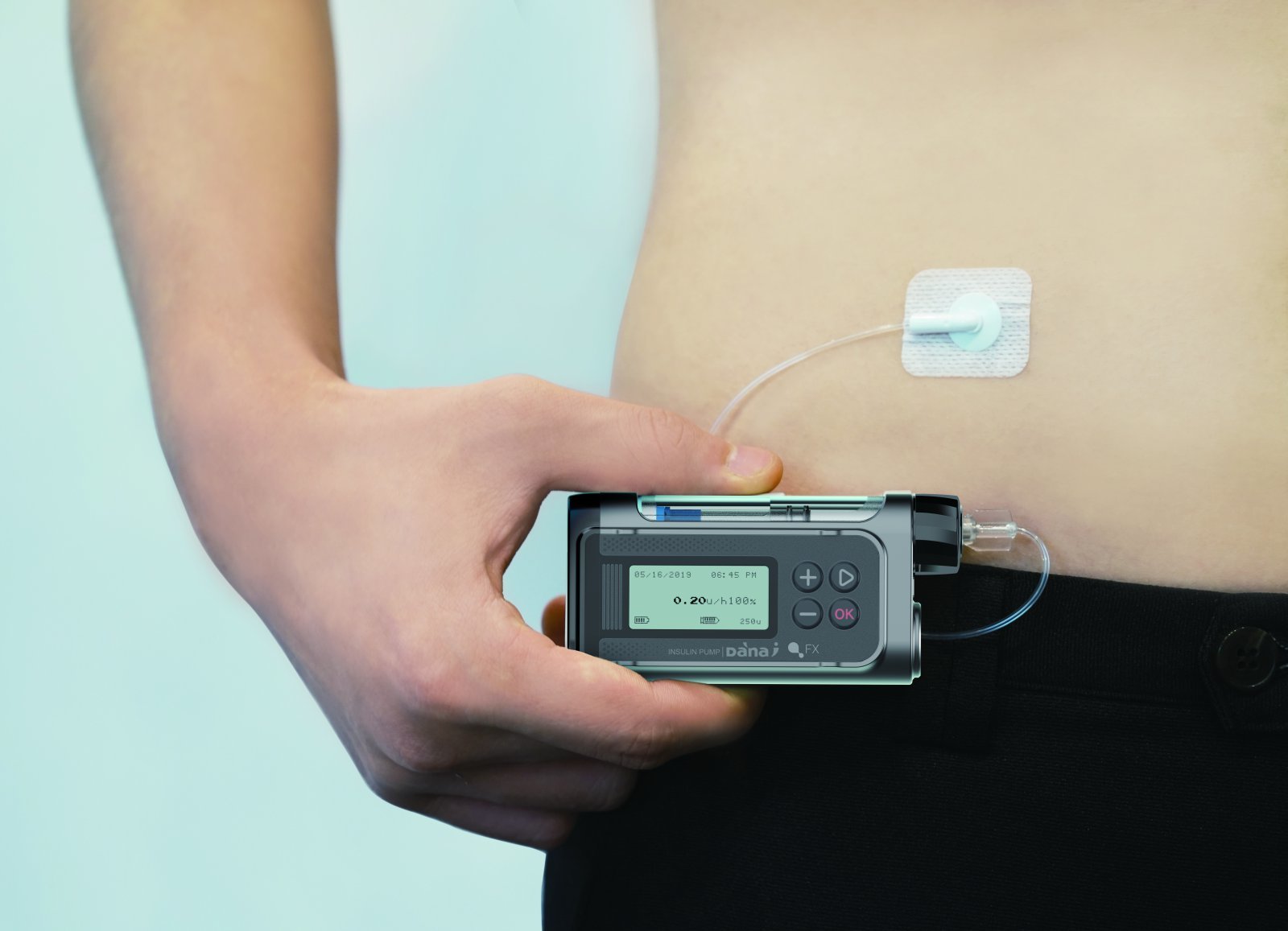
Wearing of Sooil Development’s insulin pump “Dana-i.” Provided by Sooil Development
Diabetes is no longer someone else’s story. The international medical community views more than 10% of the world’s adult population as living with diabetes, and that number is rising steeply. In Korea as well, amid a Westernized diet and rapid aging, diabetes has long established itself as the most common chronic disease. It is not unusual to see a scene where a child opens a newspaper, says “I should tell my parents about this,” and clips an article for them.
The issue is not the numbers but “how to overcome” the disease. For patients who receive injections several times a day and live with fear of complications, the treatment method directly determines quality of life. Accordingly, the global center of gravity in diabetes treatment is rapidly shifting away from oral medication and fixed-dose injections toward physiologic insulin delivery that mimics the body’s pancreas.
The American Diabetes Association (ADA) has begun officially recommending the use of insulin pumps even for patients with type 2 diabetes, and as researchers at the University of Cambridge in the UK have clinically verified their effectiveness, the global insulin pump market is opening in earnest. Academia warns that by 2050 the number of people with diabetes in Korea could reach twice the current level.
With the addition of artificial intelligence (AI), diabetes treatment has entered an entirely new era. At the center of this large-scale transition stands a Korean company that, 47 years ago, became the world’s first to commercialize a portable insulin pump. That company is Sooil Development Co., founded by Professor Emeritus Choi Soo-bong of Konkuk University School of Medicine.
“Patients, not business” … An unwavering pathWhen Professor Choi first commercialized the portable insulin pump in 1979, the domestic medical community reacted coldly. He was dogged by the dismissive view that “doctors should not be making machines.” Research funding was always insufficient, and failures were countless. Nevertheless, one thing held him fast: his patients. Watching people who spent their lives battling blood glucose levels and who, terrified of diabetic complications, could not even eat properly, he resolved to develop a treatment method that came as close as possible to the human pancreas. His research began not for business, but for treatment.
He still remembers certain faces he can never forget: a patient whose blood glucose stabilized and who finally went on a long-postponed trip, and a child who, after being connected to an insulin pump, could at last run freely with friends. At such moments, he says, he repeatedly confirmed that the true value of medical devices is not in numbers but in changing the life of an individual person.
The first to recognize this new-concept medical technology, which had been neglected in Korea, were overseas institutions. Ralph DeFronzo, a leading authority in American diabetology and a distinguished professor at the University of Texas Health Science Center, highly evaluated Choi’s doctoral dissertation and invited him to Texas. Choi says this taught him that research with genuine value will be recognized across borders.
He sees himself not as an entrepreneur but as a physician and researcher: a doctor who discovers patients’ problems, a researcher who digs into underlying causes, and an entrepreneur who delivers solutions to more patients. For him, these three are not separate paths but one path that converges on a single point: the patient. Even when everyone around him said his goals were impossible, his family believed in his convictions and raised him back up whenever he faltered. He remains deeply grateful to his wife, CEO Yeom Yoon-hee, who has quietly endured with him for nearly half a century. The company’s mission, “bringing joy to people with diabetes,” is not a mere slogan for him but the core value he has pursued throughout his life.
Replacing the pancreas every four minutes … A device modeled on the patient’s bodyWhat makes an insulin pump different? A healthy pancreas secretes insulin around the clock as needed, whereas in patients with diabetes that function has collapsed. If oral medications rely on residual pancreatic function and injections consist of administering a fixed dose once or twice a day, an insulin pump delivers insulin automatically every four minutes through a subcutaneously attached needle about 0.5 cm long. By finely adjusting the amount according to meals, exercise, and daily patterns, the system operates in a way closest to the actual pancreas, Professor Choi explains.
Sooil Development has gone a step further by developing a dedicated pump tailored to the Korean type of diabetes, which is characterized by smaller body frames and marked weight loss. The key was found not at a desk but in the examination room. His conviction is that only by meeting patients directly can one understand what they find inconvenient and what they fear.
“Medical device development cannot exist apart from patients.” This, he says, is why he has remained in the clinic for nearly half a century.
The technology continues to evolve. In January, AnyDANA Plus, equipped with a predictive low-glucose suspend (PLGS) system that halts insulin infusion based on hypoglycemia prediction, received approval from the Ministry of Food and Drug Safety. It is a technology that prevents nocturnal hypoglycemia—which patients fear most—before it occurs, not after. This signifies a transition from an era in which patients made their own judgments to one in which the device predicts and protects first. For children, elderly patients, and others who suffer significant anxiety about nocturnal hypoglycemia, he assesses this as a major improvement in quality of life and an important milestone on the path toward a fully automated artificial pancreas.
Professor Choi calls the insulin pump a “revolution.” He does not conceal the fact that, because it is worn on the body, there is some inconvenience. He says that alleviating that inconvenience is also their responsibility, and that the company is accelerating R&D for products that are thinner, smaller, and more automated. He adds that patient feedback—reporting that pancreatic function improved and health was restored through insulin pump therapy—attests to its effectiveness.
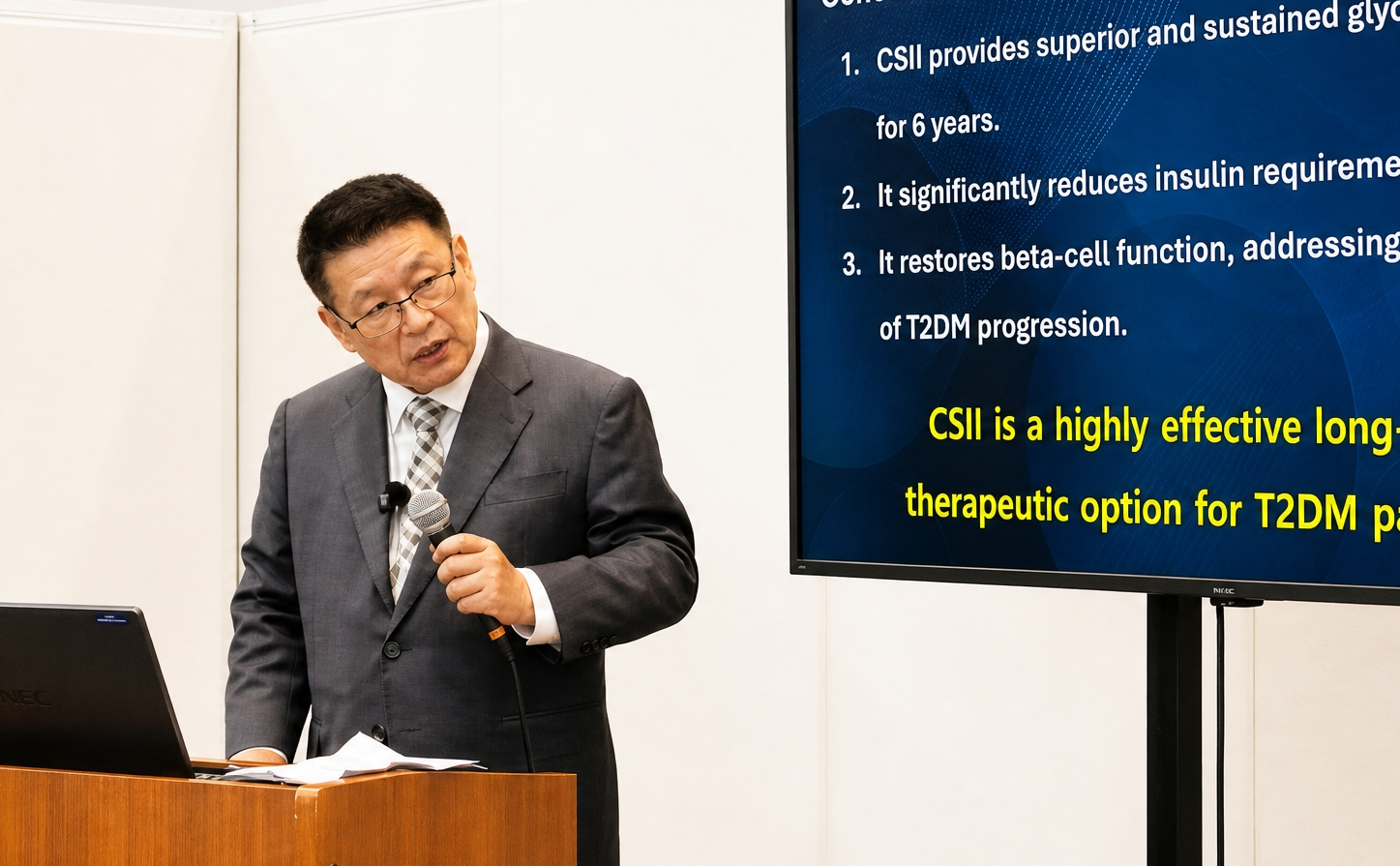
Professor Choi Soo-bong presenting a paper at the 2026 AASD.
Not patents but “depth of understanding patients”What does Sooil Development see as its strongest weapon in competition with global conglomerates? Without hesitation, Professor Choi cites the patient data and clinical experience accumulated over decades. The company does not merely manufacture hardware; it has consistently maintained a virtuous cycle in which physicians provide direct care, conduct research based on the outcomes, and then feed the results back into product development. He is confident that this accumulated data and clinical experience constitute a unique comparative advantage that no one can easily replicate.
The depth of this work is being recognized first by the global academic community. At the 2026 Asian Association for the Study of Diabetes (AASD) conference, held recently in Osaka, Japan, he drew attention with his presentation on “long-term treatment outcomes of insulin pumps in patients with type 2 diabetes,” and his papers have been successively selected for international journals. He has also long maintained academic exchanges with Professor Roman Hovorka at the University of Cambridge, a leading authority on artificial pancreas research. Now that the ADA has officially recommended insulin pump use for patients with type 2 diabetes and Professor Hovorka’s team has been clinically validating its effectiveness since 2025, the path Choi asserted and practiced decades ahead of others is being recognized as the global standard.
The influence extends beyond borders. Patients from around the world, having heard of his reputation, come to Korea for consultations, learn the insulin dosage and usage methods tailored to their own body type, and return home. Some of them are influential figures in their own countries and, wishing to extend the same benefits to domestic patients, personally take on distribution or dealership roles. In this way, an insulin pump that began in Korea is spreading from patient to patient, across the world. In a stringent marketplace where products are evaluated according to actual performance and clinical value rather than nationality or corporate scale, he believes it is ultimately the market that recognizes sincerity.
Over 60 countries, artificial intelligence … K-medical devices expanding globallySooil Development’s insulin pumps are exported not only within Korea but also to more than 60 countries including China and across Europe, with overseas sales accounting for 60% of total revenue. The company has obtained approvals from the U.S. Food and Drug Administration (FDA), European CE, and China’s NMPA. In July last year, it signed a four-year supply contract worth about KRW 30 billion with Medicq, the largest medical device distributor in Europe, based in the Netherlands. Professor Choi regards this not simply as export expansion but as the starting point of entering the realm of “global standards.”
The next stage is artificial intelligence. In partnership with French AI company Diabeloop, Sooil has unveiled a next-generation automated insulin delivery system that combines an AI algorithm with the Dana-i pump. Choi’s son, who previously researched artificial intelligence at Google, recently joined the company to help drive AI-based global expansion. At a time when K-medical, following K-beauty, is attracting attention worldwide, Sooil Development has effectively given wings of AI to its decades of clinical data.
A vast market is also opening up. Recently, three executives from an Indian pharmaceutical company visited Sooil in person to negotiate an export contract. With one-quarter of the world’s diabetes patients living in India, it is a market that cannot be overlooked. The company is also pushing to expand its factory in Yongin to respond to the explosive growth in global demand. Sooil Development, as Professor Choi repeatedly emphasizes, aims to be a global company that does not merely produce hardware but is equipped with data and clinical experience as it expands worldwide.
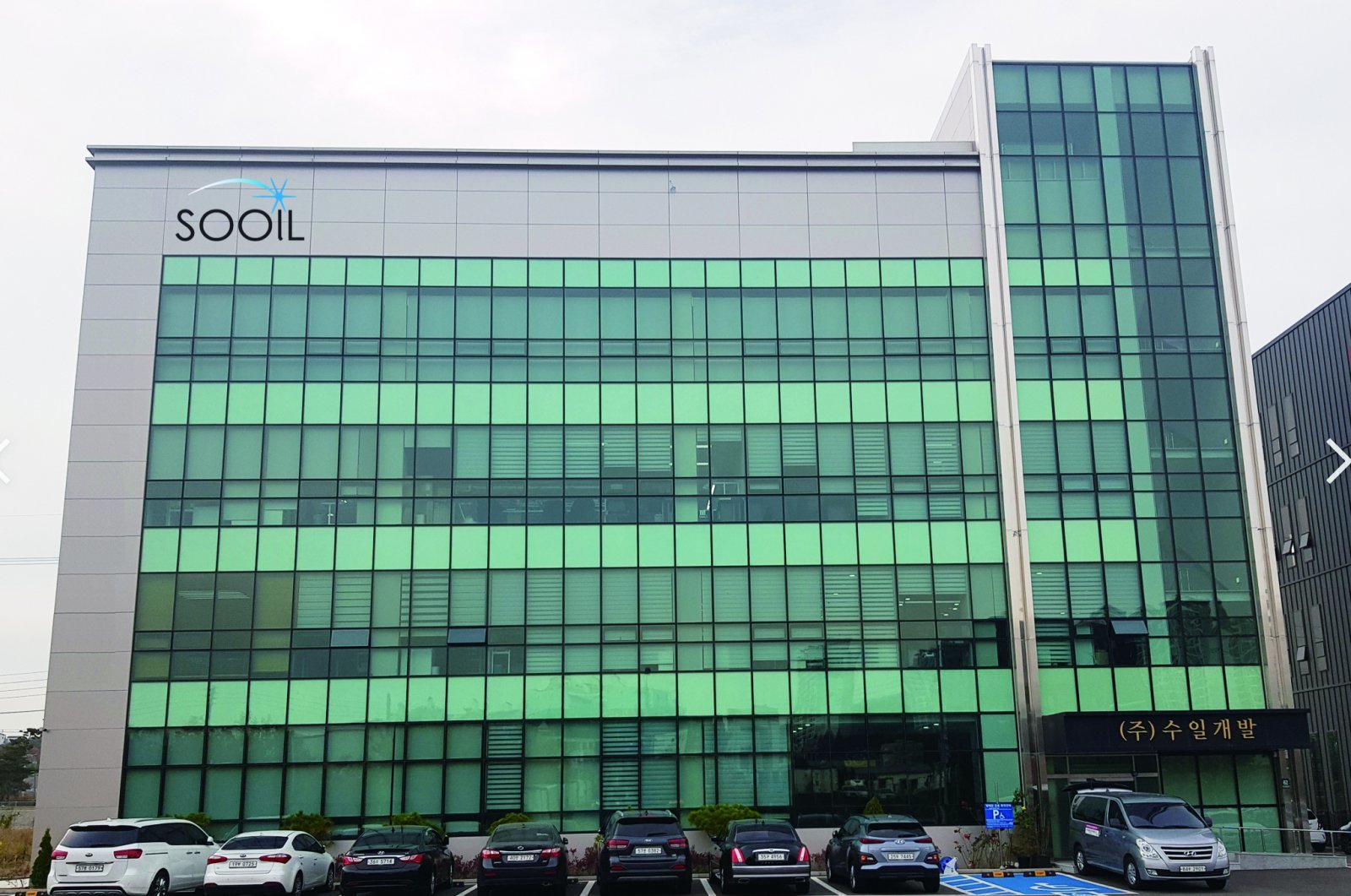
Exterior view of Sooil Development’s headquarters in Yongin, Gyeonggi Province.
“Now it is time to give back the love received”There is one thing Professor Choi refuses to let go of amid the company’s growth: giving back. Earlier this month, he announced expanded support for free insulin pump treatment for severely ill diabetes patients in vulnerable groups. He stresses that corporate success is never achieved alone and has only been possible thanks to the trust of countless patients and the support of society. “Now it is time to return the love we have received.”
His commitment to sharing runs deep. In 2010, there was an Afghan boy with diabetes living in a war zone. Without timely treatment, his life could not be guaranteed. Unable to turn away as a doctor, Choi invited the boy to Korea and began treatment; that relationship has now continued for 16 years. The sharing he has practiced through the in-house volunteer group Shinuhoe and the Insulin Pump Association has also continued for 25 years. “Helping one person may not change the entire world,” he says, “but for that one person, it changes the whole world—and that boy proved it.”
Regarding the decision that, from July 1, pancreatic impairment in patients with type 1 diabetes will be recognized as a legally designated disability category, he notes that “the system is only a starting point.” He adds that it is a company’s responsibility to identify and fill blind spots first. He further emphasizes that perceptions of treatment must change.
Recently, more and more adult children with elderly parents have reportedly found information about insulin pumps and Professor Choi Soo-bong through newspapers or YouTube and recommended them to their parents.
“Some may think an insulin pump is expensive, but once you buy one, you can use it for 10 years. With health insurance coverage, including consumables, the cost is about KRW 1,000 a day—KRW 20,000 to 30,000 per month. If that amount allows parents to eat comfortably and even prevents complications, it is by no means expensive.”
Professor Choi also stresses that wearing an insulin pump helps patients eat sufficiently, which in turn facilitates blood glucose control and even prevents complications.
“There will be no retirement until the day diabetes disappears”
[Interview] Professor Choi Soo-bong, founder of Sooil Development Co.
Chungju in North Chungcheong Province is a city deeply committed to overcoming diabetes, to the extent that it has declared itself a “Diabetes Bio Specialized City.” Every Tuesday and Wednesday, Chungju Intercity Bus Terminal becomes particularly crowded because those are the days when Professor Choi Soo-bong sees patients at Konkuk University Chungju Hospital. On Thursdays, he meets patients at Yangjae Choi Clinic in Dogok-dong, Seoul.
Even now, when most physicians of his generation have stepped back from front-line care, he does not leave the examination room. His expertise has been recognized with appearances on well-known TV programs such as EBS “The Best Doctors” and KBS “Ask Anything.” More recently, he launched a YouTube channel called “Diabetes TV” to broaden communication. “There are limits to how many patients I can meet in the clinic,” he says, “so I strongly hope that accurate information and patients’ stories reach many more people.”
His determination toward clinical practice and research is resolute. “There will be no retirement until the day diabetes disappears.” In his statement that his research and clinical work will not end as long as there are people living with diabetes, there is a firmness that only someone who has remained in the same place for nearly half a century can possess.
The complete form of Sooil Development that he envisions is not defined by sales figures or corporate valuation. He hopes it will be remembered as the company most trusted by people with diabetes, the company that changed the history of diabetes treatment. Having opened the era of portable insulin pump commercialization, he now looks toward the future era of a “fully automated artificial pancreas” combined with artificial intelligence.
The blueprint is already taking shape. In March last year, Professor Choi purchased a site of about 140,000 pyeong (460,000 square meters) in Chowol-eup, Gwangju, Gyeonggi Province. He says he chose the location after considering both accessibility from Seoul and future development potential. His plan is to gradually implement a comprehensive project to build an AI artificial pancreas research complex there.
Under the goal of “turning it into a global hub for K-medical devices,” he aims to systematically establish a “diabetes treatment medical city” by attracting and building a specialized tertiary hospital focused on diabetes treatment, an insulin pump manufacturing facility, and a medical professional training institution all in one place. The half-century that began in the examination room is now expanding into the master plan for an entire city.
When asked how he intends to pass on intangible assets such as clinical experience accumulated over many years and original technologies to the next generation, he replies that “true succession means passing on a mission, not a company.” Only when the answer to the question “Why did we start this work?” is carried forward to the next generation, he says, can a company sustainably exist beyond 100 years.
He also offered words of encouragement to patients battling diabetes. Diabetes, he stresses, is by no means a disease that requires giving up hope, and patients should never feel they are fighting alone. He emphasizes that numerous people, including physicians and researchers, are working together for a better life for those affected.
ⓒ dongA.com. All rights reserved. Reproduction, redistribution, or use for AI training prohibited.
Popular News








 About Dong-A Ilbo