Neurosurgeon Lee Yong-jae on the “golden hour” and treatment of cerebrovascular disease
Rising cases of “young stroke” among people in their 40s and 50s… Don’t dismiss symptoms thinking “sleep will make it better”
Emergency patients seen by a specialist within 30 minutes… Cerebrovascular procedures performed within 1 hour
“Targeted temperature management” reduces complications
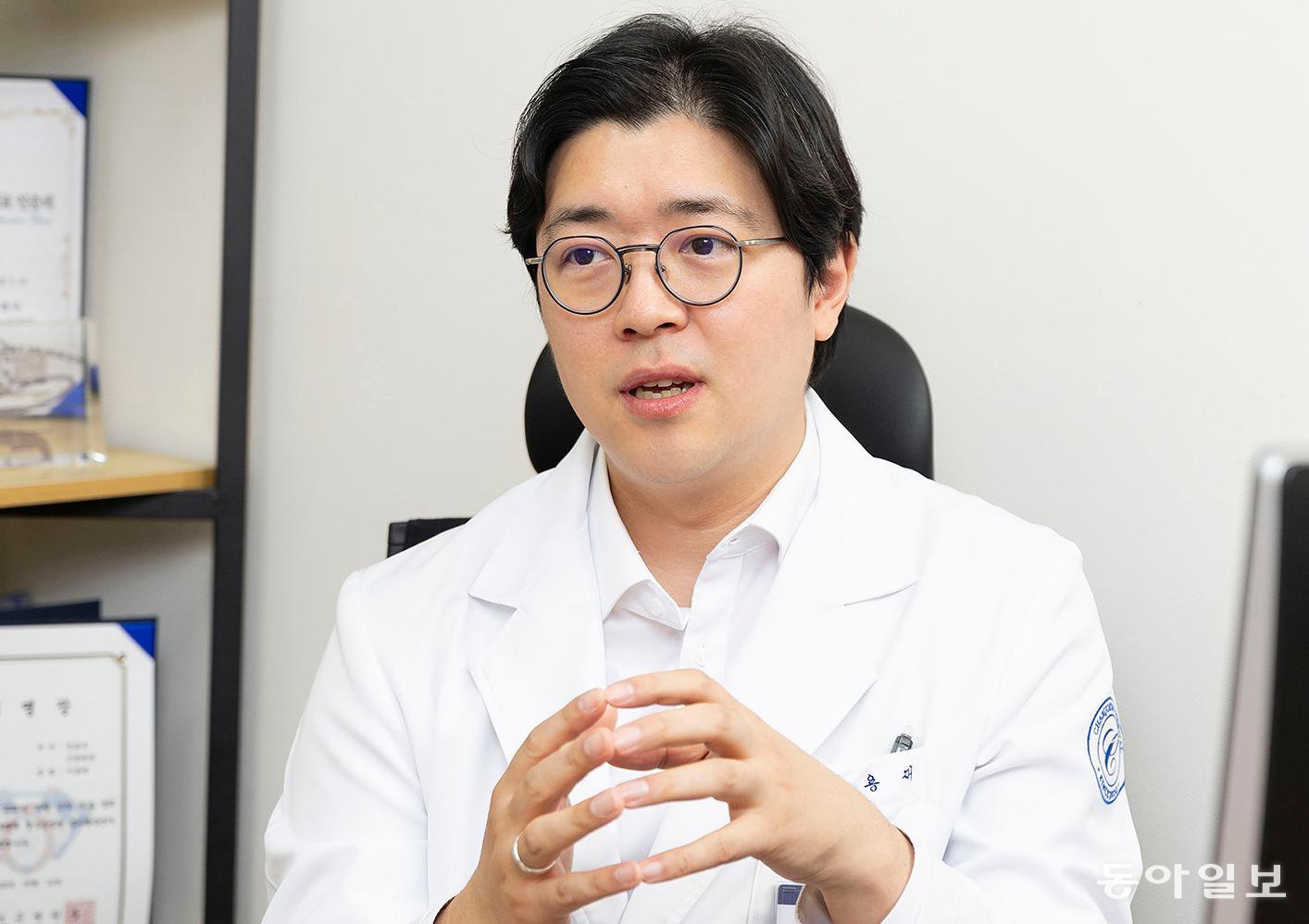
Lee Yong-jae, Director of the Neurovascular Center in the Department of Neurosurgery at Charm Joeun Hospital, explains the significance of the golden hour in the treatment of cerebrovascular disease and the role of specialized treatment institutions. Medical correspondent and physician Lee Jin-han likeday@donga.com
Recently, due to population aging and the increase in chronic diseases, the number of patients with severe cerebrovascular diseases such as stroke has been steadily rising. Stroke is a representative “golden hour” disease in which the time from onset to treatment determines patient survival and the extent of sequelae. If the initial response is delayed, it can lead to serious neurological aftereffects or death, making it essential to have a medical environment in which patients and caregivers can recognize symptoms and receive prompt treatment. In this context, an interview was conducted with Lee Yong-jae, Director of the Neurovascular Center in the Department of Neurosurgery at Charm Joeun Hospital, on the meaning of the golden hour in cerebrovascular disease treatment and the role of specialized treatment institutions.
―What are the main reasons for the recent surge in stroke?“The most prominent factors observed in the field are the ‘aging of the patient population’ and the ‘bimodal distribution of onset age.’ While the number of very elderly patients aged 80 or older is rapidly increasing, the number of ‘younger’ stroke patients in their 40s and 50s is also steadily rising due to Westernized diets and stress. According to the latest epidemiological studies, in addition to traditional risk factors such as hypertension and diabetes, environmental factors like fine dust have an increasing impact on cerebrovascular health. In particular, the rising prevalence of arrhythmias such as atrial fibrillation is acting as a major cause of severe embolic stroke, which makes preventive management even more important.”
―How does the golden hour affect patient prognosis in stroke?“The condition in which the golden hour is especially critical is ischemic stroke (cerebral infarction). The golden hour for cerebral infarction is 4 hours and 30 minutes, because thrombolytic agents can only be used within this time window after symptom onset. If mechanical thrombectomy follows rapidly after administration of thrombolytic agents, the success rate of vascular recanalization rises dramatically. In contrast, cerebral hemorrhage progresses extremely quickly, so immediate implementation of the highest level of emergency treatment is necessary to favorably influence clinical outcomes. Patients whose blood vessels are reopened within the golden hour are three to four times more likely to return to independent daily living than those who are not.”
―What early symptoms suggest a severe cerebrovascular disease?“If there is slurred speech or difficulty speaking, indicating language impairment, the patient must go to the emergency room immediately via 119. Transient ischemic attack (TIA), in which symptoms appear and then quickly disappear, is also a strong harbinger of a major stroke and must never be overlooked. One in three individuals who experience TIA eventually develops a stroke. The clearest guideline is the ‘BE-FAST’ rule: △B (Balance): sudden difficulty maintaining balance; △E (Eyes): visual disturbance or double vision; △F (Face): drooping or asymmetry on one side of the face; △A (Arm): weakness in one arm or leg; △S (Speech): slurred speech; △T (Time): if any one of these is present, it means the patient must be transported immediately via 119 to a specialized center.”
―What kind of care system does the Neurovascular Center at Charm Joeun Hospital have in place?“The core is a ‘24/7 immediate activation system, 365 days a year.’ Because stroke occurs without warning, neurosurgery specialists are on site, and a ‘one-stop high-pass’ system has been established whereby diagnosis, procedures, and intensive care continue seamlessly from the moment the patient arrives at the emergency room. When a patient reaches the emergency room, a specialist examines the patient within 30 minutes, and if necessary, cerebrovascular intervention is performed within 1 hour. Intensive care unit treatment is provided through a multidisciplinary system, involving collaboration not only with neurosurgery but also with specialists in pulmonology, nephrology, infectious diseases, and other departments.”
―Once a patient arrives at the hospital, how do the diagnosis and treatment proceed?“As soon as the patient arrives at the emergency room, an emergency medicine specialist quickly determines whether it is a cerebral infarction or cerebral hemorrhage. This is followed by both brain vascular CT and brain perfusion CT to simultaneously assess vascular status and blood flow volume. In the past, it was common to perform CT first and then add MRI, but now a single CT examination can rapidly confirm the presence of cerebral hemorrhage or infarction, the causative site, and the degree of hypoperfusion. Immediately after diagnosis, the patient is connected to endovascular procedures or surgical treatment.”
―How have technologies and environments for treating cerebrovascular disease changed recently?“The paradigm has shifted from primarily craniotomy-based surgery to mainly endovascular intervention. There are now many cases in which the lesion is accessed and treated directly through the blood vessels without opening the skull. In particular, advances in CT technology have dramatically accelerated diagnosis, enabling capable regional hub hospitals—not only large university hospitals—to treat patients with severe stroke swiftly.”
―What is ‘targeted temperature management’ to reduce complications?“Targeted temperature management (TTM) is the essence of modern neurocritical care. It involves reducing the body temperature of patients who have regained spontaneous circulation after cardiac arrest or those with severe brain injury to 32–36 degrees Celsius for a certain period, thereby inducing a kind of hibernation state. When body temperature decreases, the brain’s energy demand falls, and reactive oxygen species and inflammatory responses are reduced, which suppresses secondary brain injury. This treatment was originally used for patients after cardiac arrest, but it is now actively applied to patients at high risk of brain edema, such as those with severe cerebral hemorrhage or extensive cerebral infarction. By suppressing heat generation and protecting the brain, it is an essential strategy for improving survival rates and neurological outcomes.”
―Lastly, what message would you like to convey to the public?“Stroke is not a matter of ‘luck’ but of ‘management’ and ‘response.’ Sudden symptoms such as language disturbance or paralysis must never be taken lightly. Even if symptoms temporarily improve, this may be a precursor similar to the calm before a storm, so a thorough examination is essential. Blood pressure and blood glucose must be rigorously managed on a daily basis, and when suspicious symptoms occur, one must not delay treatment thinking, ‘It will be fine after a night’s sleep.’ A swift decision in the moment can change the rest of a person’s life.”
ⓒ dongA.com. All rights reserved. Reproduction, redistribution, or use for AI training prohibited.
Popular News










 About Dong-A Ilbo