Earnings surge on cenobamate boom… Expanding investment in next‑generation TPD and RPT pipelines
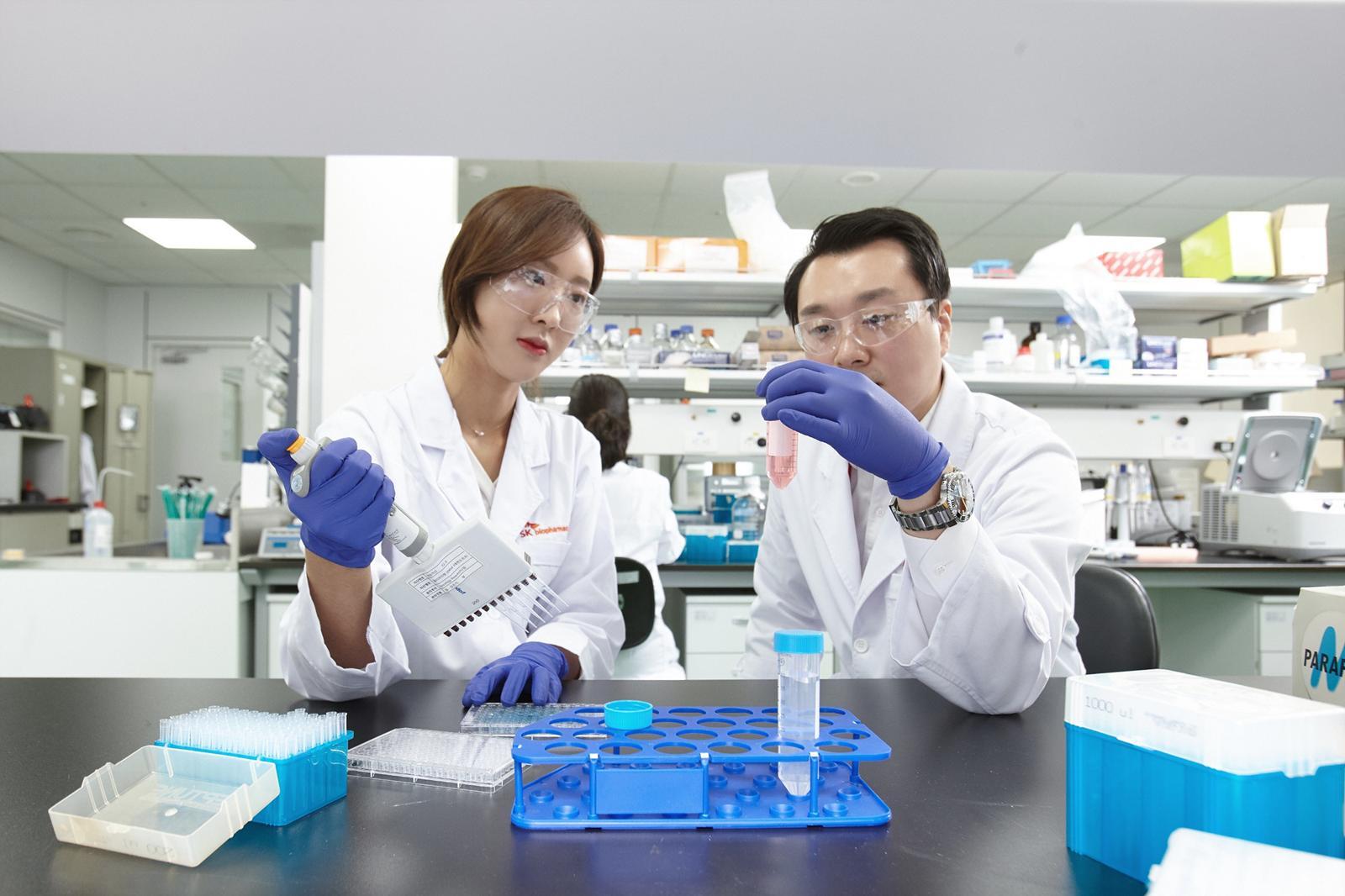
SK Biopharmaceuticals research center. Provided by SK Biopharmaceuticals
SK Biopharmaceuticals achieved its highest-ever quarterly performance in the first quarter of 2026. With robust growth of its epilepsy treatment cenobamate driving earnings, the company is assessed to be fully activating its “Big Biotech” model of reinvesting new drug sales revenue into research and development (R&D).
SK Biopharmaceuticals announced on the 7th that, on a consolidated basis, it recorded first-quarter revenue of KRW 227.9 billion and operating profit of KRW 89.8 billion this year. Compared with the same period a year earlier, revenue increased 57.8% and operating profit rose by about 250%, while operating profit grew 94% quarter-on-quarter. Market observers noted that earnings expanded significantly even as the company increased R&D and marketing expenditures, viewing this as a meaningful achievement.
The driver of these results was cenobamate (U.S. brand name: XCOPRI). Revenue from the U.S. market reached KRW 197.7 billion, up 48.4% year-on-year. As of March, monthly total prescriptions (TRx) reached 47,000, and new-to-brand prescriptions (NBRx) exceeded 2,000 per month for the first time. The steady increase in new patient prescriptions is interpreted as a signal that the company is strengthening its medium- to long-term growth base beyond short-term sales expansion.
From the second quarter, the company plans to accelerate growth through aggressive marketing. It will resume direct-to-consumer (DTC) advertising and expand marketing activities targeting healthcare professionals. It is also pursuing label expansion. In March this year, the company completed a New Drug Application (NDA) to the U.S. FDA for a suspension formulation, and it plans to seek additional indications within the year for primary generalized tonic-clonic seizures (PGTC) and pediatric patients.
The company is also moving in earnest to diversify its global markets. In China, commercialization has begun through its partner Ignis Therapeutics, and the approval process is under way in Japan with a target of completion within this year. If its sales portfolio, currently concentrated in the United States, expands into Northeast Asia, the company’s growth pillars are expected to broaden further.
On the back of stable cash generation, SK Biopharmaceuticals is also increasing investment in next-generation pipelines. Its key Targeted Protein Degradation (TPD) candidate “SKT-18416” selectively degrades the p300 protein, which is involved in cancer cell growth, thereby reducing the potential for side effects compared with existing therapies. The candidate has shown meaningful anticancer effects in preclinical studies for prostate cancer and multiple myeloma, and is being developed with the goal of submitting an Investigational New Drug (IND) application in the first half of 2027. The company also unveiled its molecular glue platform “MOPED,” which targets proteins that are difficult to address with existing technologies, signaling its intention to further diversify its pipeline.
The market views SK Biopharmaceuticals as building a virtuous cycle in which cenobamate’s revenue growth translates into cash generation, which is then reinvested into R&D to secure new growth engines. Unlike many domestic biotech firms that depend on technology exports or capital raising, SK Biopharmaceuticals is clearly establishing a model of generating cash through actual new drug sales and reinvesting it into the future.
However, key challenges remain, including clinical outcomes from follow-up pipelines that could reduce the company’s dependence on cenobamate, and real-world validation in highly competitive global fields such as TPD and radiopharmaceutical therapy (RPT). Whether its U.S.-centric revenue structure can be sustained over the long term is also seen as a major variable.
An SK Biopharmaceuticals official stated, “SK Biopharmaceuticals is the only company in Korea that possesses a CNS small-molecule new drug platform that has produced two FDA-approved innovative new drugs,” adding, “We have been reinvesting the sustainable and growing revenue generated from our new drugs into next-generation pipelines and platforms such as TPD and RPT, and we will continue to communicate closely with the market as tangible results emerge going forward.”
ⓒ dongA.com. All rights reserved. Reproduction, redistribution, or use for AI training prohibited.
Popular News










 About Dong-A Ilbo