Hyundai Motor Group is evolving from an automobile manufacturer into a high-tech company spanning a wide range of fields including artificial intelligence (AI), robotics, smart factories, and defense. Mobility remains the core axis, but a closer look shows that each business line shares a common direction: redefining human life and space beyond simple means of transportation. Although still in the early stages, this diverse next-generation business portfolio is already having a positive impact on actual management. It can be seen as the key to overcoming the limitations of a manufacturing company and sustaining growth despite various uncertainties such as tariffs, exchange rates, and supply chain issues. This report examines how Hyundai Motor Group is making the leap from an automotive powerhouse to an advanced technology enterprise.
Hyundai Motor Group’s moves in the defense industry are gaining notable traction. In fact, defense is not a new or unfamiliar field that Hyundai Motor Group suddenly entered. It is a business that has been continued for a long time, but its presence has drawn significant attention recently, triggered by the K2 tank contract with Poland. Defense, once perceived as a quiet, affiliate-centered business, is being re-evaluated as a meaningful long-term revenue source within the group in line with export expansion. As the business portfolio, once centered on automobiles, gradually expands, defense is emerging not merely as an auxiliary line but as a new growth engine.
The essence of this change lies in the concept of a “mobility-based battlefield platform.” By applying platform technologies and production capabilities accumulated in the automotive industry to defense, the group is strengthening a development–production–service structure.
Hyundai Rotem K808. Provided by Hyundai Rotem
“Production capability” is Hyundai Motor Group’s defense competitiveness… “Even Europe was surprised”
The success of Hyundai Motor Group in defense does not stem simply from producing superior weapons. Behind it lies the “mobility DNA” accumulated over decades in the automotive sector. While conventional defense companies focused on small-batch production, Hyundai Motor Group introduced automotive mass-production processes and rigorous quality-control systems into tank and military vehicle manufacturing. This was the decisive factor that enabled the group to meet what Poland demanded as an “unbelievable delivery schedule” while maintaining high quality.
At the center of this is Hyundai Rotem’s K2 tank contract with Poland. Following the first contract in 2022 (approximately KRW 4,499.2 billion), the company secured a second implementation contract in 2025 (approximately KRW 8,981.4 billion), amassing more than KRW 13 trillion in total work volume based on disclosures. This KRW 13 trillion does not translate into revenue all at once; instead, each phase of the contract will be recognized as revenue over a long period through the early 2030s. Rather than a scale that would instantly transform the group’s overall financial structure, it is interpreted as a signal of the long-term growth potential of the defense business.
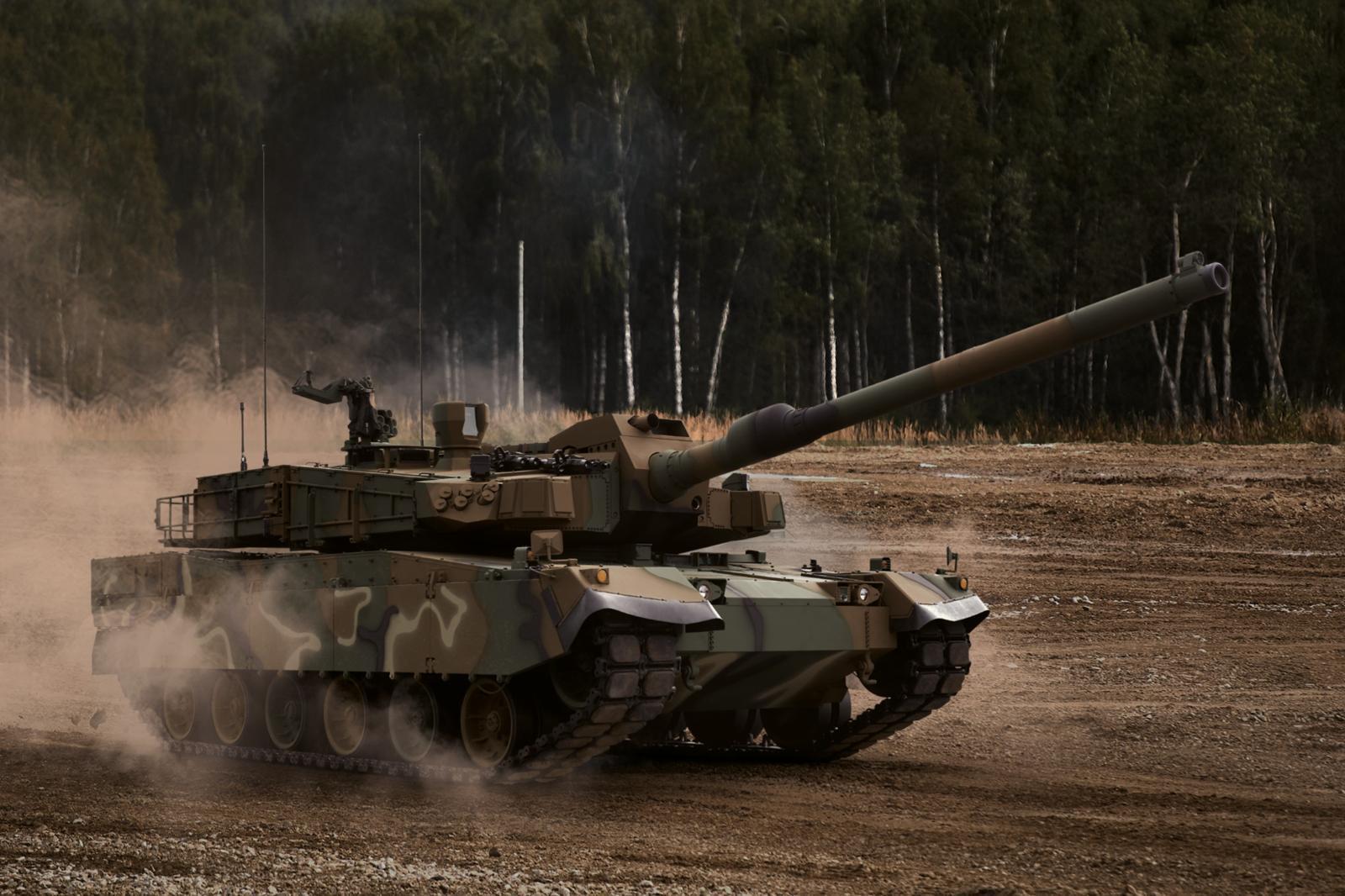
Hyundai Rotem K2 tank. Dong-A Ilbo DB
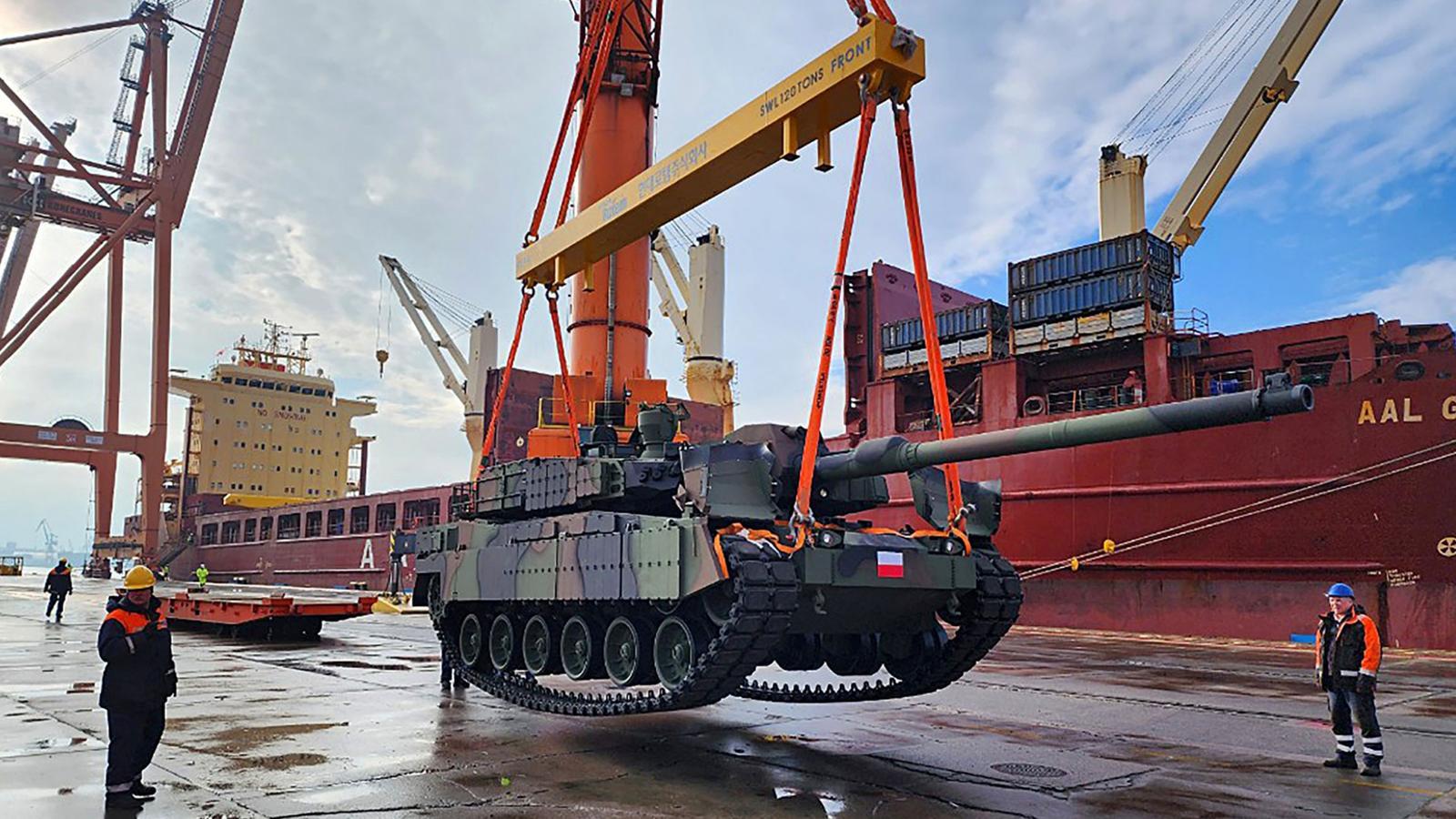
Polish-version Hyundai Rotem K2 tank being delivered to Poland. Provided by Hyundai Rotem
“After delivery is what really matters”… Selling one tank secures revenue for decades
Hyundai Rotem’s Poland project is not a simple one-off deal that ends with tank delivery. It is an industrial cooperation model that includes technology collaboration and local production, effectively reshaping the nature of the defense business.
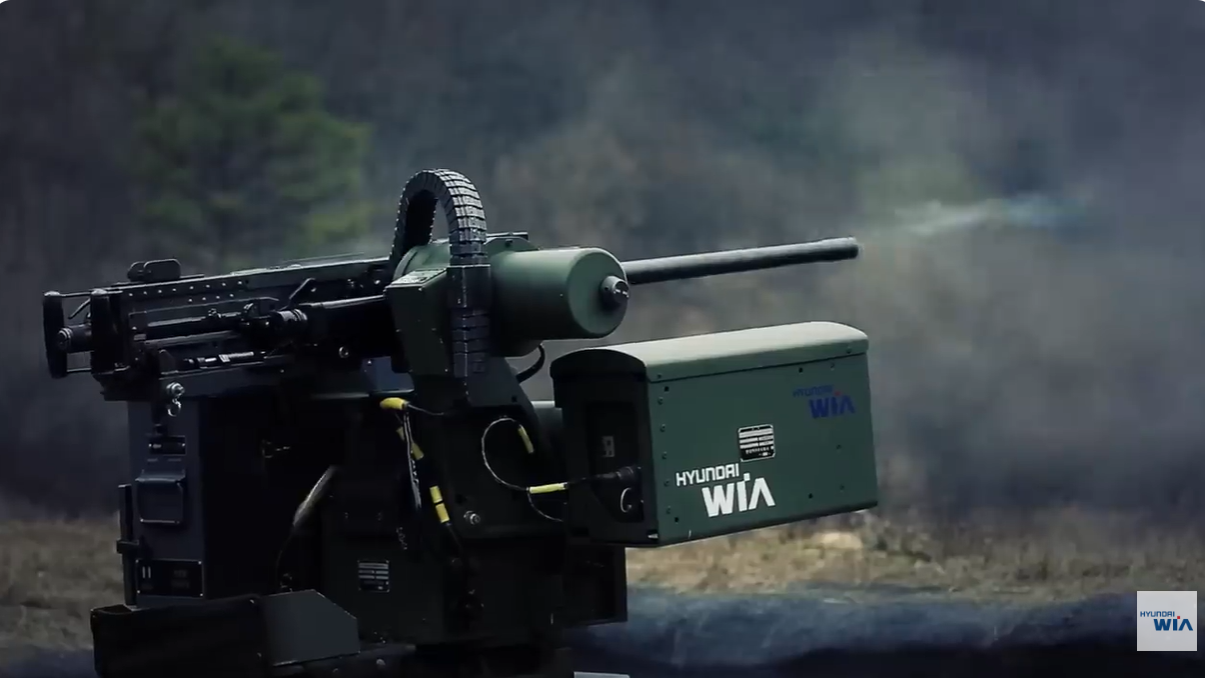
The K2PL, which applies from the second contract tranche, is a Poland-customized variant of the K2 tank. Its installed technologies are distinctive. A prime example is the Trophy Active Protection System (Trophy APS), developed by Israeli defense company Rafael. It is the world’s only system with battlefield-proven effectiveness by the Israeli military, enabling the tank to autonomously detect incoming missiles or rockets and intercept them midair. This is complemented by a jammer that disrupts drones and a Remote Controlled Weapon Station (RCWS) that allows the crew to fire without leaving the turret.
The powerpack configuration that combines the engine and transmission also deserves attention. The K2PL adopts a hybrid approach that pairs a domestically produced engine with a transmission from Germany’s Renk. This choice was made to align parts compatibility with the previously exported K2GF model, facilitating local maintenance. For tank operators, easier parts procurement and maintenance are directly linked to operating costs.
Hyundai WIA Remote Controlled Weapon Station (RCWS). Provided by Hyundai WIA
Another core element of this project is technology transfer. Production and maintenance technologies for thousands of components will be transferred to Polish state-owned defense company Bumar-Łabędy, enabling Poland to directly produce and upgrade the K2PL domestically in the future. The aim is not merely to supply tanks, but to cultivate Poland as a maintenance and overhaul hub for K2 tanks across Europe.
Ultimately, the Poland K2 project is a structure that sells the entire operational ecosystem, starting from tank sales and extending to maintenance, parts supply, and technical training. It is a model in which revenue continues for decades after the initial weapons sale, expanding the character of the defense business from manufacturing into services.
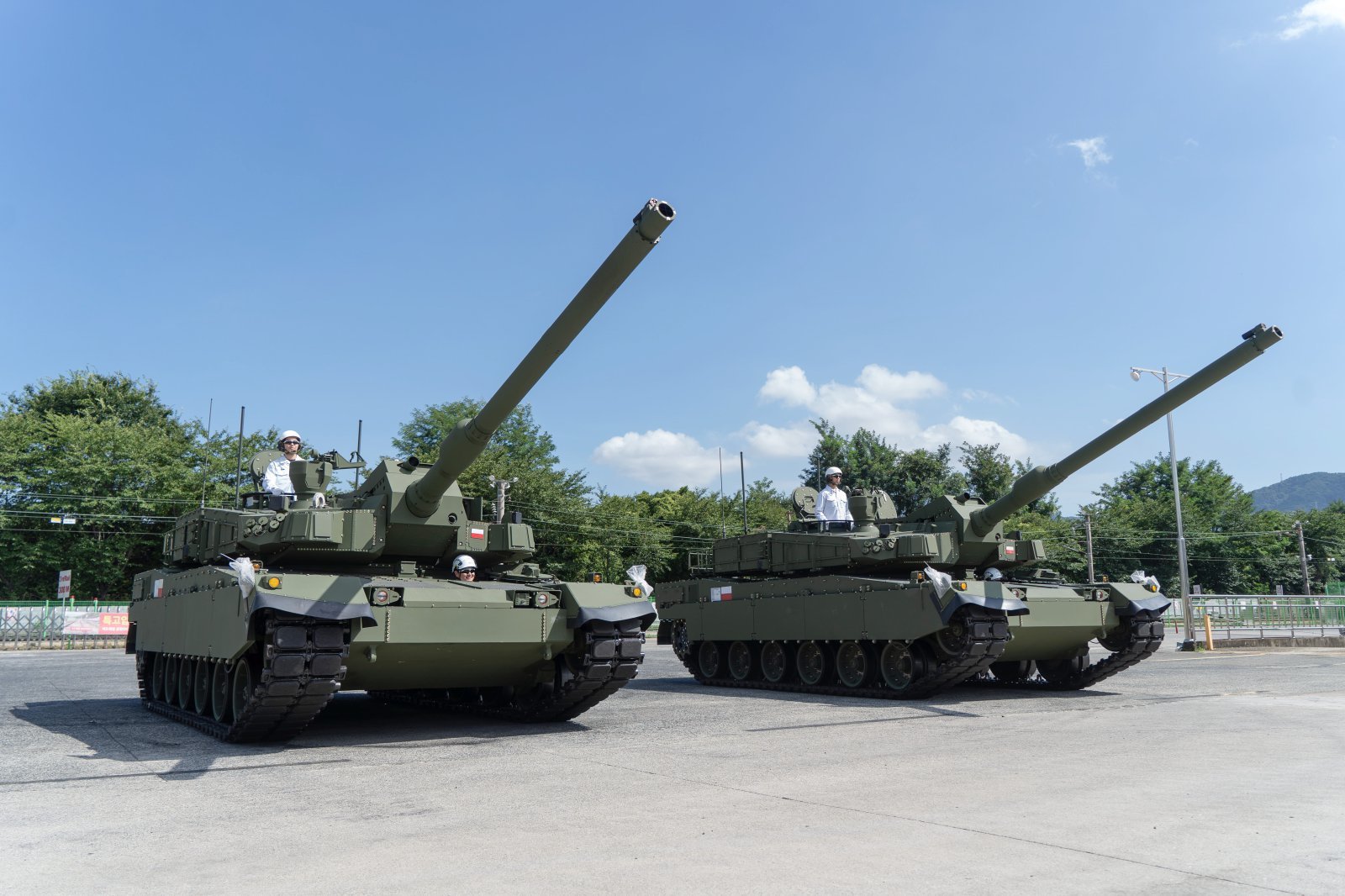
A K2 tank waits ahead of a demonstration at Hyundai Rotem’s Changwon defense plant tank driving test site. Provided by Hyundai Rotem
Rotem, WIA, and Kia each operate on the battlefield, converging into “group-wide integrated defense capabilities”
Hyundai Motor Group’s defense business is organized around ground platforms, which have a high degree of technological affinity with automobiles. Rather than building individual weapons in isolation, the group leverages strengths within vehicle-based product families.
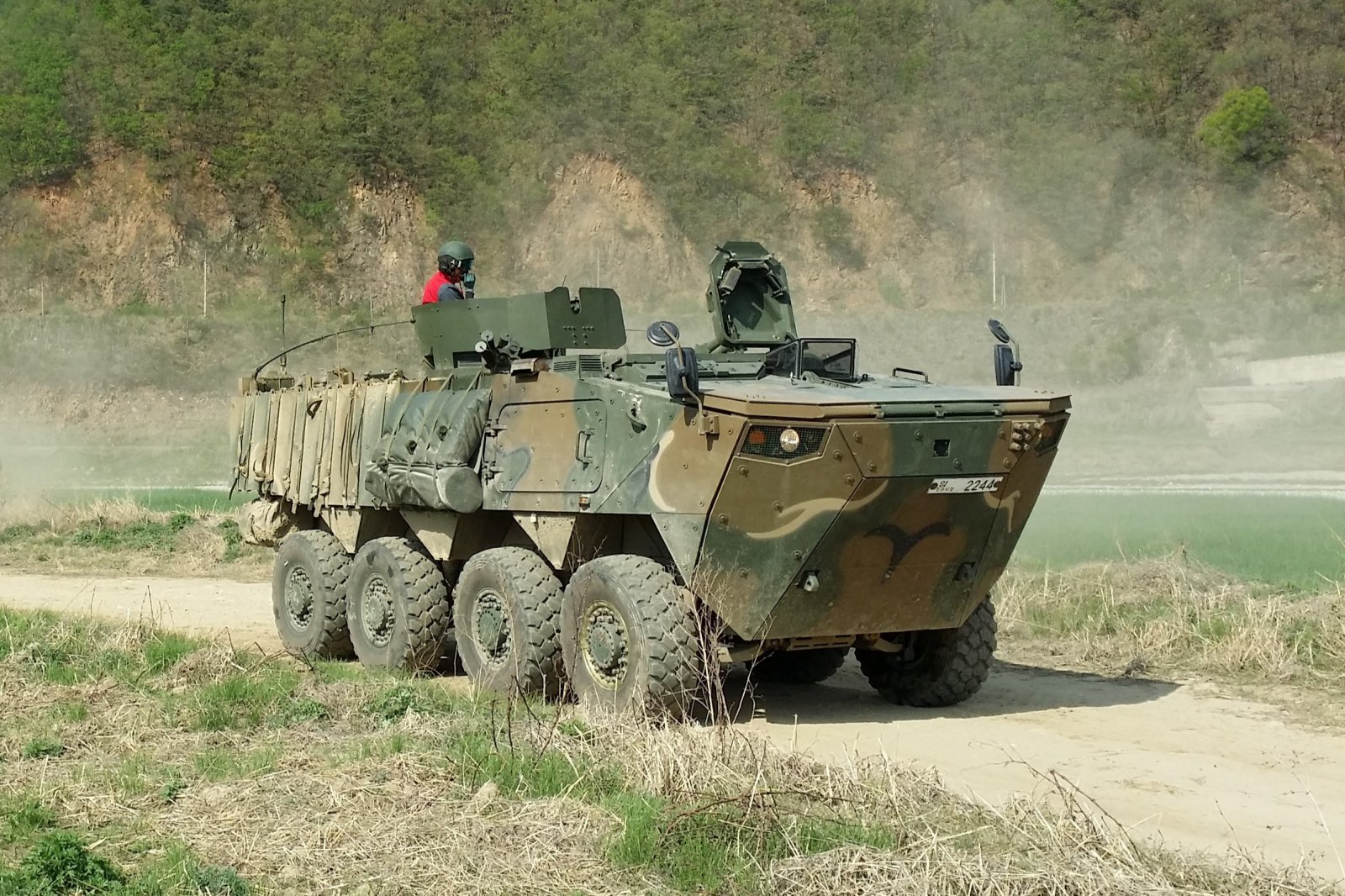
Hyundai Rotem is responsible for the overall ground weapon systems, including the K2 tank. It has a broad portfolio of vehicle-based products, such as armored vehicles (K808, K806), command post vehicles (K877), and obstacle clearing tanks (K600). There is also discussion about the deeper application of software technologies to military equipment in the future. Just as smartphones gain new functions through app updates, tanks could adopt the concept of a so-called “software-defined tank,” in which performance is improved through software patches. Given that a tank’s lifespan extends 30–40 years, the ability to continually enhance performance without hardware replacement is meaningful. For now, this remains closer to a technological direction than a fully developed business model.
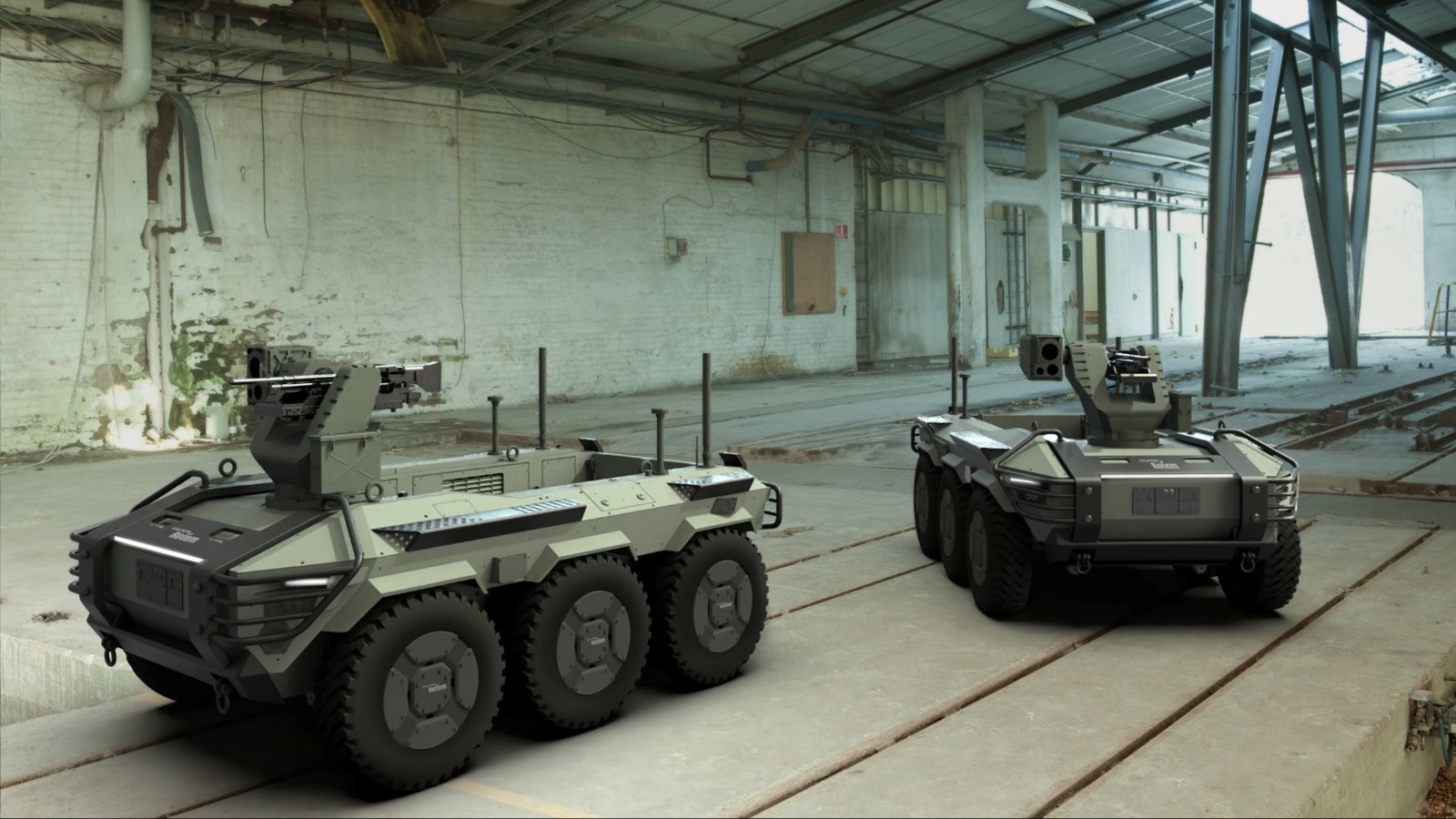
Hyundai Rotem multi-purpose unmanned vehicle HR-Sherpa. Provided by Hyundai Rotem
Hyundai WIA serves as the group’s firepower arm. It manufactures core artillery systems such as the main gun for the K9 self-propelled howitzer and the main gun for the K2 tank, and has established itself as a major domestic artillery company. Recently, it expanded into naval armaments by rolling out a Close-In Weapon System (CIWS-II) for ships, designed to intercept incoming missiles or drones in the final phase of approach. This gun system is scheduled to be installed on the Korean Next-Generation Destroyer (KDDX) and the Chungnam-class frigate. New initiatives are also underway on land. A representative example is a mobile fire system in which a self-propelled gun or mortar is mounted on a light tactical vehicle, enabling a shoot-and-scoot capability. The system can automatically deploy its gun within 30 seconds. With AI-based remote-controlled weapon stations (RCWS) and anti-drone systems (ADS) added, efforts are ongoing to transform fixed artillery into mobile platforms.
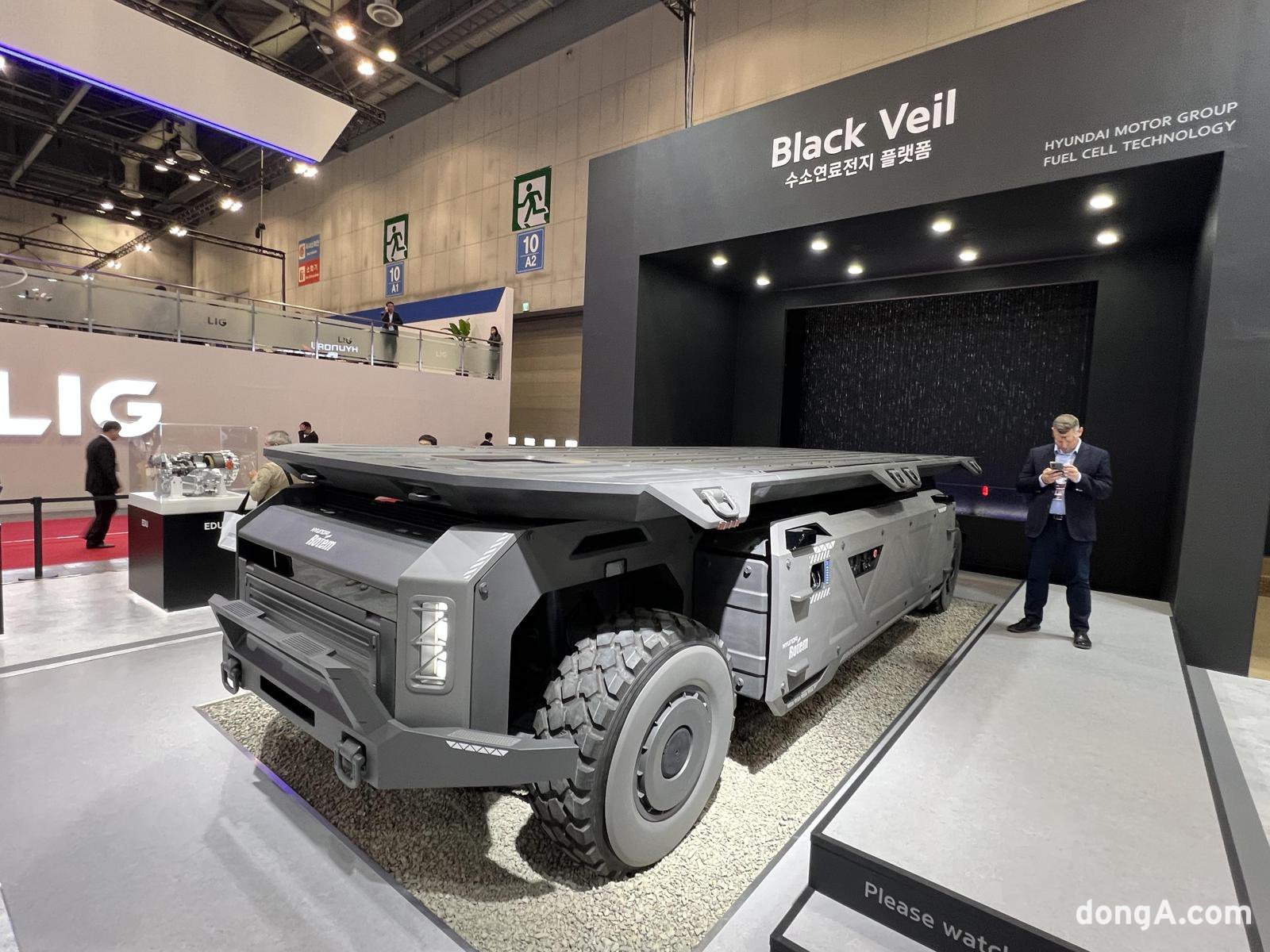
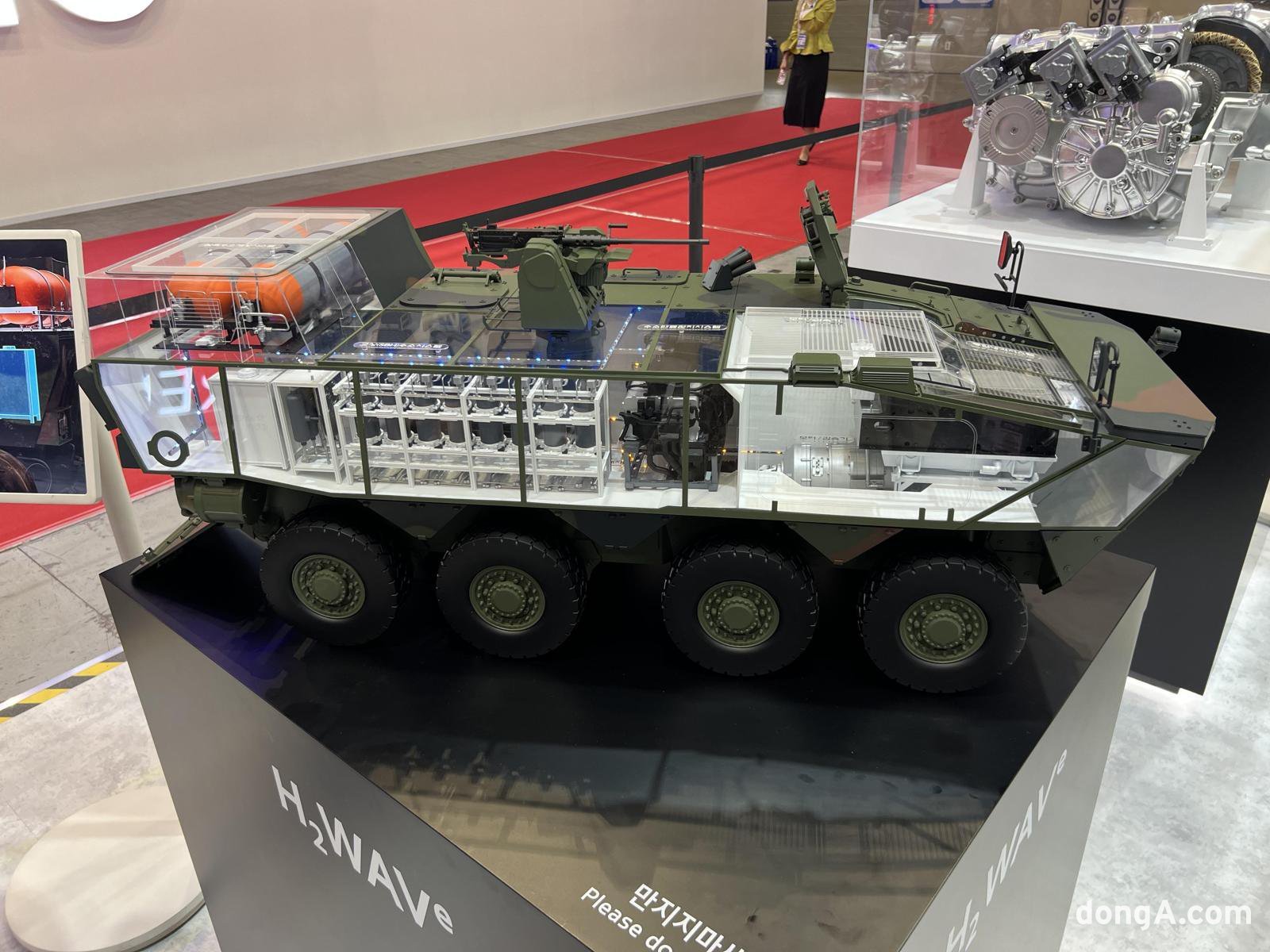
Hyundai Rotem defense hydrogen fuel-cell platform Black Veil. Reporter Hwang So-young, fangso@donga.com
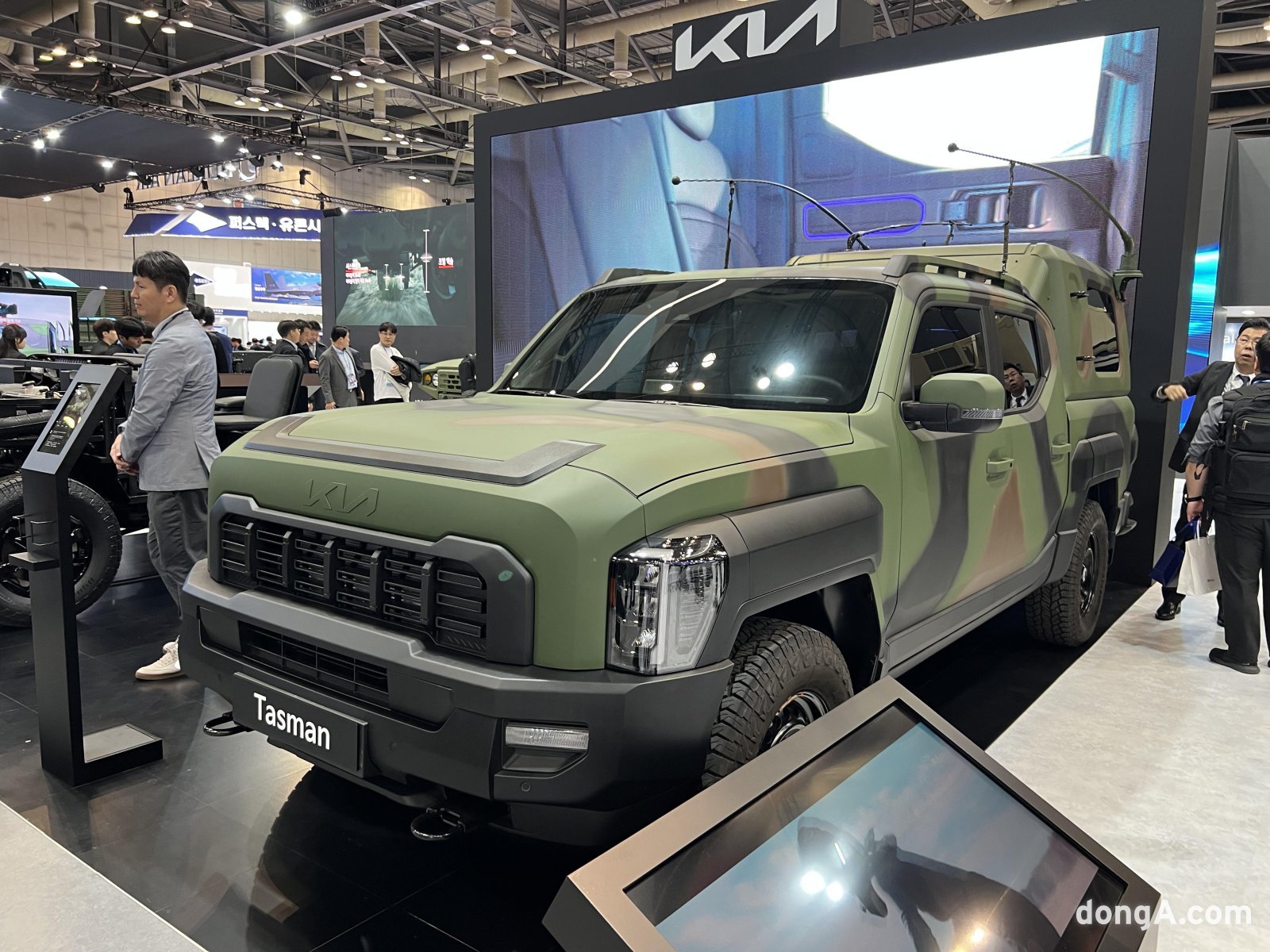
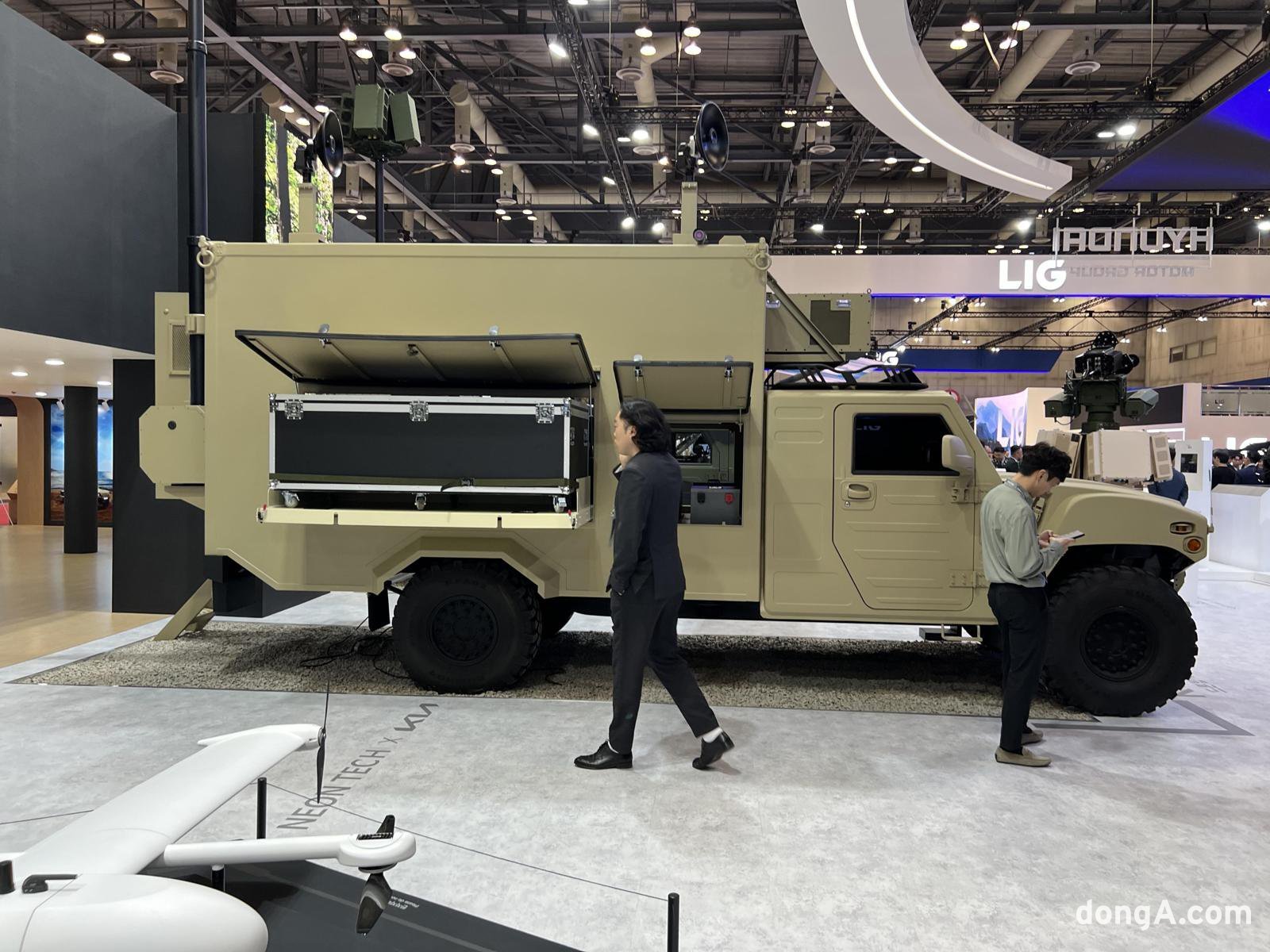
Tasman military command vehicle unveiled by Kia at ADEX2025 in October last year. Reporter Hwang So-young, fangso@donga.com
Kia’s Special Vehicle Division is in charge of military vehicles. In 2025, it commenced mass production of the next-generation Medium Tactical Vehicle (KMTV), replacing the military’s standard medium vehicle platform for the first time in 48 years. Its Light Tactical Vehicle (KLTV) is being exported to Poland and the UAE. Notably, Kia has established an integrated logistics support system that offers not only vehicle delivery but also maintenance, parts supply, and operational training as a package. The company is also researching military mobility using hydrogen fuel cells. Hydrogen’s characteristics of being very quiet and having low exhaust heat are considered advantageous for avoiding detection during night-time stealth operations, although the actual tactical effectiveness remains to be validated.
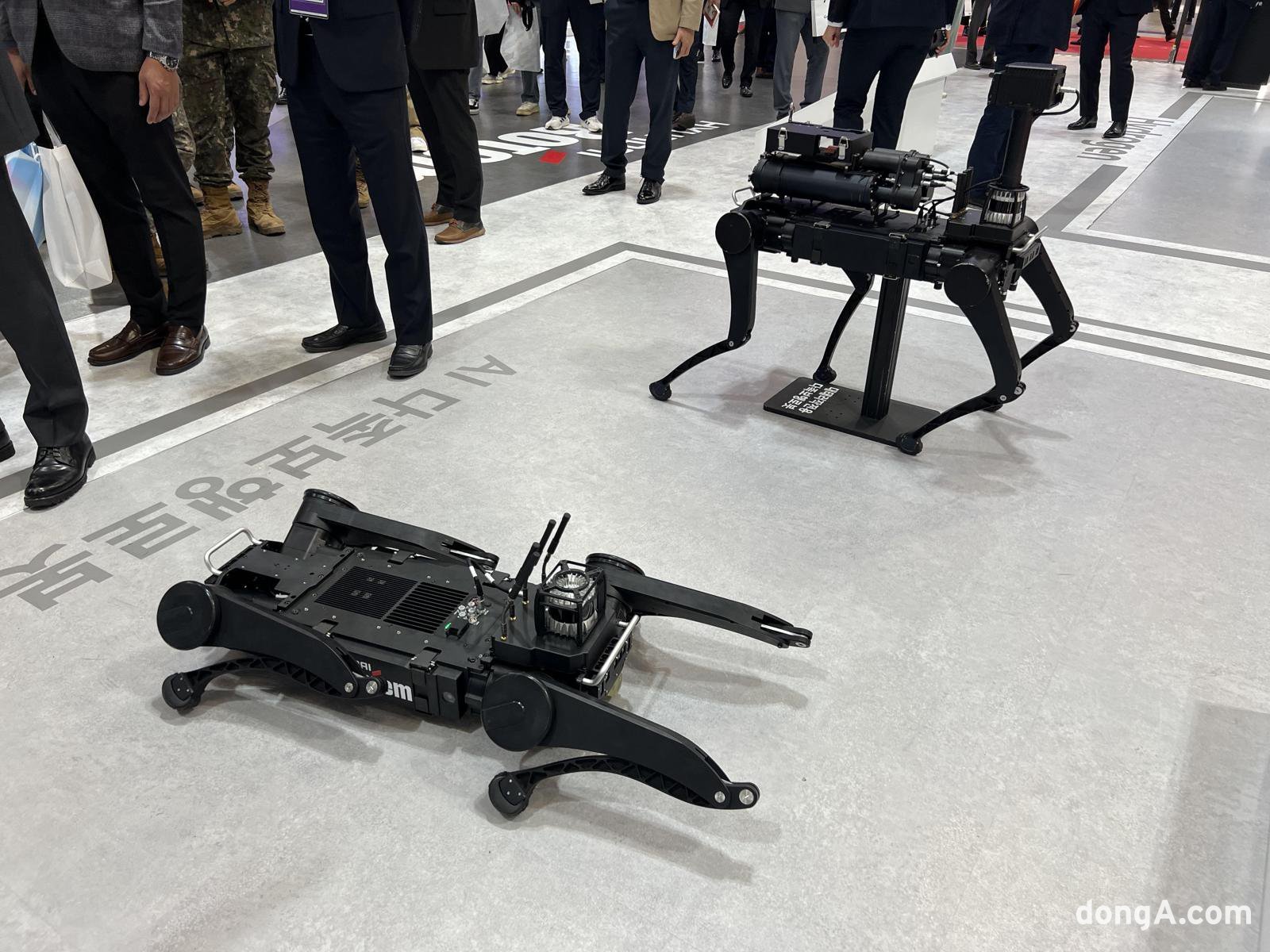
Hyundai Rotem AI quadruped walking robot. Reporter Hwang So-young, fangso@donga.com
Robotics is also consistently mentioned in relation to the future of Hyundai Motor Group’s defense business. Following the acquisition of Boston Dynamics, the potential fusion of robotics and defense has been discussed, and Hyundai Rotem is developing unmanned ground vehicles (UGVs). If these vehicles, which autonomously navigate without a human onboard, take over tasks such as ammunition and supply transport or reconnaissance, they could help reduce troop burdens.
There are, of course, challenges. As Hyundai Motor Group’s defense business is centered on ground platforms, it requires collaboration with other defense companies in fields such as missiles, electronic warfare, reconnaissance, and surveillance. Another issue to address is diversifying its order portfolio, which is currently concentrated on specific countries.
Hyundai Motor Group’s defense operation has grown steadily as traditional military supply activities have converged with the group’s automotive capabilities. The KRW 13 trillion in order backlog is a tangible indicator of this growth. While not yet large enough to overhaul the group’s overall financial structure at once, it is a meaningful signal that defense can take root as another growth pillar for Hyundai Motor Group. Attention now centers on how far the expansion of the defense business, built on the group’s automotive production and supply capabilities, will go.
Q. Why has Hyundai Motor Group’s defense business grown so rapidly in recent years?
A. The primary reason is that its existing tank, military vehicle, and artillery businesses have been integrated into a unified business pillar driven by exports. On top of this, production, quality, and supply chain capabilities accumulated in the automotive industry have enhanced both delivery responsiveness and price competitiveness. In particular, package export models such as the Poland K2 tank program, which include local production as well as maintenance and overhaul, are cited as key growth drivers because they extend beyond short-term delivery into long-term projects.
Q. How can Hyundai Motor Group’s defense competitiveness be described?
A. Its differentiation lies more in production and supply capabilities than in weapon performance alone. Based on experience in mass production, quality management, and global supply chain operation, the group’s strengths include fast delivery and stable supply. However, export performance is the result of a combination of factors, including these production capabilities, price competitiveness, and government-to-government contract structures.
Q. How does it differ from other domestic defense companies?
A. Hyundai Motor Group has strengths in ground platforms and production capabilities, including tanks and military vehicles. Unlike companies focused on missiles or electronic warfare, its differentiating factor is the ability to combine vehicle-based weapon systems with mass-production capacity. That said, in higher value-added segments, its structure involves parallel cooperation with other defense companies.
Q. What does the concept of a “Software-Defined Tank (SDT)” signify?
A. It is a concept that views the tank not as purely hardware-centric equipment but as a platform whose performance can be improved via software updates. Given that a tank’s service life is 30–40 years, the ability to continuously upgrade performance without hardware replacement can significantly enhance operational efficiency. However, at present, this remains more a concept indicating technological possibilities than a fully materialized business.
Q. What are the risks or limitations of Hyundai Motor Group’s defense business?
A. A key limitation is that the current business structure is heavily concentrated on ground platforms such as tanks and vehicles. If an order portfolio centered on particular countries persists, the business may be exposed to geopolitical risks, making market diversification an important task.
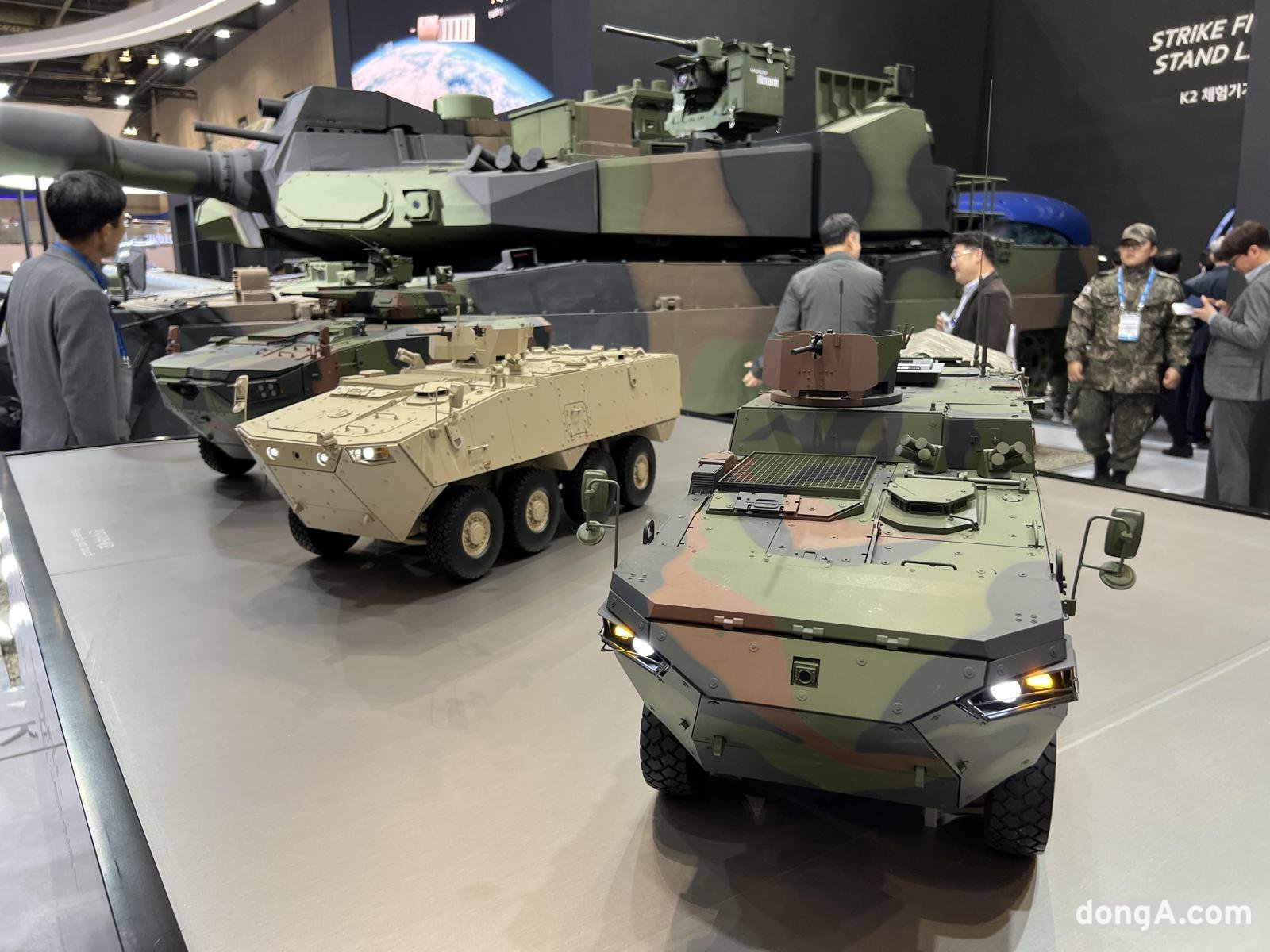
Hyundai Rotem armored vehicle lineup. Reporter Hwang So-young, fangso@donga.com
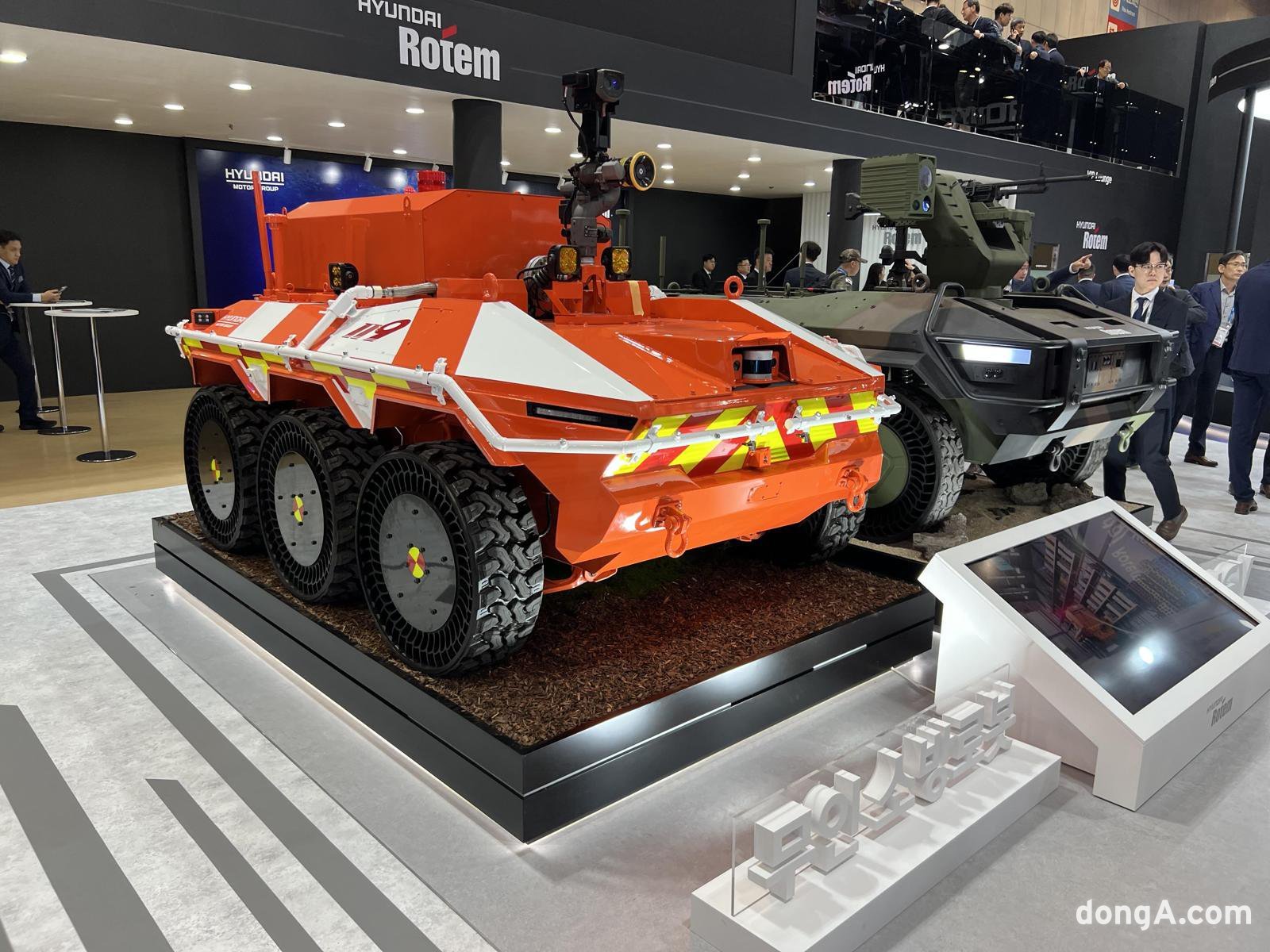
Hyundai Rotem unmanned firefighting robot vehicle concept. Reporter Hwang So-young, fangso@donga.com
Hyundai Rotem armored vehicle model equipped with a hydrogen fuel-cell system. Reporter Hwang So-young, fangso@donga.com
Hyundai Rotem drone operation command vehicle. Reporter Hwang So-young, fangso@donga.com
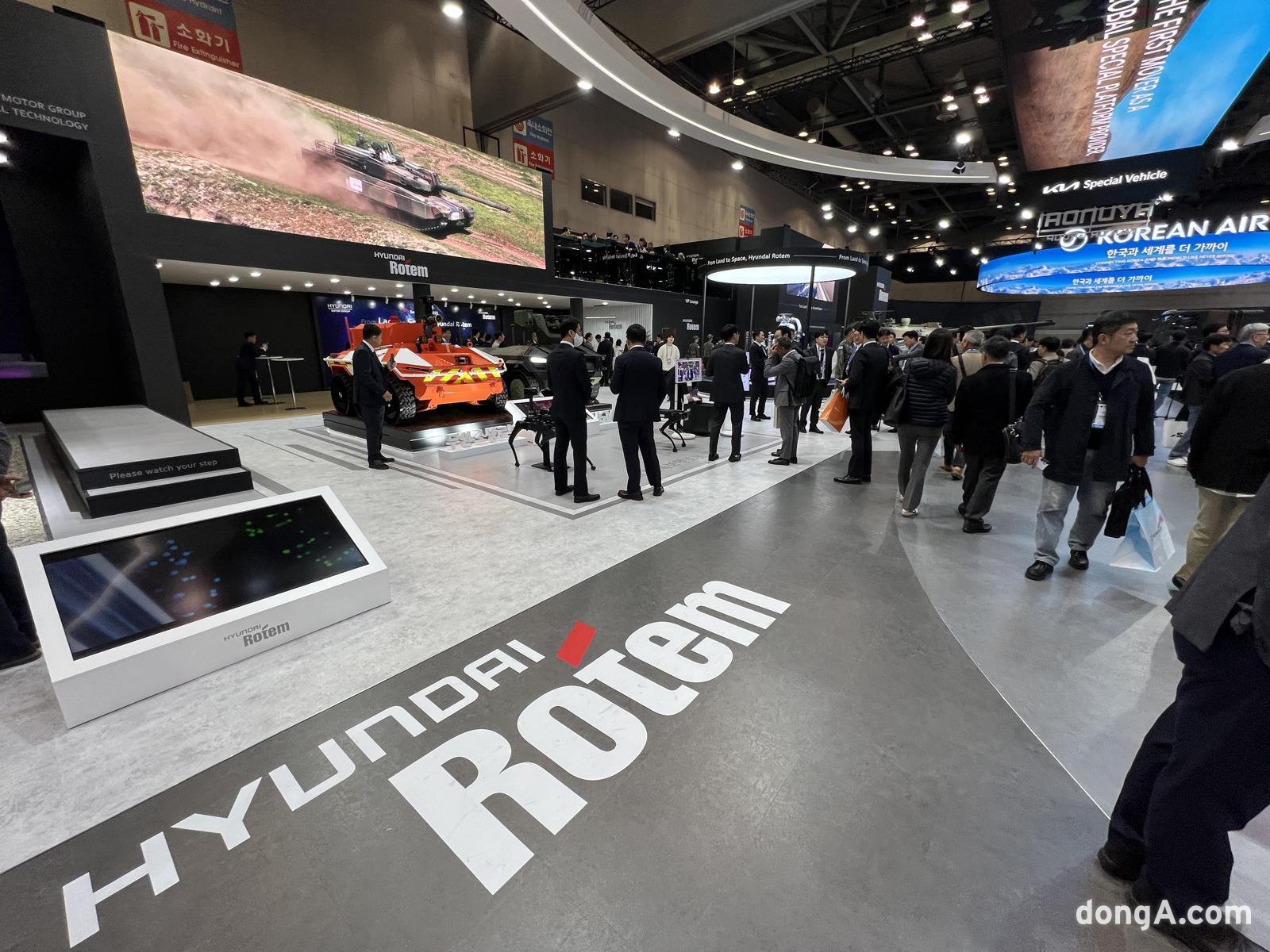
Hyundai Rotem booth at a defense exhibition. Reporter Hwang So-young, fangso@donga.com
ⓒ dongA.com. All rights reserved. Reproduction, redistribution, or use for AI training prohibited.
Popular News









 About Dong-A Ilbo