Hyundai Motor Group is evolving beyond an automobile manufacturer into a high-tech company spanning artificial intelligence (AI), robotics, smart factories, and defense. Mobility remains the central pillar, but across its businesses the group shares a vision of redefining human life and space beyond simple means of transportation. Although still in the early stages, this diverse next-generation business portfolio is already having a positive impact on actual management performance. It can be seen as the key to sustaining growth while overcoming the limitations of a manufacturing company amid various uncertainties such as tariffs, exchange rates, and supply chain issues. This article examines the secrets behind Hyundai Motor Group’s leap from an automotive powerhouse to an advanced technology company.
Complete vehicle brands are superficially assessed by the number of units sold. High sales volume is interpreted as having satisfied a significant number of consumers. This translates into trust in the brand’s technology and performance. Even in terms of simple performance figures, Hyundai Motor Group is achieving remarkable results in the global market. In July last year, it surpassed cumulative sales of 30 million units in the U.S. market. This milestone came 39 years and 6 months after Hyundai Motor first entered the local market in 1986. Toyota Motor, the first automaker to sell 30 million vehicles in the U.S., took 54 years, and Honda Motor, the second, took 47 years, indicating that Hyundai has been rapidly closing the gap with competitors.
Many experts cite the so-called “indomitable spirit of challenge” of the late founder Chairman Chung Ju-yung, who established the company in 1967, as the driving force behind Hyundai Motor Group’s growth. His numerous sayings are still frequently quoted. The most famous, “Have you tried?” means one should not deem something impossible without even attempting it. It was a phrase that sounded an alarm for Korea’s then-struggling industry.
Chairman Chung Mong-koo, who became chairman of Hyundai Motor and Kia after acquiring Kia in 1998, focused on propelling the group into a truly global company in both qualitative and quantitative terms. In particular, he pushed “quality management” with what many saw as tenacity. Thanks to these efforts, in 2016 Hyundai and Kia received the highest ratings for the first time in new vehicle quality surveys conducted by U.S. research firm J.D. Power. Quality management is directly aligned with the secret behind the group’s rise as a global top-five automaker.
Chairman Chung Euisun of Hyundai Motor Group has fully inherited the customer-centric values and management philosophies of founding Chairman Chung Ju-yung and Honorary Chairman Chung Mong-koo. Upon taking office in 2020, Chairman Chung Euisun stressed: “Building on the noble achievements and entrepreneurial spirit of the two former chairmen, we aim to contribute to the national economy and, further, to humanity’s happiness, and I intend to build a new future for the group together with all employees.”
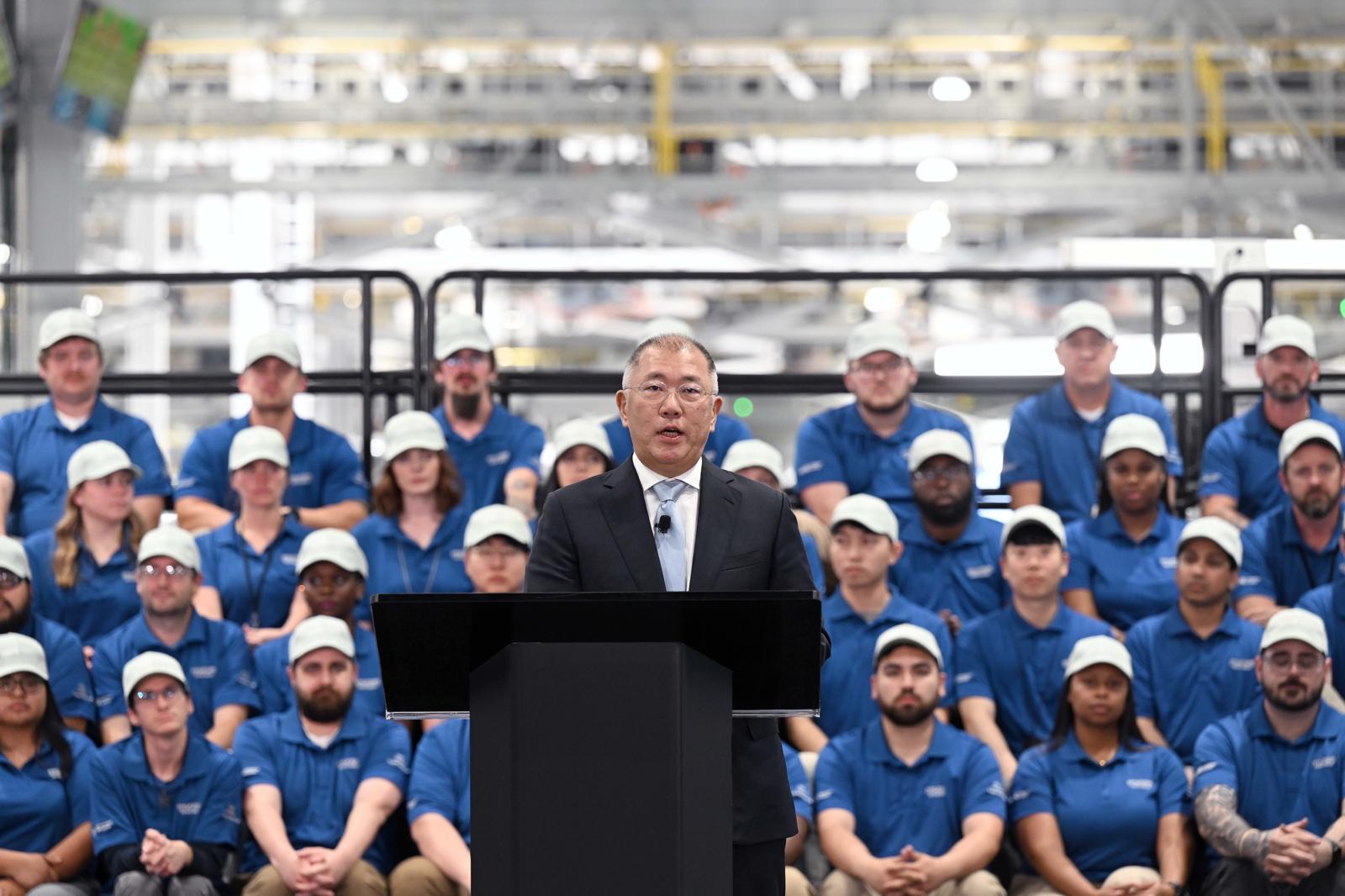
Hyundai Motor Group Chairman Chung Euisun delivers a welcome address at the completion ceremony of Hyundai Motor Group Metaplant America (HMGMA) in Ellabell, Georgia, U.S., on March 26 last year (local time). Provided by Hyundai Motor Group
Six years on, Chairman Chung Euisun’s words are becoming reality. He is currently transforming Hyundai Motor Group into an organization that is both flexible and strong amid a rapidly changing industrial environment, not only by achieving a rational balance between traditional business areas and new businesses but also by internalizing core technologies, pursuing strategic collaborations with competitors, promoting outstanding talent, and recruiting global professionals to harmonize internal and external capabilities.
Hyundai Motor Group’s stature is rising steeply. Since first ranking third in global sales in 2022, it has consistently remained in the “top three,” while its operating margin has stood at the highest level in the industry. In addition, Hyundai and Kia have obtained an A credit rating from the world’s three major credit rating agencies for the first time since their founding.
Hyundai Motor Group is expanding investment across future technologies such as electrification, hydrogen, SDV (software-defined vehicles), robotics, autonomous driving, and advanced air mobility (AAM), redefining the mobility domain to enable free movement and connectivity for humanity beyond the traditional boundaries of the automotive industry.
Amid the major transition toward electrification, the global automotive industry is entering an era of complex strategies. Rather than focusing on a single technology, Hyundai Motor Group has opted to target both multi-powertrain systems and the broader future mobility space simultaneously. This approach aims to disperse risks in a highly uncertain market environment while securing optimal solutions for each market.
The group is expanding its business scope across the mobility spectrum. In an environment where the shift to electrification is slower than expected, it has adopted a “multi-strategy” of operating various powertrains in parallel rather than concentrating on a single technology. This is interpreted as a strategic choice to diversify market uncertainty and secure optimal solutions for each region.
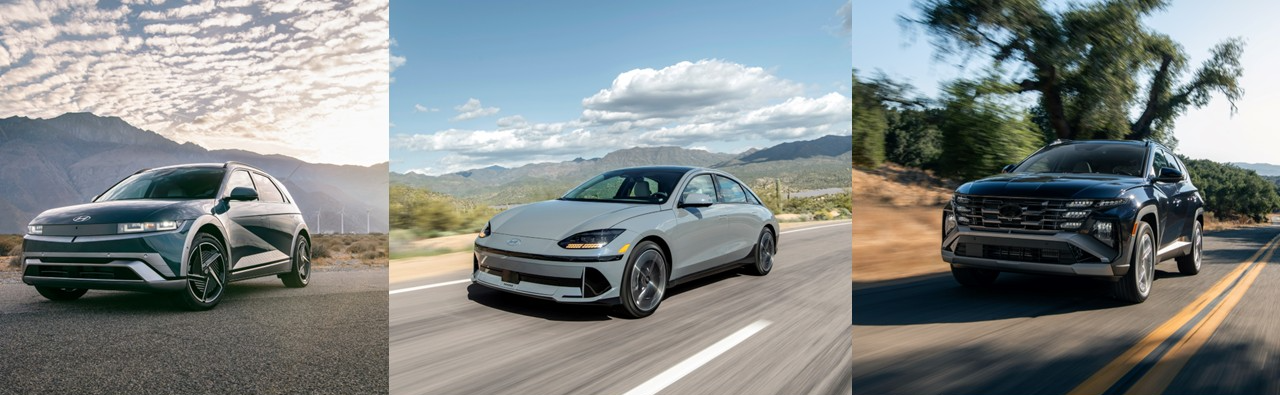
From left, Hyundai IONIQ 5, IONIQ 6, and Tucson Hybrid won three categories at the “2025 Best Hybrid and Electric Cars Awards” organized by U.S. News & World Report. Provided by Hyundai Motor Company
Internal combustion–hybrid ‘two-track’
Combining high efficiency and high performanceThe next-generation hybrid system recently unveiled by Hyundai Motor Group is regarded as an example that demonstrates a structural shift in its electrification strategy based on internal combustion engines. In a global market environment where the pace of transition to electric vehicles is slower than anticipated, hybrids are being redefined as core powertrains with independent competitiveness.
Hyundai’s hybrid system departs from the previous structure centered on an auxiliary motor and features a dual-motor architecture with P1 and P2 motors arranged in parallel. The P1 motor, directly connected to the engine, is responsible for starting, power generation, and assist torque, minimizing energy loss, while the P2 motor, connected to the transmission, handles actual propulsion and regenerative braking. This division of roles enables efficient collaboration between the engine and motors, reducing delays and unnatural feel in power delivery and thereby enhancing overall driving completeness.
On the engine side, thermal efficiency improvement based on an over-expansion cycle is applied as a core technology. By increasing the expansion ratio relative to the compression ratio, the system maximizes recovery of combustion energy and reduces unnecessary losses. Combined with the characteristic of hybrid systems in which the engine operates selectively only in highly efficient ranges, this significantly contributes to overall fuel economy gains.
Meaningful progress has also been confirmed in performance. According to Hyundai Motor Group, for the next-generation 2.5 turbo hybrid, fuel efficiency has been improved by more than approximately 40%. Output and torque have each increased by double-digit percentages. This suggests that hybrids are no longer confined to being economy powertrains for small cars but can expand into the domains of large SUVs and premium vehicles.
A notable aspect is the active adoption of functions at the level of electric vehicles. Representative examples include V2L, which supplies power to external devices, Stay Mode, which allows the use of climate control and electronic functions without engine operation, smart control technology that adjusts regenerative braking strength according to driving conditions, and a predictive energy management system linked to the navigation system.
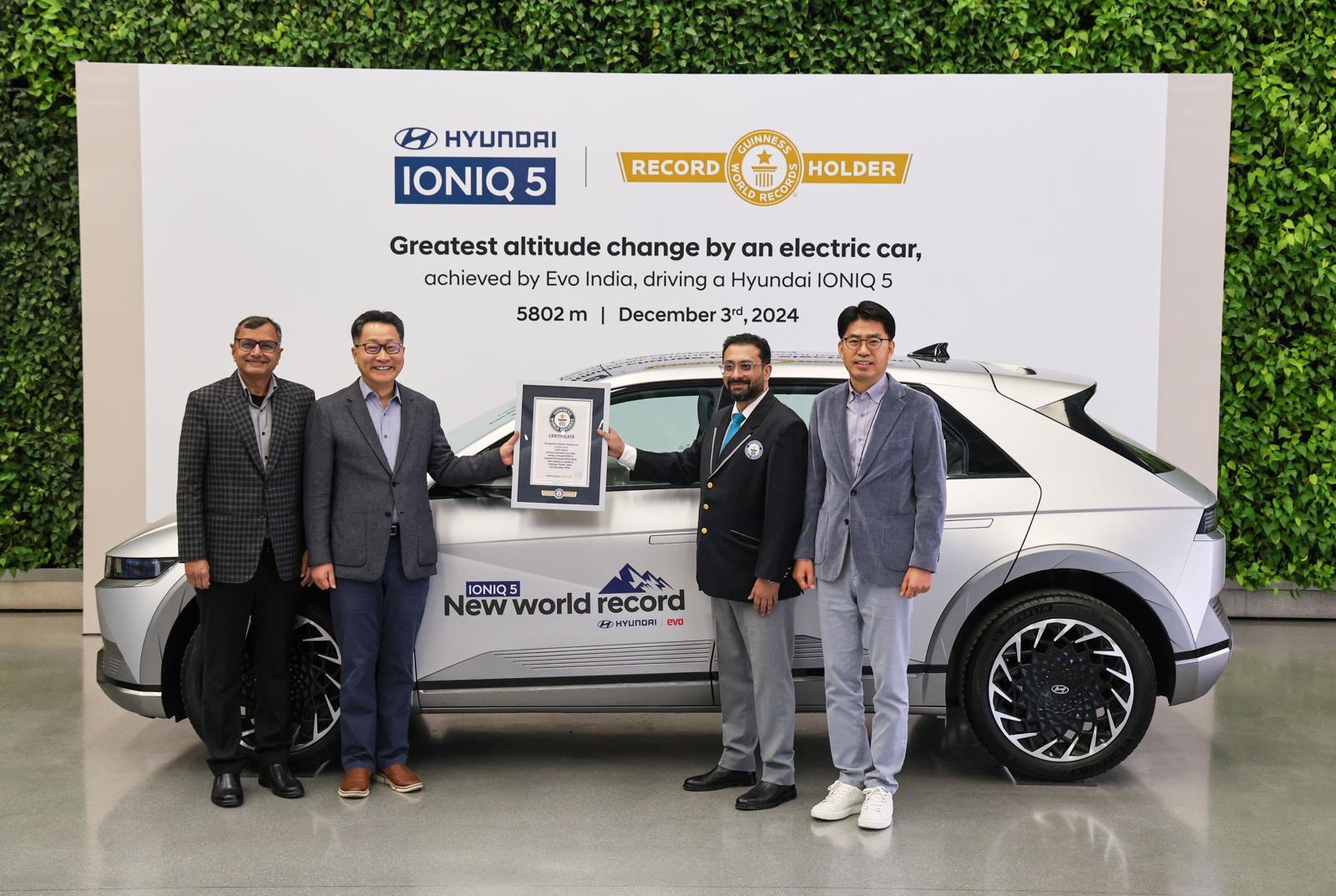
The Hyundai IONIQ 5 successfully completed a drive covering a vertical difference of 5,802 meters, from Umling La (5,799 meters above sea level) in northern India, known as the world’s highest motorable road, to Kuttanad (-3 meters above sea level) in southern India, which has the country’s lowest elevation. This record has been listed in the Guinness World Records in the category “Greatest altitude change achieved by an electric car.”
Electric vehicles as a mid- to long-term growth strategy
Hydrogen vehicles to preempt the commercial marketElectric vehicles are cited as Hyundai Motor Group’s mid- to long-term growth strategy. Dedicated platforms, battery technology, and software capabilities are the core pillars. The group’s dedicated EV platform, E-GMP, is optimized for electric vehicles from the design stage. The platform adopts a skateboard structure that places the battery under the vehicle floor. This maximizes the advantages of lowering the center of gravity and improving driving stability. It also offers a significant benefit in dramatically expanding interior space.
In particular, the high-voltage-based charging system is a key factor that transforms the user experience. Applying an 800-volt architecture allows the same amount of power to be delivered at a lower current, reducing heat generation and increasing charging speed. As a result, charging time is greatly reduced. In practice, the time required to charge the battery from 10% to 80% is just over 10 minutes. The battery management system monitors the condition of cells in real time and optimizes temperature and state of charge, ensuring both battery life and safety.
Battery technology itself is also advancing rapidly. For the current mainstream lithium-ion batteries, balancing energy density, output, and safety is crucial. Batteries with higher nickel content offer greater energy density, extending driving range, but ensuring safety remains a key challenge. In contrast, LFP batteries have lower energy density but offer advantages in safety and cost. Considering these characteristics, Hyundai Motor Group adopts a strategy of deploying different battery chemistries depending on vehicle usage. At the same time, it is increasing investment in developing next-generation technologies such as solid-state batteries.
The true competitiveness of electric vehicles is determined by software. The various electronic control units in a vehicle are being integrated into a single, unified system. Through this, vehicles become platforms that continually evolve. Over-the-air update technology enables performance and functionality to be improved even after purchase. This is transforming automobiles from finished goods into software-based services.
Hydrogen technology must be approached from another axis. Hydrogen fuel cell systems generate electricity through chemical reactions. The only by-product of this process is water. Technically, the efficiency and durability of the fuel cell stack are key. Inside the stack, hydrogen ions move while electrons flow through an external circuit, and minimizing losses in this process is critical. Hyundai Motor Group is increasing power density by improving catalyst efficiency and optimizing bipolar plate structures.
Hydrogen vehicles have particularly strong competitiveness in commercial segments. For large trucks and buses, it is difficult to secure sufficient driving range with batteries alone, and charging times pose a burden. Hydrogen, by contrast, can be refueled in a short time and is suitable for long-distance operation. Owing to these characteristics, adoption of hydrogen vehicles in logistics and transportation could expand rapidly.
Manufacturing innovation via future plants
Expansion of smart factories
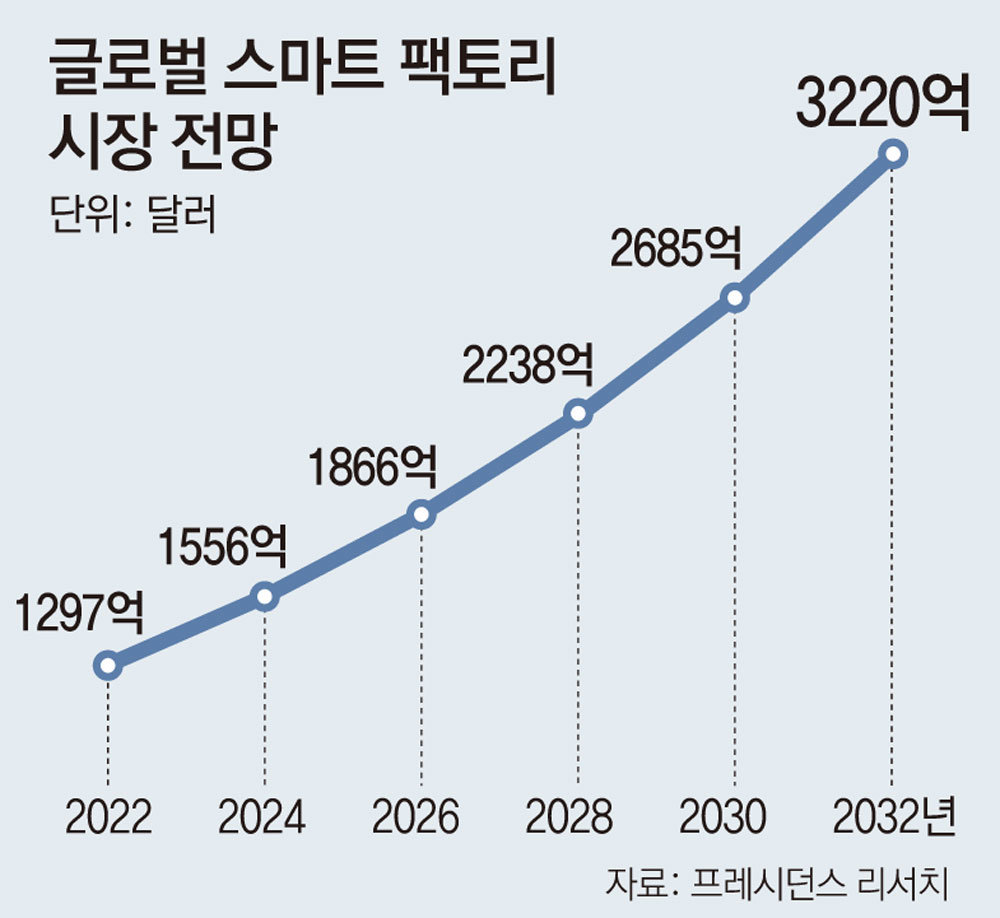
Digital transformation is also central in the manufacturing sector. Hyundai Motor Group’s smart factory strategy aims to shift to a “software-defined factory (SDF)” that integrates the entire manufacturing process based on data. It is a mid- to long-term strategy designed to simultaneously address the expansion of EV and customized production demand and the need to enhance the efficiency of global production bases.
At the core of this strategy lies the digitalization of production processes. Hyundai Motor Group is aggressively adopting “digital twin” technology, which connects the entire chain from design and production to logistics and quality management into a single data flow. By recreating physical plants in virtual space and verifying process changes or equipment layouts in advance, the group reduces trial and error and pursues both productivity gains and cost savings. This plays a critical role in shortening new vehicle development cycles and stabilizing initial quality.
Robotics and AI-based automation are rapidly expanding on production floors. Automation is broadening beyond traditional areas such as welding, painting, and assembly to include parts transport, inspection, and logistics. Hyundai Motor Group is integrating the technologies of its robotics affiliate Boston Dynamics into production lines to build a flexible manufacturing system that utilizes mobile robots and collaborative robots.
Data utilization is also a key factor. In particular, manufacturing execution systems (MES) that collect and analyze process data in real time and AI-based quality control are central. By detecting subtle anomalies arising during production at an early stage and preventing defects in advance, the group is strengthening its quality competitiveness. In parallel, it is implementing predictive maintenance to forecast equipment failures and maximize operation rates.
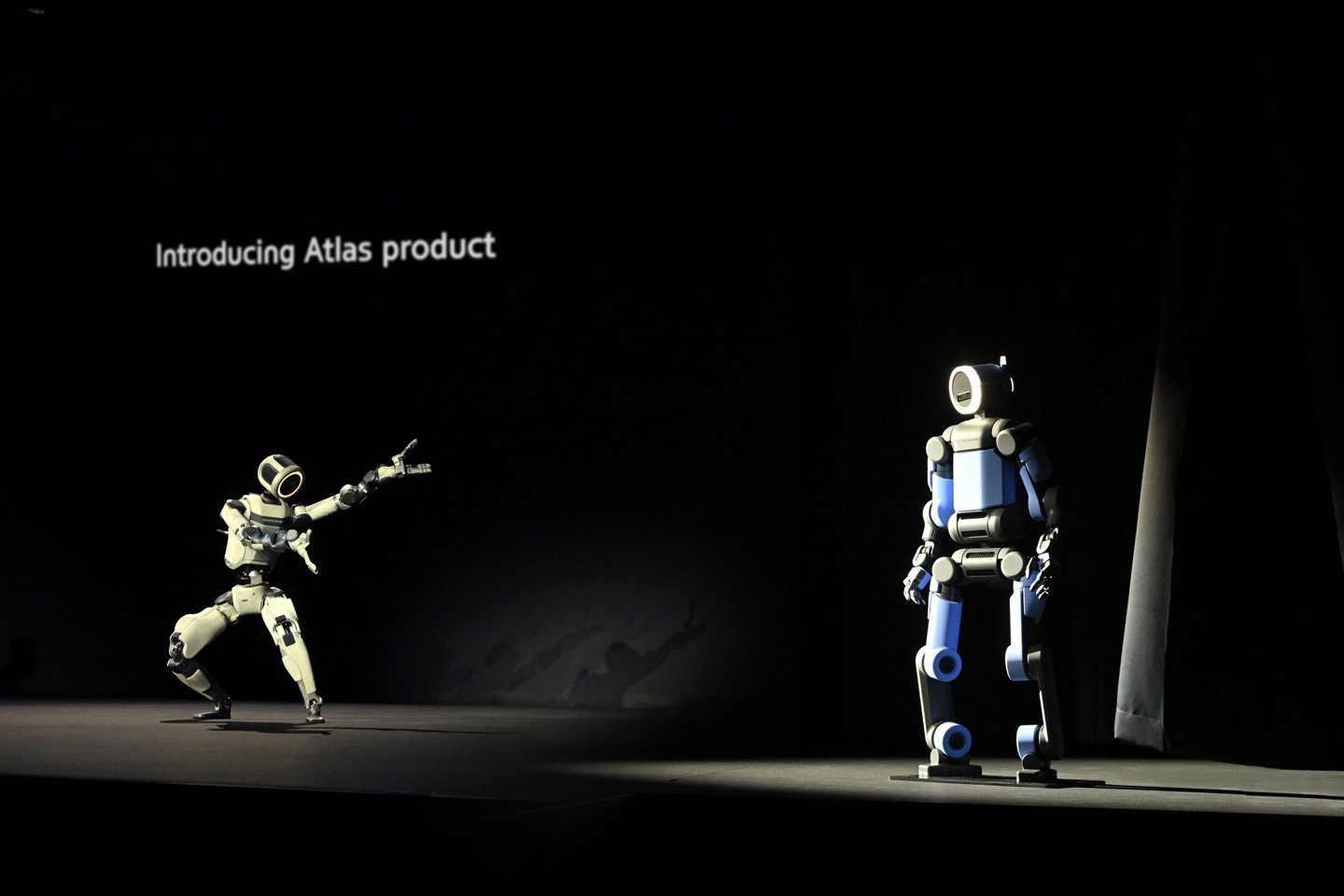
At Hyundai Motor Group’s press conference held at the Mandalay Bay Convention Center in Las Vegas, U.S., on January 5, Boston Dynamics’ “next-generation electric Atlas research model” humorously presents the “next-generation electric Atlas development model,” which is designed to be more suitable for industrial sites. Provided by Hyundai Motor Group
The smart factory strategy is also closely linked to logistics innovation. Parts supply and inventory management are integrated with automated logistics systems. Inside plants, autonomous mobile robots (AMRs) supply parts in real time. This enables a “low-inventory, high-efficiency structure” that minimizes inventory while preventing disruptions in production.
These strategies are being realized at actual sites. Hyundai Motor Group’s Singapore Global Innovation Center is a representative smart factory test bed, where it is experimenting with low-volume, high-mix production and customized build-to-order manufacturing. The center integrates the entire process from online ordering to production and delivery, presenting a manufacturing model differentiated from traditional mass production systems.
In Korea, the transition to an electrification-focused production system is also underway. Along with building dedicated EV plants, existing factories are simultaneously being upgraded into smart factories, restructuring operations to secure both production flexibility and efficiency. This can be seen as a measure to minimize inefficiencies that may arise during the shift from an internal combustion engine-centered production structure to one centered on electrification.
Smart factories maintain optimal production conditions by collecting and analyzing data throughout the entire production process. Data collected via sensors are analyzed in real time. If an anomaly is detected, the system is designed to respond immediately. Using digital twin technology, real plants can be reproduced in virtual space to verify various scenarios in advance. This plays a major role in enhancing production efficiency and reducing trial and error.
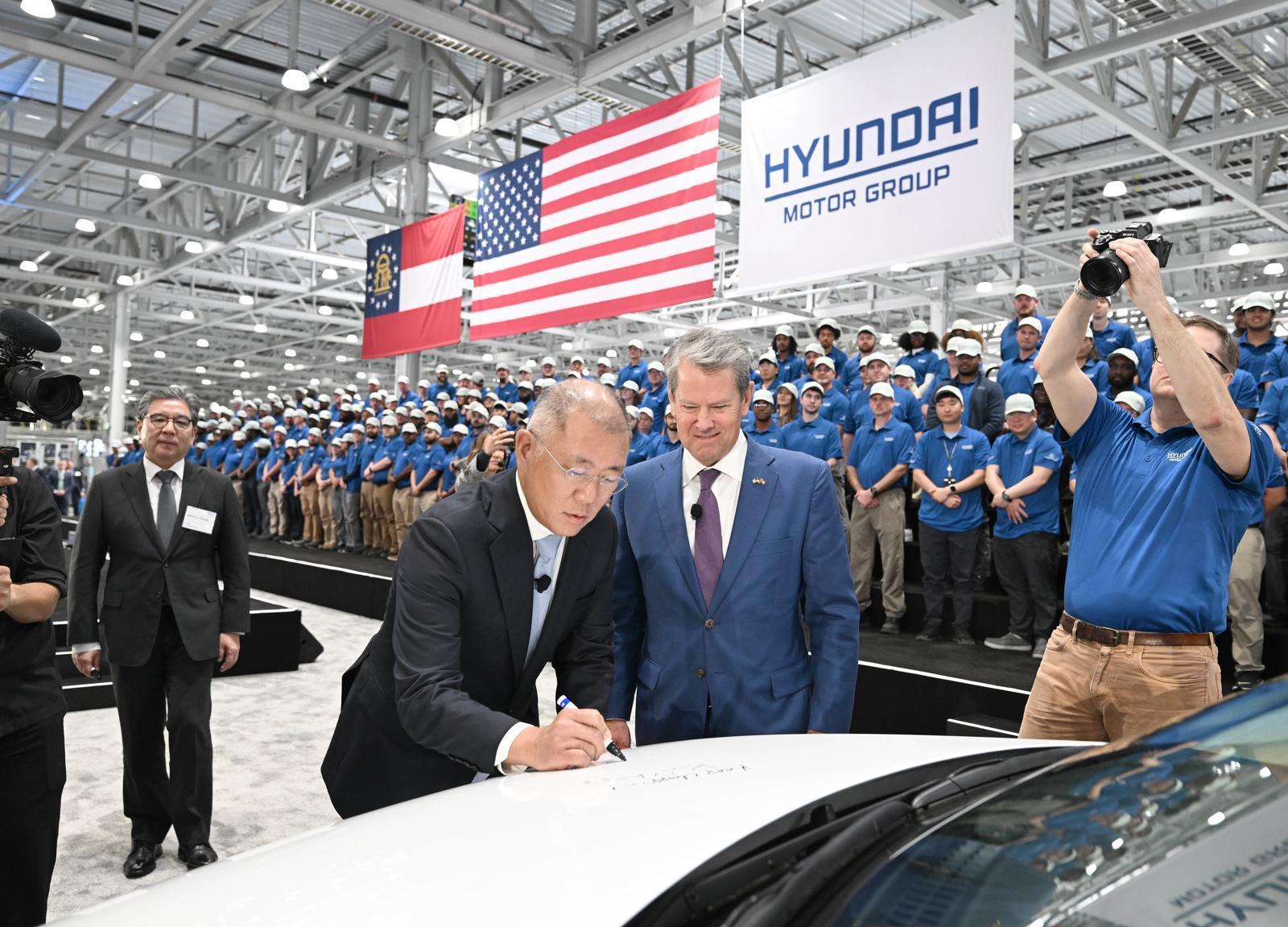
Hyundai Motor Group Chairman Chung Euisun signs a commemorative autograph on an IONIQ 5 produced at Hyundai Motor Group Metaplant America in Ellabell, Georgia, U.S., where he attended the plant’s completion ceremony on March 26 last year (local time). Provided by Hyundai Motor Group
Global top-three market strategy
Localization in North America, Europe, and IndiaHyundai Motor Group’s global market strategy combines localized production with differences in regional demand structures and regulatory environments. Approaches are clearly differentiated across key regions such as North America, Europe, and India.
In the North American market, Hyundai and Kia have adopted a “two-track strategy” that runs electric vehicles and hybrids in parallel. As the pace of the EV transition in the U.S. is highly volatile depending on policy and infrastructure, a flexible portfolio including hybrids, rather than a single strategy centered solely on pure EVs, is required. Accordingly, Hyundai Motor Group is expanding models based on its dedicated EV platform while simultaneously strengthening its SUV lineup equipped with next-generation hybrid systems.
The group is also expanding production bases. Centered on HMGMA in Georgia, it is pursuing local production of EVs and batteries to meet subsidy requirements under the Inflation Reduction Act (IRA) and secure price competitiveness. This reflects the intent to position the North American market as a global production hub.
In Europe, a stronger electrification drive is required. As carbon emission regulations in the European Union (EU) are among the most stringent in the world, Hyundai Motor Group is effectively implementing an EV-centric strategy in this region. The core is to gradually reduce the share of internal combustion and hybrid vehicles while rapidly increasing the proportion of EV sales.
Hyundai and Kia in particular are seeking to expand their EV market share based on design and driving performance tuned to European consumer preferences and competitive pricing. They are also strengthening linkages not only between vehicles and charging services but also with energy solutions to respond to the expansion of charging infrastructure and changes in the energy ecosystem.
In India and other emerging markets
ⓒ dongA.com. All rights reserved. Reproduction, redistribution, or use for AI training prohibited.
Popular News







 About Dong-A Ilbo